
Loading NuWatt Energy...
We use your location to provide localized solar offers and incentives.
We serve MA, NH, CT, RI, ME, VT, NJ, PA, and TX
Loading NuWatt Energy...
NuWatt designs, installs, and manages solar, battery, heat pump, and EV charger systems across 9 states. One company, one warranty, one point of contact.
Get a Free Quote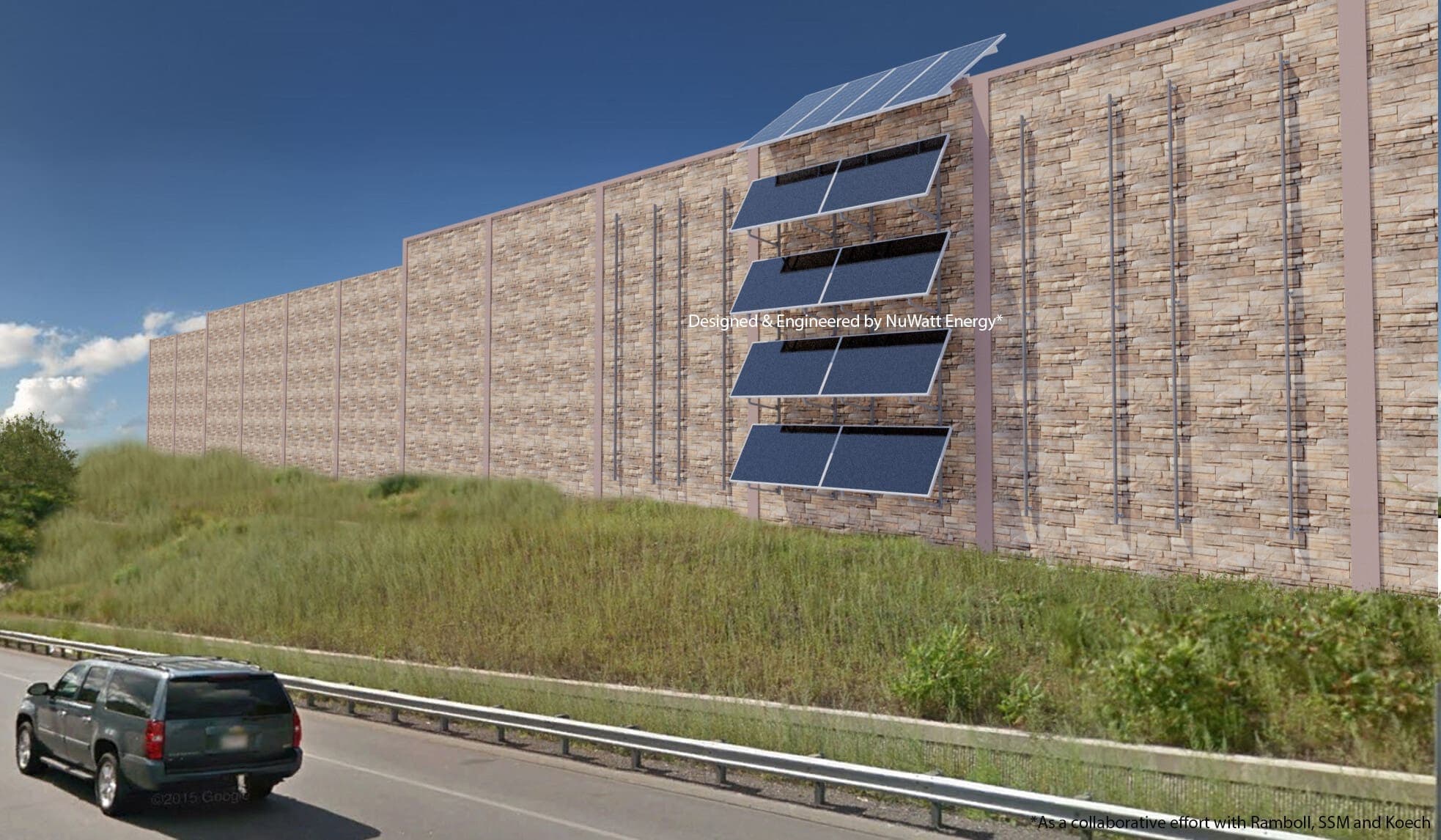
Highway sound walls that generate clean energy. 10-15 dB noise reduction. Public-private partnerships available for DOTs and municipalities.
10-15
dB Noise Reduction
500K
kWh/Mile/Year
25+
Year Lifespan
$0
DOT Upfront Cost*
*With public-private partnership structure
Solar noise barriers (photovoltaic noise barriers or PVNB) are highway sound walls with integrated solar panels. They reduce traffic noise by 10-15 decibels (50% perceived reduction) while generating 300,000-500,000 kWh per mile annually—enough to power 30-50 homes.
These dual-purpose structures cost $600-$1,000 per linear foot, 30-50% more than traditional barriers. However, electricity revenue offsets the premium over 10-15 years. Public-private partnerships (P3) can eliminate upfront costs for DOTs—private investors fund construction and own the solar component while the public gets a noise barrier.
NuWatt Energy partners with state DOTs, municipalities, and developers to bring solar noise barrier projects to New England. Ideal locations include I-93, I-95, I-495, and urban expressways through residential areas. We handle project development, financing structure, engineering, and construction management.
Smart infrastructure that pays dividends for communities.
Effectively reduces highway and traffic noise by 10-15 decibels, creating quieter communities.
Solar panels integrated into the barrier generate electricity for communities or the grid.
Turn infrastructure costs into revenue streams through energy sales and carbon credits.
We help DOTs partner with private investors for projects with minimal upfront government cost.
Reduce carbon emissions while improving quality of life for communities along highways.
Engineered to withstand extreme weather conditions and maintain performance for 25+ years.
The barrier structure blocks and absorbs sound waves from traffic, reducing noise pollution by 10-15 dB for nearby communities.
Photovoltaic panels integrated into the sun-facing side capture sunlight and convert it to electricity throughout the day.
Generated electricity feeds into the local grid, offsetting infrastructure costs and providing clean energy to communities.
Perfect for various infrastructure and development projects
I-93, I-95, I-495 through residential areas
Major state highways with noise-sensitive zones
City highways and elevated roadways
Commuter rail and freight lines
Manufacturing zones adjacent to communities
Shopping centers and office parks near highways
NuWatt Energy works with state DOTs, municipalities, and private developers to bring solar noise barrier projects to life. Our innovative financing models can fund projects with minimal or no upfront government investment.
Zero Upfront Cost
Revenue Sharing
Asset Transfer
Solar noise barriers (also called photovoltaic noise barriers or PVNB) are highway sound walls with integrated solar panels. They serve dual purposes: reducing traffic noise by 10-15 decibels while generating clean electricity. The solar panels face the sun (typically south) while the barrier structure blocks highway noise.
Solar noise barriers generate approximately 50-150 kWh per linear meter annually, depending on orientation and panel efficiency. A 1-mile barrier can produce 300,000-500,000 kWh per year—enough to power 30-50 homes. This electricity can be fed into the grid or used to power nearby infrastructure.
Solar noise barriers cost 30-50% more upfront than traditional sound walls ($600-$1,000 per linear foot vs. $400-$600). However, electricity generation provides revenue that can offset the premium over 10-15 years, resulting in lower lifecycle costs. Public-private partnerships can eliminate upfront costs for DOTs.
In a public-private partnership (P3), a private investor funds the solar noise barrier construction. The investor owns and operates the solar component, selling electricity to utilities. The DOT gets a noise barrier at reduced or zero cost. After 20-25 years, ownership typically transfers to the public entity.
Solar noise barriers reduce highway noise by 10-15 decibels, equivalent to traditional barriers. A 10 dB reduction cuts perceived loudness by 50%. The solar panels don't affect acoustic performance—they're mounted on the sun-facing side while sound-absorbing materials face the highway.
Solar noise barriers work best along south-facing highway sections with nearby residential communities. Ideal locations include urban expressways, interstate highways through populated areas, and rail corridors. New England's relatively low land costs make ground-mounted alternatives competitive in some locations.
Contact us to learn more about how solar noise barriers can benefit your community, DOT, or development project.