Loading NuWatt Energy...

We use your location to provide localized solar offers and incentives.
We serve MA, NH, CT, RI, ME, VT, NJ, PA, and TX
Loading NuWatt Energy...
NuWatt designs, installs, and manages solar, battery, heat pump, and EV charger systems across 9 states. One company, one warranty, one point of contact.
Get a Free Quote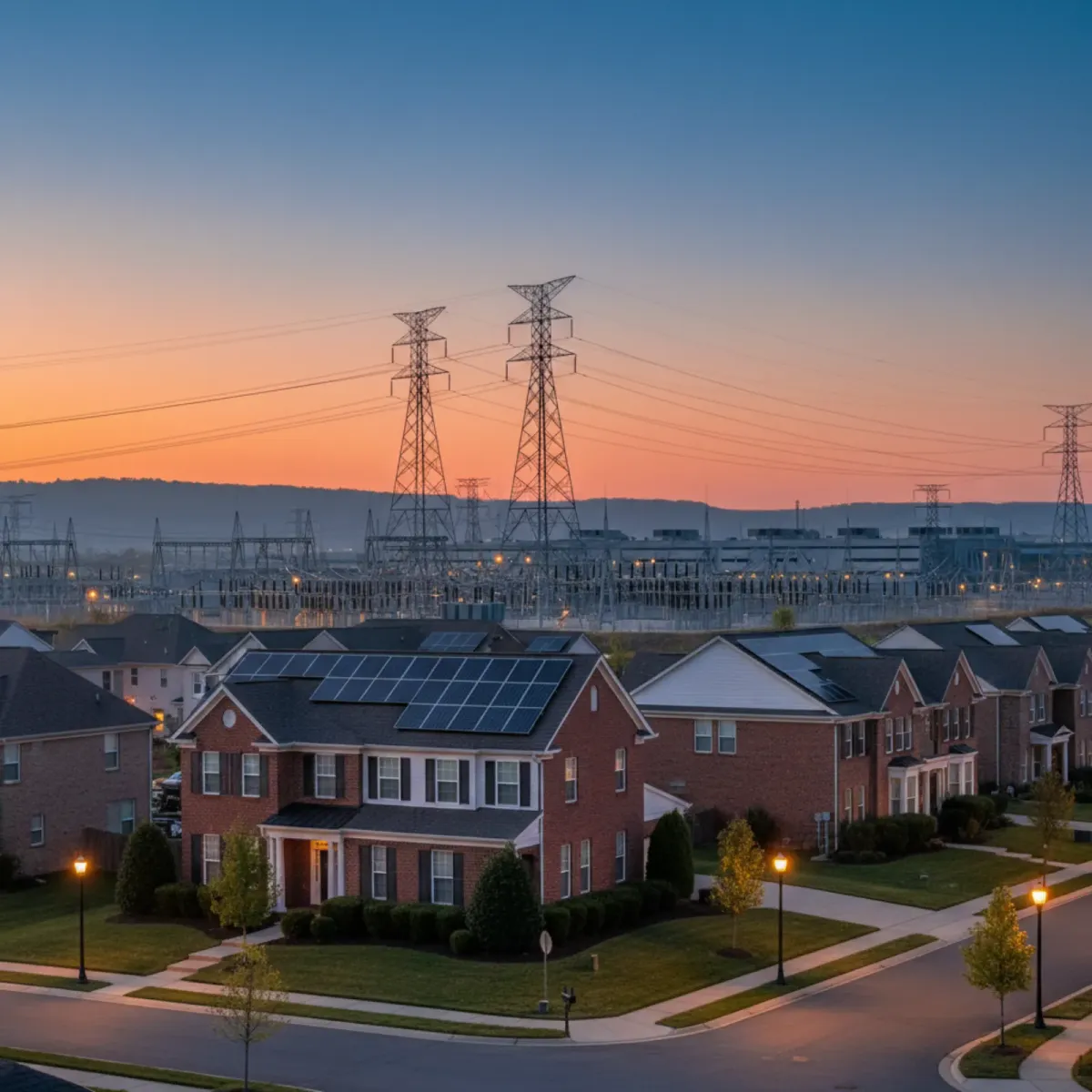
The AI boom is consuming staggering amounts of grid electricity. Utilities pass those infrastructure costs to you. Here is what is actually happening, the real numbers, and what you can do about it.
Quick Answer
AI data centers consumed 4.4% of US electricity in 2025, up from 2.5% in 2022, and the DOE projects 12% by 2028. This explosive demand forces utilities to invest billions in grid upgrades, costs they pass to residential ratepayers. Northeast homeowners on Eversource (around $0.34/kWh in MA, $0.33/kWh in CT) or National Grid (around $0.32/kWh) are paying among the highest residential rates in the country. Solar panels hedge against these increases by locking in your energy cost: even without the expired federal residential tax credit, owned residential solar in MA, CT, and NJ now starts from around 4-5 year payback with state incentives, followed by 20+ years of near-free electricity.
On April 13, 2026, SPAN — the smart electrical panel company — announced XFRA, a pilot program to place small NVIDIA-powered AI compute nodes inside new homes built by PulteGroup. The plan: a 100-home proof of concept in Q3 2026 in southwestern US new construction, with a stated goal of gigawatt-scale capacity by 2027. Each node draws roughly 19.2 kW and is managed by a SPAN panel, battery backup, and optional solar. NVIDIA's Marc Spieler said the move addresses the need for “low-latency solutions that are proximal to end users and can scale rapidly.”
For existing homeowners in MA, CT, NJ, PA, TX, and other NuWatt states, this is news to watch — not a product you can buy today. SPAN itself told pv magazine USA it is “much too early in the process to make any promises” about the discounted or free electricity rates being floated. What it does confirm: builders, chipmakers, and grid operators all expect smart electrical panels, batteries, and solar to be standard home infrastructure within this decade.
Read the full XFRA breakdown for homeownersThe artificial intelligence revolution has an enormous, physical footprint: electricity. Training a single large language model like GPT-5 or Gemini consumes as much electricity as 3,000 US homes use in an entire year. But training is just the beginning. Every time you ask ChatGPT a question, generate an image, or use an AI-powered search, servers in massive data centers burn electricity. And the scale is staggering.
According to the Department of Energy and the Electric Power Research Institute (EPRI), US data center electricity consumption hit approximately 176 TWh in 2025, representing 4.4% of total national electricity generation. That is up from roughly 100 TWh (2.5%) in 2022, a 76% increase in three years.
EPRI projects data center demand will reach 466-580 TWh by 2030, consuming 9-12% of US electricity. To put that in perspective, that is more electricity than the entire residential sector of Texas uses today.
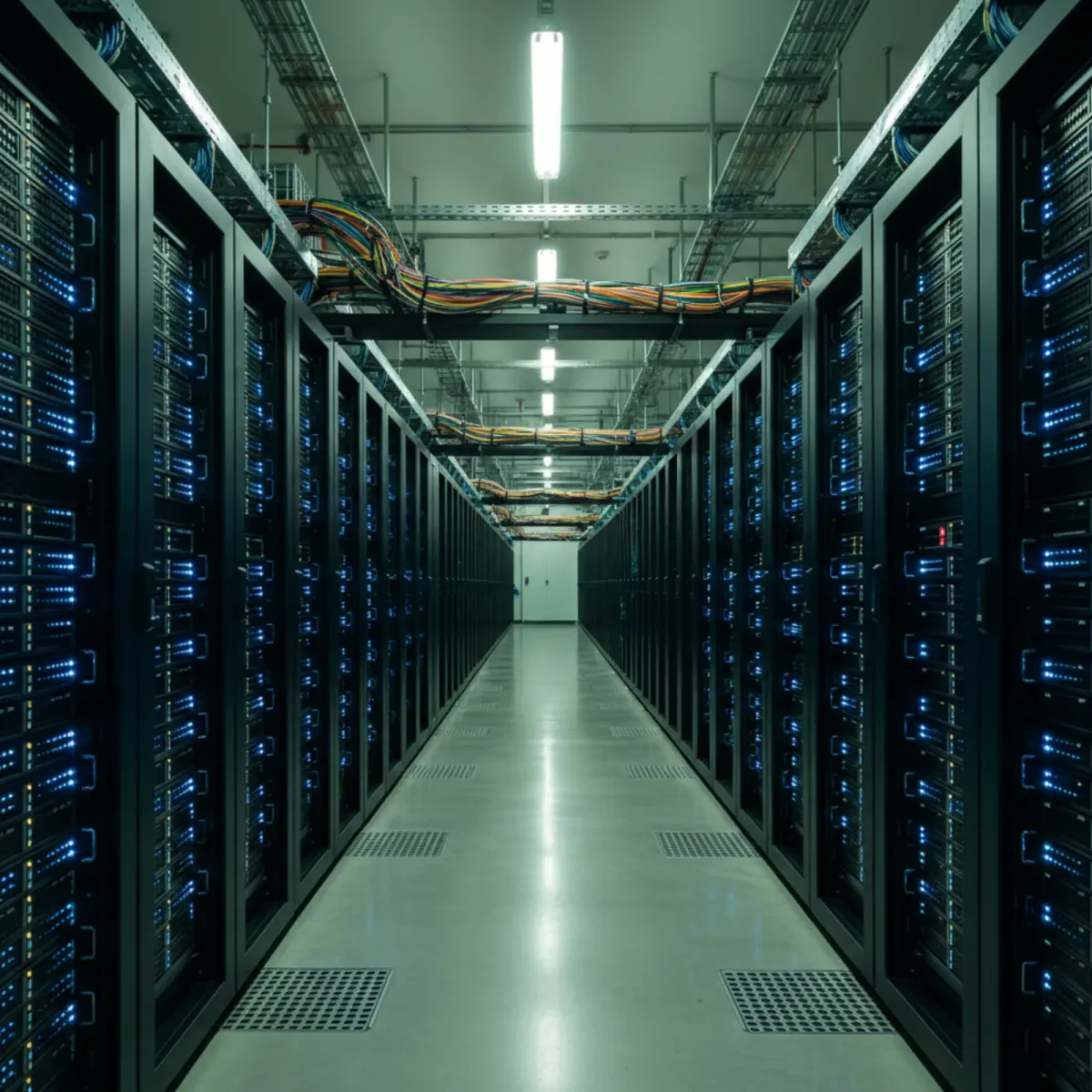
The hyperscalers (Microsoft, Google, Amazon, Meta) are the primary drivers, collectively spending over $200 billion on data center infrastructure in 2025-2026. Microsoft alone has committed to 80+ GW of data center capacity. But the second wave is already here: AI-focused startups (xAI, OpenAI, Anthropic), crypto mining operations, and enterprise AI inference workloads are all competing for grid capacity.
These are not small facilities. A modern AI data center campus consumes 100-500 MW of continuous power. For comparison, a typical US home uses about 1.2 kW on average. A single large data center uses as much electricity as 80,000 to 400,000 homes.
You are not paying for data center electricity directly. But you are paying for the infrastructure needed to deliver it. Here is the mechanism:
A hyperscaler announces a 200 MW data center campus. The local utility must plan for this massive new load, often in areas where the grid was designed for residential and light commercial use.
Serving 200 MW of new demand requires new substations ($50-100M each), transmission line upgrades ($2-5M per mile), generation capacity additions, and distribution system reinforcement. Utilities petition state regulators to recover these costs.
Public utility commissions typically approve rate increases that spread infrastructure costs across all customer classes. While large industrial customers pay a share, residential ratepayers absorb 30-40% of grid upgrade costs through higher per-kWh rates.
The result: your per-kWh rate increases by 5-15% to fund infrastructure that primarily serves data centers. A household using 900 kWh/month at around $0.34/kWh sees their bill jump $15-$45/month from data-center-driven rate increases alone.
US utilities have announced over $150 billion in grid upgrade projects directly tied to data center load growth through 2030. The Edison Electric Institute estimates total transmission spending alone will exceed $42 billion in 2026, a record. These costs flow directly into the rates you pay every month.
This is not theoretical. It is already happening. Dominion Energy in Virginia (the largest data center market in the world) has raised residential rates 27% since 2020, with data center infrastructure cited as a primary driver. Georgia Power is seeking a 12% rate increase partly to serve new data center load. And it is coming to the Northeast and Texas next.
The fundamental problem is a misalignment of incentives: data centers create massive demand that benefits their shareholders, but the grid infrastructure costs are shared with every ratepayer, including homeowners who see no benefit from AI workloads running in their neighborhood.
The Northeast already has the highest electricity rates in the continental US. Data center growth is making it worse. The region faces a perfect storm: aging grid infrastructure, limited generation capacity, constrained transmission corridors, and now surging industrial demand from edge computing and AI inference facilities.
Filed $337M rate case in 2025. Grid modernization surcharge increasing 8-12% annually. New edge computing facilities in CT and MA driving substation upgrades.
Highest major utility rate in the Northeast. Capital investment plan includes $2.1B for grid upgrades 2025-2028. Data center interconnection queue growing rapidly in upstate NY.
Maine seeing data center interest due to cold climate (natural cooling) and cheap land. CMP transmission upgrades accelerating. Maine residential rates remain the most affordable in New England, but supply charges have been volatile.
Texas is the fastest-growing data center market in the US, and its deregulated electricity market (ERCOT) creates a different, but equally concerning, dynamic for homeowners. Unlike the Northeast where rate increases come through formal regulatory proceedings, Texas rates respond directly to wholesale market supply and demand.
If you are on a variable-rate or indexed retail electricity plan in Texas, data center demand directly increases your costs during peak periods. Even fixed-rate plans are resetting 15-25% higher at renewal due to elevated wholesale price expectations. Solar is particularly attractive in Texas because it produces the most electricity during the same hours that data center demand (and prices) peak: hot summer afternoons. A 10 kW system in DFW or Austin produces peak power exactly when ERCOT prices are highest.
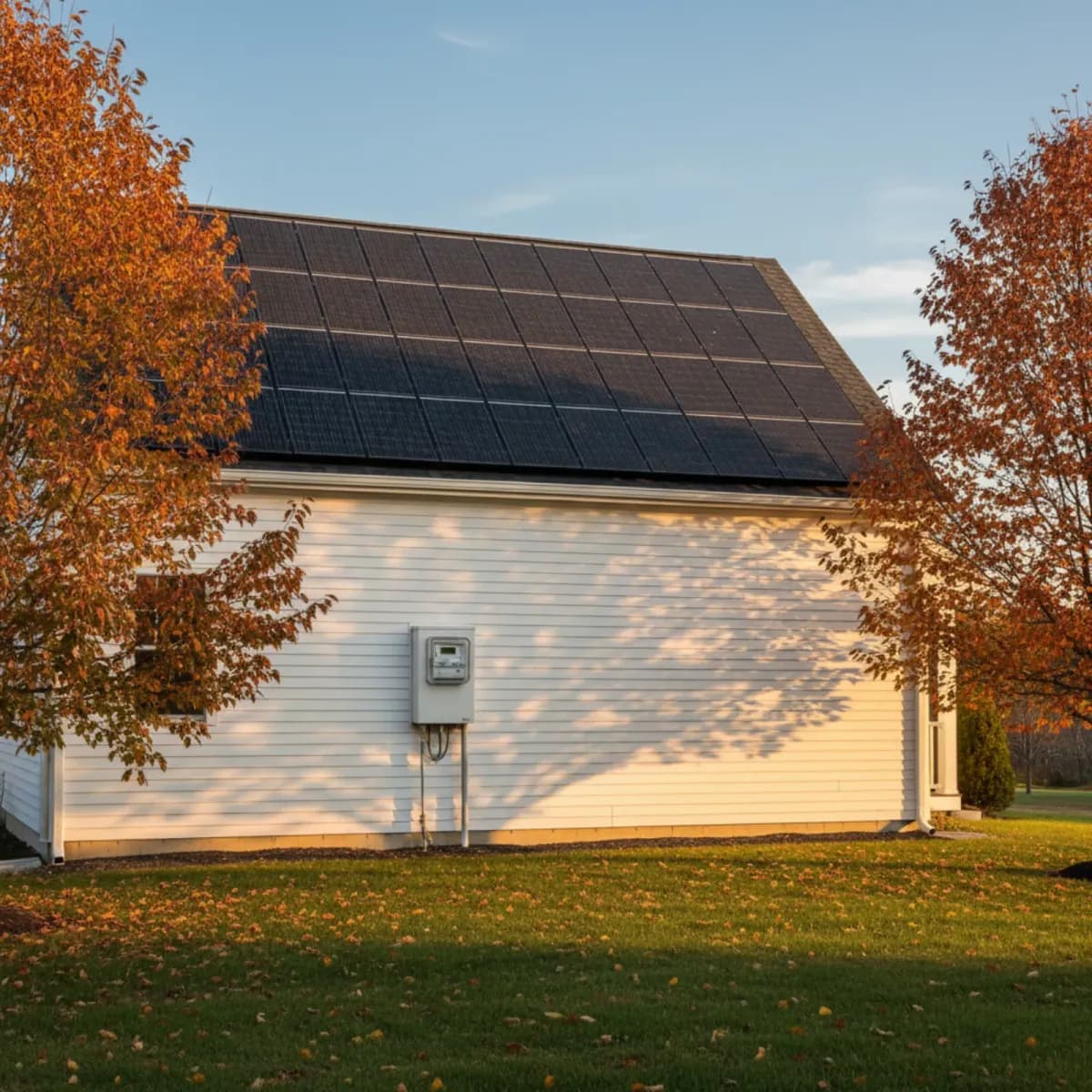
Here is the core concept: once you own solar panels, your electricity cost is effectively locked at zero for the energy they produce. Panels last 25-30 years. Your utility rate, driven by data center demand and grid modernization costs, will increase every single year.
The gap between what you would pay the utility and what you actually pay with solar widens every year. This is the rate hedge effect. And it is more valuable now than at any point in the past two decades precisely because data center demand is accelerating rate increases.
The honest truth about 2026 solar economics: The residential solar investment tax credit (Section 25D) expired on December 31, 2025. There is no federal tax credit for homeowner-owned solar systems. This means you pay the full system cost. But the math still works, especially in high-rate states, because the rates you are avoiding are so high and rising so fast.
*Texas rates vary widely by retail plan and provider. Listed range reflects average fixed-rate residential plans in 2026. Variable plans can spike significantly higher during summer peaks. System costs assume 8 kW, cash purchase, no federal tax credit. Savings assume 5% annual rate increase (conservative given data center demand trends).
The following table compares cumulative electricity costs for a typical Northeast household (900 kWh/month at around $0.32/kWh blended Northeast IOU rate, 5% annual rate increases) with and without solar. Solar system assumed at $26,000 upfront, 85% offset, 0.5% annual panel degradation. Lower system cost configurations (starting around $21,000 per the current pricing matrix) shorten payback further.
| Period | Without Solar | With Solar* | Cumulative Savings |
|---|---|---|---|
| Year 1 (2026) | $3,360 | $1,200 | $2,160 |
| Year 5 (2030) | $19,800 | $6,000 | $13,800 |
| Year 10 (2035) | $45,200 | $12,000 | $33,200 |
| Year 20 (2045) | $118,600 | $24,000 | $94,600 |
| Year 25 (2050) | $172,400 | $28,500 | $143,900 |
*With Solar column includes $26,000 system cost (paid in year 1) plus residual grid charges for the ~15% of electricity not offset by solar. Assumes net metering at current rates. Actual savings vary by system size, utility, and net metering policy.
As data center demand strains the grid, utilities are increasingly adopting time-of-use (TOU) rate structures that charge more during peak demand hours (typically 4-9 PM). This is where battery storage becomes a powerful complement to solar.
Solar panels produce most electricity midday, but peak utility rates hit in the late afternoon and evening, after solar production drops. A battery stores your midday solar surplus and dispatches it during expensive peak hours, avoiding the highest rates.
In states with demand response programs, your battery can also earn revenue by discharging during grid emergencies caused by, you guessed it, data center and industrial demand peaks.
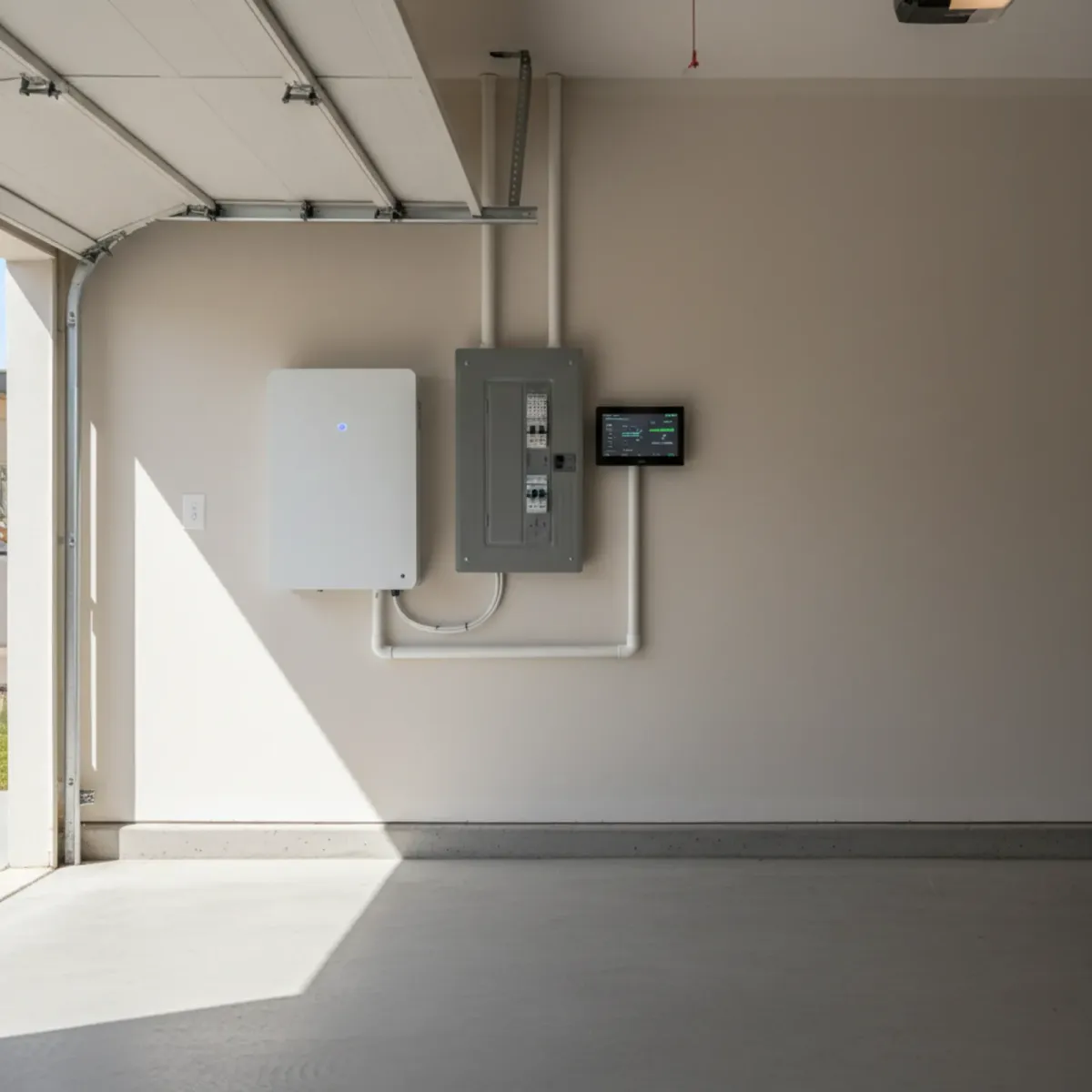
Store cheap midday solar, use during expensive peak hours. Value increases as peak/off-peak spread widens.
Eversource pays $275/kW for summer peak dispatch, plus $50/kW winter. A 10 kWh battery earns $1,000+/yr.
Other NE utilities offer demand response payments for battery dispatch during grid peaks. Programs expanding in 2026.
Grid outages increase as infrastructure ages under data center load stress. Battery provides 8-12 hours of critical load backup.
Some net metering programs credit battery exports at retail or near-retail rates during peak periods.
ERCOT ancillary services markets allow residential batteries to earn revenue during price spikes. Programs maturing in 2026.
A solar + battery system provides the most complete protection against data-center-driven rate increases. Solar eliminates 80-100% of your grid electricity consumption. Battery storage shifts remaining grid usage to the cheapest hours, earns demand response revenue, and provides backup power during outages. Together, they can reduce your effective electricity cost to $0.03-$0.06/kWh over 25 years, while your neighbors without solar pay $0.40-$0.55/kWh by 2035 at current rate trajectories.
You cannot stop hyperscalers from building data centers. You cannot stop your utility from raising rates to pay for grid upgrades. But you can take control of your own energy costs.
Understand your roof potential, current usage, and realistic savings. Our IQ quiz takes 2 minutes and provides a personalized analysis.
Take the Solar IQ QuizIf your utility offers TOU rates or demand response programs, battery storage significantly increases your savings. We model both scenarios.
Learn About BatteriesCash, loan, and third-party ownership (lease/PPA with Section 48 ITC through July 2026) all have different economics. Know your options.
Compare OptionsEvery month you wait, your utility rate increases. Your future solar savings are highest if you install before the next rate hike cycle.
Get Your QuoteAs of 2026, data centers consume approximately 4.4% of total US electricity, up from 2.5% in 2022. The Department of Energy projects this could reach 12% by 2028. A single large AI training cluster can consume 100+ MW, enough to power 80,000 homes.
Yes, indirectly. Utilities must invest billions in grid infrastructure (substations, transmission lines, generation capacity) to serve data center load. These costs are passed to all ratepayers through rate cases approved by state public utility commissions. In areas with major data center buildouts, residential rates have increased 15-25% faster than the national average.
Virginia leads with 70%+ of US data center capacity (Loudoun County alone has more data centers than most countries). Texas is the fastest-growing market due to cheap land, deregulated power, and ERCOT flexibility. The Northeast corridor (MA, CT, NJ, NY) is seeing rapid growth in edge computing and AI inference facilities, directly competing with residential load on constrained grids.
Solar panels reduce or eliminate your dependence on grid electricity, effectively locking in your energy cost at today's rates. A typical 8 kW system in the Northeast offsets 85-100% of household electricity. Even without the federal residential tax credit (which expired Dec 31, 2025), residential solar payback now starts from around 4-5 years in MA, CT, and NJ at current utility rates with available state incentives (SMART, Green Bank, ADI), and runs longer in northern New England without comparable rebates — followed by 20+ years of essentially free electricity.
At current Northeast IOU rates (around $0.32-$0.34/kWh for Eversource MA, Eversource CT, and National Grid, with Unitil MA higher still) and 3.5-4.7% annual rate increases driven by data center demand and grid modernization, a homeowner without solar will spend roughly $80,000-$120,000 on electricity over 25 years. With solar, total cost (system + minimal grid fees) is typically $25,000-$35,000 over the same period — savings well into five figures.
Yes. As utilities shift to time-of-use (TOU) rates to manage peak demand from data centers and other industrial loads, batteries let you avoid the most expensive rate periods (typically 4-9 PM). In Massachusetts, the ConnectedSolutions program pays $225-$275/kW annually for battery dispatch during grid peaks, turning your battery into a revenue source.
Data centers need three things: reliable power, fiber connectivity, and low-latency proximity to end users. Edge computing and AI inference workloads require facilities near population centers. This puts data centers in direct competition with residential customers for limited grid capacity, especially in the Northeast where transmission infrastructure is aging.
The EIA projects national average residential rates will increase 3-5% annually through 2030. In states with heavy data center development, increases of 5-8% annually are likely. Factors include: $150B+ in planned grid upgrades, natural gas price volatility, data center demand growing 15-20% per year, and the retirement of aging generation assets.
You cannot control what Big Tech does to the grid. But you can control how much of your electricity comes from it. Take our 2-minute Solar IQ quiz to see your personalized savings estimate, including how much you will save as rates keep climbing.