Loading NuWatt Energy...

We use your location to provide localized solar offers and incentives.
We serve MA, NH, CT, RI, ME, VT, NJ, PA, and TX
Loading NuWatt Energy...
NuWatt designs, installs, and manages solar, battery, heat pump, and EV charger systems across 9 states. One company, one warranty, one point of contact.
Get a Free Quote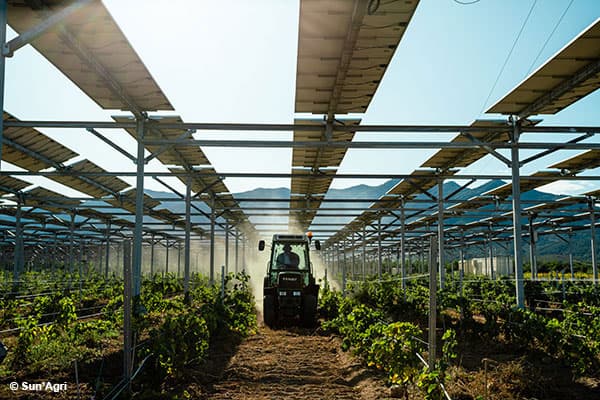
Combine solar energy with agriculture across 9 states. 2x productivity. 30% water savings. State programs: MA SMART adders, NJ dual-use pilot, PA SRECs.
2x
Land Productivity
30%
Water Savings
20%
Yield Increase
25+
Year Lifespan
NuWatt Energy designs custom agrivoltaic systems across MA, NH, CT, RI, ME, VT, NJ, PA, and TX. Agrivoltaics combines solar with agriculture, with panels elevated 8-15 feet for farming and livestock access. Benefits include 20-30% water savings and 10-30% yield increases for shade-tolerant crops.
State programs: MA SMART dual-use adder ($0.06/kWh), NJ dual-use pilot, PA SREC revenue, VT Standard Offer. Popular applications include sheep grazing, berry production, leafy greens, and vineyard solar. ROI typically 4-8 years with dual revenue streams.
Each state offers different support for dual-use solar farming. Find programs available in your area.
SMART Dual-Use Adder
MA SMART program offers dual-use agricultural adder of $0.06/kWh for qualifying agrivoltaic systems. Strict agricultural activity requirements ensure continued farming.
Dual-Use Pilot Program
NJ dual-use solar pilot supports agrivoltaic installations on preserved farmland. SREC income plus agricultural revenue provides dual income streams.
Agricultural Land Support
PA supports agrivoltaics on agricultural land with SREC revenue. Large farms and vineyards across PA are ideal candidates for dual-use solar.
Standard Offer + Ag Land
VT Standard Offer combined with agricultural operations. Strong support for sheep grazing and crop production under elevated panels.
ZREC/Agricultural Sites
CT supports agrivoltaics on agricultural land with ZREC program. Growing interest in vineyard solar and sheep grazing applications.
REG + Dual Use
RI REG program supports dual-use installations. Coastal farms benefit from both solar income and crop protection from weather.
Agricultural Solar Support
ME's extensive blueberry farms and pastures are ideal for agrivoltaics. Net energy billing provides revenue alongside continued agricultural operations.
Group Net Metering + Ag
NH supports agrivoltaics through group net metering. Sheep grazing and hay production common under elevated panel systems.
Large Scale Agrivoltaics
TX's vast agricultural land is ideal for large-scale agrivoltaics. Cattle grazing, sheep, and crop production under solar increasingly common.
A sustainable solution that benefits farmers, communities, and the planet.
Generate solar electricity while continuing to farm the same land, maximizing revenue per acre.
Shaded soil retains moisture better, reducing irrigation needs by 20-30%.
The shade from panels cools crops, reducing water stress and increasing productivity for shade-tolerant plants.
Earn income from solar energy production while maintaining agricultural operations.
Panels protect crops from extreme weather events like hail, heavy rain, and excessive heat.
Moderated temperatures can extend the growing season for certain crops.
Many crops benefit from the partial shade provided by solar panels
Lettuce, spinach, kale, arugula, chard
Yield: +20-30%
Blueberries, raspberries, strawberries, blackberries
Yield: +10-20%
Basil, cilantro, parsley, mint, oregano
Yield: +15-25%
Potatoes, carrots, beets, radishes
Yield: Stable
Wine grapes, table grapes (ideal for vineyards)
Yield: +10-15%
Sheep grazing, cattle pasture, hay production
Yield: Maintained
Solar panels installed at heights of 8-15 feet allow farming equipment and workers to operate beneath them.
Panel spacing is calculated to provide optimal light for both energy production and crop growth based on your specific crops.
Farmers earn income from both crop sales and solar energy production or land lease payments on the same land.
Agrivoltaics (also called agrisolar) combines solar panels with agricultural production on the same land. Panels are elevated 8-15 feet high, allowing farming equipment and livestock to operate beneath them. The partial shade benefits many crops while generating clean electricity—doubling land productivity.
Shade-tolerant crops thrive under agrivoltaic systems: leafy greens (lettuce, spinach, kale), berries (blueberries, raspberries), herbs (basil, cilantro), and pasture grasses. Research shows 20-30% yield increases for some crops due to reduced heat stress and water evaporation.
Massachusetts SMART program offers a dual-use agricultural adder of $0.06/kWh for qualifying agrivoltaic systems. Combined with the base SMART rate, this provides significant long-term revenue while maintaining agricultural operations. Strict requirements ensure genuine farming continues.
Yes, New Jersey has a dual-use solar pilot program that supports agrivoltaic installations, including on preserved farmland. Projects can earn SREC income while continuing agricultural activities. NJ is actively expanding support for dual-use solar farming.
Agrivoltaic systems reduce irrigation needs by 20-30%. The shade from solar panels decreases soil temperature and evaporation, helping soil retain moisture longer. This is especially valuable in drought-prone regions and for water-intensive crops.
Yes, sheep grazing under solar panels is increasingly common and beneficial. Sheep control vegetation (reducing mowing costs), provide natural fertilizer, and benefit from shade. The elevated panel design accommodates sheep perfectly. Cattle may require higher panel mounting.
Agrivoltaic systems provide dual revenue streams: solar energy income (or land lease payments) plus continued agricultural production. With the 30% federal ITC for commercial installations, state incentives like MA SMART adders, and agricultural income, ROI typically ranges from 4-8 years.
NuWatt Energy designs custom agrivoltaic systems across 9 states: Massachusetts, New Hampshire, Connecticut, Rhode Island, Maine, Vermont, New Jersey, Pennsylvania, and Texas. Each state has different programs and requirements for dual-use solar installations.
Custom agrivoltaic design for farms across 9 states
Contact us to learn how agrivoltaics can maximize the value of your agricultural land while generating clean energy. Available across 9 states.