Loading NuWatt Energy...

We use your location to provide localized solar offers and incentives.
We serve MA, NH, CT, RI, ME, VT, NJ, PA, and TX
Loading NuWatt Energy...
Use the free estimator for a preliminary layout, or share your preferred response method with the commercial team. Final feasibility still requires site, utility, and engineering review.
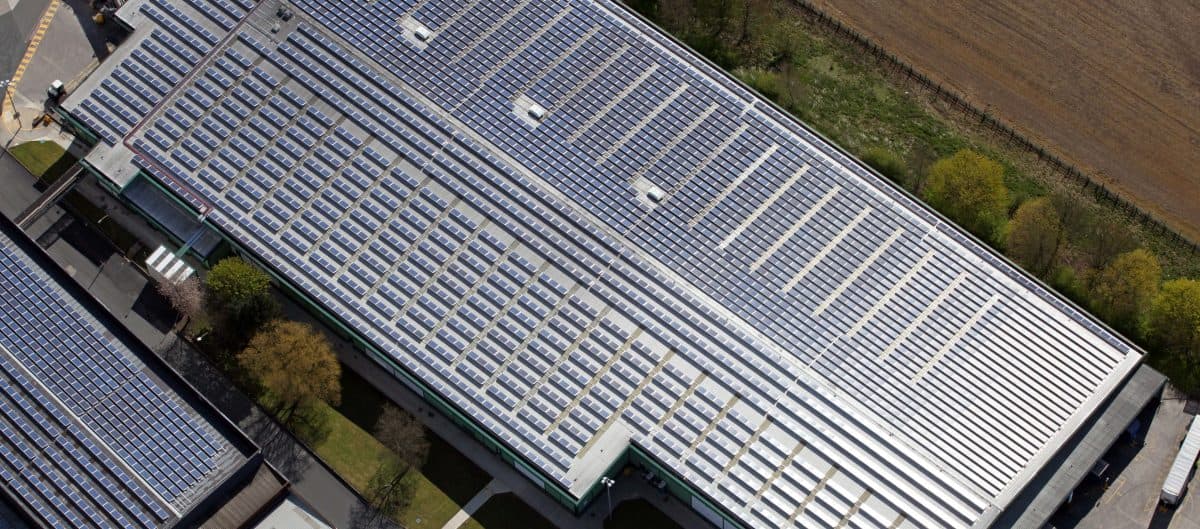
NuWatt handles site assessment, engineering, permitting, installation and utility interconnection across nine states. Start with the property; model cost, ROI and financing only after the site and facility inputs are known.
Direct EPC
Operating Model
Roof, Ground, Carport
Property Types
Quote + Tariff
Project Economics
9 States
States Served
Free address-based tool
Get a preliminary roof layout, panel count, system size, annual production range, and confidence grade before sharing contact details.
No account required to see your roof result
A commercial solar project runs through site and structural analysis, utility-tariff and interconnection screening, design and permitting, installation and commissioning, then project-specific tax and financing review. A loan or C-PACE generally preserves customer ownership, while a PPA or lease places ownership and tax benefits with a third party. Cost and payback require the facility's quote, production model, tariff, operating costs, financing terms and verified incentive eligibility.
Last updated: August 24, 2026
Federal project input
Up to 30%
Clean Electricity Investment Credit
The base credit is 6%. It can increase five times to 30% when the applicable labor requirements are met. The IRS also lists limited exceptions, including certain clean-energy facilities under 1 MW. Eligibility and recordkeeping must be confirmed for the project.
The Section 48E begin-construction window closed July 4, 2026: projects that began construction on or before that date may use the longer continuity pathway. Commercial solar projects starting now generally must be placed in service by December 31, 2027. The statutory credit is 6%; it can increase to 30% when the applicable prevailing-wage and registered-apprenticeship requirements are met. Learn how the July 4 timing works →
Each commercial question has one primary NuWatt resource so capacity, cost, ROI, financing, storage and proposal review do not compete with one another in search.
Capacity owner
Screen roof, ground-mount or carport capacity before discussing project economics.
Cost owner
Separate official benchmark context from the scope and exclusions in an EPC quote.
ROI owner
Use the facility quote, production model, tariff, operating costs and documented tax inputs.
Financing owner
Compare cash, loan, C-PACE, PPA and lease terms without mixing ownership or tax treatment.
Storage owner
Define the operating objective before sizing energy, power, controls or backup duration.
Proposal owner
Review scope, assumptions, exclusions and risk before advancing a commercial bid.
Know which tool or project lane fits? Start the commercial quote path.
The fast-path intake records this page as the conversion assist; a specialist then verifies facility, utility, engineering, interconnection, and tax inputs.
Documented NuWatt installations
These are selected documented installations, not a count of every project NuWatt has completed. The case study documents the 55 kW ground-mounted solar array at Pleasant Valley Gardens in Methuen, MA.
| Installation | Recorded capacity | Engineering context | Evidence basis |
|---|---|---|---|
| Pleasant Valley Gardens Methuen, MA · 2012 | 55 kW utility interconnection record | The utility-authorized 55 kW design was commissioned as a ground-mounted array with multiple Fronius inverters. | National Grid authority-to-interconnect correspondence, commissioned certificates, electrical inspection, as-built single-line drawing, Box installation archive, and long-term monitoring and service records. |
| Dorchester Bay Economic Development Corporation Dorchester, Boston, MA · 2018 | 59.64 kW final permit set | The 168-module ballasted layout was coordinated around an occupied building and an overnight electrical tie-in. | Final permit set, City of Boston permit SF830924, and substantial- and final-completion records. |
| ISBCC Roxbury, Boston, MA · 2012 | 103.74 kW final permit set | The stamped ballast set lists approximately 5.4 to 5.6 psf distributed loading and a non-penetrating layout. | Stamped PanelClaw ballast set Rev. 2 dated August 29, 2012, structural review, and permit records. |
Pleasant Valley’s record includes National Grid interconnection evidence; it does not establish today’s tariff for another building. For your site, identify the exact utility, commercial rate class, billing-demand method, supply contract and export treatment. Reconcile a model against an actual bill before applying solar or storage savings.
Project size and property fit
These are planning lanes, not price or production promises. The usable area, structure, electrical service, utility path, load profile, and commercial objective determine the defendable design.
25–100 kW
Start with roof condition, service capacity, operating hours, bills, and fixed design or permitting work.
100–500 kW
Add interval load, structural review, tariff and demand-charge treatment, interconnection, and ownership objectives.
500 kW–2 MW+
Civil scope, medium-voltage equipment, utility studies, export limits, phasing, procurement, and schedule become central.
A defendable project plan
Usable geometry, roof or civil condition, access, shade, drainage, setbacks, and structural constraints.
Bills, interval data when available, demand charges, export treatment, operating hours, and account classification.
Service voltage, switchgear and transformer capacity, utility studies, upgrade scope, export limits, and schedule.
DC and AC size, equipment, racking, one-line, production model, code path, permits, and commissioning.
Cash, loan, C-PACE, PPA, or lease terms with fees, escalators, collateral, tax ownership, and buyout language.
Placed-in-service timing, labor compliance or exception, bonus eligibility, program award, and adviser confirmation.
Customized commercial solar for every business type
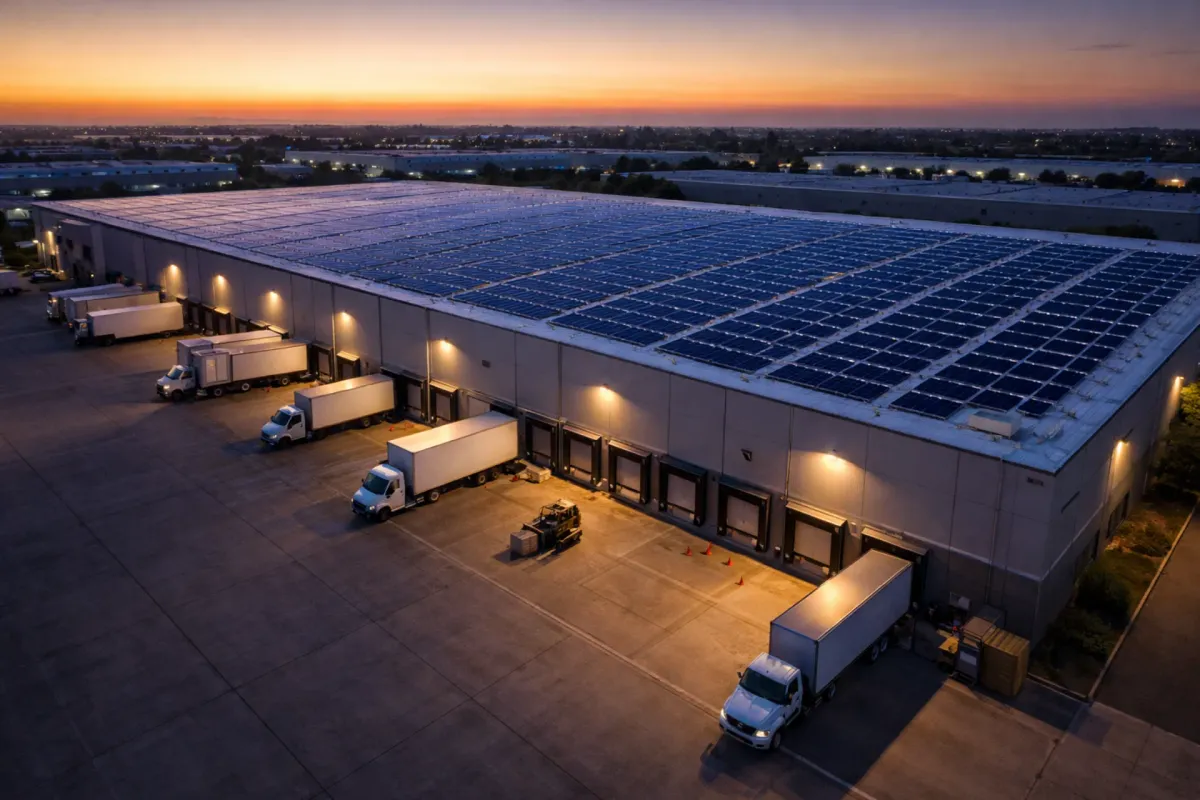
Large flat roofs and high energy use make warehouses ideal for commercial solar.
Customer-facing sustainability, parking canopies, and SREC revenue for retail businesses.
Process energy offset, demand charge management, and energy resilience for manufacturers.
Energy resilience, backup integration, and ESG reporting for healthcare facilities.
Tax-exempt direct pay, educational value, and community benefit for educational institutions.
Agrivoltaics, irrigation pumping, and USDA REAP grants for agricultural operations.
ITC stacking guide, MACRS, domestic content, energy community bonuses, and Direct Pay for nonprofits.
Explore tax creditsCompare PPA, lease, PACE, and loan options. $0 down available. Find the best fit for your business.
Compare financingUse a real quote, production model and utility-specific energy value to evaluate cost and payback.
See cost guideNuWatt runs the project end to end: site and structural assessment, system engineering and layout, utility interconnection, permitting, installation and commissioning. The economic model uses the project's own quote, production, tariff, operating expenses and documented tax assumptions.
Start the tracked commercial intake. A specialist will verify the property, load, utility, engineering, interconnection, financing, and documented tax eligibility before a final price.