
Solar Panel Critter Guards: Protect from Birds & Squirrels
Animals love the warm, sheltered space under solar panels. A mesh critter guard prevents nesting, wiring damage, and costly repairs. Here's what works, what it costs, and when to install one.
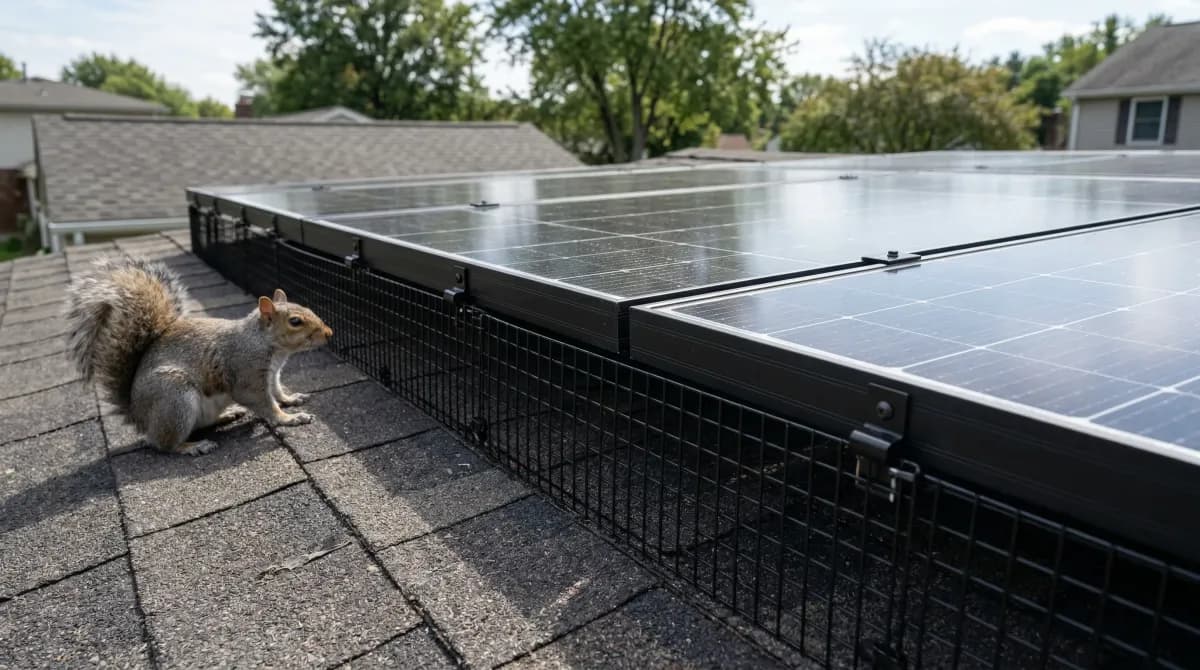
Why Animals Love Solar Panels
Solar panels create an ideal microhabitat for birds, squirrels, and other small animals. The gap between the panels and your roof (typically 3-6 inches) provides:
Warmth
Solar panels absorb sunlight and radiate heat downward. The space underneath stays 10-20 degrees warmer than the surrounding roof in winter, making it an attractive nesting spot.
Shelter from Predators
The enclosed space under panels protects birds and rodents from hawks, owls, and cats. The rigid panel surface overhead also blocks rain, snow, and wind.
Nesting Material
Roof debris (leaves, twigs, pine needles) collects in the gaps around panels, providing ready-made nesting material. Pigeons are especially drawn to this.
Accessible Wiring
The DC wiring that runs between panels and down to the inverter is exposed and accessible to rodents. Squirrels instinctively chew on wiring, and solar cables are no exception.
Most affected areas: Suburban neighborhoods with mature trees (within 10 feet of the roof) see the highest rates of critter problems. Urban areas have more pigeon issues. Rural properties may see raccoons, opossums, and mice.
Types of Animal Damage to Solar Panels
Wire Chewing (Squirrels & Rodents)
Severity: High.Squirrels chew through the insulation on DC wiring, exposing conductors. This can cause arc faults (electrical sparks), which pose a fire risk. At minimum, chewed wires cause panel-level production loss. Repair cost: $200-$500 per affected run, plus the electrician's truck roll.
Nesting (Birds & Squirrels)
Severity: Medium.Nests block airflow under panels, causing them to run hotter. Every 10°F increase above optimal reduces panel efficiency by 3-5%. Dense nests can also trap moisture against the roof, accelerating shingle degradation. Nest removal + cleanup: $150-$400.
Droppings (Pigeons)
Severity: Medium.Bird droppings on panel surfaces block sunlight to individual cells. A single dropping can reduce a panel's output by 10-30% due to the "hot spot" effect in series-wired cells. Frequent droppings also etch the glass coating over time. Cleaning cost: $150-$300 per visit.
Roof Damage (Raccoons & Large Birds)
Severity: Low-Medium. Larger animals can dislodge flashing, lift shingles, and damage the roof membrane around panel mounts. This creates leak entry points. Roof repair around panels: $300-$800.
Critter Guard Types
1. Mesh Clip-On Guards
Most PopularGalvanized steel or aluminum mesh that clips directly to the panel frame edge. No drilling into the roof required. The mesh has a small enough gauge (typically 0.5 inch) to block birds, squirrels, and mice.
- Cost: $8-$12/linear foot installed
- Material: Galvanized steel or aluminum
- Durability: 20+ years
- Pros: No roof penetration, easy to install, removable for maintenance
- Cons: Clips can loosen in high winds if not installed properly
2. L-Bracket with Mesh
An L-shaped metal bracket fastened to the roof edge with mesh attached. More secure than clip-on systems but requires fasteners into the roof surface (sealed with roofing sealant).
- Cost: $12-$18/linear foot installed
- Material: Aluminum bracket + steel mesh
- Durability: 25+ years
- Pros: Very secure, handles high winds, clean appearance
- Cons: Roof penetration required, harder to remove for panel service
3. Pest-Repellent Strips
Plastic or metal spike strips installed along panel edges to deter birds from landing. These do not block rodent access — they only work for pigeons and larger birds.
- Cost: $3-$6/linear foot installed
- Material: UV-resistant polycarbonate or stainless steel
- Durability: 10-15 years
- Pros: Cheapest option, easy to install, no roof penetration
- Cons: Does NOT stop squirrels, mice, or small birds. Bird-only solution
4. Conduit Wire Protection
Flexible conduit or wire loom wrapped around exposed DC cables under panels. This specifically protects wiring from rodent chewing but does not prevent nesting.
- Cost: $100-$300 for materials (often included in installation)
- Material: Split corrugated conduit, typically nylon or PVC
- Durability: 15-20 years
- Pros: Protects the most critical component (wiring), inexpensive
- Cons: Does not prevent nesting or droppings
Cost Breakdown
| Item | During Panel Install | After Panel Install |
|---|---|---|
| Mesh clip-on (20 panels) | $300 - $600 | $600 - $1,200 |
| L-bracket system (20 panels) | $500 - $900 | $900 - $1,500 |
| Pest-repellent strips only | $100 - $250 | $200 - $400 |
| Wire conduit protection | $50 - $150 | $150 - $300 |
| Nest removal + cleanup | N/A | $150 - $400 |
| Typical Total (mesh + conduit) | $350 - $750 | $750 - $1,500 |
Costs based on a typical 20-panel residential system with approximately 120-150 linear feet of panel perimeter. Pricing varies by region and roof complexity.
DIY vs Professional Installation
DIY Installation
- Cost: $150-$400 (materials only)
- Time: 3-5 hours
- Tools needed: Tin snips, wire clips, tape measure, gloves, safety harness
- Best for: Single-story homes, low-pitch roofs, handy homeowners
Warning:Working on a roof near DC solar wiring (up to 600V) is dangerous. Never touch exposed wiring. Panels produce electricity whenever sunlight hits them — they cannot be "turned off" at the panel level.
Professional Installation
- Cost: $500-$1,500 (materials + labor)
- Time: 2-4 hours
- Includes: Existing nest removal, wire inspection, mesh install, cleanup
- Best for: Two-story homes, steep roofs, existing critter damage
Recommended: Ask your solar installer to add critter guard during the initial installation. Most charge $300-$600 as an add-on since their crew is already on the roof with safety equipment.
Best Time to Install a Critter Guard
During solar panel installation = cheapest and easiest
Adding critter guard during your solar installation is 30-50% cheaper than a separate service call later. The crew is already on your roof with ladders, safety equipment, and the panels are being handled. It takes 30-60 extra minutes and costs $300-$600 as a line-item add-on.
If your panels are already installed and you do not currently have problems, you can wait. But if you see any signs of animal activity (droppings on panels, nesting material at panel edges, scratching sounds), install sooner rather than later. Once animals establish a nesting site, they return year after year.
Seasonal Considerations
- Spring (March-May): Peak nesting season. If you see birds carrying material to your roof, act now. Removal is easier before eggs are laid (some species are protected by the Migratory Bird Treaty Act once nesting).
- Summer: Good installation weather. Baby animals may be present under panels — a professional can check and humanely relocate before installing guard.
- Fall: Squirrels stockpile acorns and nest materials. A pre-winter install prevents them from establishing a warm winter den under your panels.
- Winter: Installation is possible but more expensive (cold weather, snow on roof). Less urgent since nesting activity is lower.
Signs You Need a Critter Guard
Bird droppings on panel surfaces
Visible droppings reduce panel output and indicate birds are roosting on or near panels.
Nesting material visible at panel edges
Twigs, leaves, feathers, or shredded material poking out from under panels means active nesting.
Scratching or scurrying sounds from the roof
Especially at dawn and dusk. Squirrels are most active in early morning and late afternoon.
One panel showing zero or low production
A chewed wire connection causes a panel to go offline. Check your monitoring app for individual panel data.
Mature trees within 10 feet of roof edge
Squirrels jump up to 8-10 feet horizontally. Nearby trees are highways to your panels. Consider trimming branches as a first defense.
Related Resources
Frequently Asked Questions
How much does a solar panel critter guard cost?
Critter guard installation typically costs $500-$1,500 for a standard residential solar system. The cost breaks down to $8-$15 per linear foot of panel perimeter. If installed at the same time as your solar panels, the cost is significantly lower ($300-$800) because the installers are already on the roof with equipment.
Can squirrels damage solar panels?
Yes. Squirrels chew on exposed wiring under solar panels, which can cause electrical shorts, arc faults, and even roof fires in extreme cases. They also build nests that block airflow, causing panels to overheat and lose 5-10% efficiency. Squirrel damage is one of the most common solar maintenance issues in suburban areas.
Should I install a critter guard during or after solar panel installation?
During installation is always cheaper and easier. The installers are already on the roof with safety equipment. Adding critter guard later requires a separate truck roll, roof access setup, and sometimes partial panel removal to clean existing nests. Budget 30-50% more for after-the-fact installation.
Can I install solar panel critter guard myself?
DIY is possible for ground-level or single-story roofs with safe access. You need galvanized steel or aluminum mesh, clips or fasteners, tin snips, and safety equipment. However, working on a roof near electrical wiring carries risks. Most installers charge $500-$1,000, and the professional job includes a warranty. For two-story homes or steep roofs, professional installation is strongly recommended.
What type of critter guard is best for solar panels?
Galvanized steel mesh with panel-edge clips is the most popular and durable option. It costs $8-$12 per linear foot installed, lasts 20+ years, and requires no drilling into the roof. Aluminum mesh is lighter and slightly cheaper but less durable. L-bracket systems with mesh are more secure but cost $12-$18 per linear foot.
Protect Your Solar Investment
NuWatt Energy includes critter guard as an add-on option with every solar installation. Ask about bundled pricing when you get your free quote.
Get a Free Solar Quote