Loading NuWatt Energy...

We use your location to provide localized solar offers and incentives.
We serve MA, NH, CT, RI, ME, VT, NJ, PA, and TX
Loading NuWatt Energy...
NuWatt designs, installs, and manages solar, battery, heat pump, and EV charger systems across 9 states. One company, one warranty, one point of contact.
Get a Free Quote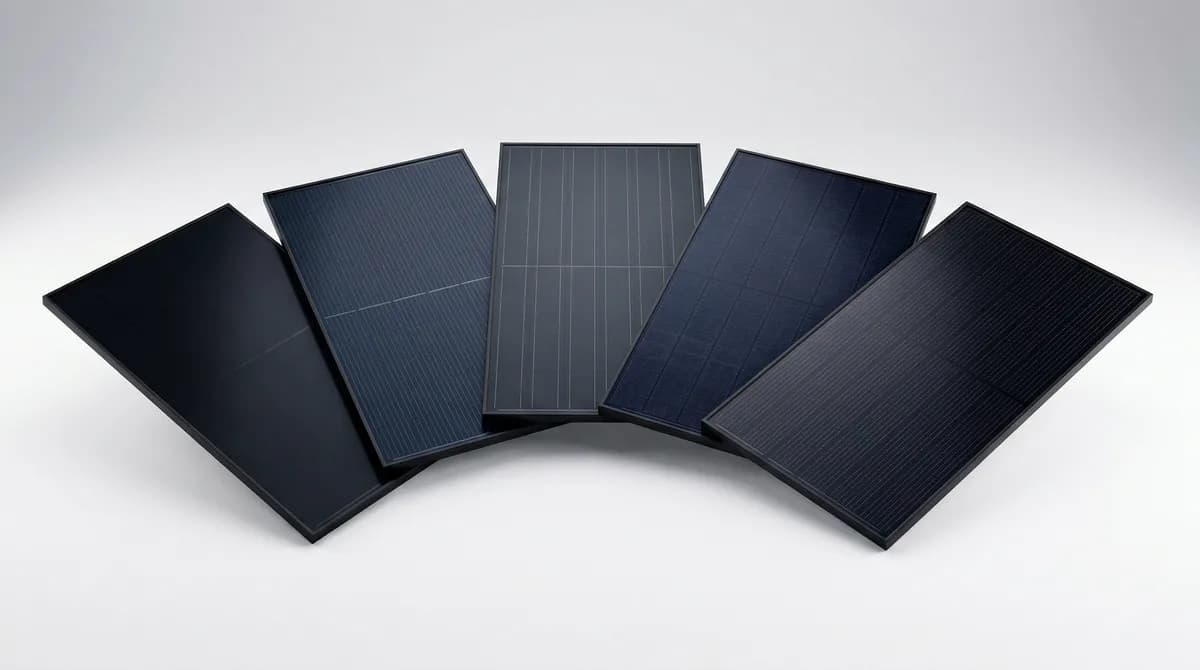
Ranked by real installers, not manufacturer sponsorships. Optimized for New England weather, high electric rates ($0.27–$0.28/kWh), and updated for the post-ITC landscape.
The best solar panel for Connecticut in 2026 is the Silfab SIL-440-BG (440W)— it is American-made, FEOC-compliant for commercial ITC eligibility through PPA/lease financing, performs well in cold weather, and costs less than premium alternatives at $2.93–$3.12/W installed. With CT rates at $0.27–$0.28/kWh (70% above the national average), every watt of production matters more here than in most states. For budget-conscious homeowners paying cash or with a Smart-E Loan, the Hyundai HiE-S440VG (440W) offers excellent value at approximately $0.07/W less. For maximum 25-year production, the REC Alpha Pure-R 460Wleads with 22.3% efficiency and the industry’s best 0.25%/yr degradation rate.
$2.93–$3.12/W
440W · 21.5% eff.
$3.12–$3.31/W
460W · 22.3% eff.
$2.85–$3.05/W
440W · 21.3% eff.
Connecticut electricity rates are among the highest in the nation. With Eversource charging roughly $0.27/kWh and United Illuminating at $0.28/kWh, every kilowatt-hour your system produces offsets significantly more cost than in most other states. This means that small differences in panel efficiency, degradation rate, and temperature performance translate into real dollars over your system’s 25-year life.
Unlike Massachusetts (SMART $1,000) or Rhode Island (REF $0.65/W), Connecticut has no state solar rebate. This makes your installed $/W cost even more critical for payback. Energize CT is for heat pumps, not solar panels.
At $0.27–$0.28/kWh, a well-designed CT solar system typically pays for itself in 7–9 years without any federal tax credit. An extra 1% panel efficiency means roughly $30–$50 more saved per year.
CT’s RRES netting tariff gives you retail credits for self-consumed energy and roughly $0.30/kWh for exports. Higher-efficiency panels can shift more production into the export bucket when paired with battery storage.
NuWatt installs thousands of solar panels across Connecticut every year. These rankings come from our installation teams, our engineering department, and our customer feedback data — not from manufacturer sponsorships or affiliate deals. We earn the same margin regardless of which panel you choose.
Temperature coefficient measures output loss per degree above 25°C. Lower is better. In CT summers, panels reach 50–60°C on hot days. In winter, cold temps actually boost output.
We require 25-year product + 25-year performance warranties. Any panel without dual 25-year coverage is not considered. Manufacturer financial stability matters for year-20 claims.
What CT homeowners actually pay, including microinverters, racking, permitting, and interconnection. Not the panel price alone — the complete installed system price.
Supply chain matters. We only rank panels we can source reliably for Connecticut installations right now. No vapor-ware, no panels stuck in port.
CT’s Long Island Sound shoreline means salt air exposure, nor’easters, and higher wind loads for towns like Stamford, Norwalk, Bridgeport, and New Haven. We evaluate panels based on mechanical load ratings and sealed-junction-box construction.
After July 4, 2026, PPA/lease financing requires FEOC-compliant panels for the financing company to claim the 30% Section 48/48E ITC. This affects which panels work for which financing paths.
Each pick is based on real installation data, customer feedback, and our engineering team’s assessment. Prices reflect fully installed cost in Connecticut including Enphase IQ8+ microinverters, IronRidge racking, permitting, and utility interconnection.
$2.93–$3.12/W
NuWatt installed
Wattage
440W
Efficiency
21.5%
Temp Coeff.
-0.34%/°C
Degradation
0.50%/yr
Cell Type
N-type TOPCon
Snow Load
5,400 Pa
Origin
Bellingham, WA (USA)
Warranty
25-year product 25-year performance
Best balance of price, quality, and FEOC compliance. American-made in Washington state. The only panel in this list that qualifies for Section 48/48E commercial ITC through PPA/lease financing after July 4, 2026. With CT electricity rates at $0.27–$0.28/kWh (70% above the national average), every watt of production counts. If you want one panel that works for every financing path, this is it.
$3.12–$3.31/W
NuWatt installed
Wattage
460W
Efficiency
22.3%
Temp Coeff.
-0.24%/°C
Degradation
0.25%/yr
Cell Type
HJT (Heterojunction)
Snow Load
5,400 Pa
Origin
Singapore (Norwegian-designed)
Warranty
25-year product 25-year performance (REC ProTrust)
Highest efficiency in our lineup (22.3%) and the best temperature coefficient (-0.24%/°C) of any panel we install. The HJT cell technology delivers industry-leading 0.25%/yr degradation, meaning 92% output at year 25 vs 87% for standard TOPCon panels. At CT rates of $0.27–$0.28/kWh, that extra 5% output at year 25 translates to roughly $200–$300 more in annual savings compared to standard degradation panels. Best for homeowners with limited roof area or who want maximum 25-year production.
$2.85–$3.05/W
NuWatt installed
Wattage
440W
Efficiency
21.3%
Temp Coeff.
-0.30%/°C
Degradation
0.50%/yr
Cell Type
N-type TOPCon
Snow Load
5,400 Pa
Origin
South Korea
Warranty
25-year product 25-year performance
Same 440W output as the Silfab at approximately $0.07/W less. If FEOC compliance does not matter to you (cash or loan purchase), this is the smart pick. Connecticut has no state solar rebate — unlike Massachusetts with its $1,000 SMART credit — so keeping your $/W cost low is even more critical for payback. Hyundai brings automotive-grade manufacturing quality to solar. The all-black aesthetic is identical to the Silfab from the street.
$2.90–$3.10/W
NuWatt installed
Wattage
440W
Efficiency
21.2%
Temp Coeff.
-0.29%/°C
Degradation
0.45%/yr
Cell Type
N-type TOPCon
Snow Load
5,400 Pa
Origin
Southeast Asia (Canadian HQ)
Warranty
25-year product 25-year performance
Strong snow load rating (5,400 Pa), competitive pricing, and excellent performance in cold climates. Canadian Solar has been manufacturing panels since 2001 and has one of the strongest balance sheets in the industry. For larger systems (12+ kW) where you need 28–30 panels — common on Connecticut colonials and cape-style homes — the combination of reliability and value makes this a solid choice. Particularly good for homes with ample south-facing roof area in inland CT towns.
$2.88–$3.08/W
NuWatt installed
Wattage
440W
Efficiency
22%
Temp Coeff.
-0.29%/°C
Degradation
0.40%/yr
Cell Type
N-type TOPCon
Snow Load
5,400 Pa
Origin
Southeast Asia (Chinese HQ)
Warranty
25-year product 30-year performance
N-type TOPCon technology with excellent low-light performance, which matters for overcast Connecticut days and the shorter winter daylight hours in the northeast. Jinko is the world's largest solar panel manufacturer by shipment volume. The Tiger Neo line offers a 30-year performance warranty (longest in this list) and 0.40%/yr degradation. Strong choice for homeowners who want high efficiency at a competitive price point.
All five panels compared on the specifications that matter most for Connecticut installations. Prices are fully installed including microinverters, racking, permitting, and interconnection.
| Specification | #1 Best OverallSilfab 440W | #2 PremiumREC 460W | #3 ValueHyundai 440W | #4 Large RoofsCanadian 440W | #5 EmergingJinko 440W |
|---|---|---|---|---|---|
| Wattage | 440W | 460W | 440W | 440W | 440W |
| Efficiency | 21.5% | 22.3% | 21.3% | 21.2% | 22.0% |
| Temp Coefficient | -0.34%/°C | -0.24%/°C | -0.30%/°C | -0.29%/°C | -0.29%/°C |
| Degradation | 0.50%/yr | 0.25%/yr | 0.50%/yr | 0.45%/yr | 0.40%/yr |
| Product Warranty | 25 yr | 25 yr | 25 yr | 25 yr | 25 yr |
| Performance Warranty | 25 yr | 25 yr | 25 yr | 25 yr | 30 yr |
| Snow Load Rating | 5,400 Pa | 5,400 Pa | 5,400 Pa | 5,400 Pa | 5,400 Pa |
| Cell Technology | N-type TOPCon | HJT | N-type TOPCon | N-type TOPCon | N-type TOPCon |
| NuWatt Installed $/W | $2.93–$3.12 | $3.12–$3.31 | $2.85–$3.05 | $2.90–$3.10 | $2.88–$3.08 |
| FEOC Compliant | Yes | No | No | No | No |
| Spec | Silfab | REC | Hyundai | Can. Solar | Jinko |
|---|---|---|---|---|---|
| Wattage | 440W | 460W | 440W | 440W | 440W |
| Efficiency | 21.5% | 22.3% | 21.3% | 21.2% | 22.0% |
| Temp Coefficient | -0.34%/°C | -0.24%/°C | -0.30%/°C | -0.29%/°C | -0.29%/°C |
| Degradation | 0.50%/yr | 0.25%/yr | 0.50%/yr | 0.45%/yr | 0.40%/yr |
| Product Warranty | 25 yr | 25 yr | 25 yr | 25 yr | 25 yr |
| Performance Warranty | 25 yr | 25 yr | 25 yr | 25 yr | 30 yr |
| Snow Load Rating | 5,400 Pa | 5,400 Pa | 5,400 Pa | 5,400 Pa | 5,400 Pa |
| Cell Technology | N-type TOPCon | HJT | N-type TOPCon | N-type TOPCon | N-type TOPCon |
| NuWatt Installed $/W | $2.93–$3.12 | $3.12–$3.31 | $2.85–$3.05 | $2.90–$3.10 | $2.88–$3.08 |
| FEOC Compliant | Yes | No | No | No | No |
Scroll right to see all panels
If you have researched “best solar panels Connecticut,” you have probably seen SunPower ranked first on other sites. Some CT installers still push Maxeon panels at $4+/W. Here is why we do not install them and why honest installers are moving away:
Price premium does not justify the output gain. SunPower/Maxeon panels cost $3.80–$4.20/W installed — that is 25–40% more than a Silfab installation. For that premium, you get roughly 5–8% more efficiency. A 440W Silfab panel on the same roof produces 95% of what a 420W Maxeon does, at 25% lower cost. With no state solar rebate in CT to offset the difference, the math is even worse here than in neighboring states.
Warranty risk. SunPower filed for Chapter 11 bankruptcy in September 2024. Its panel manufacturing was spun off to Maxeon Solar Technologies, which faces its own financial difficulties and ongoing restructuring. A 25-year warranty is only as good as the company backing it. We will not ask our customers to bet on a company’s survival for the next two decades.
Sponsored rankings are not honest rankings. Many “best solar panels” listicles rank SunPower first because of affiliate commissions or manufacturer sponsorships. We do not accept manufacturer payments for placement. Our rankings reflect what we actually install and what delivers the best value for Connecticut homeowners.
The Bottom Line on SunPower
SunPower Maxeon panels are technically excellent. But at $3.80–$4.20/W installed, you are paying 25–40% more for 5–8% more efficiency. For most Connecticut homeowners, the extra $/W does not justify the marginal output gain — especially without a state rebate to soften the upfront cost. A well-designed system with Silfab or REC panels on the same roof will pay for itself 2–3 years sooner and deliver 90–95% of the same lifetime production.
If you cannot find the manufacturer's US office address, their financial filings, or independent testing data (PV Evolution Labs, PVEL), the panel is a warranty risk. When a panel fails in year 8, you need a company that still exists and has a US presence to process warranty claims. We have seen too many homeowners stuck with dead panels from defunct brands.
Some budget panels carry a 12-year or 15-year product warranty with a longer performance-only guarantee. Product warranty covers manufacturing defects (cracked cells, delamination, junction box failure). Performance warranty only covers output degradation. You need both for 25 years minimum. Do not accept less.
Filing a warranty claim against a manufacturer with no US office, no US inventory, and no US legal entity is effectively impossible. This is the solar equivalent of buying appliance insurance from a company with no phone number. All five panels we recommend have manufacturers with established US operations.
LG exited the solar panel market entirely in June 2022. If any installer offers you LG panels in 2026, they are selling old inventory with questionable warranty enforcement. LG no longer manufactures replacement panels, and their warranty claim process has been transferred to a third party with limited capacity.
Homes along Long Island Sound (Stamford, Norwalk, Bridgeport, New Haven, Guilford) face salt air corrosion and higher wind loads from nor’easters. All five panels are rated for 5,400 Pa mechanical loads, exceeding coastal requirements. We use marine-grade stainless steel racking hardware for shoreline installations. Salt air has minimal effect on modern panels with sealed junction boxes and tempered glass.
Solar panels gain efficiency in cold weather (the opposite of what most people assume). Snow reduces annual production by only 2–5% in CT. Panels clear naturally within 1–2 days after storms. All five panels exceed CT building code for snow loads. The average CT system produces 1,100–1,200 kWh per kW installed annually, accounting for all seasonal variations.
After July 4, 2026, PPA and lease companies must use FEOC-compliant panels to claim their 30% Section 48/48E ITC. Only the Silfab qualifies. If you are paying cash or using a Smart-E Loan through CT Green Bank (6.99–7.99% APR), FEOC does not affect you — the residential Section 25D ITC expired December 31, 2025, so there is no federal credit at stake for direct homeowner purchases.
Section 25D (the residential solar tax credit) expired December 31, 2025. If any solar company advertises a “30% federal tax credit” for homeowner cash/loan purchases in 2026, they are either uninformed or being deliberately misleading. The only way to benefit from a federal credit is through a PPA or lease where the third-party system owner claims Section 48/48E.
Connecticut’s RRES program gives residential systems two tariff options: netting (retail credits for self-consumed energy) and buy-all (approximately $0.30/kWh for all production). For most homeowners, netting delivers better value because you avoid buying grid power at $0.27–$0.28/kWh. Higher-efficiency panels (REC 460W) can make buy-all more attractive for oversized systems.
Connecticut exempts solar equipment from the 6.35% sales tax, saving $1,200–$2,000 on a typical system. Solar also receives a permanent property tax exemption — your system adds value to your home without increasing property taxes. These exemptions apply regardless of which panel you choose.
The best overall solar panel for Connecticut in 2026 is the Silfab SIL-440-BG (440W). It is American-made in Bellingham, WA, carries FEOC compliance for Section 48/48E commercial ITC eligibility through PPA/lease financing, performs well in cold weather, and costs $2.93–$3.12/W installed. For budget buyers paying cash, the Hyundai HiE-S440VG (440W) at $2.85–$3.05/W is the best value.
With CT electricity rates at $0.27–$0.28/kWh (70% above the national average), every extra kWh matters more here than in most states. The REC Alpha Pure-R 460W costs $3.12–$3.31/W but produces approximately 6% more energy over 25 years due to its 0.25%/yr degradation rate. For most homeowners, mid-range panels like the Silfab (at $2.93–$3.12/W) offer the best ROI. Paying over $3.50/W usually means you are paying for the installer's overhead, not better panels.
NuWatt installs five solar panel options for Connecticut homes: Silfab SIL-440-BG (our top pick, American-made), REC Alpha Pure-R 460W (premium tier), Hyundai HiE-S440VG (best value), Canadian Solar HiKu7 CS7L-440MS (large roof systems), and Jinko Tiger Neo JKM440N-54HL4-V (emerging technology pick). All five carry 25-year product warranties and are paired with Enphase IQ8+ microinverters.
Solar panels actually perform better in cold temperatures — efficiency increases as panel temperature drops. Connecticut winters reduce annual production by approximately 2–5% due to snow cover, but panels typically clear within 1–2 days after storms. All five panels we install are rated for 5,400 Pa snow loads, exceeding CT building code. The average CT home solar system produces 1,100–1,200 kWh per kW installed annually, accounting for all seasonal variations.
FEOC (Foreign Entity of Concern) compliance means a solar panel meets domestic content requirements under federal law. After July 4, 2026, PPA and lease financing companies cannot claim the 30% Section 48/48E Investment Tax Credit on systems with non-FEOC panels. The Silfab SIL-440-BG is the only FEOC-compliant panel in our lineup (made in Bellingham, WA). If you are paying cash or using a Smart-E Loan through CT Green Bank, FEOC does not affect you since the residential Section 25D ITC expired December 31, 2025.
Yes. Under Connecticut's RRES (Residential Renewable Energy Solutions) netting tariff, you receive credits at retail rate for energy consumed on-site and approximately $0.30/kWh for excess energy sold back. Higher-efficiency panels (like the REC 460W at 22.3%) produce more kWh per square foot, which can push more of your generation into the buy-all export rate. However, for most CT homeowners, the netting approach (offsetting your own usage first) delivers better economics than maximizing exports.
Yes, with proper installation. Homes along Long Island Sound (Stamford, Norwalk, Bridgeport, New Haven, Guilford) face salt air and higher wind loads. All five panels we install are rated for 5,400 Pa mechanical load, which exceeds coastal wind requirements. We use marine-grade stainless steel hardware for shoreline installations and verify that racking systems meet IBC wind speed maps for coastal CT zones. Salt air exposure has minimal effect on modern solar panels with sealed junction boxes and tempered glass.
The average Connecticut home uses 8,500–10,500 kWh per year. With 440W panels producing approximately 480–530 kWh per panel annually in CT, you need 16–22 panels (7–9.7 kW system) for an average home. Heat pump homes typically need 22–28 panels (9.7–12.3 kW). NuWatt designs systems based on your actual Eversource or UI electric bill, roof measurements, and shading analysis.
Get a personalized solar design with your preferred panel, accurate pricing for your roof, and a side-by-side financing comparison. Takes 2 minutes, no pressure.
Full overview of costs, incentives, utilities, and next steps.
Read GuideCost breakdown by system size, panel tier, and city.
Read GuideHow netting and buy-all tariffs work for your solar.
Read GuideDeep-dive reviews on panels, inverters, and batteries.
Read Guide