Loading NuWatt Energy...

We use your location to provide localized solar offers and incentives.
We serve MA, NH, CT, RI, ME, VT, NJ, PA, and TX
Loading NuWatt Energy...
NuWatt designs, installs, and manages solar, battery, heat pump, and EV charger systems across 9 states. One company, one warranty, one point of contact.
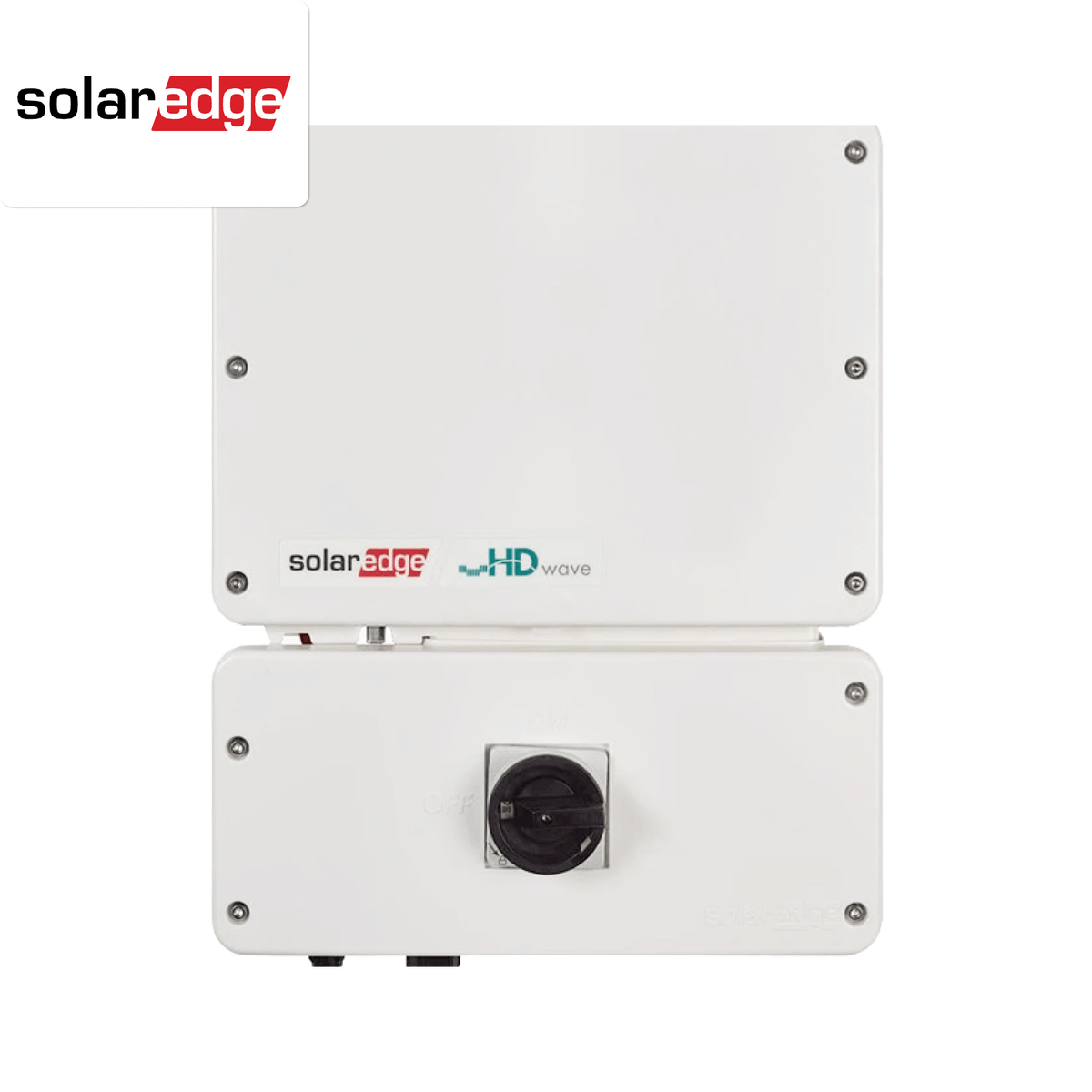
Get a Free Quote10 kW of rated AC power, 99% peak efficiency, and a full smart-home energy ecosystem. We break down the SE10000H's real-world performance, optimizer architecture, pricing, and whether it beats microinverters for your roof in 2026.
10 kW
Rated Power
99.0%
Peak Efficiency
13.5 kW
Max DC Input
8.5/10
Our Rating
The SolarEdge Home Hub SE10000H is the best string inverter for large, unshaded residential roofs in 2026. At 99% peak efficiency, it converts more of your panel output into usable electricity than any competitor. The optimizer architecture gives you panel-level monitoring and shade mitigation without the cost of full microinverters. The total inverter+optimizer package runs $3,500-$5,000 installed for a typical 20-panel system. The 12-year base warranty is the main weakness — budget $400-600 to extend to 25 years, which we strongly recommend. If you have a complex or heavily shaded roof, look at Enphase IQ8 microinverters instead. Rating: 8.5/10.
The SolarEdge Home Hub SE10000H is a high-power residential string inverter designed for the SolarEdge ecosystem. Unlike traditional string inverters, it works exclusively with SolarEdge power optimizers, which provide panel-level DC-DC conversion and MPPT optimization before the DC current reaches the central inverter for final DC-to-AC conversion.
| Specification | Value |
|---|---|
| Model | SE10000H-USS002BNU4 |
| Rated AC Power | 10,000 W (10 kW) |
| Peak Efficiency | 99.0% |
| CEC Weighted Efficiency | 98.0% |
| Max DC Input Power | 13,500 W |
| DC Oversizing | 200% (up to 20 kW DC input) |
| MPPT Range | 380–480 V DC |
| AC Output | 240V AC, 60 Hz |
| Operating Temperature | -40°C to 60°C (-40°F to 140°F) |
| Dimensions | 17.7 x 14.6 x 6.8 in |
| Weight | 25.4 lbs (11.5 kg) |
| Connectivity | Wi-Fi / Ethernet / Cellular |
| Monitoring | SolarEdge Monitoring Platform + App |
| Battery Support | SolarEdge Home Battery (built-in port) |
| Cooling | Fanless, convection-cooled |
| Warranty | 12-year standard (extendable to 25 years) |
The Home Hub supports 200% DC oversizing, meaning you can connect up to 20 kW of solar panels to a 10 kW inverter. This is valuable because panels rarely produce their rated wattage (due to temperature, angle, and clouds). Oversizing your DC array maximizes early-morning and late-afternoon production when panels operate below peak. During midday when panels exceed the 10 kW inverter limit, excess DC power is safely clipped. In practice, a 12-14 kW DC array on a 10 kW inverter hits the sweet spot for most homes, producing more total energy without excessive clipping losses.
Before evaluating the SolarEdge Home Hub, it helps to understand what makes the optimizer-based string architecture different from both traditional string inverters and microinverters.
In a traditional string system, solar panels are wired in series (like Christmas lights) creating a "string" of panels. The high-voltage DC electricity (300-600V) runs through a single home-run cable to a central inverter on your garage or basement wall. The inverter converts DC to AC for your home. The problem: if one panel underperforms (shade, dirt, defect), it drags down the entire string. There is no panel-level optimization.
SolarEdge adds a power optimizer behind each panel. Each optimizer performs independent MPPT (Maximum Power Point Tracking), so a shaded panel only affects itself, not the string. The optimizers also regulate the DC voltage to a fixed output, making the string safer and more predictable. The DC current still runs through a single home-run cable to the central Home Hub inverter for DC-to-AC conversion. You get panel-level optimization without the cost of full microinverters.
With microinverters, each panel has its own complete inverter. DC-to-AC conversion happens at the panel level on the roof. Only low-voltage AC runs through the home-run cable. Each panel is fully independent — if one microinverter fails, the rest keep producing. No single point of failure, but more components on the roof and higher cost per panel.
The SolarEdge Home Hub costs $2,200-$2,800 for the inverter alone. Add optimizers for each panel and installation, and the total inverter package runs $3,500-$5,000 for a typical 20-panel system. Here is the breakdown.
SE10000H inverter hardware
$40-60 each × 20-25 panels
DC home runs, conduit, AC wiring
Varies by municipality
Inverter + optimizer install (4-6 hours)
Optional: extend to 20-25 years
When comparing inverter cost per panel, SolarEdge typically comes in at $95-135 per panel (inverter cost amortized + optimizer). Enphase IQ8HC microinverters run $150-220 per panel. On a 25-panel system, that is $1,375-$2,125 in savings with SolarEdge. This cost advantage is SolarEdge's strongest selling point for budget-conscious homeowners with simple, unshaded roofs.
Section 25D (the residential clean energy credit) expired December 31, 2025. There is no federal tax credit for homeowner-purchased solar equipment in 2026. However, solar systems installed through a third-party ownership structure (lease or PPA) may still benefit from the commercial Section 48/48E ITC, which the financing company claims. Ask your installer about lease options if the tax credit matters to you.
The Home Hub is not just an inverter — it is the central controller of the SolarEdge smart energy ecosystem. Every product in the lineup connects to the Home Hub and is managed through a single monitoring platform. This integrated approach is SolarEdge's biggest ecosystem advantage over competitors.
Central string inverter — the brain of the system. Converts DC from panels to AC for your home.
One per panel. Panel-level MPPT optimization for 400-505W panels. Mitigates shade impact on individual panels.
10 kWh LFP battery, 5 kW continuous output. Connects directly to the Home Hub via built-in battery port.
40A Level 2 charger. Solar-boost mode charges your EV with excess solar production before exporting to grid.
Panel-level production monitoring, consumption tracking, battery status, and EV charger management in one app.
The SolarEdge ecosystem works best when you go all-in. The Home Battery connects only to SolarEdge inverters. The EV charger's solar-boost mode requires SolarEdge monitoring. This is both a strength (seamless integration) and a weakness (vendor lock-in). If you start with SolarEdge, switching to another ecosystem later means replacing the inverter, optimizers, and any SolarEdge accessories. Consider whether you want full ecosystem commitment before choosing.
The SolarEdge Home Hub installation is straightforward for experienced solar installers. Here is what the physical install looks like and what to plan for.
The Home Hub mounts on an interior wall (garage, basement, or utility room) near your main electrical panel. At only 25.4 lbs and 6.8 inches deep, it fits in tight spaces. Fanless design means zero operational noise — important if mounting near living spaces.
One P505 power optimizer mounts behind each solar panel on the roof racking. Optimizers are small (roughly the size of a paperback book) and add minimal weight. This is where SolarEdge saves time vs microinverters — optimizers are simpler to wire than full microinverters, and the string wiring means fewer AC branch circuits on the roof.
High-voltage DC cables (typically 300-600V) run from the roof array to the inverter in conduit along the side of the house. This is the same as any string inverter. The high DC voltage means thinner cables and less voltage drop over long runs, but requires proper NEC rapid shutdown compliance.
The Home Hub has a dedicated battery management port pre-installed. If you plan to add a SolarEdge Home Battery later, no additional hardware or inverter modification is needed. The installer simply connects the battery to the existing port. This "battery-ready" design is a significant advantage over inverters that require a separate battery inverter.
A typical SolarEdge installation takes 4-6 hours for a 20-25 panel system. This is generally 1-2 hours faster than a microinverter install because string wiring is simpler than wiring individual AC circuits for each microinverter. The inverter itself takes about 30 minutes to mount and wire.
99% peak efficiency is the highest available for residential inverters, meaning virtually zero conversion loss
Built-in battery management port lets you add a SolarEdge Home Battery later without swapping the inverter
10 kW rated power handles arrays up to 40 panels, making it suitable for large residential systems
200% DC oversizing support means a 10 kW inverter can handle up to 20 kW of DC panel input for maximum production
EV charger integration with the SolarEdge Home EV Charger for solar-powered vehicle charging
Compact, fanless design at only 25.4 lbs makes it one of the quietest and lightest string inverters on the market
Fewer rooftop components than microinverters — optimizers are smaller and lighter than full microinverters
Panel-level monitoring via power optimizers gives you per-panel production data without microinverter complexity
Single point of failure — if the central inverter fails, your entire solar system stops producing
12-year base warranty is shorter than Enphase's included 25 years — extending to 25 years costs $400-600 extra
High-voltage DC on the roof (600V+) requires careful installation and creates a slightly higher fire risk than microinverters
Power optimizers are still required for each panel at $40-60 each, adding $640-1,500+ to system cost
Battery-ready but the SolarEdge Home Battery is sold separately ($10,000-13,000 installed)
SolarEdge offers a 12-year standard warranty on the Home Hub inverter, with optional extensions up to 25 years. Power optimizers have a separate, longer warranty. Here is the full breakdown.
We strongly recommend extending to 25 years. The $400-600 cost is trivial compared to a $2,500+ inverter replacement in year 15. Solar panels last 25-30 years, and your inverter should match. Enphase includes 25 years standard — if SolarEdge's 12-year base warranty concerns you, either extend it or consider Enphase. The 25-year optimizer warranty is already included regardless, so the extension only applies to the central inverter unit.
The SolarEdge Home Hub competes against Enphase IQ8HC microinverters and Hoymiles HMS-2000-4T microinverters. Here is a spec-by-spec comparison of the three most popular residential inverter options in 2026.
| Spec | SolarEdge Home HubBest for Large Systems | Enphase IQ8HC | Hoymiles HMS-2000 |
|---|---|---|---|
| Architecture | String + Optimizers | Microinverter | Microinverter |
| Peak Efficiency | 99.0% | 97.5% | 96.7% |
| CEC Efficiency | 98.0% | 97.0% | 96.5% |
| Warranty | 12 yr (25 yr: +$500) | 25 yr included | 25 yr included |
| Cost per Panel | $95-135 | $150-220 | $80-120 |
| Panel-Level Monitoring | Yes (via optimizers) | Yes (native) | Yes (native) |
| Shade Tolerance | Good (optimizer MPPT) | Excellent (panel independence) | Excellent (panel independence) |
| Battery Integration | SolarEdge Home Battery | IQ Battery 5P/10T | Third-party only |
| Single Point of Failure | Yes (central inverter) | No | No |
The SolarEdge Home Hub is an excellent inverter for the right situation. But it is not the best choice for every roof. Here is our honest recommendation based on hundreds of installations.
NuWatt designs and installs SolarEdge Home Hub systems with power optimizers, batteries, and EV chargers. We provide transparent pricing, handle all permits, and help you choose between SolarEdge and Enphase based on your specific roof. Serving MA, CT, RI, NH, ME, NJ, PA, and TX.