Loading NuWatt Energy...

We use your location to provide localized solar offers and incentives.
We serve MA, NH, CT, RI, ME, VT, NJ, PA, and TX
Loading NuWatt Energy...
NuWatt designs, installs, and manages solar, battery, heat pump, and EV charger systems across 9 states. One company, one warranty, one point of contact.
Get a Free Quote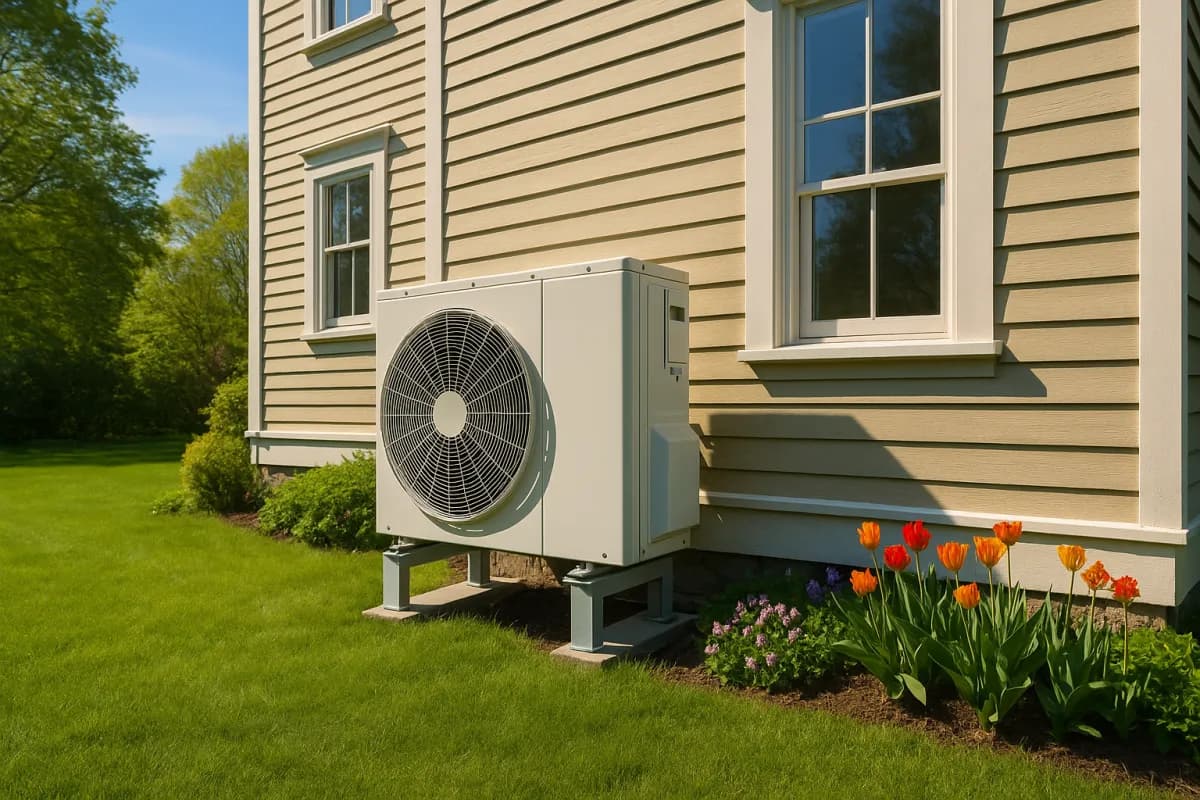
No combustion. No flame. No fuel burned. No CO. Heat pumps eliminate the single deadliest risk of home heating. Over 420 Americans die from carbon monoxide poisoning every year — 74% from heating equipment. Heat pumps make that number zero for your family.
420+
Americans die from CO poisoning annually
50,000+
Emergency dept visits per year from CO
74%
Of CO deaths from heating equipment
0
CO produced by heat pumps — ever
No. Heat pumps produce absolutely zero carbon monoxide. Heat pumps transfer heat using electricity and refrigerant — there is no combustion whatsoever. No flame, no fuel, no exhaust. This is true for mini-splits, ducted systems, air-source, and ground-source heat pumps. Switching from a gas furnace to a heat pump completely eliminates CO risk from your heating system.
This makes heat pumps the safest heating technology for families, especially homes with young children, elderly residents, or anyone with respiratory conditions.
Understanding why heat pumps are CO-safe requires understanding how they work. The key difference is simple: no combustion means no CO. Period.
Result: Zero combustion byproducts. Zero CO. Zero exhaust.
Risk: Any failure in steps 3-5 leaks CO into your living space.
Every heating system that burns fuel produces carbon monoxide. Heat pumps are the only whole-home heating system that eliminates this risk entirely.
| Heating System | Combustion? | CO Risk | Fuel | Explanation |
|---|---|---|---|---|
| Heat Pump (any type) | No | Zero | Electricity | No fuel burned, no flame, no exhaust, no combustion byproducts of any kind |
| Gas Furnace | Yes | High | Natural Gas | Burns gas to create heat. Cracked heat exchanger, blocked flue, or poor combustion produces CO |
| Oil Furnace/Boiler | Yes | High | Heating Oil | Burns oil with an open flame. Incomplete combustion, flue blockage, or burner misalignment creates CO |
| Gas Boiler | Yes | High | Natural Gas | Same combustion risks as gas furnace. Older boilers with atmospheric burners are especially risky |
| Propane Furnace | Yes | High | Propane (LP) | Propane combustion produces CO just like natural gas. Risk increases with equipment age |
| Wood Stove/Pellet Stove | Yes | Very High | Wood/Pellets | Wood combustion produces significant CO. Back-drafting during negative pressure events is common |
Even well-maintained gas furnaces carry CO risk. Here are the five most common ways CO enters Massachusetts homes from gas heating equipment.
Cracked heat exchanger
The metal barrier between combustion gases and your home air develops cracks after 15-20 years. CO leaks directly into your ductwork undetected. Annual inspections can catch cracks, but many homeowners skip them.
Most common cause of residential CO events
Blocked or damaged flue/chimney
Bird nests, ice, debris, or deteriorated liner can block exhaust gases from venting outside. CO backs up into the home instead. Particularly dangerous in old New England homes with aging chimneys.
Second most common, especially in older MA homes
Poor combustion / dirty burners
Dirty or misaligned burners create incomplete combustion, producing excess CO. Yellow or flickering flames (instead of steady blue) indicate this problem.
Common in furnaces without annual maintenance
Negative pressure / backdrafting
Kitchen exhaust fans, bathroom fans, or clothes dryers can create negative pressure that pulls combustion gases back into the home instead of up the flue. Tight modern homes are more susceptible.
Increasing risk as homes are weatherized
Simultaneous water heater venting
Gas furnace and gas water heater sharing a common flue can backdraft when one is off and one is on, creating orphaned chimney conditions with CO spillage.
Very common in MA basements
Every single one of these CO risks disappears with a heat pump. No heat exchanger to crack. No flue to block. No burners to misalign. No backdrafting possible. No gas line in your home at all. A heat pump is the only heating system that makes CO risk from heating literally impossible.
Massachusetts was one of the first states to require CO detectors in all homes. The law is named after Nicole Garofalo, a 7-year-old from Wareham who died from CO poisoning in 2005.
Statute
M.G.L. Chapter 148, Section 26F 1/2
Known As
Nicole's Law
Effective
March 31, 2006
Noncompliance Fine
Up to $200 per violation for landlords
Even if you switch entirely to heat pumps and have no gas appliances, Massachusetts law still requires CO detectors. This is reasonable — CO can come from attached garages, portable generators, or neighbors in multifamily buildings. The good news: with a heat pump as your sole heating source and no gas appliances, your CO risk drops to near zero. The detectors become an extra safety layer rather than a critical lifeline.
Children are especially vulnerable to CO poisoning. Their smaller bodies absorb CO faster, and symptoms (headache, nausea) are easily mistaken for childhood illness. Heat pumps remove this worry entirely.
Older adults are more susceptible to CO effects and may not recognize symptoms. Many CO deaths in MA occur among seniors with aging gas furnaces that have not been recently inspected.
Asthma, COPD, and other respiratory conditions are worsened by even low-level CO exposure. Heat pumps produce zero combustion byproducts, improving indoor air quality for everyone in the home.
Pre-1970s homes with aging chimneys, shared flues, and atmospheric-vented appliances are at highest CO risk. Heat pumps eliminate the need for chimney venting entirely.
Energy-efficient homes with good air sealing have higher backdrafting risk with gas furnaces. Heat pumps work perfectly in tight homes with no combustion air requirements.
Landlords are legally responsible for CO safety under Nicole’s Law. Heat pumps reduce liability by eliminating the primary CO source. One less thing to maintain and worry about.
Switching to a heat pump does more than save energy. It removes an entire category of household danger from your life.
No. Heat pumps produce absolutely zero carbon monoxide. Heat pumps work by transferring heat using electricity and refrigerant — there is no combustion, no flame, no fuel burned, and no exhaust gases of any kind. This is true for all types of heat pumps: mini-splits, ducted, air-source, and ground-source. Heat pumps are the only whole-home heating system that eliminates CO risk entirely.
Yes, significantly safer from a CO perspective. Gas furnaces burn natural gas, producing carbon monoxide as a combustion byproduct. Cracked heat exchangers, blocked flues, and dirty burners can leak CO into your home. The CDC reports that over 420 Americans die from CO poisoning annually, with 74% of CO deaths linked to heating equipment. Heat pumps eliminate this risk completely because they use no combustion.
Massachusetts law (Nicole's Law, M.G.L. c.148 § 26F 1/2) requires CO detectors on every habitable floor regardless of heating type. However, if a heat pump is your ONLY heating source and you have no gas appliances (no gas stove, no gas water heater, no gas dryer), your CO risk drops to near zero. You still need the detectors by law, and they protect against other CO sources like an attached garage.
Nicole's Law (effective March 2006) requires carbon monoxide detectors on every habitable floor of every residential property in Massachusetts. Detectors must be within 10 feet of each bedroom door. New construction requires hardwired detectors with battery backup. Landlords must provide and maintain detectors, with fines up to $200 per violation. Named after 7-year-old Nicole Garofalo who died from CO poisoning in Wareham, MA in 2005.
Gas furnaces burn natural gas in a heat exchanger to create heat. The combustion byproducts (including CO) normally vent outside through a flue or chimney. CO enters your living space when the heat exchanger cracks (common after 15-20 years), the flue becomes blocked (by debris, ice, or bird nests), burners are dirty or misaligned, or negative pressure in the home causes backdrafting. Annual inspections reduce but do not eliminate this risk.
Yes, and many MA homeowners do. A properly sized cold-climate heat pump (rated to -13°F or below) can handle Massachusetts winters as the sole heating source. Removing the gas furnace eliminates your CO risk entirely and may allow you to disconnect gas service, saving the monthly gas connection fee ($15-$25/month). Mass Save offers substantial rebates for heat pump installations: up to $8,500 for whole-home heat pump systems.
CO poisoning symptoms include headache, dizziness, nausea, confusion, weakness, and chest pain. These symptoms are often mistaken for the flu. Prolonged exposure leads to loss of consciousness and death. CO is called the "silent killer" because it is odorless and colorless. If your CO detector alarms, immediately evacuate everyone from the home, call 911 from outside, and do not re-enter until cleared by the fire department.
NuWatt installs cold-climate heat pumps that handle MA winters as sole heating source. Mass Save rebates up to $8,500. HEAT Loan at 0% APR available.
Full cost, efficiency, and safety comparison for Massachusetts homeowners.
Read GuideUp to $10,000 in rebates for whole-home heat pump installations.
Read GuideHow modern heat pumps handle Massachusetts winters down to -13°F.
Read Guide