Loading NuWatt Energy...

We use your location to provide localized solar offers and incentives.
We serve MA, NH, CT, RI, ME, VT, NJ, PA, and TX
Loading NuWatt Energy...
NuWatt designs, installs, and manages solar, battery, heat pump, and EV charger systems across 9 states. One company, one warranty, one point of contact.
Get a Free Quote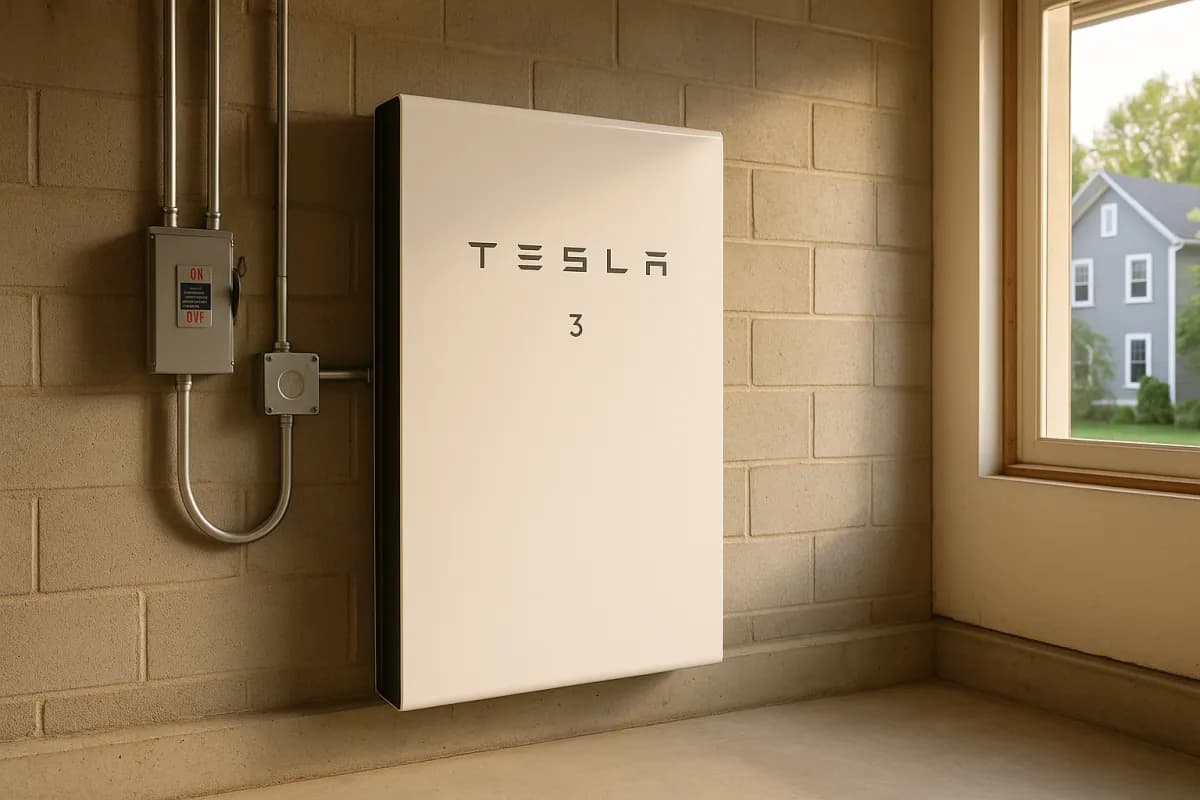
Not all battery chemistries are created equal. LFP (lithium iron phosphate) batteries like the Tesla Powerwall 3 are dramatically safer than older NMC technology. This guide covers MA fire codes, proper installation, and why chemistry choice is the single most important safety decision.
270°C
LFP thermal runaway temp
210°C
NMC thermal runaway temp
0
MA LFP battery fires
UL 9540A
Required safety certification
Yes, when you choose the right chemistry. LFP (lithium iron phosphate) batteries have an extremely low fire risk — dramatically safer than NMC (nickel manganese cobalt). The Tesla Powerwall 3, Enphase IQ 5P, and sonnen ecoLinx all use LFP chemistry. When installed to Massachusetts fire code by a licensed electrician, LFP batteries are safer than your gas furnace, clothes dryer, or kitchen stove.
There has never been a residential LFP battery fire in Massachusetts. The key is choosing LFP chemistry, hiring a licensed installer who pulls proper permits, and ensuring the final inspection passes.
Battery chemistry is the single biggest factor in fire safety. Understanding the difference between LFP and NMC will help you make an informed decision that protects your family.
Products using this chemistry:
Industry gold standard for residential safety
Products using this chemistry:
Being phased out of residential market
Higher thermal stability
LFP reaches thermal runaway at 270°C vs 210°C for NMC. That 60°C difference is enormous in fire science — it means LFP batteries can withstand extreme conditions that would cause NMC batteries to ignite.
No oxygen release
NMC cathodes release oxygen when overheated, feeding their own fire. LFP cathodes do not release oxygen during decomposition, meaning they cannot sustain combustion even if they do overheat.
Minimal toxic gas
NMC failure releases hydrogen fluoride (HF), a highly toxic gas that can cause chemical burns to lungs. LFP failure produces far less HF and no carbon monoxide, making it safer for occupied spaces.
Slower energy release
Even in worst-case failure, LFP batteries release energy slowly rather than explosively. NMC failures can be rapid and violent. This gives LFP a critical safety margin for evacuation time.
Massachusetts has comprehensive fire code requirements for residential battery energy storage. These codes exist to protect homeowners, first responders, and neighboring properties.
527 CMR 1.00
MA Fire Prevention Regulations
Battery energy storage systems must comply with NFPA 855 and be listed/labeled by a nationally recognized testing lab (UL 9540)
NFPA 855
Standard for ESS Installation
Requires fire suppression provisions, spacing from habitable walls, ventilation requirements, and signage for first responders
UL 9540A
Thermal Runaway Test
All residential batteries must pass thermal runaway fire propagation testing. LFP batteries pass easily; some NMC products have failed
MA Building Code
780 CMR (9th Edition)
Battery installations require permit, structural review, and inspection. Garage/basement installations must have fire-rated separation per local AHJ
If an installer offers to skip permits “to save you money,” that is a major red flag. Un-permitted installations violate MA fire code, void manufacturer warranties, void homeowner insurance coverage for fire damage, and create liability for the homeowner. Always verify permits are pulled and inspections are completed before making final payment.
Even the safest battery chemistry requires proper installation. Here are the standards every MA battery installation must meet.
Wall-mount on non-combustible surface
Concrete, CMU block, or fire-rated drywall (5/8" Type X). Never mount on bare wood framing or OSB.
Clearance from ignition sources
Minimum 3 feet from gas appliances (furnace, water heater, dryer). 36-inch clear space in front for service access.
Ventilation requirements
Indoor installations require natural or mechanical ventilation per NFPA 855. LFP batteries generate far less heat, simplifying this requirement.
First-responder signage
MA fire code requires exterior signage indicating ESS presence, battery chemistry type, and disconnect location.
Disconnect accessibility
Rapid shutdown and AC/DC disconnect must be accessible without entering the battery room. Firefighters need immediate access.
Temperature monitoring
All modern batteries include BMS (Battery Management System) with thermal monitoring, cell balancing, and automatic shutdown if temperatures exceed safe range.
The Tesla Powerwall 3 represents the current gold standard in residential battery safety. Here is why it leads the industry.
Lithium iron phosphate cells with the highest thermal stability of any residential battery. No cobalt, no nickel — inherently stable chemistry.
Battery Management System monitors every cell individually. Automatic shutdown at 60°C, cell balancing prevents hot spots, continuous thermal monitoring.
Passed the most rigorous thermal runaway propagation test in the industry. Confirmed that a single cell failure cannot propagate to adjacent cells.
Automatically pre-charges to 100% when severe weather is forecast. Ensures maximum backup capacity without daily deep cycling.
Weatherproof rating allows indoor or outdoor installation. Sealed against dust, rain, and snow — important for New England exposure.
Enough capacity for whole-home backup and high enough continuous power to run heat pumps, stoves, and EV chargers during outages.
NuWatt installs the Tesla Powerwall 3 as our primary battery storage solution because of its industry-leading safety profile. Every installation meets or exceeds MA fire code requirements, includes all required permits and inspections, and comes with our 25-year system warranty.
Your homeowner insurance policy is directly affected by battery installation. Here is what Massachusetts homeowners need to know.
Most MA homeowner policies cover battery installations
But you must notify your insurer. Failure to disclose can void coverage.
LFP batteries may qualify for lower premiums
Some insurers (Amica, Plymouth Rock) offer discounts for UL 9540A-certified LFP systems.
NMC batteries may increase premiums 5-15%
Higher thermal runaway risk means higher perceived liability.
Proper permitting protects your coverage
Un-permitted installations are typically excluded from fire damage coverage.
Battery fire damage is covered under standard policies
Treated the same as electrical fire — covered under dwelling/contents.
Call your homeowner insurance company before your battery is installed. Provide the battery model, chemistry type (LFP), UL certification number, and installer license. Most insurers will confirm coverage in writing within a few days. This documentation protects you if you ever need to file a claim.
Myth: “Home batteries explode like phone batteries”
Phone batteries use different chemistry (LiCoO2) and lack the thermal management systems in home batteries. Residential LFP batteries have multiple layers of protection: cell-level fuses, BMS monitoring, thermal sensors, and automatic shutdown. They are engineered to fail safely.
Myth: “Batteries in garages are dangerous because of temperature swings”
LFP batteries operate safely from -4°F to 122°F. The BMS automatically reduces charge/discharge rates in extreme temperatures rather than allowing unsafe operation. Tesla Powerwall 3 has liquid thermal management that maintains optimal temperature year-round.
Myth: “Solar batteries caused fires in Australia/California”
The fires reported in news were overwhelmingly NMC chemistry in utility-scale installations, not residential LFP systems. Many occurred in early-generation products without modern BMS protections. Current LFP residential batteries have zero residential fire incidents in Massachusetts.
Myth: “All lithium batteries are equally dangerous”
This is like saying all vehicles are equally dangerous. The difference between LFP and NMC is massive. LFP is inherently stable — the iron phosphate cathode does not release oxygen when overheated, so it physically cannot sustain combustion the way NMC can.
Myth: “Batteries degrade and become more dangerous over time”
LFP batteries actually become slightly safer as they age because capacity decreases, meaning less stored energy. The BMS continues monitoring throughout the battery’s life and will restrict operation if any cell shows abnormal behavior. Modern LFP batteries have 6,000-10,000 cycle life.
The quality of installation matters as much as the battery chemistry. Use this checklist when evaluating installers.
Modern LFP (lithium iron phosphate) batteries like the Tesla Powerwall 3 have an extremely low fire risk. LFP chemistry reaches thermal runaway at 270°C vs 210°C for NMC, and produces minimal toxic gases. When installed to MA fire code (527 CMR, NFPA 855) by a licensed electrician, home batteries are safer than many common household appliances. There has never been a residential LFP battery fire in Massachusetts.
LFP (Lithium Iron Phosphate) batteries have a thermal runaway temperature of 270°C and produce minimal toxic gas if they do fail. NMC (Nickel Manganese Cobalt) batteries reach thermal runaway at just 210°C and release hydrogen fluoride and carbon monoxide. LFP batteries are also less energy-dense, meaning less stored energy to release in a failure. This is why Tesla, Enphase, and sonnen have all moved to LFP for residential products.
Massachusetts requires home batteries to comply with 527 CMR 1.00 (fire prevention), NFPA 855 (ESS installation standard), and pass UL 9540A thermal runaway testing. Installations need a permit, must be mounted on non-combustible surfaces, maintain clearance from gas appliances, include first-responder signage, and have accessible disconnect switches. All installations must be inspected by the local fire department.
Yes. The Tesla Powerwall 3 uses LFP chemistry with an integrated Battery Management System that monitors every cell for temperature, voltage, and current. It is UL 9540A certified and rated for indoor or outdoor installation. For garage installations in MA, mount it on a non-combustible surface, maintain 3-foot clearance from gas appliances, and ensure the rapid shutdown is accessible from outside. It is the safest residential battery on the market.
You must notify your homeowner insurance company when installing a battery system. Most MA insurers (Amica, Plymouth Rock, Arbella, MAPFRE) cover battery installations under standard policies without surcharge, especially for UL 9540A-certified LFP systems. Some insurers offer discounts for LFP chemistry. Un-permitted installations can void your fire coverage, so always pull proper permits through your installer.
Verify your installer pulls a permit with your local building department and fire department. The installation should include first-responder signage, UL-listed equipment, non-combustible mounting, proper clearances, and a final inspection by the local Authority Having Jurisdiction (AHJ). Ask for copies of all permits, UL 9540A certification for your specific battery model, and the inspection sign-off before making final payment.
Modern batteries with BMS (Battery Management System) will automatically shut down before reaching dangerous temperatures. If you see error codes related to temperature, contact your installer immediately. Do not attempt to service the battery yourself. If you smell burning, hear unusual sounds, or see smoke, evacuate the home, call 911, and do not re-enter. Tell firefighters the battery chemistry type and disconnect location (which should be on your signage).
NuWatt installs Tesla Powerwall 3 LFP batteries with full MA fire code compliance, all permits, and fire department inspection. Get a free battery assessment today.
Solar + battery keeps your heat pump running during MA nor’easters.
Read GuideCompare Tesla Powerwall 3, Enphase IQ 5P, and other top batteries.
Read GuideEarn $225-$275/kW annually from demand response with your battery.
Read Guide