Loading NuWatt Energy...

We use your location to provide localized solar offers and incentives.
We serve MA, NH, CT, RI, ME, VT, NJ, PA, and TX
Loading NuWatt Energy...
NuWatt designs, installs, and manages solar, battery, heat pump, and EV charger systems across 9 states. One company, one warranty, one point of contact.
Get a Free Quote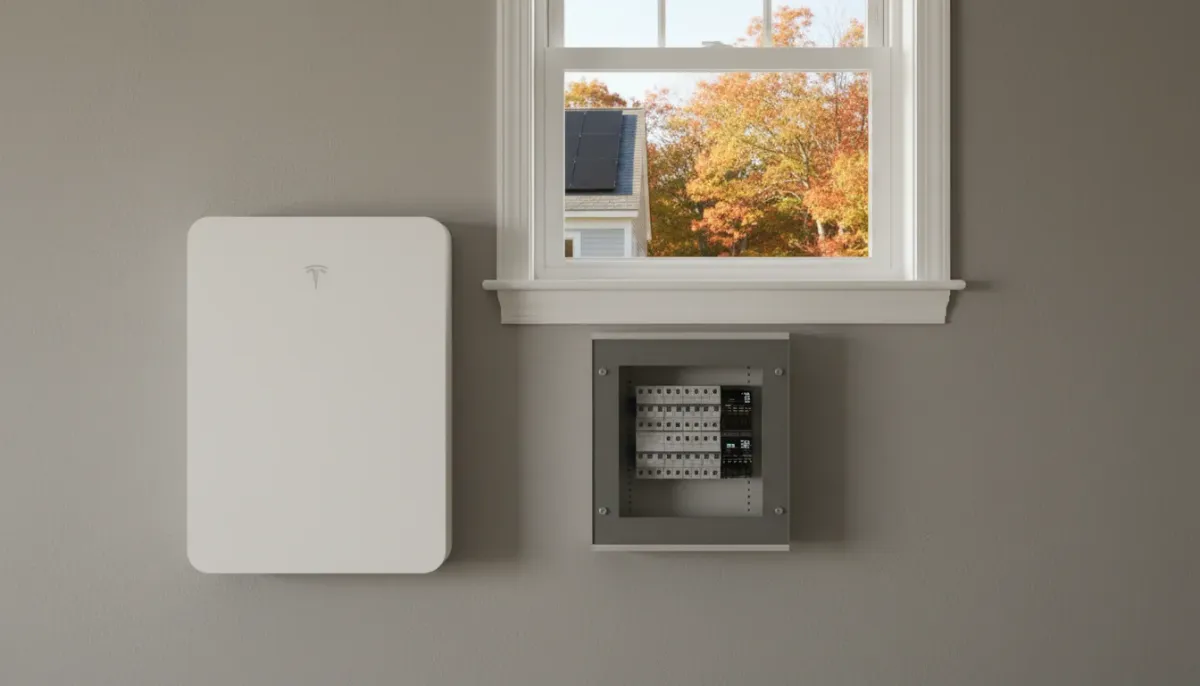
An honest guide to battery storage for Eversource New Hampshire solar customers in 2026. NH has no TOU rates, no ConnectedSolutions, and no demand response programs. So what is a battery actually worth?
Battery value in NH comes from NEM gap capture, self-consumption optimization, and backup power during Nor'easters and ice storms. We break down the real numbers.
For Eversource NH customers, a home battery earns modest financial savings of roughly $500-$700 per year from NEM gap capture and self-consumption optimization. The NEM 2.0 credit gap is about $0.091/kWh before losses, and NH has no TOU arbitrage or demand response payments to boost returns.
The primary value of a battery in New Hampshire is backup power. Nor'easters and ice storms regularly knock out power for hours or days. A solar-plus-battery system keeps your home running when the grid goes down, and solar recharges the battery each day for extended outage resilience.
Understanding the NEM 2.0 credit structure is essential to evaluating battery value. NH net metering is not 1:1 retail rate — and that gap is exactly where batteries create value.
This rate structure is locked through January 1, 2041 under Docket DE 16-576. Your NEM credit rate cannot be reduced before that date, regardless of future regulatory changes.
Retail Rate
$0.3120
per kWh
NEM Credit
$0.200
per kWh
Gap
$0.091
per kWh lost
Market Share Context
Eversource serves approximately 71% of NH residential customers, covering southern and central New Hampshire including Manchester, Nashua, and Portsmouth. This guide focuses on Eversource territory. Liberty's verified gap is about $0.082/kWh; Unitil's source-proven default-service tariff gap is about $0.08575/kWh for eligible small generators.
Every kilowatt-hour you export to the grid earns about $0.091 less than what you pay to buy that same kWh back. A battery closes this gap by storing your excess solar for later use.
Midday: Solar panels produce more than you use
Excess solar exported to grid at NEM credit: ~$0.20/kWh
Evening: You buy electricity back at the $0.3120/kWh all-in reference rate
The gross export-to-import gap is $0.091 on every kWh that round-trips through the grid
Annual loss: For an 8 kW system exporting ~2,800 kWh/year, that is roughly $112 lost to the NEM gap annually.
Midday: Excess solar charges your battery first
Battery stores 8-13+ kWh at full retail value ($0.25/kWh)
Evening: Battery powers your home instead of the grid
You keep the full $0.25/kWh value of every stored kWh
Annual savings: A 13.5 kWh battery captures roughly $100-$175/year from NEM gap avoidance alone, plus $250-$375 from additional self-consumption.
There are four distinct value streams for a home battery in Eversource territory. Combined, they total approximately $600-$800 per year for a typical system.
$100 - $175/yr
Exports earn ~$0.200/kWh (NEM credit) instead of the $0.3120/kWh all-in reference rate. A battery stores midday excess and uses it later, closing a verified gap of about $0.091/kWh before battery losses.
$250 - $375/yr
Shift 3-5 kWh/day from grid imports to stored solar during evening hours. Every kWh used from your battery avoids the full $0.25/kWh retail rate.
~$200/yr value
NH averages 2-4 outage events per year from Nor'easters, ice storms, and summer thunderstorms. A battery keeps essentials running for 12-24+ hours.
~$50/yr
NH rates are 48% above the national average and rising ~5% annually. Every kWh your battery shifts to self-use protects against future increases.
Estimated Annual Total Value (13.5 kWh battery, $200/mo bill)
$782/year
10-year cumulative: ~$8,672 (with 3% annual rate escalation)
Adjust your utility, monthly bill, and battery size to see a personalized estimate of annual battery savings in New Hampshire.
See your estimated battery savings
Unitil is excluded because its published rate summary does not provide enough component detail to verify a NEM export credit.
Eversource NEM Rate Gap
Retail Rate
29.1¢
NEM Credit
20.0¢
Gap
9.1¢
Annual Value Breakdown (Year 1)
Cumulative Value
Year 1 Annual
$782
First-year savings
5-Year Total
$4,090
With rate escalation
10-Year Total
$8,672
Full warranty period
NH does not offer TOU rates, ConnectedSolutions, or battery demand response programs. Battery value in NH comes primarily from backup power and self-consumption optimization. These estimates are based on current utility rates and typical usage patterns.
We believe in honest advice. Batteries are not the right fit for every NH homeowner. Here is our candid assessment.
Frequent power outages from Nor'easters and ice storms
High evening electricity usage (EV charging, cooking, AC)
Plans to add an EV or heat pump (higher future consumption)
Want energy independence and resilience from grid disruptions
Rural location where utility repair crews take longer to restore power
Low electricity usage (under $100/month bill)
Rarely experience power outages in your area
Tight budget with limited savings to invest in storage
Already have a backup generator that meets your needs
Small solar system with little excess production to store
At $9,000-$13,000 installed cost for a typical 13.5 kWh battery and $500-$700/year in total value, simple payback in NH is 13-20+ years — often beyond the 10-year warranty period. If purely financial return is your primary goal, batteries are a difficult investment in NH today. The value proposition improves significantly if backup power matters to you, or if you choose a TPO/lease structure where the financing company captures the Section 48/48E ITC (30% for projects starting construction before July 4, 2026) and passes savings through lower payments.
The right battery size depends on your backup needs, budget, and solar system size. Here are three sizing tiers commonly installed in New Hampshire.
Enphase IQ 5P
Small / starter battery. Best for homes with modest evening usage. Provides 4–8 hours of essential backup (fridge, lights, router). Shifts ~3–4 kWh/day from export to self-use. Lowest upfront cost but limited backup capacity.
Tesla Powerwall 3
Medium / most popular option. Covers most homes' evening electricity needs. Provides 12–24 hours of essential backup or 6–10 hours of moderate usage. Shifts ~8–10 kWh/day from export to self-use. Best balance of cost and capability.
Enphase IQ Battery 10C x2
Large / whole-home backup. Two stacked Enphase units for maximum capacity. Provides 24–48 hours of essential backup. Can handle larger loads (well pump, EV charger). Higher upfront cost but most resilience. Good for rural NH homes far from utility repair crews.
These are the most commonly installed home batteries in New Hampshire in 2026, with current pricing that includes equipment, installation, and permitting. NH has no state sales tax on batteries.
| Model | Capacity | Power | Installed Cost | Warranty | Notes |
|---|---|---|---|---|---|
Tesla Powerwall 3 | 13.5 kWh | 11.5 kW | $9,500 - $13,500 | 10 years, 70% capacity retention | Integrated inverter, highest continuous power output. Most popular residential battery in NH. Good whole-home backup capability. |
Enphase IQ Battery 5P | 5 kWh | 3.84 kW | $5,500 - $8,000 | 10 years or 4,000 cycles | Modular design — add units as budget allows. Pairs perfectly with Enphase microinverter systems. Lowest entry cost. |
Enphase IQ Battery 10C | 10.08 kWh | 5 kW | $8,500 - $12,000 | 10 years or 4,000 cycles | Larger Enphase option with improved power output. Stackable for 20+ kWh systems. Good for homes needing more backup. |
SolarEdge Home Battery | 9.7 kWh | 5 kW | $7,500 - $11,000 | 10 years, 70% capacity retention | DC-coupled — slightly higher efficiency. Best when paired with SolarEdge optimizers and inverter. Not compatible with other inverter brands. |
Franklin WH aPower | 13.6 kWh | 5 kW | $9,000 - $13,000 | 12 years | Whole-home backup capable with integrated transfer switch. Growing installer network in NH. Smart management system with app control. |
Generac PWRcell | 9 kWh | 4.5 kW | $8,000 - $12,000 | 10 years | Scalable 3–18 kWh. From the generator company — strong brand recognition in NH where generators are common. Compatible with existing Generac generators. |
LG Energy RESU Prime 16H | 16 kWh | 7 kW | $10,000 - $14,000 | 10 years | High capacity in a single unit. DC-coupled for efficiency. Limited availability in NH — check installer stock before committing. |
sonnen ecoLinx | 12 kWh | 8 kW | $15,000 - $22,000 | 10 years or 10,000 cycles | Premium smart home integration. Longest cycle life warranty. Highest price point. Best for tech-forward homeowners who want maximum automation. |
Tesla Powerwall 3
13.5 kWh / 11.5 kW
$9,500 - $13,500 installed
Warranty: 10 years, 70% capacity retention
Integrated inverter, highest continuous power output. Most popular residential battery in NH. Good whole-home backup capability.
Enphase IQ Battery 5P
5 kWh / 3.84 kW
$5,500 - $8,000 installed
Warranty: 10 years or 4,000 cycles
Modular design — add units as budget allows. Pairs perfectly with Enphase microinverter systems. Lowest entry cost.
Enphase IQ Battery 10C
10.08 kWh / 5 kW
$8,500 - $12,000 installed
Warranty: 10 years or 4,000 cycles
Larger Enphase option with improved power output. Stackable for 20+ kWh systems. Good for homes needing more backup.
SolarEdge Home Battery
9.7 kWh / 5 kW
$7,500 - $11,000 installed
Warranty: 10 years, 70% capacity retention
DC-coupled — slightly higher efficiency. Best when paired with SolarEdge optimizers and inverter. Not compatible with other inverter brands.
Franklin WH aPower
13.6 kWh / 5 kW
$9,000 - $13,000 installed
Warranty: 12 years
Whole-home backup capable with integrated transfer switch. Growing installer network in NH. Smart management system with app control.
Generac PWRcell
9 kWh / 4.5 kW
$8,000 - $12,000 installed
Warranty: 10 years
Scalable 3–18 kWh. From the generator company — strong brand recognition in NH where generators are common. Compatible with existing Generac generators.
LG Energy RESU Prime 16H
16 kWh / 7 kW
$10,000 - $14,000 installed
Warranty: 10 years
High capacity in a single unit. DC-coupled for efficiency. Limited availability in NH — check installer stock before committing.
sonnen ecoLinx
12 kWh / 8 kW
$15,000 - $22,000 installed
Warranty: 10 years or 10,000 cycles
Premium smart home integration. Longest cycle life warranty. Highest price point. Best for tech-forward homeowners who want maximum automation.
Prices are estimated installed costs in NH including equipment, labor, permitting, and electrical panel work. Actual costs vary by installer and site conditions. No federal or state incentive applies to homeowner-purchased batteries in 2026.
Transparency matters. These are the programs and incentives that exist in neighboring states but are not available in NH. This directly impacts battery economics.
NH utilities (Eversource, Liberty, Unitil, NHEC) offer flat residential rates only. There is no TOU option, so there is zero TOU arbitrage value for batteries in NH.
NH has no residential demand response battery program. Unlike MA ($225–$275/kW/year) and CT (ESS $225/kW/year), NH batteries earn $0 from grid services. This is the single biggest gap in NH battery economics.
NH offers no state-level incentive for battery storage. Unlike CT (ESS $30-$130/kWh at enrollment plus $300-$550/kW/year for ten years) or MA (ConnectedSolutions), NH has no financial support for residential batteries.
No NH utility offers a battery incentive, rebate, or enrollment program. Battery value is entirely from self-consumption and backup — no utility payments.
NH received $34.7M in HEAR allocation. Launch anticipated spring 2026 but NOT yet active. HEAR is for heat pumps and weatherization, not batteries specifically. However, the electrification focus may indirectly boost battery interest.
Section 25D expired December 31, 2025. Homeowner-purchased batteries receive $0 federal tax credit in 2026. TPO/lease batteries may benefit from Section 48/48E (30%): financing companies that began construction on or before July 4, 2026 locked in the full timing pathway, and projects that begin later still qualify but generally must be placed in service by Dec 31, 2027 — savings passed to homeowner through lower lease payments.
Despite these gaps, NH batteries still provide real value through NEM gap capture, self-consumption, and outage protection. The economics just require honest expectations.
Common questions about battery storage for Eversource NH solar customers, answered honestly.
Time-of-use availability is utility- and tariff-specific. Unitil now publishes optional whole-house residential TOU and EV-only TOU rates; do not assume a statewide flat-rate structure. Verify eligibility and the current tariff before modeling battery arbitrage.
No. NH has no demand response program for residential batteries. In Massachusetts, ConnectedSolutions pays $225–$275/kW/year for battery dispatch during peak events. In Connecticut, the ESS program pays $225/kW/year. NH offers nothing comparable — your battery earns $0 from grid services. This is the single biggest missing piece in NH battery economics.
NH NEM 2.0 credits are utility-specific. For the current Eversource residential reference, the verified all-in rate is $0.2906/kWh at 600 kWh/month and the derived export credit is $0.1996/kWh. Battery value still depends on actual imports, exports, load timing, efficiency, and tariff eligibility; do not publish a fixed annual savings figure without those inputs.
Financially, NH battery economics are modest. Without TOU arbitrage, demand response payments, or state/federal incentives, a typical battery saves $500–$700/year through NEM gap capture and self-consumption optimization. At $9,000–$13,000 installed cost, simple payback is 13–20+ years — often beyond the 10-year warranty. However, if backup power during outages is important to you (Nor'easters, ice storms), the non-financial value can justify the investment. Third-party owned batteries via lease/PPA may be more attractive since the financing company can still claim the 48/48E ITC (30%).
For essential loads only (refrigerator, lights, router, phone charging, ~1–2 kW continuous): a 5 kWh battery provides 4–8 hours of backup. For moderate loads (essentials + well pump, ~3–5 kW): a 13.5 kWh battery provides 6–12 hours. For whole-home backup including electric heat or EV charging: 20+ kWh is recommended. NH ice storms can cause multi-day outages, so pairing solar + battery for daytime recharging extends backup indefinitely during daylight hours.
Modern lithium-ion batteries (LFP chemistry) perform well in cold climates. Most residential batteries are installed in garages, basements, or utility closets where temperatures stay above freezing. Tesla Powerwall, Enphase, and Franklin WH units have internal thermal management. Expect 10+ years of useful life with gradual capacity degradation (most warranties guarantee 70% capacity at 10 years). NH's cold but not extreme temperatures are within normal operating range for all major battery brands.
No — for homeowner-purchased systems. Section 25D expired December 31, 2025. Homeowners who buy batteries with cash or a solar loan receive $0 federal tax credit in 2026. However, if you lease or PPA your solar+battery system, the third-party financing company can still claim the Section 48/48E commercial ITC (30%). July 4, 2026 was the begin-construction safe-harbor date, not an expiry: projects that began construction on or before it locked in the full timing pathway, and projects that begin later still qualify but generally must be placed in service by December 31, 2027. That savings is passed to you through lower monthly lease/PPA payments.
There is no announced timeline for NH to introduce battery incentives, demand response, or TOU rates. HEAR rebates ($34.7M, anticipated spring 2026) are for heat pumps and weatherization, not batteries. If backup power is your primary motivation, there is no reason to wait. If economics are your primary driver, waiting for potential future programs makes sense — but nothing is guaranteed. The one time-sensitive factor: if you're considering a TPO/lease battery, July 4, 2026 was the Section 48/48E begin-construction safe-harbor date — starting on or before it locked in the full timing pathway, while later starts still qualify but must be placed in service by Dec 31, 2027, a tighter window.
Yes. Community Power Coalition of NH (CPCNH) customers use their IOU utility (Eversource, Liberty, Unitil) for delivery and net metering. A battery works identically whether you're on utility default supply or CPCNH supply — the NEM credit structure and delivery rates are unchanged. CPCNH may lower your supply rate by 5–15%, which slightly reduces the NEM gap (marginally less battery value from gap capture) but lowers your overall bill.
In 2026, typical installed costs in NH are: Enphase IQ 5P (5 kWh) — $5,500–$8,000. Tesla Powerwall 3 (13.5 kWh) — $9,500–$13,500. Two-battery systems (20+ kWh) — $16,000–$24,000. These prices include equipment, installation, permitting, and electrical panel work. NH has no state sales tax, which helps. Prices are slightly higher in northern NH and rural areas due to installer travel. No federal or state incentive reduces these costs for homeowner-owned systems in 2026.
Find out exactly what a solar-plus-battery system would cost for your Eversource NH home. We provide honest assessments based on your actual usage, roof, and backup needs.
Free consultation. No obligation. We serve all of southern and central New Hampshire.