Loading NuWatt Energy...

We use your location to provide localized solar offers and incentives.
We serve MA, NH, CT, RI, ME, VT, NJ, PA, and TX
Loading NuWatt Energy...
NuWatt designs, installs, and manages solar, battery, heat pump, and EV charger systems across 9 states. One company, one warranty, one point of contact.
Get a Free QuoteThe federal 25D solar credit and 25C heat pump credit are both dead, and the Section 30C EV charger credit expired June 30, 2026. Here is what NJ homeowners can still stack in 2026: the Whole Home rebate (up to $7,500), ADI solar income ($85.00/MWh for 15 years), the Charge Up NJ EV charger rebate ($250), and utility rebates.
$39,300
Bundle Gross Cost
8kW solar + HP + EV
$9,393
Total Incentives
Rebates + credits
$29,907
Net Cost
After all incentives
$4,627/yr
Annual Savings
Electric + fuel + ADI
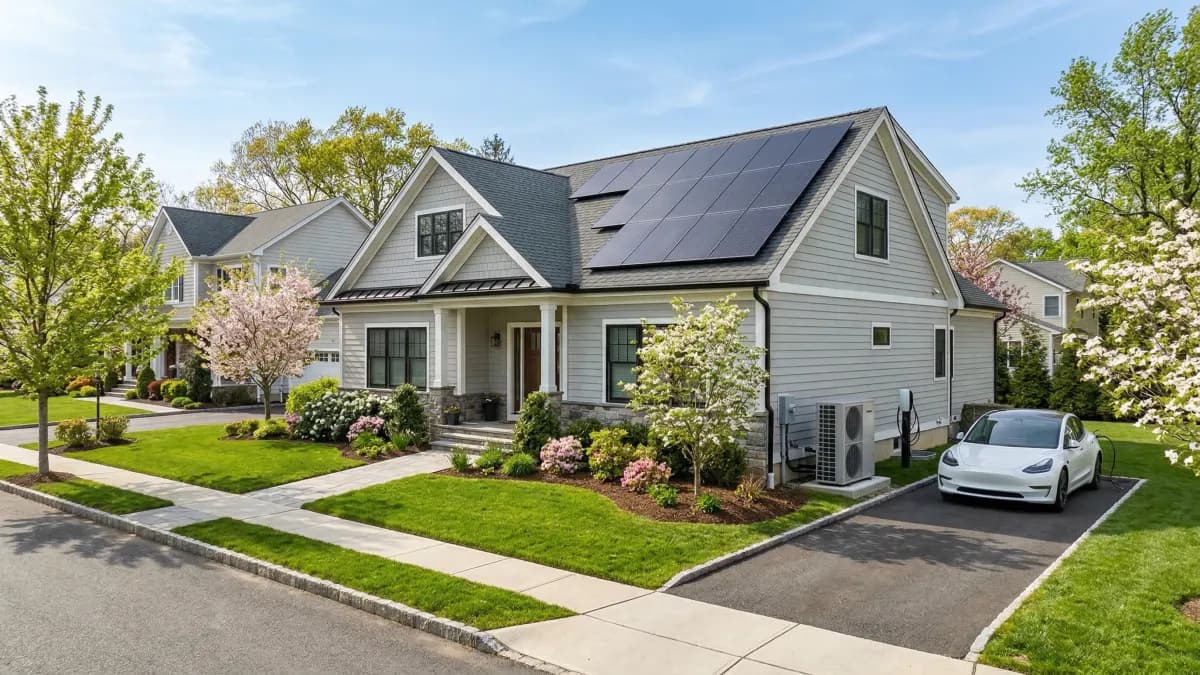
The One Big Beautiful Bill Act (OBBBA), signed July 4, 2025, eliminated the two biggest federal energy credits that homeowners relied on. If any solar company or HVAC contractor tells you these are still available, walk away.
Previously 30% of your solar system cost. Now $0. Homeowners who purchase solar with cash or a loan receive zero federal tax credit in 2026.
On a $24,800 system, this would have been $7,440. That money is gone.
Previously up to $2,000 for heat pumps, $1,200 for insulation. Now $0. No federal credit for heat pumps, water heaters, or insulation in 2026.
On a $12,500 heat pump, this would have been $2,000. Also gone.
30% credit for third-party owned solar (lease/PPA). The financing company claims it, not you. Benefit passed as a lower monthly rate. Projects that began construction on or before the July 4, 2026 safe-harbor date locked in the full timing window; later starts still qualify if placed in service by Dec 31, 2027.
Previously up to $1,000 for residential EV charger installation, but this credit expired June 30, 2026and is no longer available for chargers placed in service after that date. NJ homeowners can still use the Charge Up NJ rebate ($250) and utility EV programs (PSE&G, JCP&L, ACE).
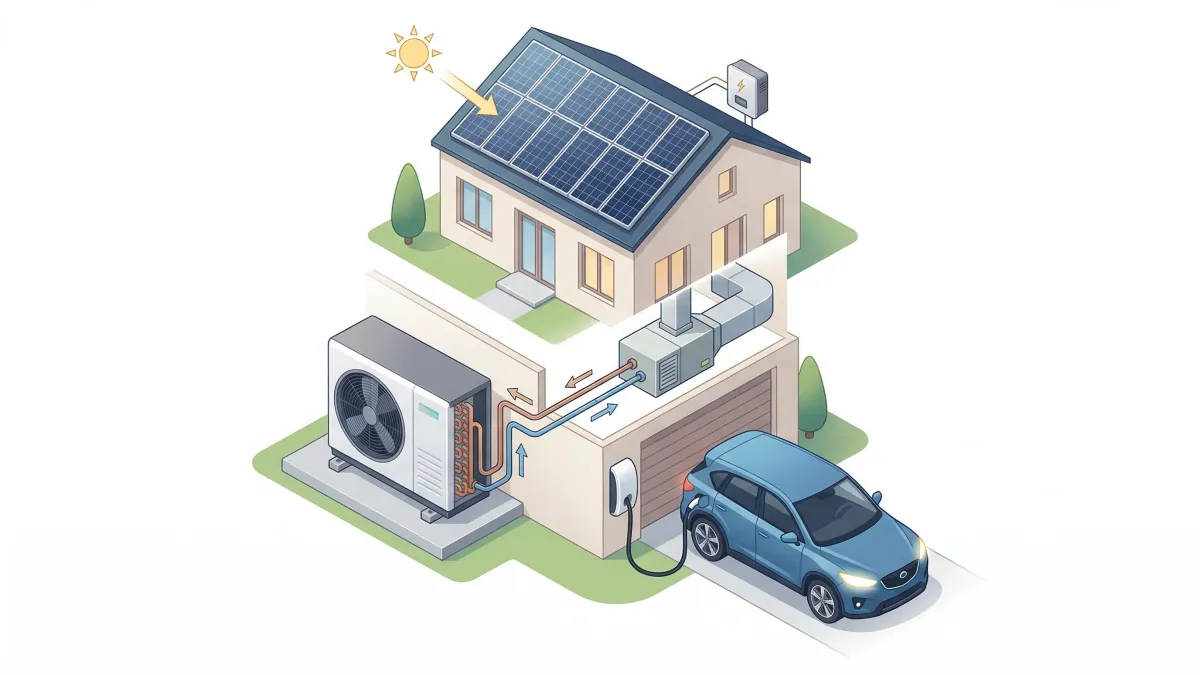
The three pillars of home electrification: solar power generation, heat pump HVAC, and electric vehicle charging
With federal credits dead, the NJ Clean Energy Whole Home program is the single largest rebate available to NJ homeowners in 2026. It rewards comprehensive efficiency upgrades based on your projected Total Energy Savings (TES) percentage.
Base rebate: $2,000 at 5% TES threshold
Per-point bonus: +$200 for each additional percentage point above 5%
Maximum: $7,500 at 33% TES (capped)
Requirement: BPI-certified contractor must perform the energy audit
| TES % | Rebate | Typical Upgrade |
|---|---|---|
| 5% | $2,000 | Insulation + air sealing only |
| 10% | $3,000 | Insulation + ductless mini-split |
| 15% | $4,000 | HP + air sealing |
| 20% | $5,000 | Ducted HP + insulation |
| 25% | $6,000 | HP + insulation + solar (partial) |
| 33%+ | $7,500 | Full bundle: solar + HP + insulation |
BPI Certification Required
You cannot claim the Whole Home rebate without a BPI-certified contractor performing the initial energy audit. If a contractor offers the rebate without mentioning BPI certification, that is a red flag. NuWatt partners with BPI-certified firms across NJ.
New Jersey's ADI (Administratively Determined Incentive) program replaced the old SREC market with predictable, guaranteed solar income. This is the biggest financial reason solar still works in NJ even without the federal credit.
$777/yr
Annual ADI income (8 kW system)
9.04 MWh x $85.00/MWh, paid quarterly
$11,242
Total 15-year ADI income
Accounts for 0.5%/yr panel degradation
15 yrs
Rate locked from registration
$85.00/MWh fixed for the full 15-year term
Old SREC (before 2022): Market-traded certificates with volatile prices. SRECs ranged from $180 to $230 per MWh but could crash. No price guarantee. Speculators drove prices.
ADI/SREC-II (current): Fixed rate set by NJ BPU. $85.00/MWh locked for 15 years. Paid quarterly. No market risk. Predictable income you can budget around.
Honesty Check: NJ Is a Gas Market
Unlike Maine (60%+ oil heat) or Vermont (high propane), New Jersey is dominated by natural gas. Gas is relatively affordable, which means switching to a heat pump produces narrower heating savings than in oil or propane states. We believe in giving you real numbers, not inflated projections.
$600/yr
Net heating savings
$1,800 gas − $1,200 HP electric
$50/mo
Monthly savings
Modest but real
$15,000
25-year fuel savings
With 2% gas price escalation
Compare: In Maine (oil), annual savings are $2,800+. In NJ (gas), the heat pump is more about AC replacement, comfort, and future-proofing than dramatic fuel savings.
Here is the real math for a complete NJ whole-home electrification project. No hidden costs, no inflated savings.
| Component | Cost | Details |
|---|---|---|
Solar (8 kW) | $24,800 | $3.10/W installed, mid-tier panels |
Heat Pump (3-ton ducted) | $12,500 | $10,000-$15,000 range, includes install |
EV Charger (Level 2) | $2,000 | $1,500 charger + $500 install/wiring |
| Gross Total | $39,300 | Before any incentives |
| NJ Whole Home Rebate (33% TES) | -$7,500 | BPI audit required |
| Section 30C EV Credit | $0 | Expired June 30, 2026 — no longer available |
| NJ Charge Up Rebate | -$250 | State EV charger incentive |
| Sales Tax Exemption (6.625%) | -$1,643 | Solar equipment exempt |
| Total Incentives | -$9,393 |
Net Bundle Cost
$29,907
Gross $39,300− $9,393 incentives
Annual Savings
$4,627/yr
Electric offset + ADI + fuel + EV fuel
Simple Payback
~6.5 yrs
Net cost / annual savings
Utility rebates stack on top. PSE&G ($900), JCP&L (up to $1,000), ACE ($1,300), or RECO ($1,400) heat pump rebates are additional and not included in the table above. With a PSE&G rebate, your true net cost drops to $29,007.
Even though the 25D homeowner credit is dead, a solar lease or PPA can still leverage the 30% commercial ITC through Section 48/48E. The financing company claims the credit and passes the benefit to you as a lower monthly rate.
Safe harbor: July 4, 2026
July 4, 2026 was the begin-construction safe-harbor date for the 30% Section 48/48E credit — not an expiration. Projects that began construction on or before it locked in the full timing window (placed in service through roughly 2030). Projects starting now still qualify for the 30% credit but generally must be placed in service by December 31, 2027.
Section 30C covered up to $1,000 for residential EV charger equipment and installation, but it expired June 30, 2026 and is no longer available for chargers placed in service after that date. NJ homeowners can still use the Charge Up NJ rebate ($250) and utility EV programs (PSE&G, JCP&L, ACE).
Based on NJ average electricity $0.26/kWh, gasoline $3.50/gal, 30 MPG gas car vs. 3.5 mi/kWh EV
Solar-charged: If your solar panels cover your EV charging, your effective fuel cost drops to near $0, pushing annual savings above $1,600.
Census Tract Requirement (Historical)
Section 30C required the property to be in a qualifying census tract (low-income or non-urban). Many NJ suburban and rural locations qualified, but not all. The credit expired June 30, 2026 and is no longer available for chargers placed in service after that date.
Your utility territory affects your bundle economics in three ways: electric rate (net metering value), heat pump rebate amount, and interconnection speed.
| Utility | Rate | HP Rebate | Territory | Est. Annual Savings |
|---|---|---|---|---|
| PSE&GBest | $0.2694/kWh | $900 | Northern & Central NJ | $4,712/yr |
| JCP&L | $0.2074/kWh | $1,000 | Central & Western NJ | $4,154/yr |
| ACE | $0.2969/kWh | $1,300 | Southern NJ & Shore | $4,959/yr |
Estimated annual savings include net metering offset, ADI income, gas displacement, and EV fuel savings. Utility HP rebates not included in the annual figure (they are one-time upfront).
Northern & Central NJ — 2.3M customers
Rate: $0.2694/kWh
HP rebate: $900
Net metering: 1:1 retail credit
Central & Western NJ — 1.1M customers
Rate: $0.2074/kWh
HP rebate: $1,000
Net metering: 1:1 retail credit
Southern NJ & Shore — 560K customers
Rate: $0.2969/kWh
HP rebate: $1,300
Net metering: 1:1 retail credit
9,040 kWh at $0.23/kWh (PSE&G)
$85.00/MWh x 9.04 MWh, quarterly payments
Grid-charged EV vs gasoline at $3.50/gal
HP electric vs gas furnace heating
Year 1 savings
$4,627
ADI income (15 years)
$11,242
Property tax savings (25 yrs)
$18,750
~$750/yr avoided (NJ highest in US)
Estimated 25-year total value
$135,000+
Net metering + ADI + fuel savings + tax exemptions (with 2% rate escalation)
A BPI-certified contractor assesses your home, ductwork, insulation, and energy usage. This determines your Total Energy Savings percentage for the Whole Home rebate. Cost: typically $200-$400 (often rebated).
Based on your total electricity consumption (including future heat pump and EV charger load), size a solar system to offset 80-100% of your annual usage. Most NJ homes need 7-10 kW for a full electrification bundle.
For gas-heated NJ homes with existing ductwork, a ducted central heat pump ($10,000-$15,000) is the most common choice. For homes without duct access, multi-zone ductless ($8,000-$18,000) works well. Cold-climate models recommended for North Jersey (Zone 5A).
Cash purchase gives you the most savings (you keep ADI income). Solar lease/PPA gives $0 down — projects that began construction by the July 4, 2026 safe-harbor date locked in the full §48E timing window. NJ Clean Energy zero-interest loan covers HP up to $25,000. Mix and match across components.
Solar install: 1-3 days. Heat pump install: 1-2 days. EV charger: half a day. File for NJ Whole Home rebate (BPI contractor submits), register for ADI (installer handles), and submit your NJ Charge Up application. (The federal Section 30C EV charger credit expired June 30, 2026.)
Solar interconnection takes 2-6 weeks depending on your utility (PSE&G: 2-4 weeks, JCP&L: 3-6 weeks, ACE: 2-4 weeks). Once approved, your meter runs in both directions and net metering credits begin.
Whole-home electrification means replacing fossil-fuel systems (gas furnace, gas water heater, gasoline car) with electric alternatives: a heat pump for HVAC, solar panels for power generation, and an EV charger for transportation. In 2026, it matters because the federal 25D solar tax credit and 25C heat pump credit are both dead (expired Dec 31, 2025). New Jersey state programs like the Whole Home rebate ($7,500 max) and ADI solar payments ($85.00/MWh for 15 years) are now the primary financial incentives.
A typical NJ bundle costs approximately $39,300 before incentives: $24,800 for an 8 kW solar system ($3.10/W), $10,000-$15,000 for a 3-ton ducted heat pump, and $2,000 for an EV charger with installation. After the NJ Whole Home rebate ($7,500), NJ Charge Up ($250), and sales tax exemption ($1,643), the net cost drops to roughly $29,900. The Section 30C EV credit ($1,000) expired June 30, 2026 and no longer applies.
No. The Section 25D residential solar ITC expired December 31, 2025 under the OBBBA. Homeowners who buy solar with cash or a loan get $0 in federal tax credits. However, if you go with a solar lease or PPA, the third-party system owner claims the Section 48/48E commercial ITC (30%). Projects that began construction on or before the July 4, 2026 safe-harbor date locked in the full timing window; later starts still qualify if placed in service by December 31, 2027. That savings is passed to you as a lower monthly rate.
No. The Section 25C Energy Efficient Home Improvement Credit expired December 31, 2025. There is no federal heat pump tax credit available in 2026. NJ state programs fill some of the gap: the NJ Whole Home program offers up to $7,500, and utility companies offer $900-$1,400 in additional rebates.
No. Section 30C (Alternative Fuel Vehicle Refueling Property Credit), which covered up to $1,000 for residential EV charger equipment and installation, expired June 30, 2026 and is no longer available for chargers placed in service after that date. New Jersey homeowners can still use the Charge Up NJ rebate ($250) and utility EV programs (PSE&G, JCP&L, ACE) instead.
The NJ Clean Energy Whole Home program provides cash-back incentives based on your projected Total Energy Savings (TES) percentage. You start at $2,000 for achieving 5% TES, plus $200 for every additional percentage point, up to a maximum of $7,500 at 33% TES. A BPI-certified contractor must perform the energy audit. A solar + heat pump combo typically achieves 20-33% TES easily, qualifying for $5,000-$7,500.
ADI (Administratively Determined Incentive) is New Jersey replacement for the old SREC market. For an 8 kW residential solar system, you earn approximately $777 per year at the current rate of $85.00/MWh. These payments are locked in for 15 years and paid quarterly. Over 15 years, that is approximately $11,242 in total ADI income (accounting for 0.5% annual panel degradation).
The savings are real but narrow. NJ is a gas-dominant market with relatively affordable natural gas. Typical annual gas heating costs run about $1,800. A heat pump costs roughly $1,200/year to heat the same home. That is only $600/year in fuel savings. However, when you pair the heat pump with solar panels that offset the HP electricity cost, the total savings picture improves significantly. The honest answer: the heat pump alone is a modest upgrade, but the bundle economics are strong.
Yes, through a combination of financing options. Solar can be installed via a Section 48 lease or PPA with $0 down. The heat pump can be financed through the NJ Clean Energy zero-interest loan (up to $25,000) or PSE&G on-bill repayment (up to $75,000). The EV charger is a smaller purchase that the NJ Charge Up rebate helps offset — the federal Section 30C credit expired June 30, 2026. Combined, you can electrify your home with minimal or zero upfront cost.
ACE territory offers the strongest overall economics: the highest electric rate of the three (~$0.30/kWh all-in, June 2026 tariff) means the most net metering value per kWh, and ACE also pays the highest utility heat pump rebate ($1,300). PSE&G (~$0.27/kWh, $900 rebate) is close behind. JCP&L has the lowest rate (~$0.21/kWh) — cheaper bills today, but less net metering value, with competitive HP rebates (up to $1,000). The spread between territories is roughly $800/year in total bundle savings.
Yes. The NJ Whole Home program requires a BPI (Building Performance Institute) certified contractor to perform your home energy audit and determine your Total Energy Savings percentage. This is a firm requirement - non-BPI contractors cannot submit for the rebate. NuWatt works with BPI-certified partners throughout New Jersey.
July 4, 2026 was the begin-construction safe-harbor date for the Section 48/48E commercial ITC, not an expiration. Projects that began construction on or before that date locked in the full timing window (placed in service through roughly 2030). Projects starting now still qualify for the 30% credit, but generally must be placed in service by December 31, 2027 — a tighter build schedule. The credit did not disappear when the safe harbor closed.
Get a free whole-home electrification assessment. We will calculate your Whole Home rebate, ADI income, utility rebate, and total bundle savings — specific to your home and utility territory.