Loading NuWatt Energy...

We use your location to provide localized solar offers and incentives.
We serve MA, NH, CT, RI, ME, VT, NJ, PA, and TX
Loading NuWatt Energy...
NuWatt designs, installs, and manages solar, battery, heat pump, and EV charger systems across 9 states. One company, one warranty, one point of contact.
Get a Free Quote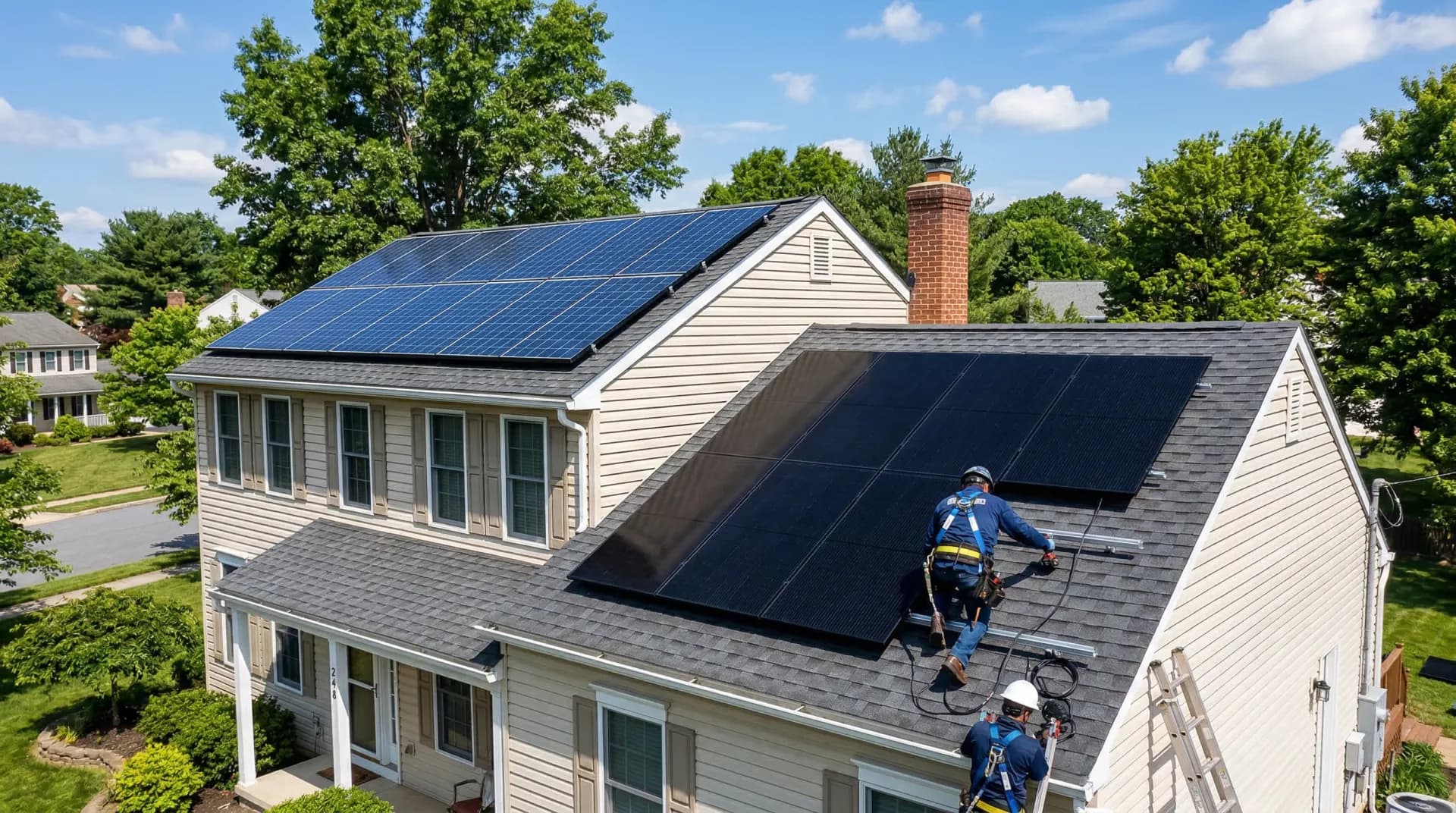
Pennsylvania had one of the earliest SREC-driven solar booms (2012-2018). Those homeowners now need more capacity for EVs, heat pumps, and higher usage. Here is everything you need to know about expanding your system in 2026 — without any federal tax credit.
Pennsylvania was an early solar state. The SREC program through the Alternative Energy Portfolio Standard (Act 213) drove thousands of installations between 2012 and 2018. But those systems were sized for the electricity needs of a decade ago. Today, those same homeowners are adding electric vehicles, heat pumps, and home offices — and their 5-8 kW systems cannot keep up.
An EV adds 2,400-4,900 kWh/year to your usage. Your original 5-8 kW system was not sized for this. Adding 2-4 kW of panels covers your commute.
Switching from gas or oil to a heat pump increases winter electric usage by 3,000-6,000 kWh/year. Your existing system likely covers only half of your new total load.
Work-from-home, pool pumps, hot tubs, and general electrification have pushed usage up 20-40% since many PA systems were installed.
Many early PA solar installs were sized conservatively — 80-90% offset to stay under net metering caps or minimize upfront cost during the SREC boom.
If you installed solar in PA between 2012 and 2018, you likely have a 5-8 kW system using 250-310W panels with either Enphase M215/M250 microinverters or a SolarEdge string inverter. Your panels are producing at 85-92% of their original rating (normal degradation). The good news: your system still has 15-20 years of productive life left. You do not need to replace it — just expand it.
The single most important factor in a solar expansion is your inverter type. This determines how easy (or complex) the expansion will be.
Common PA scenario: 2014 system with 20x SunPower 290W + Enphase M250s. Add 8x Silfab 440W + IQ8HC. Envoy gateway update required. Total capacity goes from 5.8 kW to 9.3 kW.
Common PA scenario: 2015 system with 24x Canadian Solar 275W + SolarEdge SE7600H. Inverter rated for 7.6 kW but only 6.6 kW installed. Can add 3-4 new panels with optimizers within headroom. Larger expansion needs second inverter.
| Your Current Setup | Expansion Difficulty | Extra Cost |
|---|---|---|
| Enphase microinverters (any generation) | Easy | $0-$600 (Envoy upgrade if needed) |
| SolarEdge with optimizers (has headroom) | Easy | $0 (add optimizers + panels) |
| SolarEdge with optimizers (maxed out) | Moderate | $1,500-$2,500 (second inverter) |
| Central string inverter (Fronius/ABB/SMA) | Complex | $2,000-$3,500 (inverter replacement) |
Yes — and this is one of PA's advantages for system expansions. Your expansion capacity can be registered for Solar Renewable Energy Credits (SRECs) through PJM-GATS, generating $22-$35 per MWh of additional income. Here is how it works.
Best for small expansions (1-4 kW) where simplicity matters.
Best for larger expansions (4+ kW) or when original SRECs are nearing expiration.
Based on 4 kW expansion at 1,250 kWh/kW/year (eastern PA), SRECs at $22-$35/MWh, 0.5% annual degradation. SREC prices are market-based and not guaranteed. PRESS Act legislation (pending) could increase prices significantly.
The PRESS Act (PA Renewable Energy Standard Strengthening) is pending in the PA legislature. If passed, it would raise the solar carve-out from 0.5% to 5.5%, likely boosting SREC prices to levels closer to New Jersey ($200+). If you are expanding your system, registering expansion capacity for SRECs now positions you to benefit if PRESS passes.
PPL Electric Utilities has proposed shifting from 1:1 retail net metering credits to hourly LMP-based (wholesale) credits. This tariff change is expected around July 2026. If your expansion triggers a new interconnection application in PPL territory, you may be placed under the new tariff — which would dramatically reduce your net metering value.
Full retail rate, monthly rollover. Annual true-up at PTC ($0.13/kWh).
Wholesale rate varies by hour. Midday solar production gets lowest LMP prices.
| Utility | Retail Rate | Net Metering Status | Expansion Risk |
|---|---|---|---|
| PECO | $0.21/kWh | 1:1 retail — stable | Low |
| PPL | $0.21/kWh | LMP proposal ~July 2026 | High |
| Duquesne Light | $0.20/kWh | 1:1 retail — stable | Low |
| Met-Ed | $0.19/kWh | 1:1 retail — stable | Low |
| Penelec | $0.18/kWh | 1:1 retail — stable | Low |
Pennsylvania requires a new electrical permit for any solar expansion, even if you are adding panels to an existing system. This is separate from your original installation permit. The expansion permit covers the new panels, wiring, and any inverter changes.
Filed through your local municipality (borough, township, or city). Fee: $100-$400.
2-4 weeks typical in PA. Faster in rural townships, slower in Philadelphia and historic districts.
Your utility must approve the expanded capacity. PECO: 3-5 weeks. PPL: 2-4 weeks. Duquesne: 2-4 weeks.
Expansion installations typically cost $2.80-$3.10 per watt in Pennsylvania — slightly cheaper than a new installation because your electrical infrastructure (main panel, conduit, disconnect) already exists. However, PA's lack of tax exemptions adds to the total.
| Line Item | Low End | High End |
|---|---|---|
| Panels + microinverters/optimizers (9-10 panels) | $8,400 | $9,200 |
| Racking and mounting hardware | $800 | $1,000 |
| Wiring, conduit, and electrical | $600 | $800 |
| Labor (installation) | $1,200 | $1,600 |
| Permit and interconnection fees | $200 | $400 |
| Subtotal (before tax) | $11,200 | $13,000 |
| PA sales tax (6% — no exemption) | +$672 | +$780 |
| Total Out of Pocket | $11,872 | $13,780 |
| Federal 25D ITC credit | $0 (expired Dec 31, 2025) | |
Even though the residential 25D ITC is dead, there is a way to get federal tax benefits on your expansion: lease only the expansion panels through a third-party financing provider. The financing company claims the 30% Section 48E commercial ITC and passes the savings through as a lower rate.
Example: You own a 6 kW system from 2015 (paid off). You want 4 kW more for your EV. Instead of paying $12,000+ cash with $0 federal benefit, you lease the 4 kW expansion. The financing company claims ~$3,600 in Section 48E ITC and offers you a rate 20-35% below your utility rate. Your net cost: $0 upfront, immediate savings on the expansion portion.
Section 48E is available for projects that begin construction before July 4, 2026. After that date, neither homeowners nor third-party owners get any federal solar tax credit. If you are considering a leased expansion, start the process now — the financing company needs time to originate the lease, order equipment, and establish the construction start date.
Expansion is not always the right move. Here are scenarios where a different approach makes more sense.
If your roof needs replacing within the next 5 years, do the roof first. Removing and reinstalling panels costs $1,500-$3,000, and you would need to pay this twice — once for the original system and again for the expansion.
If your existing panels are producing below 80% of their rated output, you may be better off replacing the entire array with modern high-wattage panels rather than adding to a degrading system.
If PPL has already implemented LMP-based net metering by the time you expand, the economics change dramatically. A 4 kW expansion that would save $1,000/year under 1:1 credits might only save $300-$500/year under LMP.
If your roof cannot fit enough additional panels to meaningfully offset your new load (at least 2 kW), the fixed costs of permitting, interconnection, and installation make a small expansion uneconomical.
Without the 25D ITC, a cash expansion takes 8-11 years to pay back in PA. If you are selling before then, you will not recoup the investment — PA solar adds to your property tax bill (no exemption), further reducing ROI.
If your existing string inverter has failed or is end-of-life, replacing it plus adding expansion may cost more than a full system replacement with modern microinverters and high-wattage panels.
Microinverter or string? If string, is there headroom for more panels?
Confirm your roof can support additional panels and has 10+ years of life remaining.
How many extra kWh do you need per year? (EV: 2,400-4,900, HP: 3,000-6,000)
PPL territory? File interconnection ASAP before the LMP tariff takes effect (~July 2026).
Cash ($0 federal benefit) vs. Section 48E lease (30% ITC through third-party, before July 4, 2026).
Amend existing PJM-GATS registration or register expansion as a separate system.
Compare expansion-specific pricing. Not all installers do expansions — some only handle new installs.
Get a free expansion assessment from NuWatt Energy. We evaluate your existing system, check inverter compatibility, and provide a detailed expansion quote — including SREC projections and PPL risk analysis if applicable.
Get Your Expansion Quote