Loading NuWatt Energy...

We use your location to provide localized solar offers and incentives.
We serve MA, NH, CT, RI, ME, VT, NJ, PA, and TX
Loading NuWatt Energy...
NuWatt designs, installs, and manages solar, battery, heat pump, and EV charger systems across 9 states. One company, one warranty, one point of contact.
Get a Free Quote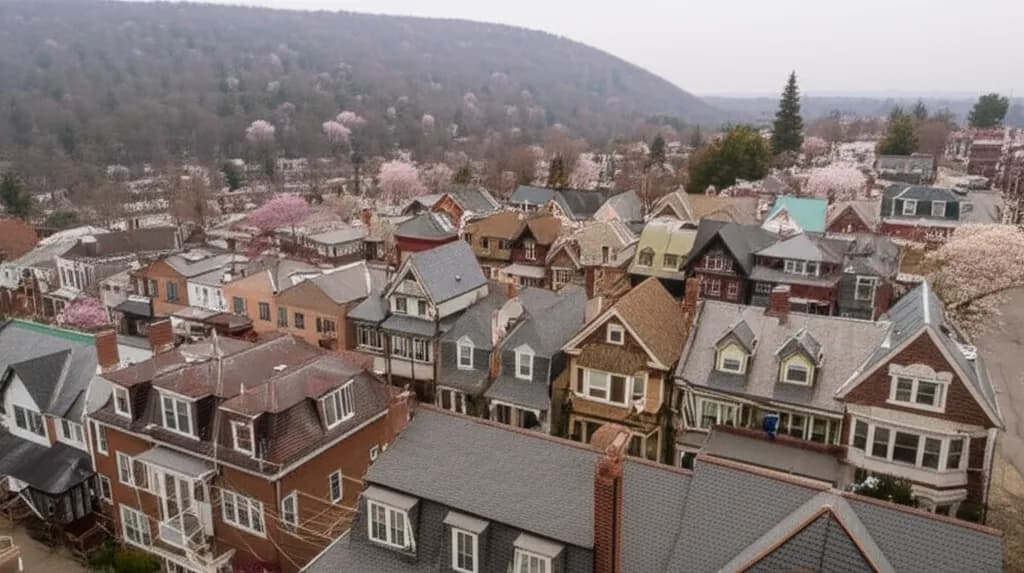
Reading offers the most affordable solar in eastern PA at ~$2.85/W with stable Met-Ed net metering at $0.19/kWh. No federal tax credit for homeowners — but Section 48E lease/PPA still available; new starts placed in service by Dec 31, 2027.
Cost Range
$2.7-$3.1
Per watt installed
Avg System
13 kW
~$37,050 gross
Payback
14 yrs
Met-Ed 1:1 net metering
SREC Income
$419/yr
$22-$35/MWh
Met-Ed Net Metering: Stable for Reading
Unlike PPL customers in the Lehigh Valley, Reading homeowners in Met-Ed territory have stable 1:1 net metering with no proposed tariff changes. You can plan your solar project without urgency pressure on the net metering front.
2026 Reality: The 30% federal solar tax credit (25D) expired Dec 31, 2025. All costs reflect $0 federal credit for cash/loan purchases. Third-party PPA/lease providers can still claim the commercial ITC (Section 48E) — new starts placed in service by Dec 31, 2027. How Section 48E works for you
A typical 13 kW system in Reading costs $37,050 before taxes. After 6% PA sales tax: $39,273. With Met-Ed 1:1 net metering at $0.19/kWh and SRECs, payback is approximately 14 years. For $0 down, a PPA or lease passes the Section 48E 30% ITC savings as a lower rate.
Gross Cost (13 kW)
$37,050
~$2.85/W avg
All-In With Tax
$39,273
Including 6% PA tax
SREC Income/yr
$419
15 SRECs @ ~$28/ea
Production
14,950 kWh
1150 kWh/kW/yr
Reading offers the lowest installation costs in eastern PA, making solar accessible even without federal incentives. All costs at $2.85/W average for the Reading/Berks County market.
| System Size | Gross Cost | +6% Tax | All-In Cost | SREC/yr | Payback |
|---|---|---|---|---|---|
| 6 kW | $17,100 | +$1,026 | $18,126 | $193 | 14 yrs |
| 8 kW | $22,800 | +$1,368 | $24,168 | $258 | 14 yrs |
| 10 kW | $28,500 | +$1,710 | $30,210 | $322 | 14 yrs |
| 13 kW | $37,050 | +$2,223 | $39,273 | $419 | 14 yrs |
| 15 kW | $42,750 | +$2,565 | $45,315 | $483 | 14 yrs |
Payback assumes Met-Ed 1:1 net metering at $0.19/kWh, SRECs at ~$28/MWh, central PA irradiance (1150 kWh/kW/yr). No federal tax credit (25D expired).
The homeowner solar tax credit (Section 25D) is dead. But the commercial ITC (Section 48/48E) is still available for third-party system owners — the begin-construction window closed July 4, 2026, so new projects generally must be placed in service by December 31, 2027. For Reading homeowners on a budget, this makes PPA and lease the most compelling path to solar.
Federal tax credit
$0 (25D expired)
Gross cost (13 kW)
$37,050
6% PA sales tax
+$2,223
All-in cost
$39,273
You own the system
Yes
SREC income
$419/yr (you keep 100%)
25-year net savings
$44,769
Payback Period
~14 years
Upfront cost
$0
Section 48E ITC
30% claimed by financing company
Your savings vs Met-Ed
20-40% lower per-kWh rate
SREC income
Kept by third party (reflected in lower rate)
Contract term
20-25 years typical
Maintenance
Included — third party handles everything
Timing
New starts: in service by Dec 31, 2027
Affordability angle: For Reading homeowners where $37K+ upfront is not realistic, a $0-down PPA captures the 30% Section 48E ITC and passes those savings as a lower electricity rate. You start saving from day one with no debt and no risk.
Section 48E Timing: Placed in Service by Dec 31, 2027
The third-party commercial ITC (Section 48/48E) begin-construction window closed July 4, 2026. Projects that began construction on or before that date locked in the full timing pathway; new PPA/lease projects still qualify for the 30% credit but generally must be placed in service by December 31, 2027. Reading homeowners who want a PPA or lease with maximum ITC benefit should factor in that in-service timeline.
Pennsylvania SRECs are a meaningful revenue stream that offsets the lack of a federal tax credit. Each SREC represents 1 MWh of solar production and trades at $22-$35/MWh in the current PA AEPS market.
Annual SREC Income
$419
15 SRECs at ~$28/ea
15-Year SREC Earnings
$6,285
Active PA AEPS market participation
SREC Market Outlook
$22-$35
Per MWh, 3-year vintage life
Your system is registered with PJM-GATS (Generation Attribute Tracking System)
Every 1,000 kWh (1 MWh) of production generates 1 SREC
SRECs are sold on platforms like SRECTrade or Flett Exchange
PA utilities must buy SRECs to meet the 0.5% solar carve-out
SRECs have a 3-year useful life from the vintage year
Cash/loan buyers keep 100% of SREC income
PPA/lease: third party keeps SRECs (reflected in your lower rate)
PRESS Act, if passed, could significantly increase SREC values
Understanding your Met-Ed rate structure is critical for accurate solar payback calculations. Reading homeowners benefit from stable net metering with no proposed tariff changes.
$0.19/kWh
Average residential rate including supply + delivery. This is the rate you receive as a 1:1 net metering credit for monthly excess generation.
$0.119/kWh
Price-to-Compare rate. At annual true-up, excess credits beyond your usage are paid out at this lower rate. Size your system to minimize annual surplus.
Stable — No Threat
Met-Ed (FirstEnergy) has NOT filed any tariff proposals to change net metering. This contrasts with PPL territory where changes could reduce solar credits.
Reading and the Lehigh Valley are just 60 miles apart but have meaningfully different solar economics due to their different utility territories.
Key takeaway: Reading has lower installation costs ($2.85 vs $2.98/W) and zero net metering urgency, but slightly lower utility rates ($0.19 vs $0.21/kWh) which extends payback slightly. Both cities share the same Section 48E timing: the begin-construction window closed July 4, 2026, so new PPA/lease projects must be placed in service by Dec 31, 2027.
Reading is a diverse city with neighborhoods ranging from dense row homes downtown to suburban developments in the surrounding townships. Here is how solar works in each area.
Urban, diverse housing, row homes
Dense row housing with narrow roofs — systems typically 5-8 kW for individual homes
Most affordable installation costs in eastern PA due to lower labor rates
Lower property values mean minimal property tax increase from solar
Met-Ed territory with stable 1:1 net metering (no PPL-style threat)
Growing interest in solar among Latino homeowners — bilingual installer availability
Typical System
5-9 kW
Cost Range
$14,250-$25,650
Permitting
2-3 weeks (City)
Mixed residential, single-family homes
Single-family homes with 1,200-1,800 sq ft roof areas suitable for mid-size systems
Proximity to Wyomissing commercial corridor provides installer access
Many homes from the 1940s-1970s with solid roof structures
Quiet residential streets with less tree coverage than suburban areas
Strong appreciation potential as area investment continues
Typical System
8-12 kW
Cost Range
$22,800-$34,200
Permitting
2-3 weeks
Suburban, larger single-family homes
Larger suburban homes with 1,500-2,200 sq ft roof areas ideal for 11-15 kW systems
Township permitting is straightforward and typically faster than city permitting
Newer developments (post-2000) are solar-ready with 200-amp panels
Less tree coverage provides optimal year-round sun exposure
Highest solar adoption rates in the Reading area due to roof size and homeowner demographics
Typical System
11-15 kW
Cost Range
$31,350-$42,750
Permitting
2-3 weeks (Township)
Hillside residential, varied elevation
Hillside properties can have excellent south-facing exposure on the right slope
Elevation provides some wind benefit for panel cooling in summer
Mix of older and mid-century homes with varied roof conditions
Mt. Penn borough has smaller lots but strong community solar interest
Kenhorst has more suburban-style homes with better roof access
Typical System
7-11 kW
Cost Range
$19,950-$31,350
Permitting
2-3 weeks
Reading has some of the most affordable housing in eastern PA, which means solar affordability matters. The good news: Reading also has the lowest solar installation costs in the region, and $0-down options make solar accessible regardless of budget.
No upfront cost. The financing company installs, owns, and maintains the system. You pay a lower per-kWh rate than Met-Ed. Section 48E ITC savings passed through; new starts must be placed in service by Dec 31, 2027.
Best for: Budget-conscious homeowners
While PA has no property tax exemption for solar, Reading's lower assessed values mean the annual property tax increase is more modest — roughly $300-$500/yr depending on your municipality and mill rate.
Lower impact than Philly or Lehigh Valley
Downtown row homes can fit 5-8 kW systems at $14,250-$22,800. A smaller system still offsets 60-70% of your bill. Community solar (expected 2027+ via HB 1155) will provide a future option for homes where rooftop solar is impractical.
Partial offset still saves hundreds/yr
Reading has a significant population that qualifies for income-based energy assistance programs. While these do not directly subsidize solar, they can help reduce overall energy costs and make a PPA or lease even more impactful.
PA Income-Eligible Energy Programs GuideThe death of the 25D ITC has fundamentally changed which financing path is optimal in PA. PPA and lease are now more attractive because the third-party company still gets the ITC.
Best for: Homeowners who can afford upfront cost and want maximum long-term savings
Best for: Homeowners who want ownership benefits without large upfront payment
Best for: Most PA homeowners in 2026 — MORE attractive post-ITC because the financing company claims the 30% Section 48 ITC and passes savings as a lower rate
Best for: Homeowners who want predictable monthly costs with no maintenance responsibility
PA SRECs
15 SRECs/yr at $28/SREC. 15-year market.
1:1 Net Metering (Met-Ed)
Stable — no tariff threat. $0.19/kWh full retail credit.
Section 48E ITC (PPA/Lease)
Third-party owner claims ITC, passes savings as lower rate. New starts: in service by Dec 31, 2027.
Met-Ed PTC Rate
Annual true-up rate for excess production beyond your usage.
Federal 25D ITC
$0 for homeowners since Dec 31, 2025. Cash/loan purchases get no federal credit.
6% PA Sales Tax
No solar equipment exemption in PA.
Property Tax Increase
No PA exemption. Reading values lower, so impact is relatively modest.
Customize your system size, financing type, and utility to see personalized payback and savings estimates for your Reading home.
Estimate your solar return on investment with SREC income, net metering credits, and PA-specific costs.
Federal Residential Solar Tax Credit (Section 25D) Expired
Homeowners who purchase solar with cash or a loan receive $0 in federal tax credits. Section 25D expired December 31, 2025.
Greater Philadelphia / Southeast PA
Electric Rate
$0.18/kWh
Net Metering
1:1 retail credit
SREC Value
~$28/SREC
Interconnection
4-8 weeks
~12 SRECs/yr at ~$28/SREC
Payback Period
12.7
years
25-Year Savings
$48,511
total
Monthly Benefit
$208
per month
Estimates based on average 2026 PA solar pricing at $3.00/W, SREC spot ~$28/SREC, 1:1 retail net metering, 6% PA sales tax (applies to solar), NO PA state rebate, NO property tax exemption. Section 25D residential ITC expired Dec 31, 2025 -- $0 federal tax credit for cash/loan purchases.
Solar panels in Reading cost $2.70-$3.10 per watt installed, averaging about $2.85/W — among the most affordable in eastern PA. For a typical 13 kW system, the total cost is $37,050 before the 6% PA sales tax ($2,223), for an all-in cost of about $39,273. There is no federal tax credit for homeowners (25D expired Dec 31, 2025). With a $0-down PPA or lease, the third-party financing company can still claim the 30% Section 48E commercial ITC; the begin-construction window closed July 4, 2026, so new projects generally must be placed in service by December 31, 2027.
Reading is served by Met-Ed (FirstEnergy), NOT PPL. This is good news for Reading homeowners: Met-Ed has no proposed tariff changes to net metering. Unlike PPL customers in the Lehigh Valley who face potential net metering changes, Reading homeowners have stable 1:1 net metering for the foreseeable future. Met-Ed rates average $0.19/kWh with a $0.119/kWh PTC rate at annual true-up.
With Met-Ed 1:1 net metering at $0.19/kWh, a 13 kW cash-purchased system has approximately a 14-year payback period. While Met-Ed rates are slightly lower than PPL ($0.19 vs $0.21/kWh), Reading's lower installation costs partially offset this, keeping payback competitive. SREC income of $419/yr further accelerates the payback.
PA Solar Renewable Energy Certificates (SRECs) are tradeable credits earned for every megawatt-hour (MWh) your system produces. In the current PA AEPS market, SRECs trade at $22-$35/MWh (average ~$28). A 13 kW system in Reading generates about 15 SRECs per year, earning roughly $419 annually. Over 15 years of market participation, that is approximately $6285 in additional income. SRECs have a 3-year useful life from vintage year and are registered through PJM-GATS.
Yes, but only indirectly. The homeowner 25D residential solar tax credit expired Dec 31, 2025 — homeowners who buy with cash or a loan get $0 federal tax credit. However, if you go with a $0-down solar PPA or lease, the third-party financing company can still claim the 30% Section 48/48E commercial ITC; the begin-construction window closed July 4, 2026, so new projects generally must be placed in service by December 31, 2027. Those savings are passed to you as a lower per-kWh electricity rate, typically 20-40% below your current Met-Ed bill.
Reading solar installations cost about $0.10-$0.15/W less than the Lehigh Valley for several reasons: lower labor costs in the Berks County market, more affordable housing stock that reduces installation complexity, competitive installer pricing due to Lancaster County solar market spillover, and lower overhead costs compared to the more expensive Lehigh Valley market.
Reading and Lancaster are both in Met-Ed territory with identical utility rates ($0.19/kWh) and stable net metering. Installation costs are similar ($2.70-$3.10/W). The main difference is Lancaster's larger rural properties often support bigger systems (14 kW avg vs 13 kW). Reading has slightly more urban density but equivalent solar economics. Both cities benefit from central PA irradiance (~1,150 kWh/kW/yr).
Yes, but with realistic expectations. Row homes in downtown Reading typically support 5-8 kW systems due to narrower roof widths. At $2.85/W, a 6 kW system costs about $17,100 ($18,126 with tax). With Met-Ed rates, this offsets about 60-70% of a typical bill. For 100% offset, consider community solar when it launches in PA (expected 2027+ under HB 1155). Alternatively, a $0-down PPA eliminates the upfront cost barrier entirely.
In 2026, PPA and lease options are significantly more attractive in Reading than before the 25D expiration. Since homeowners get $0 federal tax credit on cash or loan purchases, but the third-party PPA/lease company can still claim the 30% Section 48 commercial ITC (new starts in service by December 31, 2027), those savings are passed through as a lower per-kWh rate. For Reading homeowners on tighter budgets, a PPA with $0 down and immediate bill savings of 20-40% is often the best path to solar.
There are no Reading-specific solar incentives beyond the statewide programs. However, Reading homeowners benefit from PA SRECs ($28/SREC, 15-year market), 1:1 Met-Ed net metering, and some of the lowest installation costs in eastern PA. The PA PRESS Act, if passed, could increase SREC values significantly. Reading's lower property values also mean the property tax impact of solar ($450/yr estimated) is relatively modest.
With the lowest installation costs in eastern PA, stable Met-Ed net metering, and $0-down PPA/lease options with Section 48E ITC savings, Reading is well-positioned for solar in 2026.
Statewide costs and payback analysis.
Read moreHow third-party ITC works for homeowners.
Read moreSREC market, PJM-GATS, and PRESS Act.
Read moreNearby Met-Ed market comparison.
Read moreAffluent Reading suburb.
Read moreSuburban Berks County.
Read moreMet-Ed vs PPL comparison.
Read moreFinancing comparison for PA.
Read moreWhy PA solar still works in 2026.
Read morePricing: EnergySage Solar Marketplace (January 2026), NuWatt Energy PA installations.
Utility rates: Met-Ed (FirstEnergy) residential tariff, effective January 2026.
SREC data: SRECTrade, Flett Exchange, PJM-GATS (February 2026).
Federal tax credit: OBBBA signed July 4, 2025. Section 25D expired Dec 31, 2025. Section 48/48E begin-construction window closed July 4, 2026; new starts must be placed in service by Dec 31, 2027.
Irradiance: NREL PVWatts for Reading, PA (40.3N, -75.9W).