
Do Solar Panels Increase Home Value?2026 Data from Zillow, NREL & Berkeley Lab
Solar panels add an average of 4.1% to home value nationally. For a $400,000 home, that means roughly $16,400 in added equity. Here is what the latest research says, state by state, and how to maximize your return.
Quick Answer
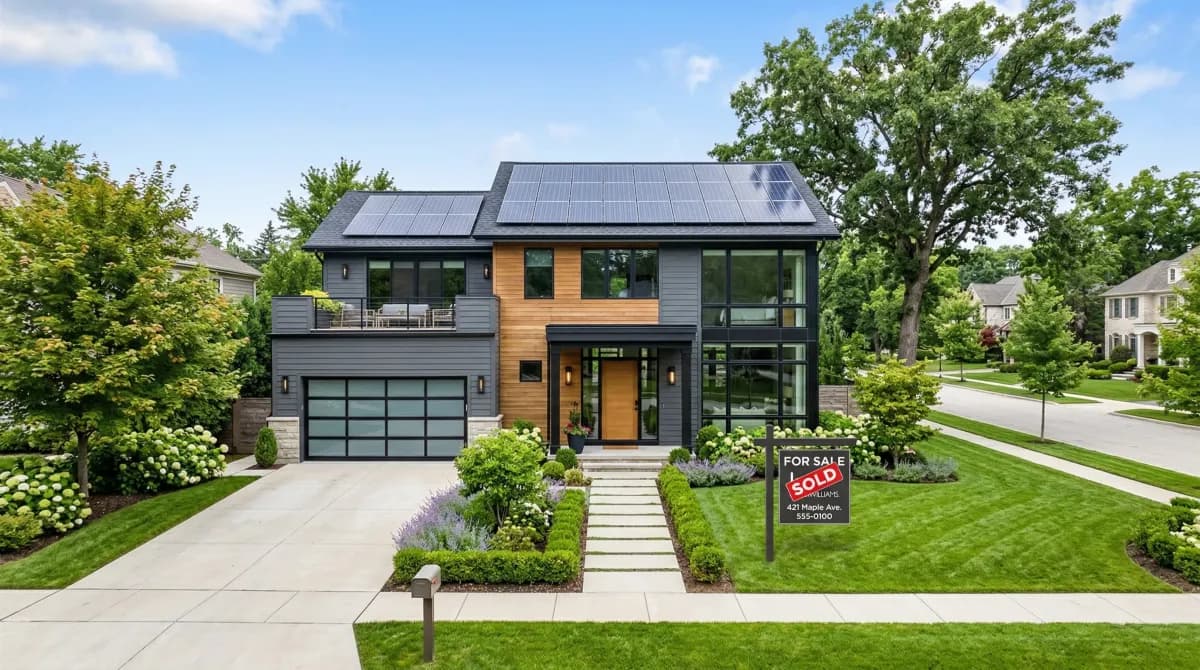
Yes, solar panels increase home value. The national average premium is 4.1% (Zillow, 2024). Berkeley Lab's landmark study found buyers pay about $4/watt for an existing solar system. A typical 8 kW residential system adds $20,000-$32,000 in resale value, depending on your state and local market. Owned systems add significantly more value than leased systems.
What the Research Says
Three major studies have quantified the solar home value premium. Together, they analyzed over 40,000 transactions and represent the most rigorous data available.
Zillow (2024)
4.1%
Average home value premium for solar-equipped homes across all US markets.
Berkeley Lab / NREL
$4/W
Buyers pay approximately $4 per watt of installed capacity. 8 kW = $32,000.
Appraisal Institute
$15-25K
Typical appraisal premium for a 6-10 kW owned system using the Green Addendum.
These figures mean solar is one of the best home improvement investments available. Kitchen remodels average 75% ROI. Bathroom remodels average 70%. Solar delivers 80-100%+ of installed cost in added resale value in strong markets.
State-by-State Solar Home Value Premium
Premiums vary by state based on electricity rates, solar penetration, and local market dynamics. States with higher utility costs and stronger solar incentive programs tend to see larger premiums.
| State | Avg Premium | Value Added | Avg Home Price |
|---|---|---|---|
| New Jersey | 5.4% | $24,300 | $450,000 |
| Massachusetts | 4.6% | $27,140 | $590,000 |
| Connecticut | 4.4% | $17,160 | $390,000 |
| New York | 4.2% | $18,900 | $450,000 |
| Pennsylvania | 4.1% | $12,710 | $310,000 |
| Rhode Island | 3.9% | $16,770 | $430,000 |
| New Hampshire | 3.8% | $16,340 | $430,000 |
| Maine | 3.6% | $13,680 | $380,000 |
| Texas | 3.5% | $11,200 | $320,000 |
| National Avg | 4.1% | $15,990 | $390,000 |
Sources: Zillow research (2024), Berkeley Lab "Selling into the Sun" (2023), state MLS data. Premiums are averages; actual values vary by system size, age, and local market.
No Federal Tax Credit? The Silver Lining for Buyers
The residential federal solar tax credit (Section 25D) expired on December 31, 2025. While this means homeowners no longer get a 30% tax credit on new installations, it creates an interesting dynamic for the resale market.
Why This Matters for Home Sellers
- 1.Buyers cannot replicate your system at the same cost. New installations in 2026 cost 30% more (no tax credit offset), making your existing system more valuable.
- 2.Equipment prices keep dropping, but the net cost to install new is still higher than your amortized cost. Your system is a "grandfathered" asset.
- 3.Electricity rates keep climbing. Northeast rates are up 18% since 2023. A solar system that offsets $2,400/year in electricity is worth more each year.
The bottom line: existing solar systems on homes for sale have become more valuable in the post-ITC landscape, not less. Buyers are willing to pay a premium for a system that is already installed, warrantied, and producing.
Owned vs. Leased Solar: Impact on Value
Owned System
- Adds 4-6% to home value
- Clean transfer at closing
- Buyer gets free electricity immediately
- Warranties transfer with home
- No third-party approval needed
Leased System
- Adds 0-2% to home value (mixed data)
- Buyer must qualify to assume lease
- Monthly payment obligation transfers
- Can narrow buyer pool by 10-20%
- Buyout option may be available ($5K-$15K)
Pro Tip: Considering a Lease Buyout?
If you have a leased system and plan to sell within 2 years, investigate the buyout cost. Many financing companies offer a buyout at $5,000-$15,000 depending on system age and remaining term. Converting from leased to owned typically adds more value than the buyout cost, netting you a profit at closing. Contact your solar provider for a current buyout quote.
The Appraiser Green Addendum: Getting Proper Credit
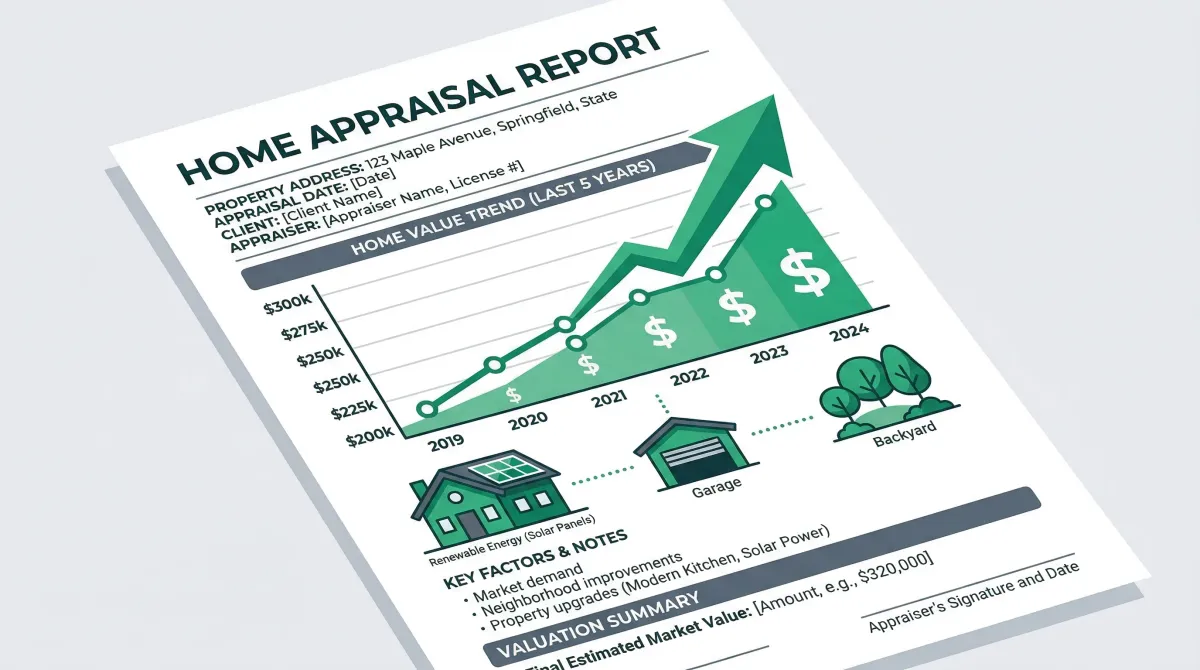
The Appraisal Institute created the Residential Green and Energy Efficient Addendum specifically to help appraisers value solar installations. Without this form, your appraiser may undervalue or entirely ignore your solar system.
What the Addendum Captures
- System size (kW), age, and remaining warranty years
- Annual energy production (kWh) and dollar savings
- Ownership status (owned/leased/PPA)
- Equipment brand, model, and condition
- Comparable solar home sales in the area
How to Prepare
- 1. Gather documentation: Original contract, warranties, interconnection agreement, and annual production reports from your monitoring app.
- 2. Calculate annual savings: Pull 12 months of electric bills showing net usage and dollar savings. Most monitoring systems track this automatically.
- 3. Request a qualified appraiser: Ask your real estate agent to specifically request an appraiser with solar/green certification (AI-RRS or similar).
- 4. Provide the Green Addendum form: Download it from the Appraisal Institute website and fill in the system details. Your installer can help with technical specs.
6-Step Checklist: Maximize Solar Value When Selling
Ensure the system is owned (not leased)
If leased, investigate buyout options. Converting to owned status almost always adds more value than the buyout cost.
Clean and inspect the system
Have panels cleaned and visually inspected. Replace any cracked panels or failed microinverters. A clean, fully-operational system photographs better and appraises higher.
Compile documentation
Gather warranties, installation contract, interconnection agreement, permit, and 12+ months of production data from your monitoring app.
Highlight savings in your listing
Work with your agent to feature "$X/year in energy savings" prominently in the MLS listing and marketing materials.
Request a solar-savvy appraiser
Not all appraisers understand solar. Ask for one who uses the Green Addendum or holds AI-RRS certification.
Transfer warranties and monitoring
Confirm all equipment warranties transfer to the new owner. Set up monitoring account transfer instructions for closing day.
Frequently Asked Questions
How much do solar panels increase home value in 2026?
According to Zillow research, solar panels increase home value by an average of 4.1% nationally. For a $400,000 home, that translates to roughly $16,400 in added value. Berkeley Lab found buyers pay approximately $4 per watt of installed solar capacity, meaning a typical 8 kW system adds $32,000 in perceived value.
Do leased solar panels hurt home value?
Leased solar panels can complicate the sale process but do not necessarily hurt value. Buyers must qualify to assume the lease, which can narrow your buyer pool. Owned systems consistently add more value because the new buyer gets free electricity with no monthly lease payment. If you have a lease, contact your provider about transfer or buyout options before listing.
Do appraisers account for solar panels?
Many appraisers now use the Appraisal Institute's Residential Green and Energy Efficient Addendum to value solar. This standardized form helps appraisers assign proper value to solar installations. However, not all appraisers are trained in green valuation. Ask your real estate agent to request an appraiser who holds the AI Green certification or has solar valuation experience.
Is solar still a good investment without the federal tax credit?
Yes. The federal residential ITC (Section 25D) expired in 2025, but solar economics remain strong in 2026. Equipment costs have dropped 30% since 2020, electricity rates keep rising (up 18% in the Northeast since 2023), and state incentives like MA SMART, NJ ADI, and RI REG still provide meaningful returns. Typical payback in the Northeast is 8-12 years, and the home value premium alone can offset a significant portion of the installation cost.
How do I maximize my home value when selling with solar panels?
To maximize value: (1) Keep your system owned, not leased. (2) Maintain documentation of warranties, production data, and original installation details. (3) Request an appraiser who understands solar valuation. (4) List energy savings prominently in your MLS listing. (5) Provide the buyer with at least 12 months of electricity bills showing savings. (6) Ensure the system is clean and in good working order.
Thinking About Solar? Get Your Free Estimate
See how much solar can save you and add to your home value. Our design tool provides instant pricing with no obligation.
Get My Free Solar Estimate