
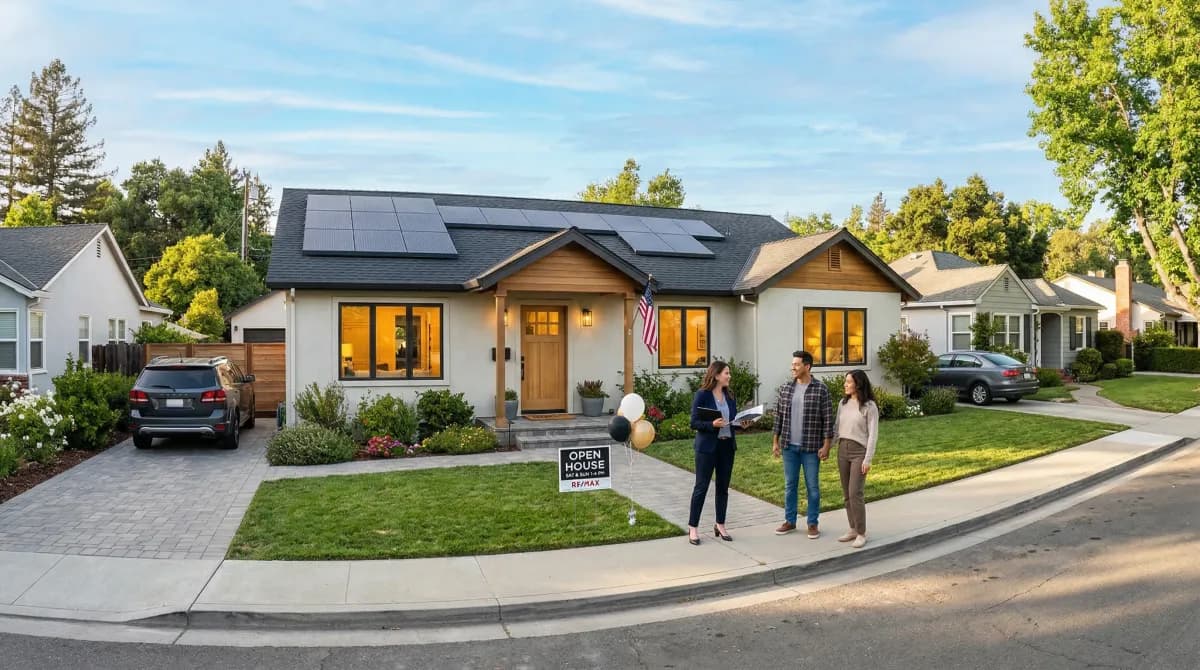
Selling a home with solar panels is straightforward when you own the system. It becomes more complicated — and potentially deal-threatening — when the panels are leased or under a power purchase agreement (PPA).
The difference is massive. Lawrence Berkeley National Laboratory found that owned solar panels increase home sale prices by an average of $15,000 for a typical residential system. Leased panels? They add nothing to the appraised value and can scare off 20 to 30% of potential buyers.
How Ownership Type Affects Your Home Sale
| Factor | Owned (Cash/Loan) | Leased | PPA |
|---|---|---|---|
| Home value impact | +3-4% ($12K-$20K) | $0 (no premium) | $0 (no premium) |
| Buyer perception | Strong positive | Mixed / cautious | Mixed / cautious |
| Transfer complexity | Simple (warranty only) | Complex (credit check) | Complex (credit check) |
| Can complicate closing? | Rarely | Frequently | Frequently |
| Appraiser treatment | Adds to dwelling value | Not counted in value | Not counted in value |
| Monthly obligation to buyer | $0 (if paid off) | $80-$200/mo | Per-kWh rate |
Selling with Owned Solar Panels
If you purchased your panels with cash or paid off your solar loan, selling is straightforward. The panels are a permanent improvement to the property, similar to a new kitchen or finished basement.
The Green Addendum (AI 820.05)
Ask your appraiser to use the Appraisal Institute's Residential Green and Energy Efficient Addendum(AI 820.05), commonly called the “Green Addendum.” This standardized form captures:
- System size, age, and manufacturer
- Annual energy production (kWh)
- Annual savings based on current utility rates
- Remaining warranty coverage
- Ownership status (owned, leased, PPA)
Without this addendum, appraisers often undervalue or ignore the solar system. It is worth requesting an appraiser who has completed Green Addendum training — ask your real estate agent for a referral.
What to Prepare for Buyers
Create a “solar packet” for potential buyers that includes:
- Original installation contract and cost
- 2 to 3 years of production data (from your monitoring app)
- 2 to 3 years of electric bills showing savings
- Warranty documentation (panels, inverters, workmanship)
- Permit and interconnection approval copies
- Net metering agreement details
Selling with Leased Solar Panels
Leased solar complicates home sales because the panels are owned by a third party — the leasing company. You cannot simply include them in the home sale. You have three options:
Option 1: Transfer the Lease to the Buyer
The most common approach. The buyer assumes your remaining lease payments. This requires the leasing company to approve the transfer — the buyer typically needs a credit score of 650+ and proof of income.
Timeline: 2 to 4 weeks for approval. Cost: Usually $0 to $250 transfer fee. Risk: Buyer may fail credit check or refuse the lease terms.
Option 2: Buy Out the Lease
Purchase the system from the leasing company. Once owned, the panels become part of the home and add to its appraised value. This often makes financial sense if the buyout price is less than the value the panels add.
Typical buyout: $5,000 to $15,000 depending on system age and remaining term. Timeline: 2 to 6 weeks. Best when: Buyout cost is less than the 3 to 4% value premium.
Option 3: Remove the System
Have the leasing company remove the panels before selling. This eliminates the complication entirely but means the buyer gets no solar benefit. You may still owe early termination fees.
Cost: $2,000 to $5,000 for removal + $1,000 to $3,000 for roof repairs. Early termination: Could be several thousand dollars depending on your contract. Best when: The lease is a dealbreaker and the home is not selling.
Lease Transfer Process by Company
Each leasing company has its own transfer process. Here is what to expect from the major providers:
| Company | Transfer Fee | Min. Credit Score | Typical Timeline |
|---|---|---|---|
| Sunrun | $0 | 650 | 2-3 weeks |
| Vivint Solar | $0 | 650 | 2-4 weeks |
| SunPower | $0-$250 | 680 | 3-4 weeks |
| Tesla | $0 | 650 | 2-3 weeks |
| NuWatt Propel | $0 | 640 | 1-2 weeks |
Transfer requirements and fees are subject to change. Contact the leasing company directly for current terms. Always initiate the transfer process early — do not wait until closing is scheduled.
Disclosure Requirements by State
All states require sellers to disclose material facts about the property, and solar panels qualify. Specific requirements vary:
Most States (General Disclosure)
You must disclose whether panels are owned, leased, or under a PPA. Include the lease agreement, remaining term, monthly payment, and any lien on the property.
California
AB 1070 requires specific solar disclosure form. Sellers must provide lease terms, buyout price, and transfer procedures. Non-compliance can result in rescission.
Massachusetts
Solar panels must be disclosed on the standard Seller's Statement of Condition. Net metering credits and SMART incentive transfers must be documented.
New Jersey
Solar must be included in the Seller's Disclosure Statement. ADI/SREC-II contracts follow the system owner — document how these transfer.
Marketing Your Solar Home
Solar panels are a selling feature — if you market them correctly. Here is how to maximize their impact on your listing:
- 1Lead with savings: “$150/month average electric bill savings” is more compelling than “8.5 kW solar system.”
- 2Include production data in the listing — screenshots of your monitoring app showing annual output.
- 3Show before/after electric bills. Nothing sells solar like “$280/month before vs $45/month after.”
- 4Mention remaining warranty years — “20 years of warranty coverage remaining” adds confidence.
- 5Get aerial/drone photos that show the panels — they photograph well and signal a modern, efficient home.
The Numbers: Impact on Sale Price
Multiple studies have quantified the value solar adds to home sales:
| Study / Source | Value Premium | Notes |
|---|---|---|
| Zillow (2024) | +4.1% | Nationwide median, owned systems only |
| LBNL (Berkeley Lab) | ~$15,000 | Average for typical residential system |
| Sandia / NREL | $3-$4/W | Value scales with system size |
| High-rate states (MA, CT, NY) | +4-6% | Higher savings = higher premium |
Important caveat: these premiums apply to owned systems. Leased panels add zero appraised value because the new homeowner inherits a monthly payment obligation rather than a free source of electricity.
Buyer Negotiation Tips
Expect buyers and their agents to have questions — and sometimes objections — about solar. Here is how to handle the most common ones:
- “What happens when the panels fail?” — Show the warranty documentation. Modern panels have 25 to 30 year performance warranties. Microinverters carry 25-year warranties.
- “Will I need a new roof under the panels?” — Provide the roof age and condition. If the roof was replaced before or during installation, document that.
- “The lease payment is too high.”— Compare the lease payment to the electric bill savings. If the net savings are positive, frame it as “you are paying less for electricity than without solar.”
- “I do not want to inherit a lease.” — Offer to buy out the lease as a seller concession if the numbers work. This converts a dealbreaker into a selling point.
Frequently Asked Questions
Do solar panels increase home value?
Owned solar panels increase home value by an average of 3-4%, according to Zillow and Lawrence Berkeley National Laboratory research. On a $400,000 home, that is a $12,000 to $16,000 premium. However, leased panels do not add value — they can actually deter buyers who do not want to assume the lease payments.
Can I sell my house with a solar lease?
Yes, but it is more complicated. You have three options: transfer the lease to the buyer (requires credit approval), buy out the lease and sell with owned panels (often $5,000-$15,000), or pay for system removal ($2,000-$5,000 plus roof repairs). Most buyers prefer a lease transfer or buyout over assuming payments.
Do I need to disclose solar panels when selling my house?
Yes. In all 50 states, you must disclose the existence of solar panels and whether they are owned, leased, or under a PPA. Many states require specific documentation including the lease agreement, production history, and warranty transfer details. Your real estate agent should include solar details in the listing disclosure.
How long does a solar lease transfer take?
A solar lease transfer typically takes 2-4 weeks from application to approval. The buyer must pass the leasing company's credit check (usually 650+ FICO). During this time, the leasing company reviews the buyer's financials and generates new transfer documents. Build this timeline into your closing schedule.
Should I buy out my solar lease before selling?
If the buyout cost is less than the added home value, yes. For example, if your lease buyout is $8,000 but having owned panels adds $14,000 to the sale price, the buyout makes financial sense. Request your buyout quote from the leasing company and compare it to the expected value add. An appraiser with solar experience can help quantify the value.