
Does Solar Affect Your Homeowners Insurance?Coverage, Costs & Claims in 2026
Your solar panels are almost certainly covered by your existing policy — but you need to increase your dwelling limit. Most homeowners pay $10 to $25 more per month for full protection. Here is everything you need to know.
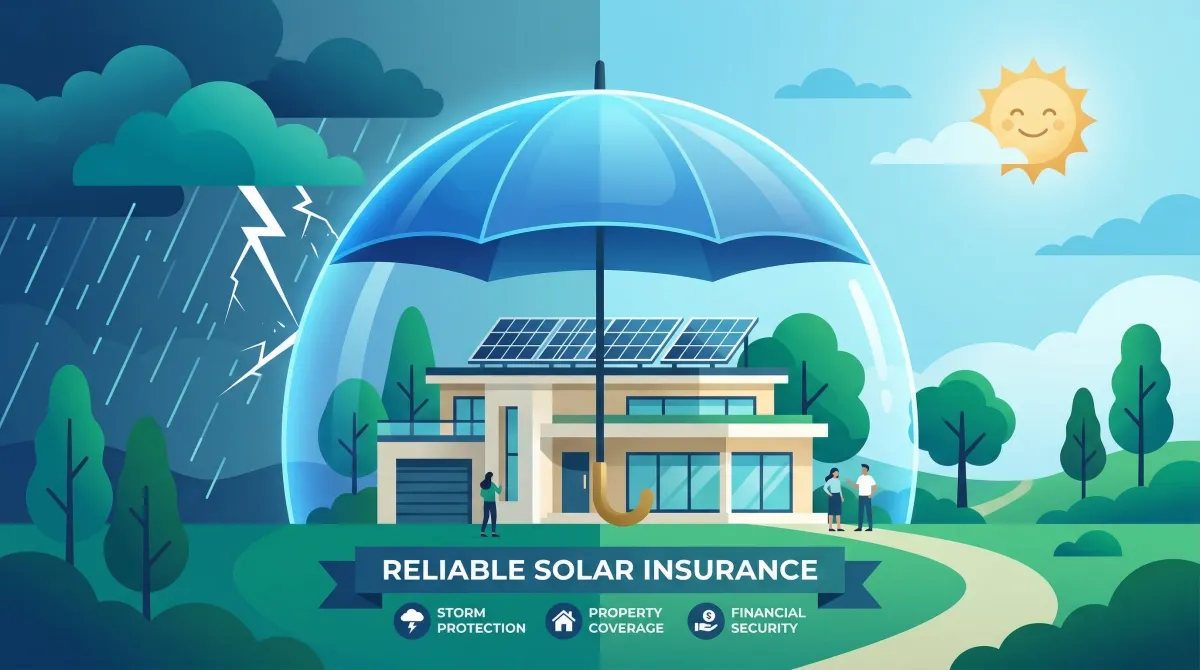
Quick Answer
Yes, standard homeowners insurance covers rooftop solar panels as a permanent dwelling attachment. You do not need a separate policy. However, you must increase your dwelling coverage by the full installed cost of your system ($25,000 to $35,000 for a typical home). Expect a premium increase of $120 to $300 per year. Always notify your insurer within 30 days of installation.
What Solar Insurance Covers (and What It Does Not)
Rooftop solar panels are classified as a permanent attachment to your dwelling — the same category as a skylight, chimney, or built-in appliance. This means they are covered under your dwelling coverage (Coverage A) for the same perils as the rest of your house. Ground-mounted systems typically fall under Coverage B (Other Structures).
Typically Covered
- ✓ Hail and windstorm damage
- ✓ Fire and lightning strikes
- ✓ Falling trees and objects
- ✓ Vandalism and theft
- ✓ Weight of ice and snow
- ✓ Vehicle or aircraft impact
- ✓ Critter/vermin damage to wiring
Typically NOT Covered
- ✗ Normal wear and degradation
- ✗ Manufacturing defects
- ✗ Electrical malfunction (no external cause)
- ✗ Flood damage (requires separate NFIP policy)
- ✗ Earthquake (requires separate rider)
- ✗ Improper or unpermitted installation
- ✗ Cosmetic damage (no functional impact)
Ground-Mount Warning
Ground-mounted systems are covered under Coverage B (Other Structures), which is typically only 10% of your dwelling coverage. If your dwelling coverage is $350,000, Coverage B is only $35,000 — shared with your garage, shed, and fence. A large ground-mount system may require increasing this limit separately.
How Much Does Insurance Increase with Solar?
The rule is simple: increase your dwelling coverage by the full replacement cost of your solar system. The premium increase is proportional to the coverage increase — typically 1 to 3% of the added coverage amount, annualized.
| System Size | Typical System Cost | Coverage Increase | Est. Premium Increase |
|---|---|---|---|
| 6 kW | $17,000 - $20,000 | $17,000 - $20,000 | $8 - $15/mo |
| 8 kW | $22,000 - $26,000 | $22,000 - $26,000 | $10 - $18/mo |
| 10 kW | $28,000 - $33,000 | $28,000 - $33,000 | $12 - $22/mo |
| 12 kW+ | $33,000 - $40,000+ | $33,000 - $40,000+ | $15 - $25/mo |
Premium increases vary by insurer, location, and existing coverage level. These are national averages for 2026. Get actual quotes from your insurer.
Use the Gross Cost, Not the Net
Always base your coverage increase on the full installed cost of the system — not the price after any state incentives or financing discounts. If your system cost $30,000 to install, increase your dwelling limit by $30,000 regardless of any rebates you received.
Replacement Cost vs. Actual Cash Value
This is one of the most important decisions for solar homeowners. The type of coverage you carry determines how much your insurer pays when panels are damaged.
Replacement Cost (Recommended)
- Pays to replace damaged panels with new, equivalent equipment
- No depreciation deducted from the payout
- Covers current market prices for labor and materials
- Typically only $3-$8/month more than ACV
Example: 10-year-old panel destroyed by hail
Payout: $350 (full replacement cost)
Actual Cash Value (ACV)
- Pays replacement cost minus depreciation
- Payout decreases each year as panels age
- After 10 years, payout may be 50-60% of new cost
- Can leave you paying thousands out of pocket
Example: 10-year-old panel destroyed by hail
Payout: $175 (after 50% depreciation)
What to Tell Your Insurer Before Installation
Contact your insurance agent before your installation begins — or within 30 days of completion at the latest. Here is a checklist for that conversation:
- 1Provide the installation contract showing the total system cost, system size (kW), and equipment specifications.
- 2Request your dwelling coverage be increased by the full installed cost of the system.
- 3Ask whether your policy covers solar as a dwelling attachment or requires an endorsement.
- 4Confirm you have replacement cost coverage, not actual cash value, for your dwelling.
- 5Ask about equipment breakdown endorsements that cover electrical failures not caused by a named peril.
- 6Request a written confirmation of the coverage update for your records.
- 7If ground-mounted, ask about increasing your Coverage B (Other Structures) limit.
Specific Hazard Coverage: Hail, Wind, Fire
Hail Damage
Solar panels are engineered to withstand 1-inch diameter hail at 52 mph (IEC 61215 standard). Most hailstorms fall within this range. However, severe hailstorms with 2-inch+ hailstones can crack tempered glass, reducing output and potentially voiding the panel warranty.
Hail damage is covered under your windstorm/hail peril. In hail-prone states (TX, CO, OK, NE), some insurers charge higher premiums or apply separate hail deductibles (often 1 to 2% of dwelling coverage instead of a flat dollar amount).
Wind Damage
Properly installed panels are rated for 90+ mph winds (many rated to 140 mph). Wind damage to panels is rare — the more common issue is wind lifting panels that were improperly attached, which can also damage the roof underneath. This is covered by insurance but may trigger questions about installation quality. Using a licensed, certified installer protects you from this concern.
Fire
Fire damage to solar panels is fully covered. However, solar panels can complicate firefighting operations because they generate electricity whenever exposed to light. NEC 2017+ requires rapid shutdown systems that de-energize rooftop conductors within 30 seconds — this is now standard on all new installations. Older systems without rapid shutdown may face slightly higher premiums from some insurers.
Roof-Mounted vs. Ground-Mounted Coverage
Where your panels are installed determines which part of your homeowners policy covers them. This distinction matters more than most homeowners realize.
| Factor | Roof-Mounted | Ground-Mounted |
|---|---|---|
| Coverage Type | Coverage A (Dwelling) | Coverage B (Other Structures) |
| Default Coverage Limit | Full dwelling limit | 10% of dwelling (often too low) |
| Action Needed | Increase dwelling limit | May need to increase Coverage B |
| Liability Risk | Minimal (attached to home) | Higher (near property lines) |
| Theft Risk | Very low (hard to access) | Higher (accessible from ground) |
Leased vs. Owned Panels: Who Insures What?
Owned Panels
- You insure through your homeowners policy
- Covered as a dwelling attachment (Coverage A)
- You file claims and receive payouts directly
- Full control over coverage level and insurer
Leased / PPA Panels
- Leasing company insures the equipment
- Covered under their commercial property policy
- They handle claims, repairs, and replacements
- Verify their coverage in writing before signing
Important for Leased Panels
Even though the leasing company insures the panels, you should still ensure your own homeowners policy covers any roof damage that could result from a panel-related incident. If a leased panel dislodges in a storm and damages your roof, your insurer covers the roof repair while the leasing company covers the panel.
Warranty vs. Insurance: Know the Difference
Solar systems come with multiple warranties. Using insurance for a warranty issue wastes your deductible and can increase your premiums. Using a warranty for an insurance issue may not be possible. Know which to use:
| Issue | Use Warranty | Use Insurance |
|---|---|---|
| Panel degradation below spec | Yes (25-30yr) | No |
| Inverter failure (no external cause) | Yes (12-25yr) | No |
| Hail cracks panel glass | No | Yes |
| Tree falls on array | No | Yes |
| Roof leak at mount point | Workmanship warranty | If weather-caused |
| Squirrel chews wiring | No | Usually (vermin) |
| Lightning surge fries inverter | No | Yes |
Filing a Claim for Solar Panel Damage
If your solar panels are damaged, the claims process follows the same steps as any homeowners insurance claim — with a few solar-specific considerations:
Check the warranty first
Before filing an insurance claim, determine whether the issue is covered by your manufacturer warranty (degradation, defects) or workmanship warranty (installation errors). Using insurance for warranty issues wastes your deductible and increases future premiums.
Document the damage thoroughly
Take photos from the ground and roof level. Check your monitoring app for production drops — a sudden decrease in a specific panel's output confirms physical damage. Save monitoring screenshots as evidence alongside the photos.
Contact your insurer
File as dwelling damage (rooftop) or Other Structures damage (ground mount). Mention that panels are a permanent attachment. Provide your original installation invoice showing the system cost and specifications.
Request a solar-experienced adjuster
General adjusters sometimes underestimate repair costs because they are unfamiliar with panel replacement, inverter compatibility, electrical re-permitting, and the labor involved in partial array repairs. Ask for an adjuster who has handled solar claims.
Get a repair estimate from your installer
Contact your solar installer for an independent repair estimate. This gives you leverage if the insurer's estimate seems low. Include costs for panel removal/reinstall, new panels, electrical work, and re-permitting.
Which Insurers Are Solar-Friendly?
Not all insurers treat solar the same. Some offer green energy endorsements and minimal surcharges, while others charge above-average premiums. Here is how major national carriers handle solar:
| Insurer | Solar-Friendly? | Notes |
|---|---|---|
| State Farm | Yes | Covers as dwelling attachment, minimal premium increase |
| USAA | Yes | One of the most solar-friendly; green energy endorsement |
| Amica | Yes | Dividend policy can offset premium increase; popular in NE |
| Nationwide | Yes | Green energy discount; covers solar equipment |
| Liberty Mutual | Moderate | Covers solar but may require separate endorsement |
| Allstate | Moderate | Covers as dwelling but premiums can run higher |
| Farmers | Moderate | Green endorsement available in select states |
After installing solar, get quotes from 2 to 3 insurers. Some offer “equipment breakdown” endorsements that cover electrical component failure not caused by a named peril — valuable for inverter surge protection.
State-Specific Insurance Considerations
Insurance regulations and weather risks vary by state, which affects how solar is covered and priced. Here are considerations for NuWatt service areas:
Massachusetts
Low hail risk. Most insurers cover solar with minimal surcharge. SMART incentive income is not an insurable interest — it does not affect your coverage. Nor'easters and heavy snow loads are the primary perils.
Connecticut
Similar to MA — low hail, moderate wind exposure. Eversource and UI territory. Most CT insurers, including Amica (headquartered in RI), handle solar seamlessly. Hurricane/tropical storm riders may apply along the coast.
New Hampshire
Heavy snow loads are the primary risk. Ensure your policy covers ice/snow damage to panels. Property tax exemption (RSA 72:62) means solar does not increase your assessed value, which keeps insurance costs stable.
Rhode Island
Coastal properties face higher wind and flood premiums. Inland installations are straightforward. If in a flood zone, your NFIP policy does NOT cover solar panels — you need a separate rider or endorsement.
Maine
Heavy snow, ice storms, and falling trees are the main perils. CMP and Versant territories. Most Maine insurers cover solar without issue. Consider critter guard installation — squirrel damage claims are common in rural areas.
Texas
Hail is the dominant risk. Some TX insurers apply separate hail deductibles (1-2% of dwelling). In hail-prone areas (DFW, San Antonio), expect higher premiums. Consider hail-resistant panel ratings (Class 4) for potential insurance discounts.
7 Ways to Reduce Solar Insurance Costs
Use a licensed, certified installer
Insurers look favorably on professionally installed systems. Unpermitted or DIY installations can result in claim denials. Always use a NABCEP-certified or state-licensed installer.
Install critter guards
Wire mesh critter guards prevent squirrels, birds, and other animals from nesting under panels and chewing wiring. This reduces one of the most common solar insurance claims. Cost: $500-$1,500 installed.
Use a monitoring system
Real-time monitoring (Enphase, SolarEdge) detects production drops immediately, allowing you to catch damage early before it worsens. Some insurers offer discounts for monitored systems.
Bundle home and auto insurance
Bundling discounts (10-25%) can more than offset the solar premium increase. If your current insurer charges too much for solar, check if a competitor offers a better bundle rate.
Increase your deductible
Raising your deductible from $1,000 to $2,500 can reduce your overall premium by 10-20%. This makes sense if you have an emergency fund to cover the higher out-of-pocket cost.
Ask about green energy discounts
State Farm, USAA, Nationwide, and others offer explicit discounts for homes with solar, energy-efficient features, or green certifications. Ask your agent specifically about these.
Review coverage annually
Solar panels depreciate slowly (0.5% per year), so after 10-15 years you may be able to reduce your coverage increase slightly. However, replacement costs can change — verify with current market prices.
Frequently Asked Questions
Does homeowners insurance cover solar panels?
Yes. Rooftop solar panels are classified as a permanent attachment to your dwelling and are covered under your standard homeowners insurance policy (Coverage A). Ground-mounted systems fall under Coverage B (Other Structures). However, you must increase your dwelling coverage limit by the full replacement cost of the solar system to avoid being underinsured. Contact your insurer within 30 days of installation to update your policy.
How much does homeowners insurance increase with solar panels?
Most homeowners see a premium increase of $10 to $25 per month ($120 to $300 per year) depending on system size, location, and insurer. A 6 kW system typically adds $8 to $15 per month, while a 12 kW+ system may add $15 to $25 per month. Some insurers offer green energy discounts that partially offset the increase. Always compare quotes from 2-3 insurers after installing solar.
What happens if my solar panels are damaged by hail?
Hail damage to solar panels is covered under your windstorm/hail coverage. You pay your standard deductible (usually $1,000 to $2,500), and the insurer covers the repair or replacement cost. Modern panels are tested to IEC 61215 standards and withstand 1-inch hail at 52 mph, but larger hailstones can crack tempered glass. Document damage with photos and monitoring app screenshots showing production drops before filing the claim.
Do I need a separate insurance rider for solar panels?
Most homeowners do not need a separate rider for standard rooftop solar. Your existing dwelling coverage applies. However, you should consider an equipment breakdown endorsement if you want coverage for electrical component failures not caused by a named peril (storm, fire, etc.). Ground-mounted systems may require increasing your Coverage B (Other Structures) limit if the standard 10% of dwelling coverage is insufficient.
Are leased solar panels covered by my homeowners insurance?
No. If your solar panels are leased, the leasing company owns the equipment and is responsible for insuring it. Their commercial policy covers the panels for damage, theft, and liability. However, you should verify this with your leasing company in writing and confirm that their policy covers the full replacement cost. You may still want to ensure your own homeowners policy covers any roof damage that could result from a panel-related incident.
Does solar void my homeowners insurance?
No. Installing solar panels does not void your homeowners insurance. However, failing to notify your insurer about the installation could create problems during a claim. If your dwelling coverage limit does not account for the added value of the solar system, you could be underinsured — meaning the insurer pays less than the full repair cost. Always notify your insurer before or immediately after installation.
Are solar panels covered if a tree falls on them?
Yes. Falling trees and branches are a named peril in virtually all homeowners insurance policies. If a tree falls on your solar panels, the damage is covered under your dwelling coverage (rooftop) or Other Structures coverage (ground mount). You pay your deductible and the insurer covers repair or replacement. The cost to remove the tree may also be covered up to your policy limit for debris removal.
Should I get replacement cost or actual cash value coverage for solar?
Always choose replacement cost coverage. Replacement cost pays to replace your damaged panels with new, equivalent equipment at current market prices. Actual cash value (ACV) deducts depreciation, meaning you receive far less — especially for panels that are 5-10+ years old. The premium difference between replacement cost and ACV is typically small ($3-$8/month) and well worth the protection.
Ready to Add Solar to Your Home?
We handle permitting, installation, and can help you coordinate with your insurer. Get a free estimate and see what solar looks like for your home.
Get Your Free Solar Estimate