Loading NuWatt Energy...

We use your location to provide localized solar offers and incentives.
We serve MA, NH, CT, RI, ME, VT, NJ, PA, and TX
Loading NuWatt Energy...
NuWatt designs, installs, and manages solar, battery, heat pump, and EV charger systems across 9 states. One company, one warranty, one point of contact.
Get a Free QuoteFor commercial sites chasing utility rebates or metered charging, networked is the only viable answer. Non-networked fits a narrow edge case and loses on 5-year TCO.
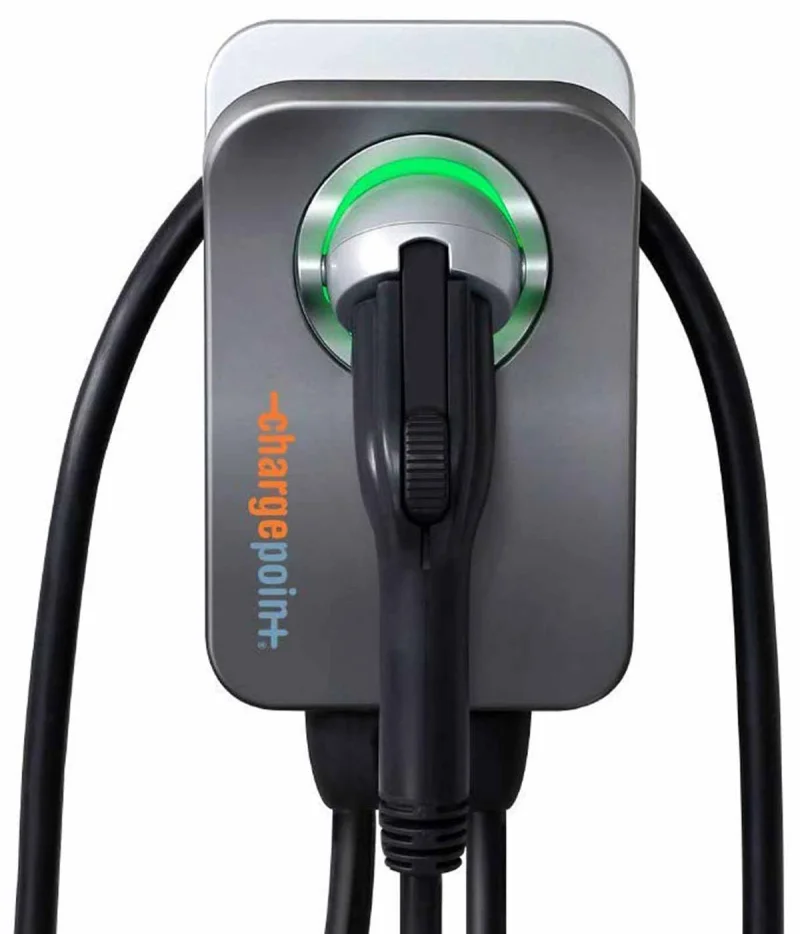
OCPP · billing · load mgmt · rebate-eligible
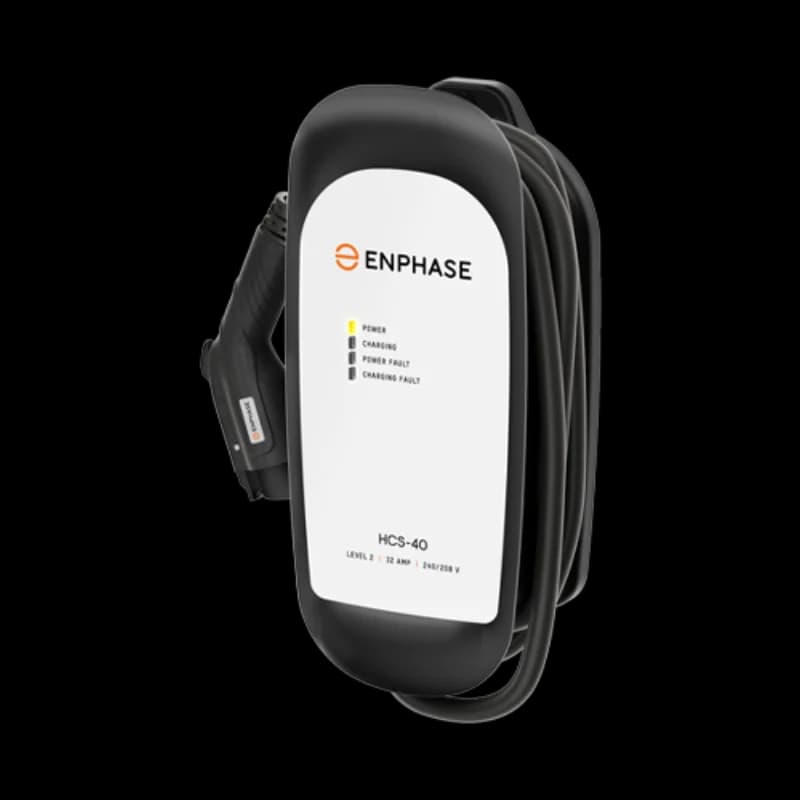
Hard-wired switched outlet · no telemetry
Networked EV chargers are better for nearly every commercial deployment in 2026. They cost $300–$600 more per port and $120–$360/yr in fees, but are required for utility rebates and state programs like MassEVIP and PSE&G, which typically cover far more than the premium.
Check = supported. X = not possible. Tilde = technically yes but operationally stranded.
A non-networked charger looks cheaper on the sticker. Once utility rebates, load management savings, and revenue capture are stacked, networked is 3–6x cheaper on 5-year TCO.
Modeled for a 6-port Connecticut workplace with EnergizeCT + Eversource make-ready applied to the networked scenario. Non-networked forfeits all utility stacking.
The non-networked site pays ~2x over five years. Every dollar of apparent hardware savings is more than wiped out by lost rebates, larger panel upgrades, and zero revenue recovery. This is why NuWatt has not deployed a non-networked L2 on a commercial site in 18 months.
If you answer “yes” to any of the first four questions, you need networked.
Will you apply for any utility or state EV rebate?
YES → networkedWill you bill drivers, residents, tenants, or guests per-session?
YES → networkedDo you have 4+ ports on a panel that would need upgrading without load mgmt?
YES → networkedWill any fleet or sustainability dashboard ever need session data?
YES → networkedAll four NO? Non-networked can work.
Off-grid, single-driver, or construction-trailer use cases. Otherwise, the answer is always networked.
Hardware premium $300–$600/port. Rebate + load management savings $3,000–$17,000/port. The math isn’t close.
Workplace / multifamily / fleet / municipal.
Approx. 1% of our scoped deployments.
Many residential rebates accept non-networked.
When customers ask about non-networked units, the conversation usually shifts within 10 minutes once we run the stacked-incentive math on their actual site. The networked choice wins by 3–6x on 5-year TCO. If this page is relevant to you, you’re in the commercial market, and the commercial answer is clear.
What happens inside the first 6 months on a dumb commercial install.
Every major utility and state program requires networked. Losing $3,900/port from National Grid + 60% MassEVIP stacking is the biggest dollar leak.
Without networked load balancing, 8 ports need 77 kW of service. With load mgmt, the same 8 ports run on 40 kW. The upgrade delta dwarfs the subscription.
Non-networked can't meter. A moderately busy 4-port site burns $3,000–$6,000/yr in unrecovered electricity the business can't pass through.
A dumb charger charges anyone who plugs in. In multi-tenant, office park, or hotel-adjacent settings, this leaks steadily within year one.
Sustainability teams, fleet managers, and CFOs want session-level reporting. When the ESG report asks for per-port utilization, you have nothing.
A networked charger with a fault is often a remote firmware nudge. A dumb unit means an electrician visit every time — $200–$400 per incident.
Cloud plan fees have drifted up 6–12%/yr. Model 5-year TCO at 8% inflation rather than flat.
Upgrading a dumb charger later to qualify for rebates requires scrapping hardware. Sunk cost.
Some networked hardware restricts OCPP load-mgmt to their back-end. Verify OCPP 1.6J export before buying.
Almost always yes. The $300–$600 per-port hardware premium and $10–$30 per port per month network fee are recovered many times over by utility rebate eligibility, load management savings, and revenue capture from metered charging. MassEVIP, PSE&G, EnergizeCT, and most state programs require networked hardware as a condition of funding.
Last verified by NuWatt Engineering Team on 2026-04-14.
NuWatt stacks utility rebates and load management into every commercial EV design. We'll model your site with networked hardware and real incentive capture.