Loading NuWatt Energy...

We use your location to provide localized solar offers and incentives.
We serve MA, NH, CT, RI, ME, VT, NJ, PA, and TX
Loading NuWatt Energy...
NuWatt designs, installs, and manages solar, battery, heat pump, and EV charger systems across 9 states. One company, one warranty, one point of contact.
Get a Free Quote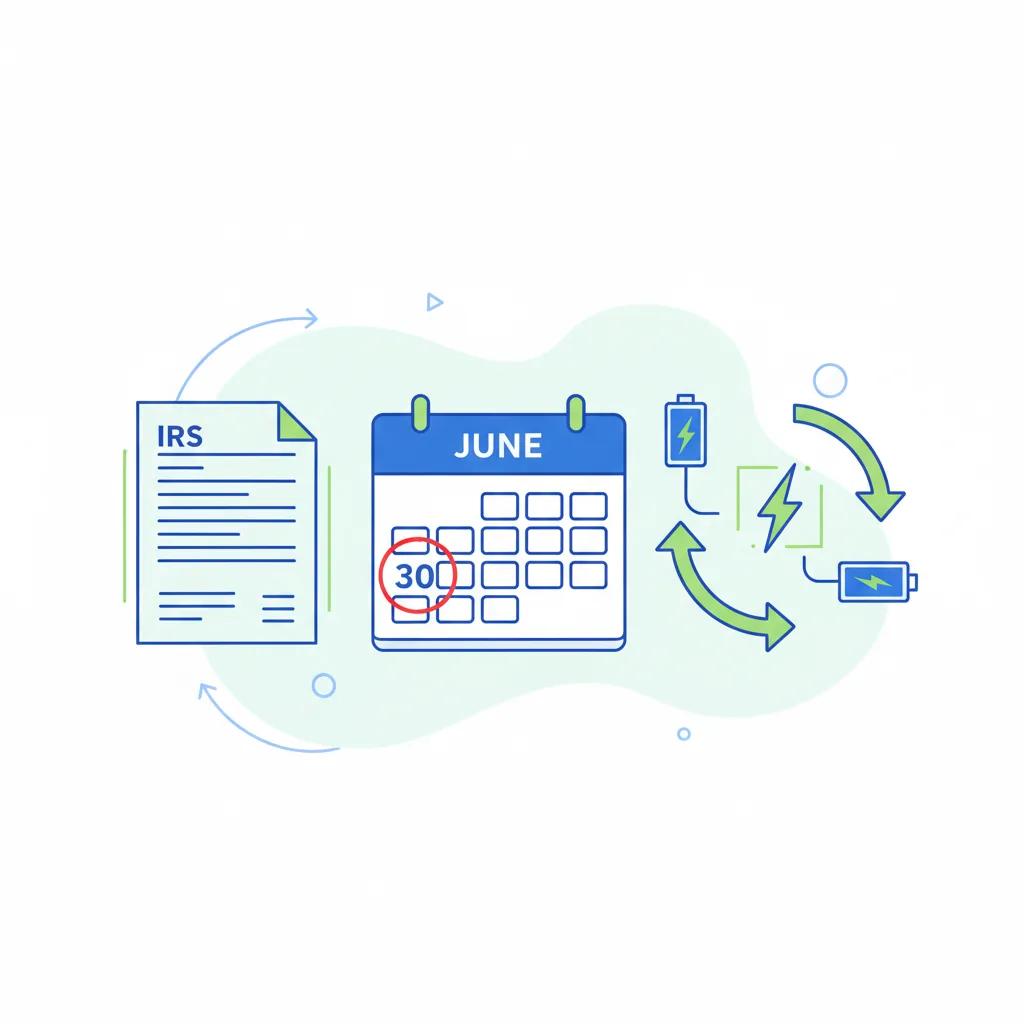
Up to 30% back on commercial EV charging — but only for projects energized by the OBBB sunset. The credit is gone for new installs; here is what qualified, what disqualified, and how to claim a pre-expiry install.
June 30, 2026
Expired
Up to 30%
Credit with PWA
$100,000
Per-item cap
Yes
Direct pay (nonprofit)
Section 30C expired for property placed in service after June 30, 2026, accelerated from 2032 by the One Big Beautiful Bill Act (P.L. 119-21). Property placed in service on that date or earlier can still be claimed on IRS Form 8911 — up to 30% of cost with prevailing wage and apprenticeship, capped at $100,000 per item, for chargers in qualifying low-income or non-urban census tracts. Later installs receive no federal 30C credit.
Section 30C ended for property placed in service after June 30, 2026
Chargers that were energized, commissioned, and utility-metered by June 30, 2026 can still be claimed on IRS Form 8911 for that tax year. Later installs receive no federal 30C credit.
Four gates, in order. A Form 8911 claim has to clear all four — fail any one and the project falls back to state + utility stacks only.
You can claim up to 30% of cost on IRS Form 8911, capped at $100,000 per port or storage item.
Skipping prevailing wage + apprenticeship cut the Section 30C claim by 80 percent. Which tier you file on Form 8911 depends on the PWA records from the install.
PWA labor premium on a typical electrical project ran 5-12% — net-positive on any item over $20K of basis, which is why most qualifying installs were built PWA-compliant.
We audited every project against this list before quoting it as 30C-eligible. Your CPA should do the same before filing Form 8911.
Always pull the 11-digit GEOID and cross-check IRS Notice 2024-20. Eyeballing fails.
The 30% tier can only be claimed if certified payroll and apprentice logs from the install substantiate PWA.
Each charging port is one item — not each pedestal. A dual-port is two items, $200K combined cap.
A utility meter set after Jun 30, 2026 kills the credit. The meter-set record is your placed-in-service evidence.
Nonprofits must register each facility on IRS Energy Credits Online portal before filing.
30C = chargers. 48E = solar. Two different line items, different basis calculations.
Under IRA Section 6417, tax-exempt entities can take 30C as elective pay for property placed in service by June 30, 2026. Even with zero tax liability, the IRS issues a Treasury refund.
Confirm GEOID eligibility + itemize ports/storage units for your installation address.
Submit each facility on Energy Credits Online up to 120 days before filing.
The property had to be energized, commissioned, and meter-set by this date. Save acceptance-test documentation.
Attach to Form 990-T with elective-payment election checkbox.
IRS Treasury refund check — even with zero federal tax liability.

Paste your 11-digit GEOID into the free checker. No backend data needed — it walks you through the IRS verification path.
Section 30C expired for alternative-fuel vehicle refueling property placed in service after June 30, 2026. This cutoff was not the original statutory one. The credit was scheduled to run through December 31, 2032 under the Inflation Reduction Act. The One Big Beautiful Bill Act (OBBBA, P.L. 119-21) accelerated the sunset for EV charging and alternative-fuel infrastructure. Generation-side credits such as Section 48E have separate July 4, 2026 construction-start and December 31, 2027 placed-in-service timing rules for most wind and solar projects. For any business that installed commercial EV charging, June 30, 2026 is now the controlling date: property placed in service by that date can still be claimed on Form 8911 for that tax year, while later installs receive no federal 30C credit.
“Placed in service” is a term of art. It does not mean ordered, shipped, or even installed. It means the property is in a state of readiness and availability for its specifically assigned function. For an EV charger, that means: hardware energized, network commissioned and communicating, utility meter set, electrical inspection signed, and the unit is capable of delivering a charge to a vehicle. A charger sitting on a pallet in a closet on July 1, 2026 does not qualify, even if the invoice was paid in January.
| Element | Detail |
|---|---|
| Base credit | 6% of qualified cost (business property without PWA) |
| Bonus credit with PWA | 30% of qualified cost (prevailing wage + apprenticeship) |
| Per-item cap | $100,000 per charging port or per storage unit |
| Eligible property | Level 2 EV chargers, DCFC, bidirectional chargers, CNG / LNG / propane / hydrogen refueling, associated storage and dispensing equipment |
| Placed-in-service cutoff | June 30, 2026 — expired (accelerated by OBBBA, P.L. 119-21) |
| Census-tract gate | Low-income community (Sec 45D(e)) OR non-urban tract (pop. under 50,000). Per IRS Notice 2024-20. |
| Direct / elective pay | Yes for tax-exempt entities under IRA Section 6417 |
| Transferability | Yes under IRA Section 6418 for eligible taxpayers |
| Primary reference form | IRS Form 8911 |
Technically no — but in practice, almost always yes. Without prevailing wage and apprenticeship (PWA), the base credit is only 6 percent of cost. With PWA, it is 30 percent. On a $500,000 DCFC project that is a $120,000 swing. On a multifamily 25-port project at $275,000 gross, it is a $66,000 swing. The labor premium for PWA compliance on a typical electrical project ran 5 to 12 percent, so PWA was net-positive for any credit-eligible project larger than a single-port Level 2 — and the tier you file on Form 8911 now depends entirely on whether the install met PWA.
PWA has two parts. Prevailing wage means every laborer and mechanic on the installation is paid at least the Davis-Bacon prevailing wage for the locality and the applicable labor category for the duration of construction, alteration, or repair. The rate sheet is published by the Department of Labor. Apprenticeship requires that qualified apprentices from a registered apprenticeship program perform a minimum percentage of total labor hours (12.5 percent through 2024, stepping up thereafter) and that specific participation and ratio requirements are met. Good-faith-effort safe harbors exist where apprentice availability is insufficient.
NuWatt handled PWA compliance as part of turnkey delivery: Davis-Bacon payrolls, certified weekly reports, apprentice logs, and the documentation package the IRS expects if a claim is audited. If we built your project, that package is on file.
This is the provision that killed more projects than any other. After the Inflation Reduction Act, Section 30C was narrowed to apply only in two kinds of census tracts:
The IRS provides a machine-readable list via Notice 2024-20 and the Energy Communities IRA mapping tool. You do not eyeball this. You take the installation address, geocode it to a GEOID (Census Tract 11-digit code), and cross-check the GEOID against the published list. Roughly two-thirds of U.S. census tracts qualify, but many of the dense commercial and suburban office tracts where businesses actually want chargers do not. This is the single largest reason otherwise-qualifying projects missed the credit.
Tract eligibility locked in at the placed-in-service date, so the verification belongs in every Form 8911 file. You can run a preliminary check yourself using our 30C tract checker tool (beta — confirm results with your NuWatt rep before filing).
The mechanics are straightforward if you have the documentation. Businesses file IRS Form 8911 (Alternative Fuel Vehicle Refueling Property Credit) with their federal income tax return for the year the charger was placed in service — June 30, 2026 at the latest. Partnerships and S-corporations file at the entity level and flow the credit to partners or shareholders on Schedule K-1. C-corporations claim the credit directly against corporate income tax liability.
Required documentation package:
The credit is non-refundable for regular taxpayers. If the business cannot use the full credit in year one, the excess carries forward 20 years under Section 39 (general business credit carryover rules). It can also be transferred (sold for cash) to an unrelated third party under Section 6418 if the taxpayer is eligible.
Yes. This is one of the most under-used features of the post-IRA credit regime. Under Section 6417 (elective or “direct” pay), tax-exempt entities can treat Section 30C as a refundable payment, meaning the IRS cuts a check even when the entity has no federal income tax liability. Eligible entities include:
Process: (1) pre-register each facility on the IRS Energy Credits Online portal before filing (this takes up to 120 days so start early), (2) complete Form 8911 with the facility registration number, (3) attach Form 3800 with the elective-payment election, (4) file with the entity's annual information return (Form 990-T for 501(c)(3) with UBI, Form 1120-POL for governments, or the special return applicable), (5) receive the refund. Most non-profits use the same turnkey project-structure we describe on our multifamily page, layering 30C direct pay on top of utility rebates.
$100,000 per item. The interpretation of “item” is the critical nuance. Under the IRS final regulations published in 2024, each individual charging port counts as a separate item of qualifying refueling property — not each pedestal, not each site. So a typical dual-port Level 2 pedestal is two items, with a $200,000 combined cap. A four-port DCFC plaza with integrated battery storage is five items: four charging ports plus one storage unit, capped at $500,000 combined. The cap is generous enough that few projects hit it on a per-item basis, but cost allocation matters for audit defense.
Both. Section 30C covered Level 2 and DCFC equally, plus bidirectional V2G-capable chargers, and alternative-fuel refueling for CNG, LNG, propane, and hydrogen. It did not cover residential-style NEMA 14-50 outlets, a bare conduit run without dedicated refueling equipment, or the vehicle itself. The hardware had to be dedicated to refueling and meet property-type definitions under Treasury Regulations implementing IRC Section 30C(c).
We audited every project against the list below before quoting it as 30C-eligible. Your CPA should run the same list before filing Form 8911.
Last verified by NuWatt Incentive Team on 2026-04-14. This page is educational and is not tax advice. Confirm eligibility with your CPA and NuWatt's incentive team before signing a contract or filing Form 8911.
Section 30C expired for property placed in service after June 30, 2026. This is the accelerated sunset set by the One Big Beautiful Bill Act (P.L. 119-21), replacing the previous 2032 expiration. "Placed in service" means energized and capable of being used — not merely purchased or installed. A charger that was sitting on site on July 1, 2026 but not energized and commissioned does not qualify. If your project was placed in service by the cutoff, keep the utility meter-set record and acceptance-testing documentation — they substantiate the placed-in-service date when you claim the credit on Form 8911.
The credit expired for later installs, but a charger energized, commissioned, and metered by the cutoff can be claimed on Form 8911. We assemble the tract verification, PWA records, and placed-in-service evidence your CPA will need.