Loading NuWatt Energy...

We use your location to provide localized solar offers and incentives.
We serve MA, NH, CT, RI, ME, VT, NJ, PA, and TX
Loading NuWatt Energy...
NuWatt designs, installs, and manages solar, battery, heat pump, and EV charger systems across 9 states. One company, one warranty, one point of contact.
Get a Free QuoteThe federal residential Section 30C EV charger tax credit expired June 30, 2026 and is no longer available. Home chargers installed after that date get $0 federal credit — but state and utility rebates plus off-peak charging rates still cut your cost. We compared the top five Level 2 chargers on the market to help you choose the right one.
The federal residential EV charger tax credit (Section 30C) provided up to $1,000 for home installations placed in service on or before June 30, 2026. It expired that date and is no longer available. State and utility EV charger rebates remain available in many areas, and off-peak charging rates further reduce ongoing costs. (The commercial Section 30C credit, up to $100,000 per item, also expired June 30, 2026; businesses that placed chargers in service by that date can still claim it on Form 8911.)
Side-by-side specs for Tesla Wall Connector, ChargePoint Home Flex, Emporia Smart Charger, Autel MaxiCharger, and Grizzl-E Classic.
| Spec | TeslaBest for Tesla Owners | ChargePointBest Overall | EmporiaBest for Solar Homes | AutelBest Display | Grizzl-EBest Budget |
|---|---|---|---|---|---|
| Price | $475-$600 | $549-$599 | $429-$499 | $549 | $399 |
| Max Amps | 48A | 50A | 48A | 50A | 40A |
| Max Power | 11.5 kW | 12 kW | 11.5 kW | 12 kW | 9.6 kW |
| Connector | NACS + J1772 | J1772 | J1772 | J1772 | J1772 |
| WiFi / App | Yes / Tesla | Yes / ChargePoint | Yes / Emporia | Yes / Autel | No |
| Solar Mode | No | No | Yes | No | No |
| Voice Control | No | Alexa + Google | No | No | No |
| Warranty | 4 years | 3 years | 3 years | 3 years | 3 years |
| Mounting | 14-50 / Hardwire | 14-50 / Hardwire | 14-50 / Hardwire | 14-50 / Hardwire | 14-50 only |
| Weather Rating | IP55 | IP55 | IP55 | IP55 | IP67 |
| Our Pick | Tesla owners | Best overall | Solar homes | Best display | Budget |
Step 1
Choose your charger and electrician
Step 2
Check state & utility EV charger rebates
Step 3
Professional install + permit inspection
Step 4
Enroll in off-peak / TOU charging rates
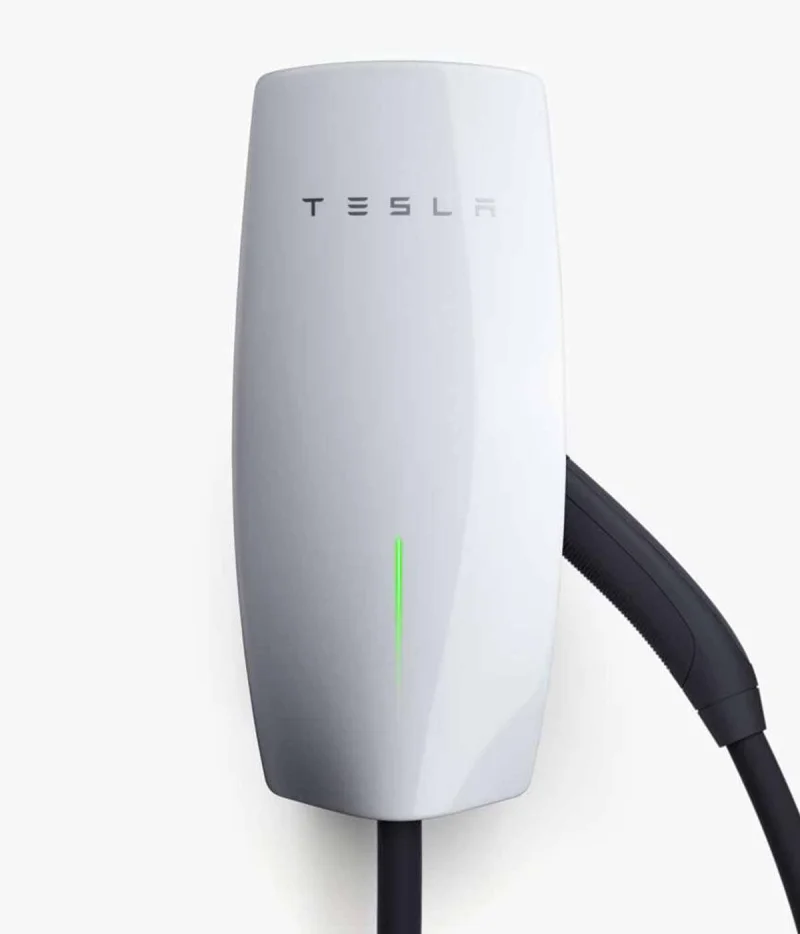
Best for: Tesla owners who want the cleanest integration with their vehicle and app ecosystem
Price
$475 - $600
Max Power
48A / 11.5 kW
Connector
NACS
Warranty
4 years
The Tesla Wall Connector is the clear winner for Tesla owners. The app integration is unmatched, power sharing is a game-changer for two-Tesla households, and the price is surprisingly competitive. Since 2024, the included J1772 adapter means it works with any EV, but you lose some smart features with non-Tesla vehicles.
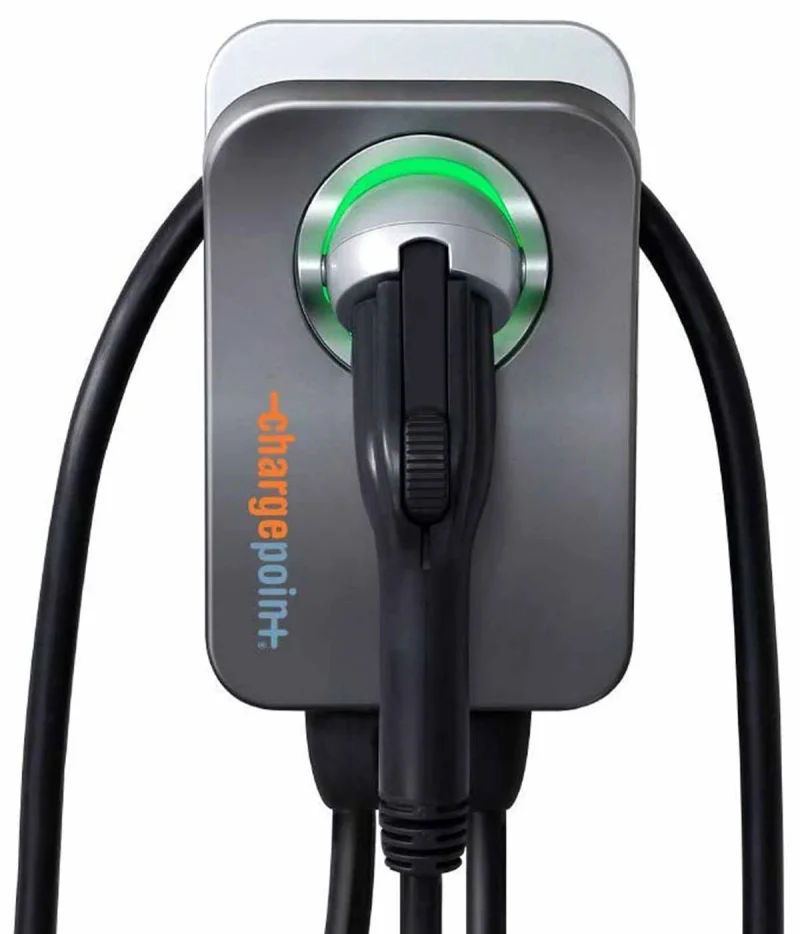
Best for: EV owners who want maximum flexibility, the highest power output, and smart home integration
Price
$549 - $599
Max Power
50A / 12 kW
Connector
J1772
Warranty
3 years
The ChargePoint Home Flex is our top overall pick. Its 50A / 12 kW output is the highest here, the adjustable amperage makes it universally compatible with any electrical setup, and the app delivers granular energy tracking. Smart home integration via Alexa and Google Home is a bonus that no competitor matches.
Best for: Solar homeowners who want to charge their EV with excess solar production and minimize grid dependence
Price
$429 - $499
Max Power
48A / 11.5 kW
Connector
J1772
Warranty
3 years
The Emporia Smart Charger is the standout choice for solar homeowners. Its Solar Capture Mode automatically modulates charging power to match your real-time solar production, meaning you charge your EV with free sunshine instead of grid electricity. For NuWatt solar customers, this translates to $500-$800 per year in avoided charging costs. No other charger in this price range offers this.
These two chargers are strong alternatives depending on your priorities — a premium display or the absolute lowest price.
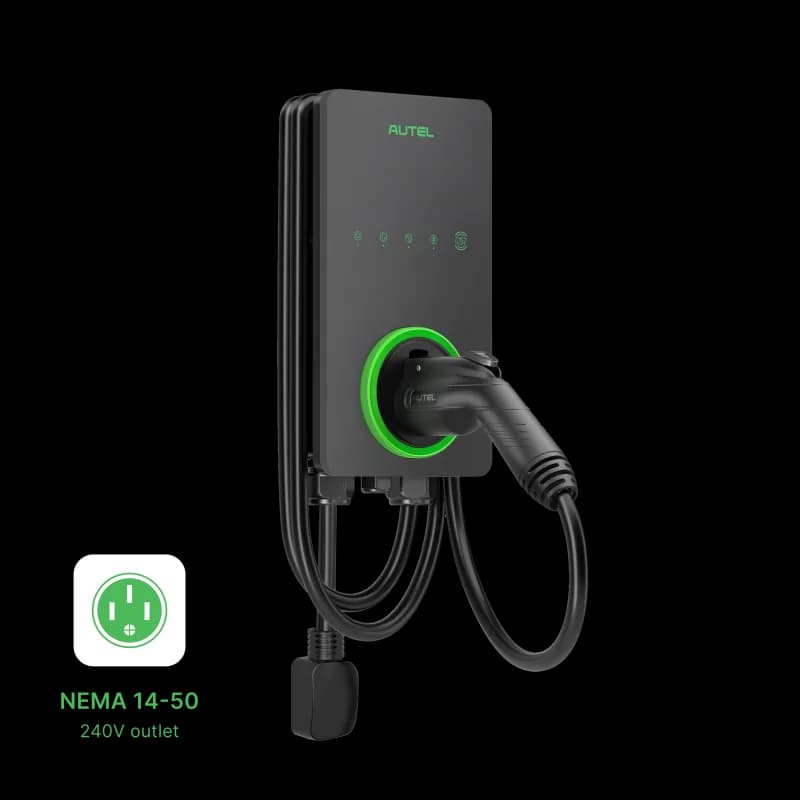
$549 | 50A / 12 kW
The Autel MaxiCharger is a solid choice if you value a built-in display. The large LCD shows charging status, energy delivered, and cost at a glance without pulling out your phone. Power output matches ChargePoint at 50A.
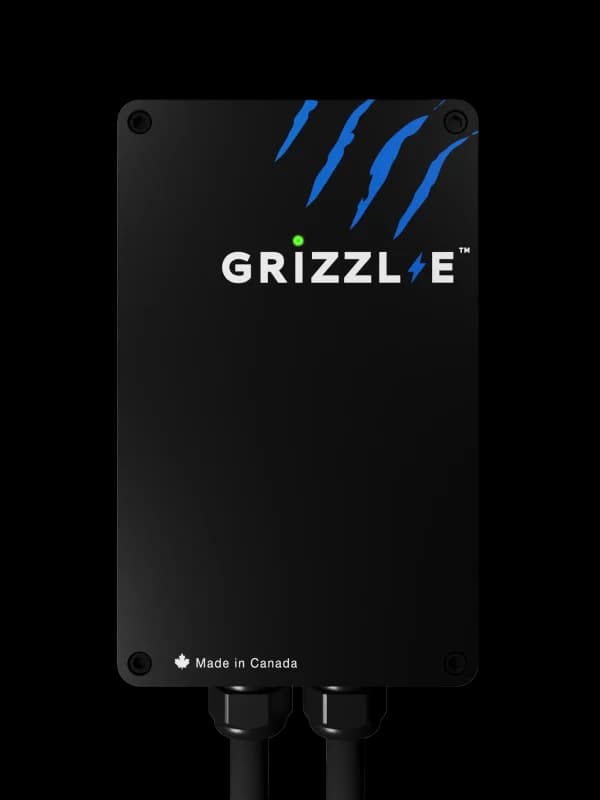
$399 | 40A / 9.6 kW
The Grizzl-E Classic is the charger for people who just want to plug in and charge. No app, no WiFi, no complexity. At $399 with IP67 waterproofing and -30°F operation, it is the best value charger on the market and a perfect fit for New England garages and outdoor installations.
Charging an EV at home typically costs $500-$1,200 per year at grid rates. With solar panels, that cost drops to near zero. The average EV driven 12,000 miles per year needs about 3,600 kWh — roughly what a 3 kW solar expansion produces annually. Pairing solar with a smart EV charger is one of the highest-ROI energy moves you can make.
The Emporia Smart Charger takes this further with its Solar Capture Mode. Instead of blindly drawing power at the maximum 48A rate, Solar Capture dynamically modulates the charging amperage to match your real-time excess solar production. When your panels produce 5 kW more than your home uses, the charger draws exactly 5 kW. When clouds pass, it throttles down. The result: your EV charges almost entirely on free solar energy during the day.
Emporia Vue monitors your solar production in real time
CT clamps on your electrical panel track exactly how much energy your solar panels are producing and how much your home is consuming.
Calculates excess solar production
If your panels produce 8 kW and your home uses 3 kW, there is 5 kW of excess energy available for EV charging.
Dynamically adjusts charging speed
The charger ramps up or down every few seconds to match available solar. No manual intervention needed.
Falls back to scheduled grid charging if needed
On cloudy days or when you need a full charge by morning, it seamlessly switches to grid power during off-peak TOU hours.
Important: The Section 25D residential solar tax credit expired December 31, 2025. New solar purchases no longer qualify for a federal tax credit. However, the Section 30C EV charger credit is still available through June 30, 2026, making this the last window to get federal money back on part of your solar+EV setup.
Even without solar panels, a smart EV charger saves money by scheduling charging during off-peak hours. In deregulated markets and states with TOU rates, the difference between peak and off-peak electricity can be 5-15 cents per kWh. Charging a 60 kWh battery during off-peak instead of peak saves $3-$9 per full charge, or $150-$450 per year for typical driving.
All three top-pick chargers (Tesla, ChargePoint, Emporia) support scheduled charging. The Grizzl-E Classic does not have scheduling built in, but most EV onboard systems can schedule charging independently.
All Level 2 EV chargers require a 240V circuit (same voltage as a clothes dryer or oven range). Most electricians install a dedicated 50A or 60A breaker for a 48A-50A charger. The circuit must be dedicated — no sharing with other appliances.
Your electrical panel needs available capacity for a new 50A-60A breaker. If your panel is already at capacity (common in older 100A panels), you may need a panel upgrade to 200A ($1,500-$3,000). Your electrician will assess this during the site visit.
Most cities and towns require a permit for new 240V circuits. The electrician typically pulls the permit and schedules the inspection. This process takes 1-3 weeks depending on your jurisdiction. Budget $50-$150 for the permit fee.
| Item | Cost |
|---|---|
Dedicated 240V circuit (new) Most common install requirement | $200 - $500 |
Panel upgrade (100A to 200A) Only if panel is at capacity | $1,500 - $3,000 |
Permit and inspection Required in most jurisdictions | $50 - $150 |
Charger mounting + wiring Included in many electrician quotes | $100 - $300 |
Total typical install Existing panel with capacity | $300 - $800 |
Lowering your cost: The federal residential 30C credit that once cut a typical $1,200 install by $360 (30%) expired June 30, 2026. State and utility EV charger rebates ($200-$1,500 in many areas) now do the heavy lifting on net cost.
Your best choice depends on your vehicle, your home energy setup, and your budget. Here is our recommendation for each scenario.
Tesla Wall Connector
Seamless app integration, power sharing, best-in-class Tesla experience. J1772 adapter included for future non-Tesla vehicles.
Emporia Smart Charger
Solar Capture Mode charges your EV with free excess solar production. Save $500-$800/yr on charging costs.
ChargePoint Home Flex
Highest power (50A/12kW), Alexa/Google Home, adjustable amperage, best app for energy tracking.
Grizzl-E Classic
Lowest price ($399), IP67 waterproof, works in -30°F. No smart features, but dead reliable.
Autel MaxiCharger
Built-in LCD shows status without your phone. 50A/12kW power output matches ChargePoint.
NuWatt Bundle
We design, install, and monitor your complete energy stack: solar panels, battery backup, and EV charger. One crew, one warranty, one app. Get a free quote and we'll find the state and utility rebates you qualify for.
No. The federal residential Section 30C credit (up to $1,000, 30% of cost) expired June 30, 2026 and is no longer available. Home chargers placed in service after that date receive $0 federal credit. State and utility EV charger rebates remain available in many areas. The commercial Section 30C credit (up to $100,000 per item) also expired June 30, 2026 for property placed in service after that date.
The residential Section 30C EV charger tax credit expired June 30, 2026 — a mid-year cutoff created by the OBBBA legislation signed July 4, 2025 (not December 31). Only chargers purchased and placed in service on or before that date qualified. There is no federal residential credit for installations after June 30, 2026.
The ChargePoint Home Flex is the best overall EV charger in 2026. It offers the highest power output (50A / 12 kW), adjustable amperage for any circuit, Alexa and Google Home integration, and an excellent app with energy tracking. For Tesla owners, the Tesla Wall Connector provides the best vehicle integration. For solar homeowners, the Emporia Smart Charger with Solar Capture Mode is unmatched.
Yes. Since 2024, Tesla includes a J1772 adapter with the Wall Connector, making it compatible with all EVs on the market (Chevrolet, Ford, Hyundai, BMW, etc.). However, some smart features like scheduled charging only work fully when paired with a Tesla vehicle. For non-Tesla EVs, the ChargePoint Home Flex offers better smart features.
Emporia Solar Capture Mode automatically adjusts your EV charging power to match your real-time excess solar production. When your panels produce more energy than your home uses, Solar Capture Mode ramps up EV charging to absorb that free energy. When solar production drops (clouds, evening), it reduces or pauses charging. This means your EV charges primarily on free solar energy rather than expensive grid power, saving $500-$800 per year on charging costs.
A typical Level 2 EV charger installation costs $300-$800 if your electrical panel has capacity for a new 240V, 50A circuit. If you need a panel upgrade from 100A to 200A, add $1,500-$3,000. The charger itself costs $399-$600 depending on the model. Total all-in cost ranges from $700 to $1,400 for most homes. The federal residential Section 30C credit that once returned up to $1,000 expired June 30, 2026, but state and utility rebates may still reduce your cost.
A licensed electrician is required for hardwired installations and strongly recommended for NEMA 14-50 plug installations. Most jurisdictions require a permit and inspection for new 240V circuits, and many state and utility rebate programs require professional, code-compliant installation. DIY installation may void the charger warranty and often disqualifies you from rebate programs.
A 48A Level 2 charger (11.5 kW) adds approximately 30-35 miles of range per hour. A 50A charger (12 kW) adds about 32-37 miles per hour. Most EVs with 60-80 kWh batteries charge from 20% to 100% overnight (8-10 hours). The Grizzl-E Classic at 40A adds 25-28 miles per hour, which is still plenty for overnight charging.
Yes, and it is one of the smartest energy investments you can make. The Emporia Smart Charger with Solar Capture Mode actively modulates charging to match solar production. Any EV charger can be paired with solar panels through time-of-use scheduling — charge during peak solar hours (10am-3pm). A typical solar homeowner who charges their EV with solar saves $500-$800 per year compared to grid charging. Note: the Section 25D residential solar tax credit expired December 31, 2025, and the residential 30C EV charger credit expired June 30, 2026 — both are no longer available.
NEMA 14-50 uses a standard 240V dryer-style plug outlet, making the charger portable and easy to swap. Hardwired connects the charger directly to your electrical panel with no plug — it is permanent but allows slightly higher amperage in some setups. Most chargers on this list support both options. The Grizzl-E Classic is NEMA 14-50 only. Both installation types are eligible for most state and utility rebate programs.
NuWatt installs EV chargers alongside solar, battery storage, and heat pumps. Get transparent pricing, professional electrical work, and help finding the state and utility rebates you qualify for. Serving MA, CT, RI, NH, ME, VT, NJ, PA, and TX.