Loading NuWatt Energy...

We use your location to provide localized solar offers and incentives.
We serve MA, NH, CT, RI, ME, VT, NJ, PA, and TX
Loading NuWatt Energy...
NuWatt designs, installs, and manages solar, battery, heat pump, and EV charger systems across 9 states. One company, one warranty, one point of contact.
Get a Free Quote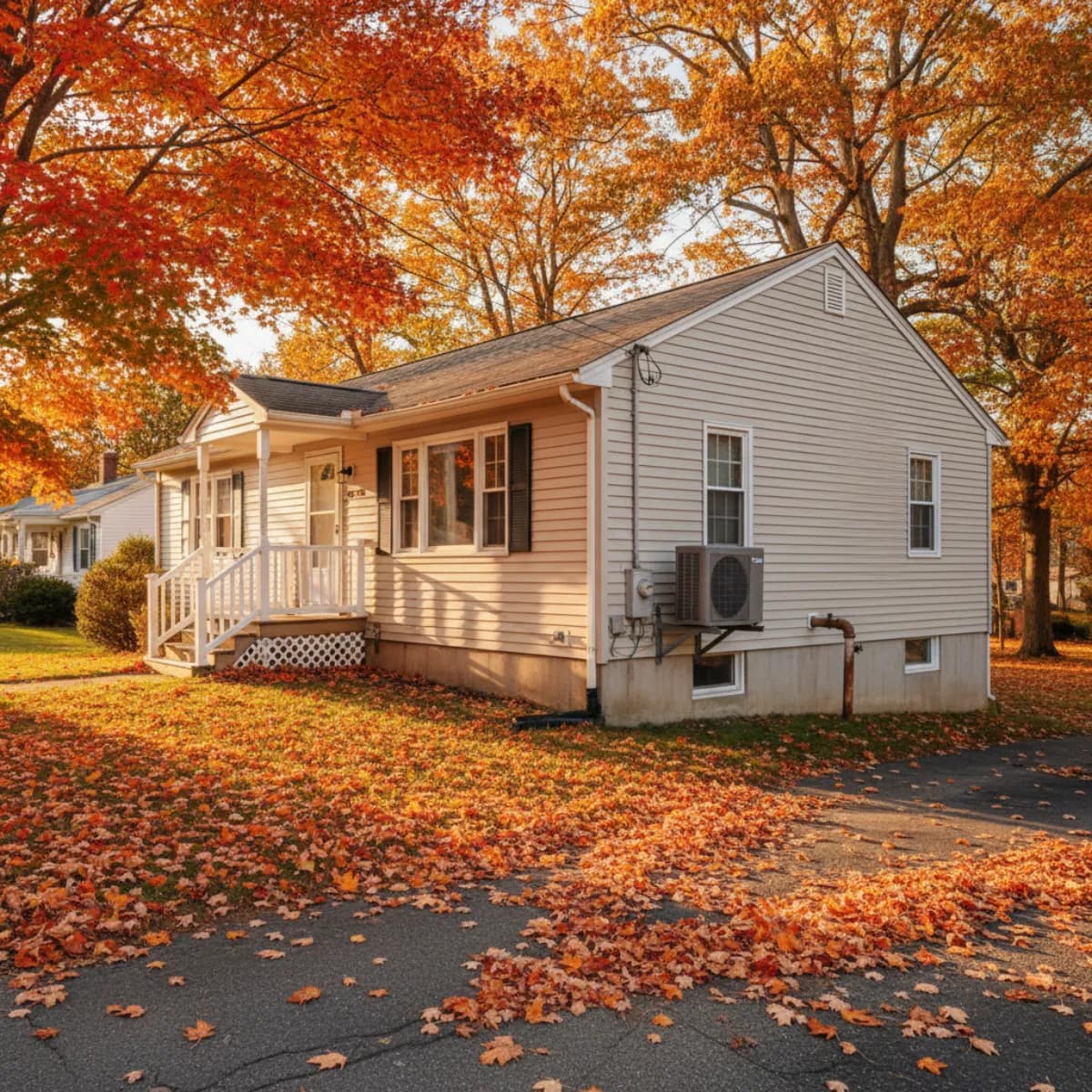
A Hudson raised ranch reduced oil furnace runtime with a 4-zone cold-climate ductless system. The design focused on finished lower-level comfort, NHSaves qualified product requirements, snow clearance, and a first-winter backup strategy.
A southern New Hampshire oil-to-heat-pump project should include cold-climate sizing, snow clearance, backup heat controls, NHSaves qualified product review, and room-by-room zoning. This Hudson case used a 3-ton Mitsubishi Hyper-Heat system with 4 indoor zones and kept oil backup for resilience.
| Category | Project Detail | Why It Matters |
|---|---|---|
| Home type | Raised ranch, 1,850 sq ft | Sets the envelope, duct, and zoning constraints. |
| Previous heating | Oil furnace with window AC | Determines fuel-switching economics and backup strategy. |
| Equipment | Mitsubishi Hyper-Heat ductless multi-zone system | Cold-climate equipment selection affects winter performance. |
| Capacity and zones | 3 tons, 4 zones | Shows whether the project is room-level or whole-home. |
| Rebate pathway | NHSaves standard air-source heat pump pathway | Rebate rules vary by state, utility, equipment, and project scope. |
| Cost range | $19,000-$26,000 before rebates | Useful for comparing quote reasonableness. |
| Net cost range | $18,250-$25,250 after standard rebate target | Shows cost after standard rebate target, before final approval. |
| Estimated savings | $1,600-$2,400 | Modeled operating-cost impact, not a guarantee. |
Raised ranches can have very different loads on upper and lower levels.
The homeowner wanted meaningful oil reduction without losing backup during cold snaps.
Outdoor unit placement needed a stand height and drainage plan for snow and defrost.
NHSaves eligibility required qualifying equipment and correct rebate documentation.
NuWatt split the home into four ductless zones covering the main living area, bedrooms, and lower-level family room.
The outdoor unit was mounted with snow clearance, service access, and defrost drainage in mind.
Oil backup was retained for the first winter and set below heat pump operation.
The rebate package used NHSaves HPQPL equipment assumptions and AHRI tonnage documentation.
| Decision | Reason | Field Note |
|---|---|---|
| Raise outdoor unit for snow | Southern NH storms and drifting can block low-mounted units. | Cold-climate installation details matter as much as equipment ratings. |
| Keep oil backup for first winter | Backup reduced transition risk while the homeowner learned heat pump operation. | A practical backup plan builds confidence and protects comfort. |
| Zone lower level separately | Finished basements and lower levels have different heating and humidity patterns. | Good zoning follows home behavior, not only floor area. |
Cold-climate ductless design.
Upper and lower-level comfort.
Standard NHSaves pathway.
Depends on backup settings.
Oil displacement plus cooling upgrade.
Multi-zone ductless installation.
Oil use, room loads, snow exposure, and utility territory review.
Manual J sizing, ductless zone plan, and outdoor placement.
Outdoor stand, indoor heads, line-set covers, electrical, and condensate planning.
Winter settings, backup thermostat behavior, and filter cleaning.
Final costs, rebates, and savings require a site-specific quote, utility confirmation, equipment selection, home energy assessment, and Mass Save approval.
Yes, when cold-climate equipment is sized correctly, installed with snow clearance, and commissioned for local winter conditions.
Yes. Many NH homeowners keep oil backup during the first winter and set it below heat pump setpoints.
NHSaves 2026 materials list a standard $250 per ton rebate for qualified air-source heat pumps, subject to eligibility and funding.
Snow, ice, and defrost water can reduce performance or block service access if a unit is mounted too low.
It depends on duct availability and room layout. Ductless can work well when upper and lower levels need separate control.