Loading NuWatt Energy...

We use your location to provide localized solar offers and incentives.
We serve MA, NH, CT, RI, ME, VT, NJ, PA, and TX
Loading NuWatt Energy...
NuWatt designs, installs, and manages solar, battery, heat pump, and EV charger systems across 9 states. One company, one warranty, one point of contact.
Get a Free QuoteBrowse anonymized heat pump case studies from Massachusetts, Connecticut, and New Hampshire covering oil conversions, ductless mini-splits, condos, old homes, ducted systems, coastal installs, finished basements, and solar plus heat pump planning.
NuWatt handles heat pump projects ranging from single-room mini-splits to whole-home oil conversions, ducted heat pump retrofits, condo installations, old-home hybrid systems, NHSaves and Energize CT rebate pathways, and solar plus heat pump electrification plans. Every project starts with load sizing, rebate pathway review, equipment selection, and installation planning.
Each case study includes project scope, system design, rebate pathway, decision table, cost assumptions, images, and common homeowner questions.
Showing 15 of 15 case studies
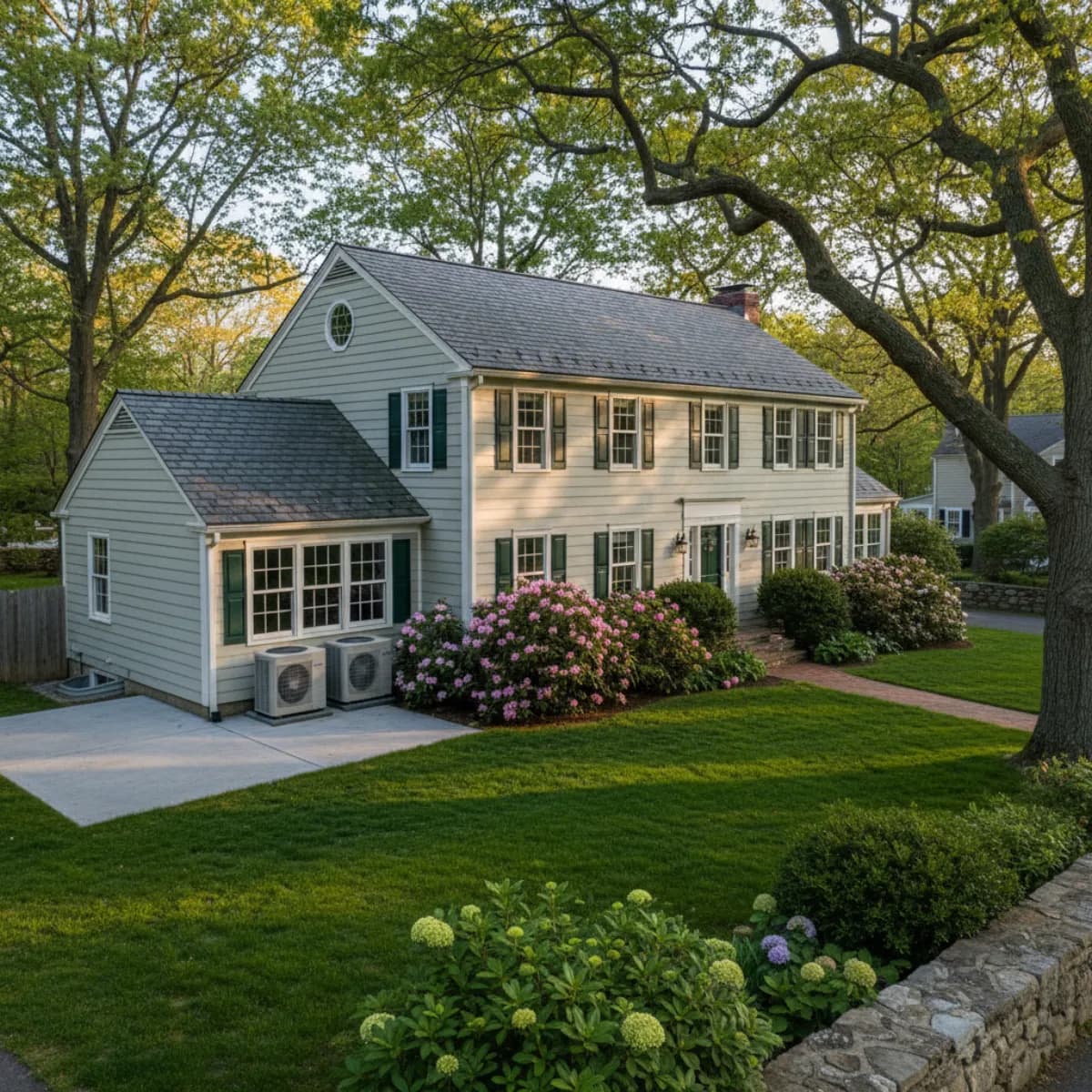
A Newton colonial replaced most oil heating hours with a right-sized Mitsubishi Hyper-Heat system. The design prioritized bedroom comfort, first-floor load balance, clean line-set routing, Mass Save documentation, and a conservative backup strategy for the first winter.
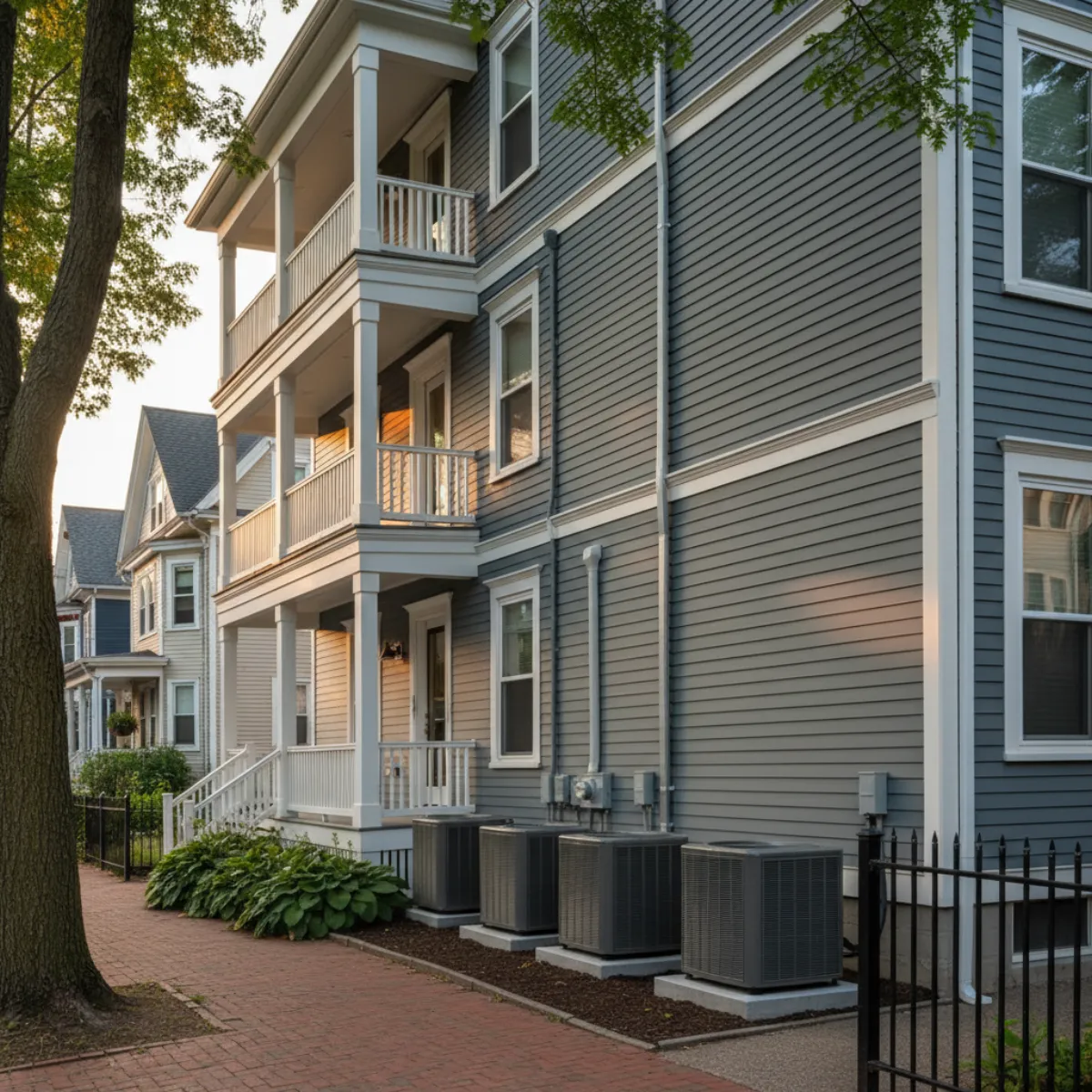
A Cambridge triple-decker needed quiet cooling, tenant-by-tenant control, and heating electrification without tearing open finished walls. The design used ductless zoning, careful outdoor-unit placement, and clean exterior line-set routing.
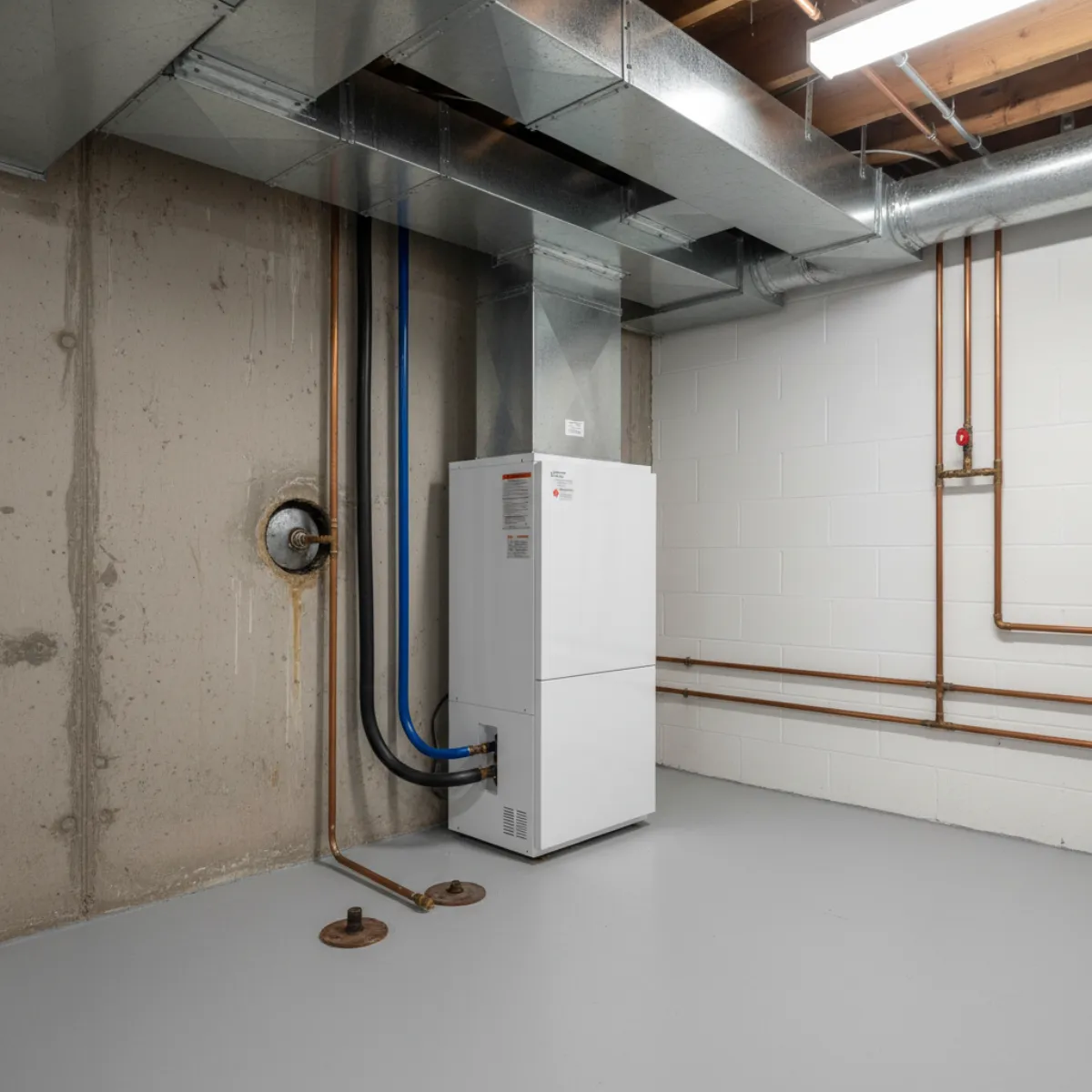
A Worcester ranch moved from oil baseboard heat toward a ducted cold-climate system. The project focused on duct design, low-temperature capacity, backup lockout, and winter commissioning for a colder Central Massachusetts design condition.
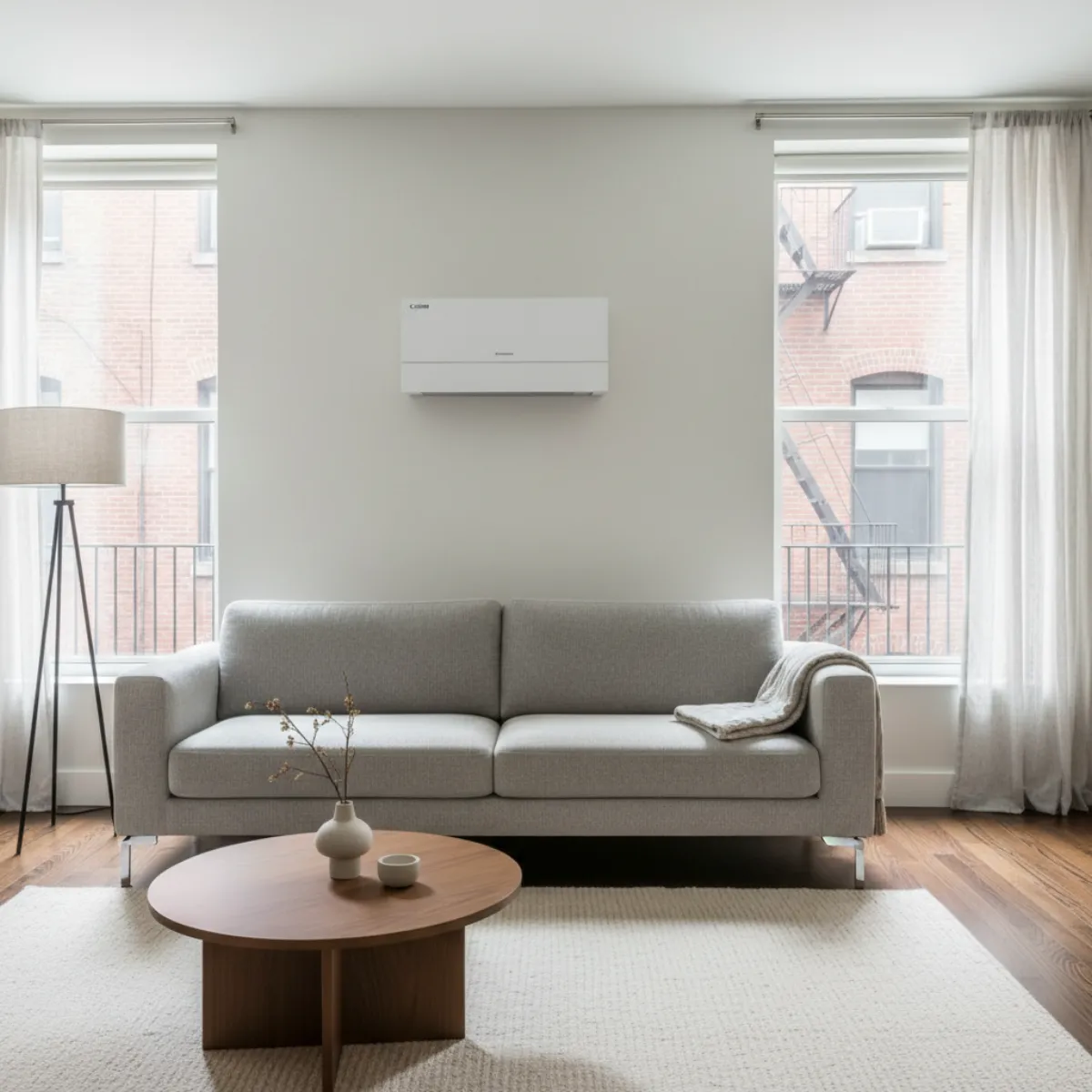
A Brookline condo replaced noisy window AC with ductless heat pumps and added efficient shoulder-season heating. The project emphasized condo-board documentation, low-noise outdoor placement, clean exterior routing, and realistic Mass Save expectations.
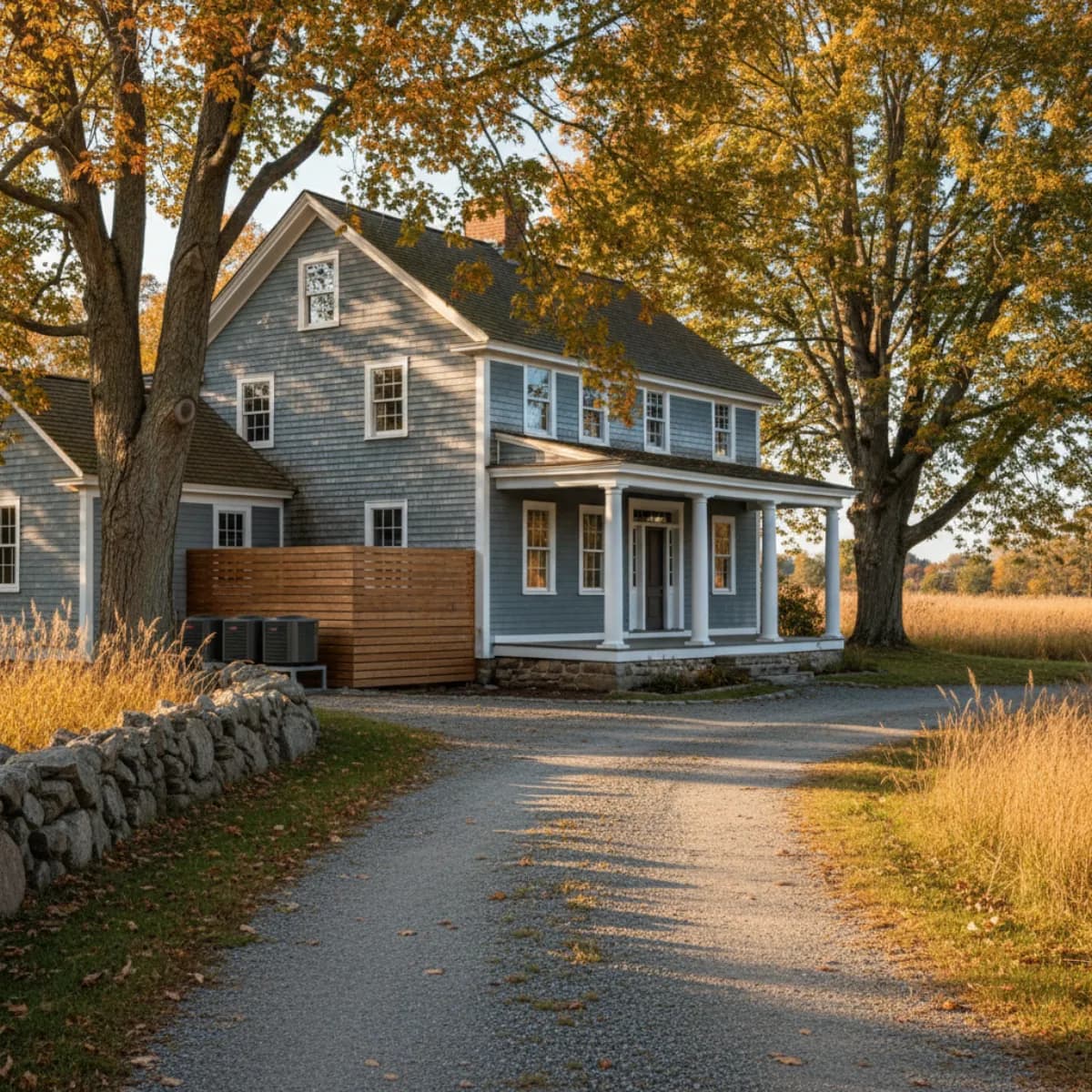
A Concord 1800s farmhouse needed electrification without damaging historic interiors. The final design combined ductless zones, compact ducted distribution, radiator backup, and envelope-aware sizing for a high-variance old-home load profile.
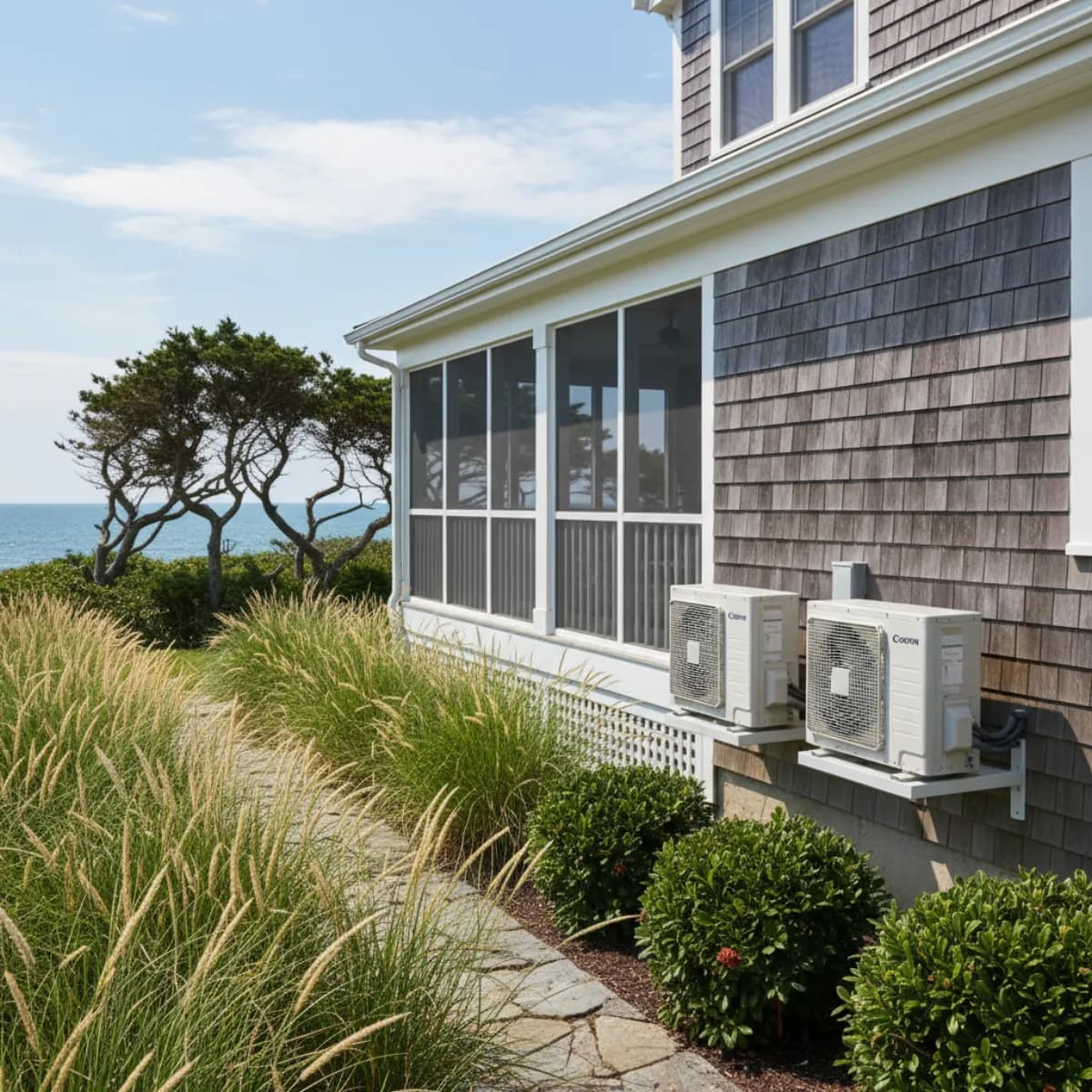
A Quincy coastal home used a 4-zone ductless system to solve summer humidity, aging AC, and shoulder-season gas use. The design emphasized corrosion-aware outdoor placement, sound control, condensate freeze protection, and partial-home rebate accuracy.
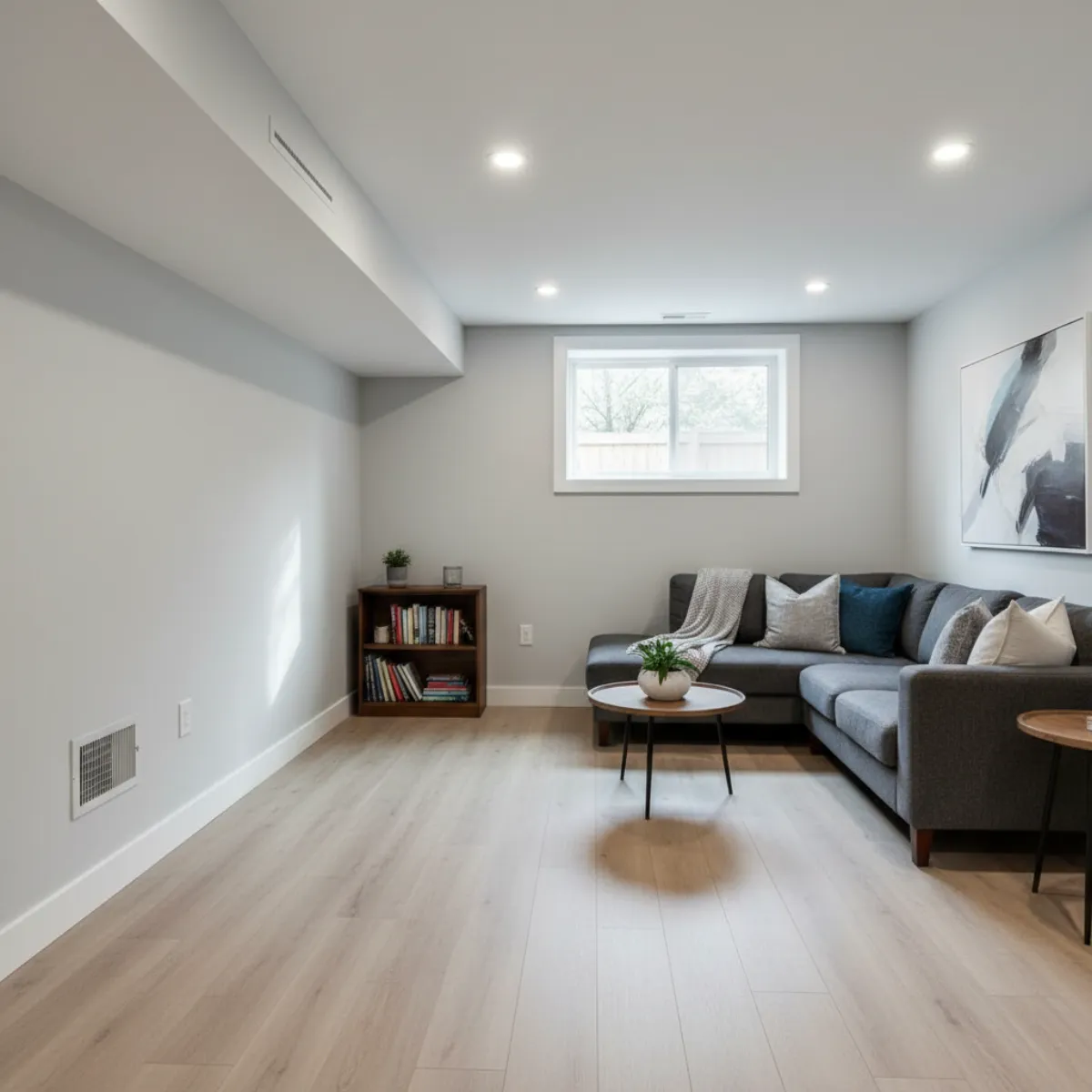
A Somerville homeowner converted a finished basement from a cold bonus room into comfortable living space. The project used a compact ductless layout, freeze-aware condensate routing, and careful line-set placement in a tight urban lot.
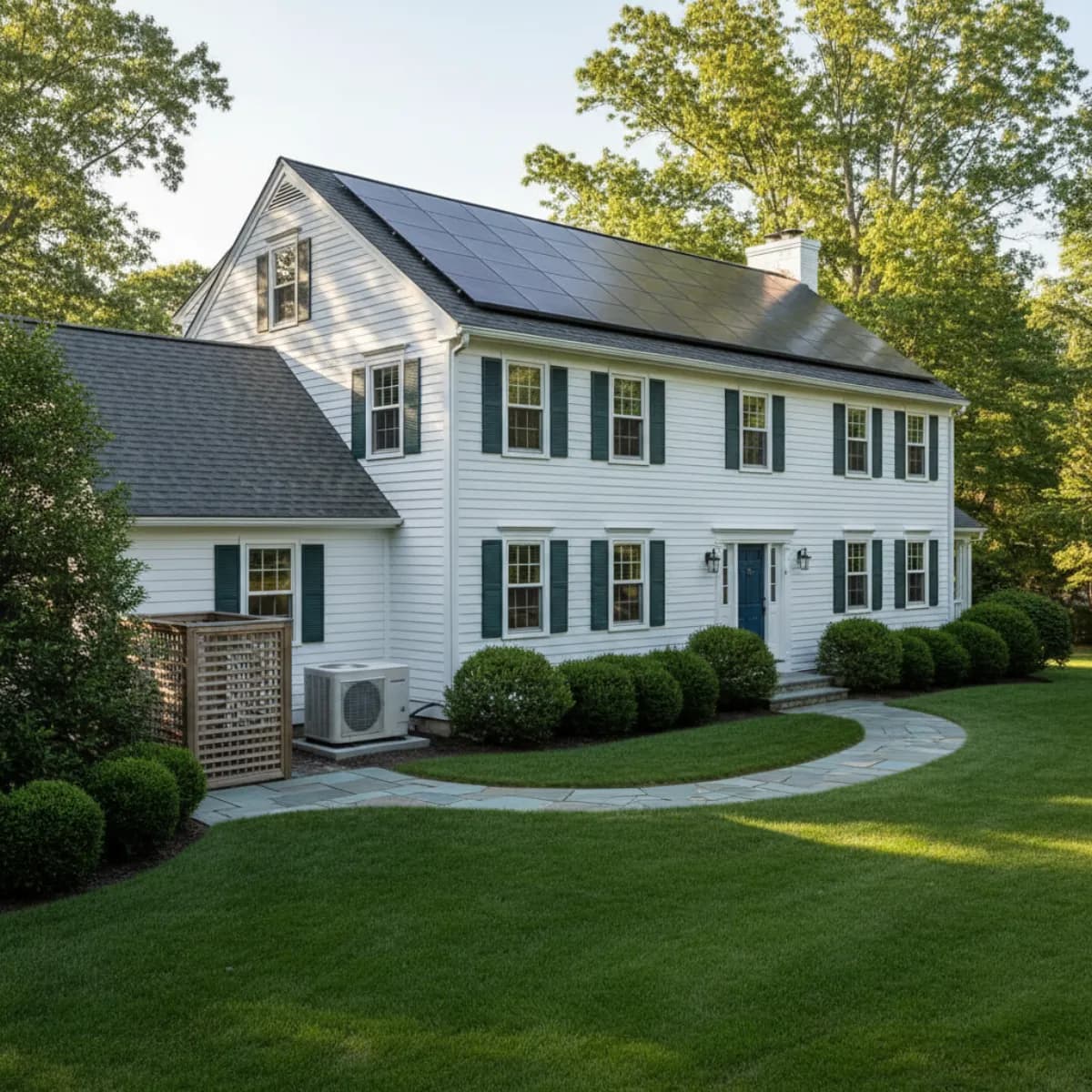
A Wellesley homeowner planned heat pumps and future solar as one electrification roadmap. NuWatt sized the heat pump, modeled the new electric load, and translated expected heating kWh into a future solar system size.
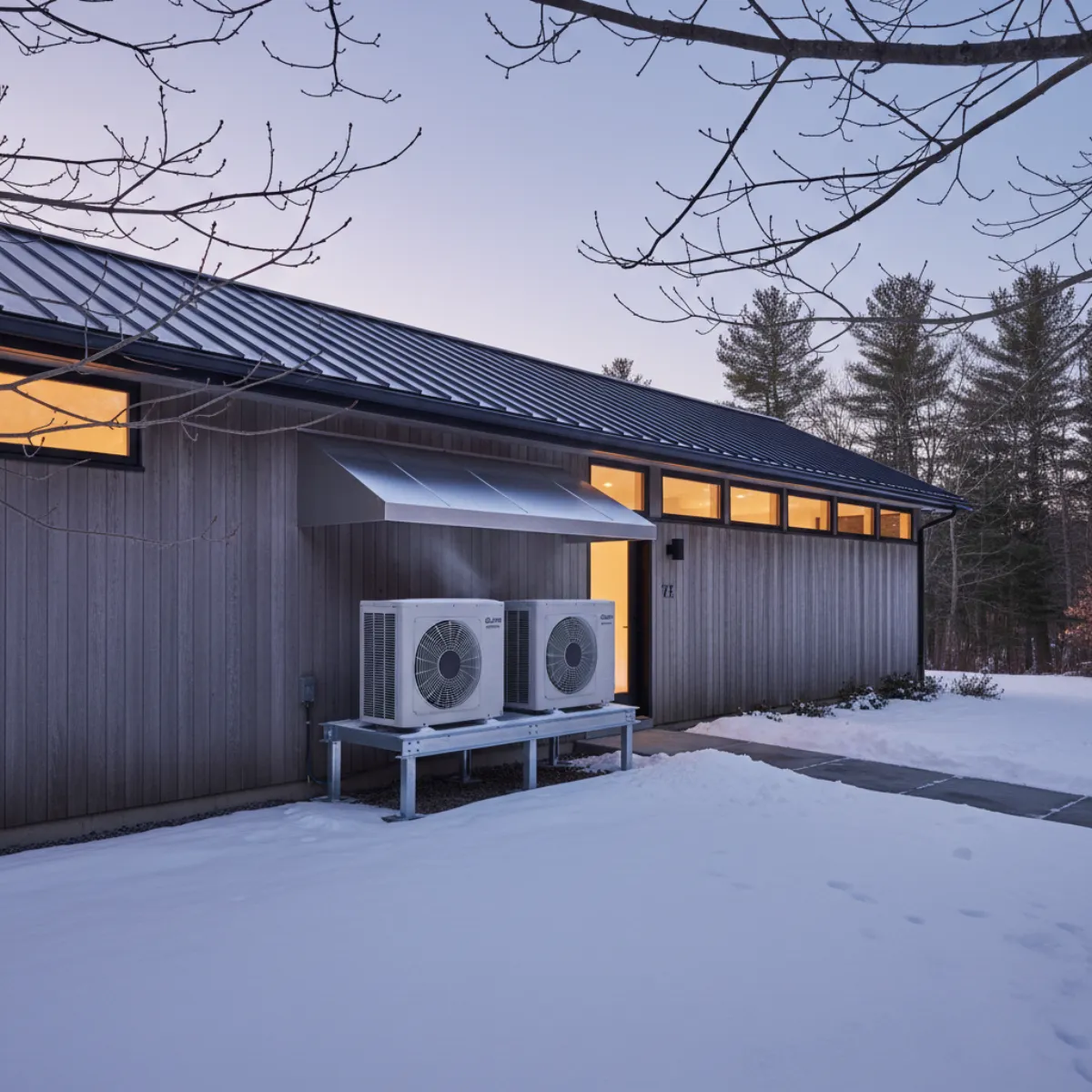
A Lexington home used a 5-zone cold-climate ductless design to reduce gas heating and replace aging AC. The project focused on right-sizing, first-winter backup controls, and Mass Save documentation for a high-efficiency partial electrification path.
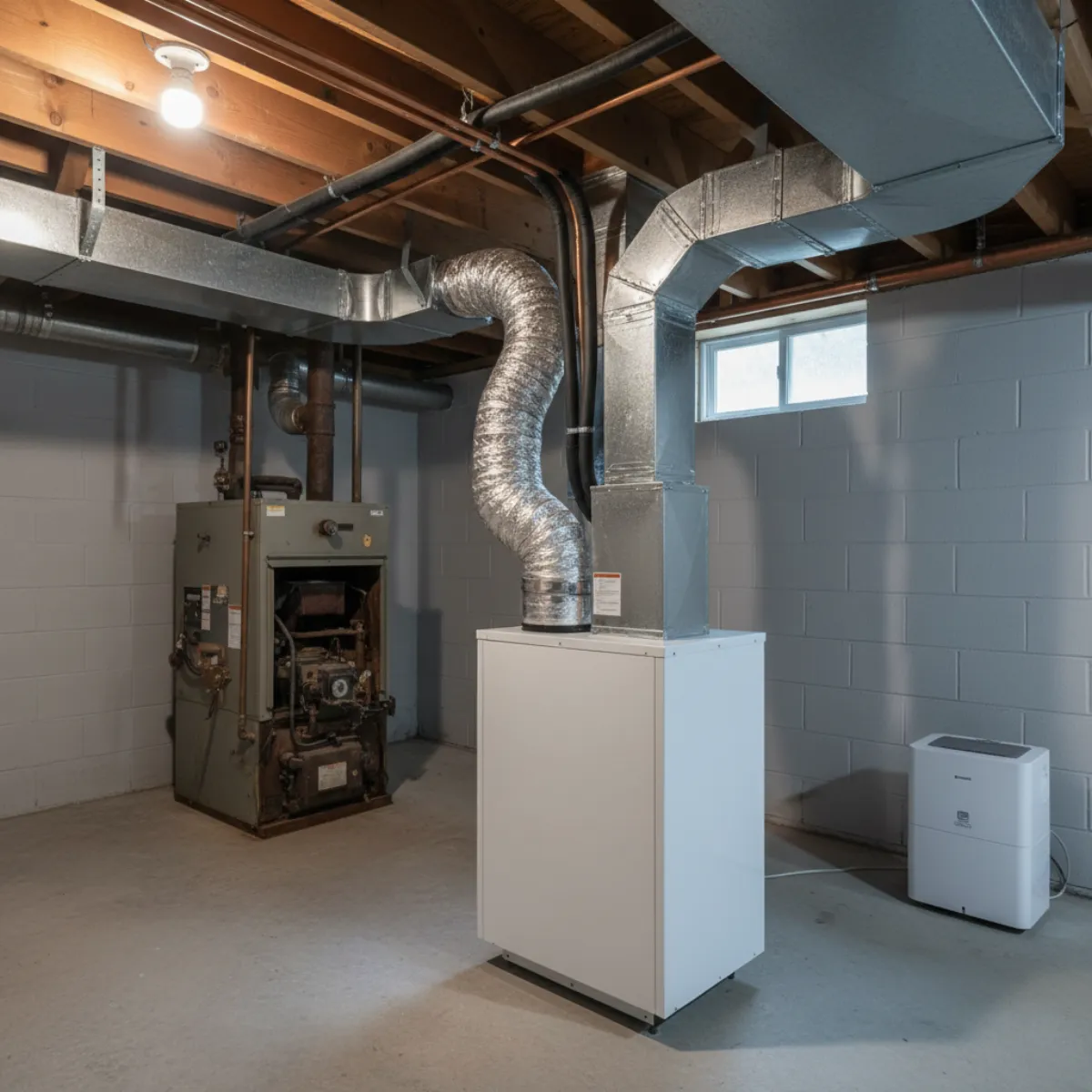
A West Hartford colonial used a ducted cold-climate heat pump to cut oil heating hours while preserving radiator backup. The project focused on duct suitability, static pressure, Energize CT HPIN documentation, and a practical first-winter controls plan.
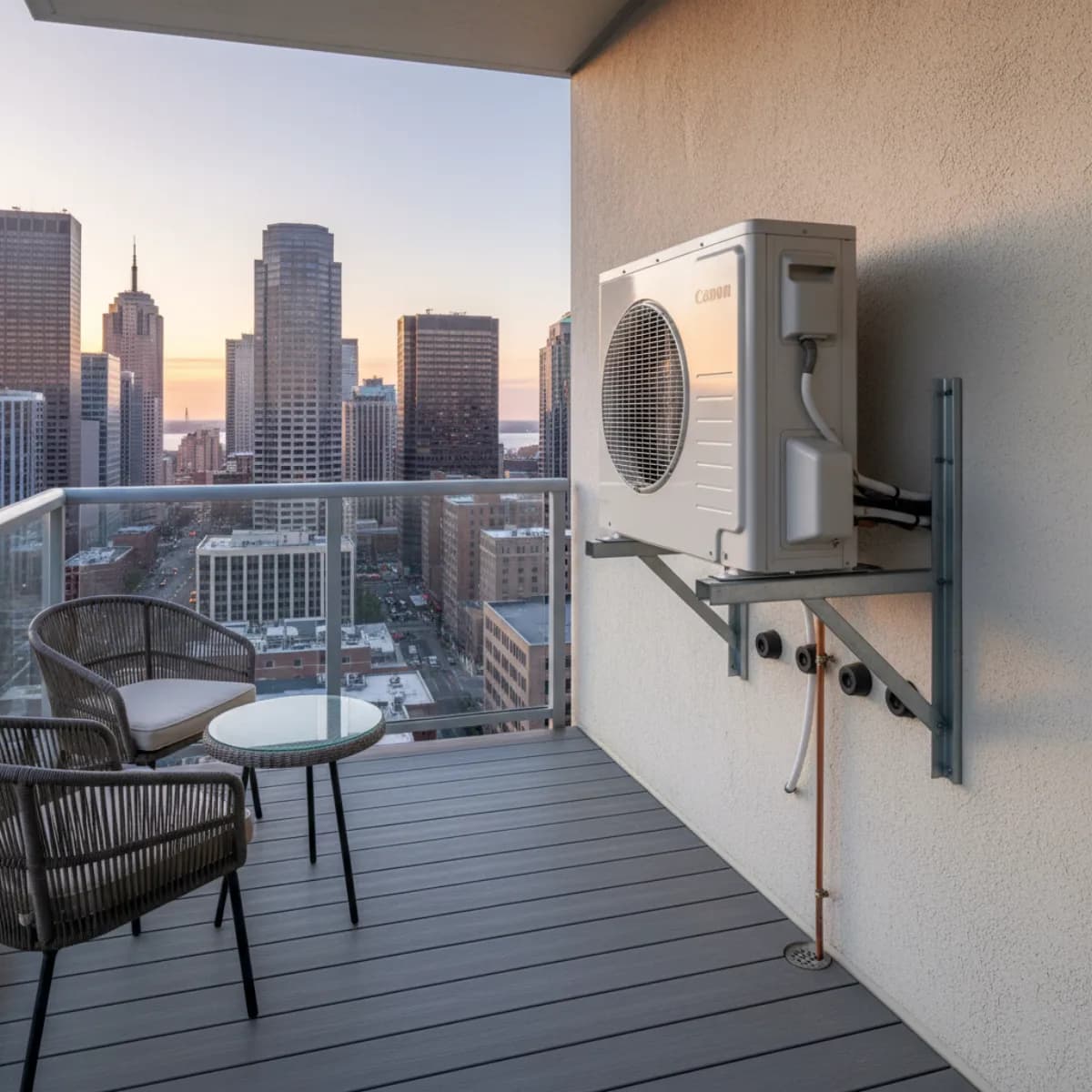
A Stamford condo replaced noisy through-wall cooling with a two-zone cold-climate mini-split and reduced electric baseboard runtime. The project centered on HOA approval, balcony clearances, condensate planning, and Energize CT rebate documentation.
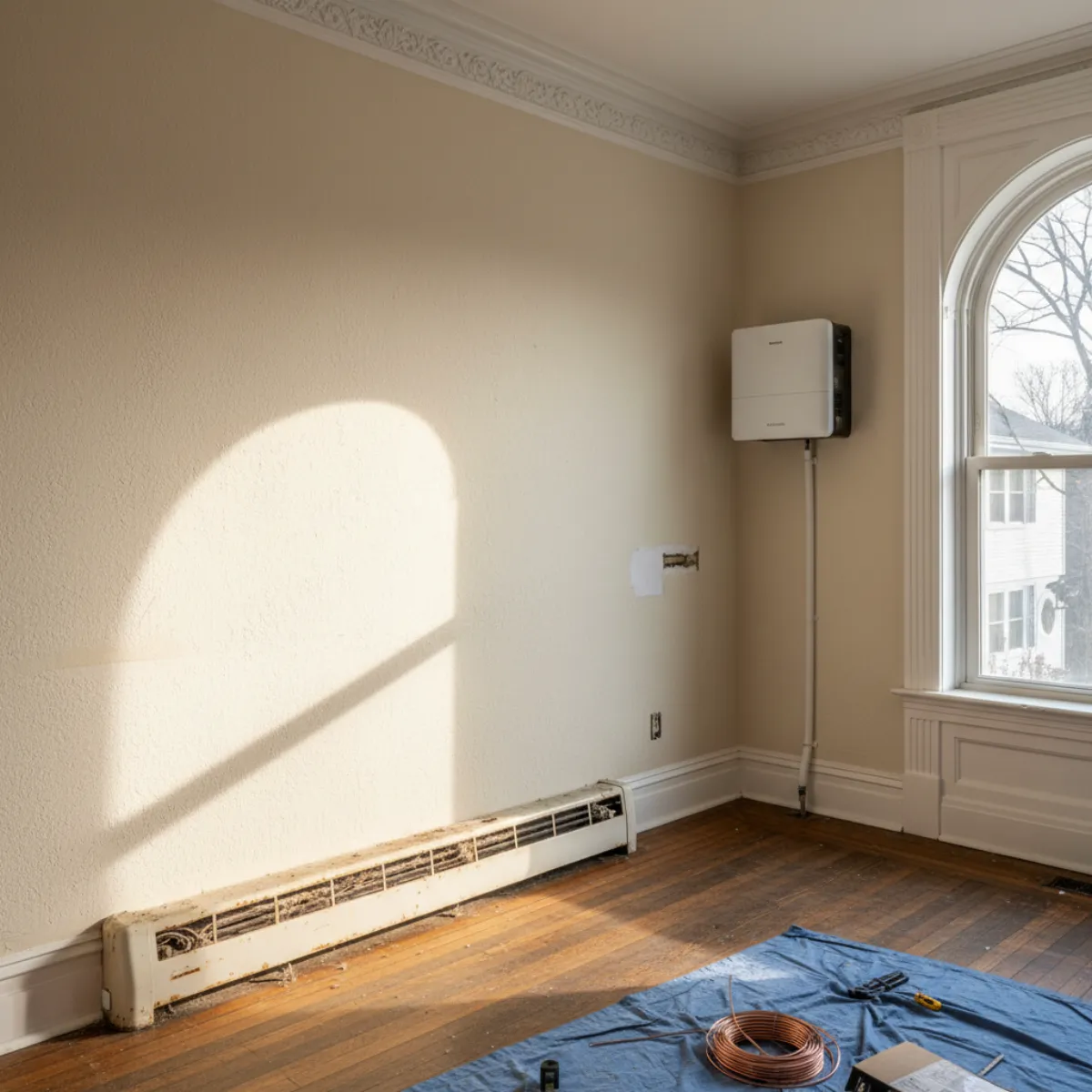
A New Haven Cape moved most heating from electric baseboard to a 5-zone cold-climate ductless system. The design prioritized upstairs knee-wall rooms, electric panel capacity, Energize CT documentation, and clear thermostat behavior for backup baseboard heat.
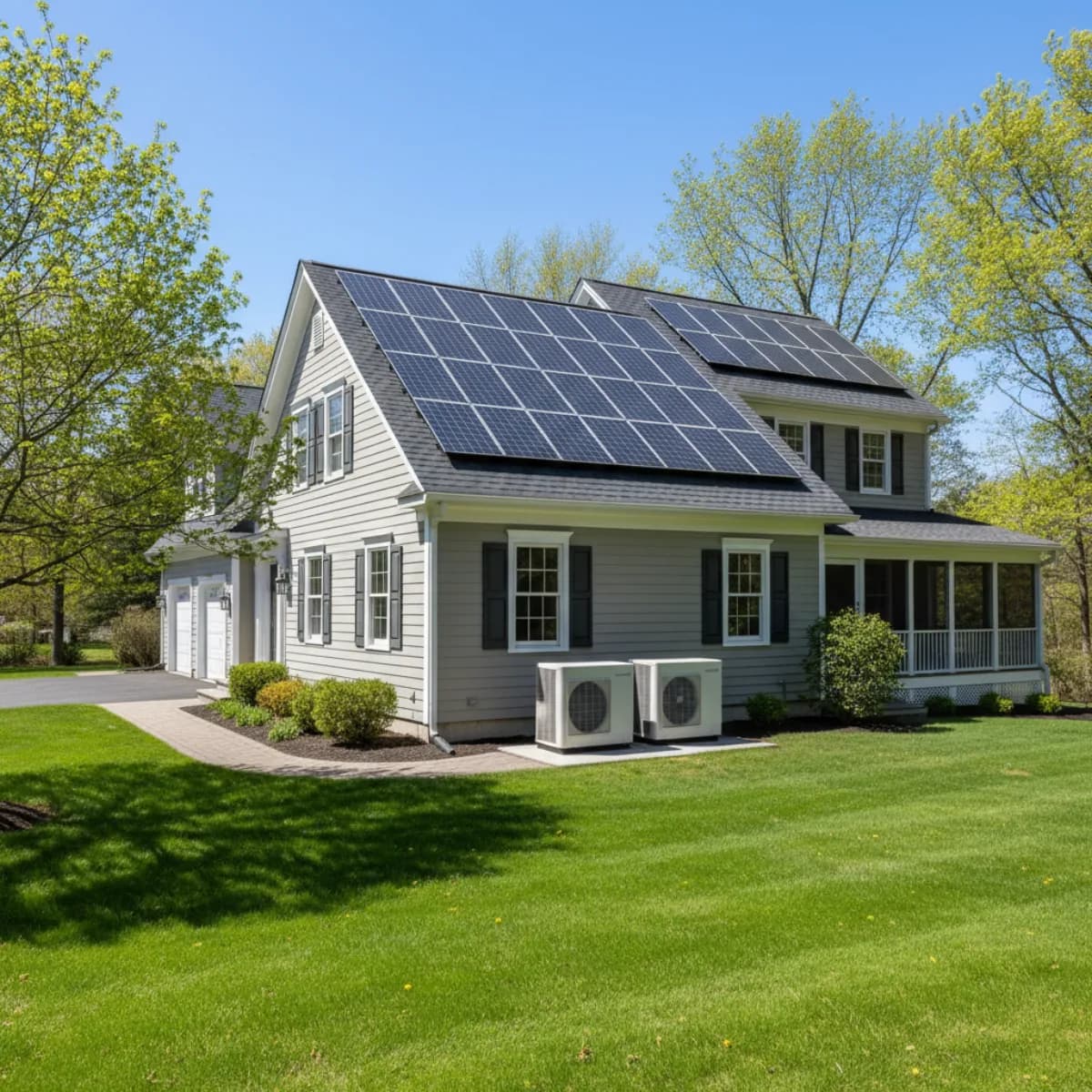
A Trumbull homeowner planned a heat pump and future solar array together. The heat pump design reduced propane runtime, and the solar model included future heating kWh so the homeowner would not undersize the PV system.
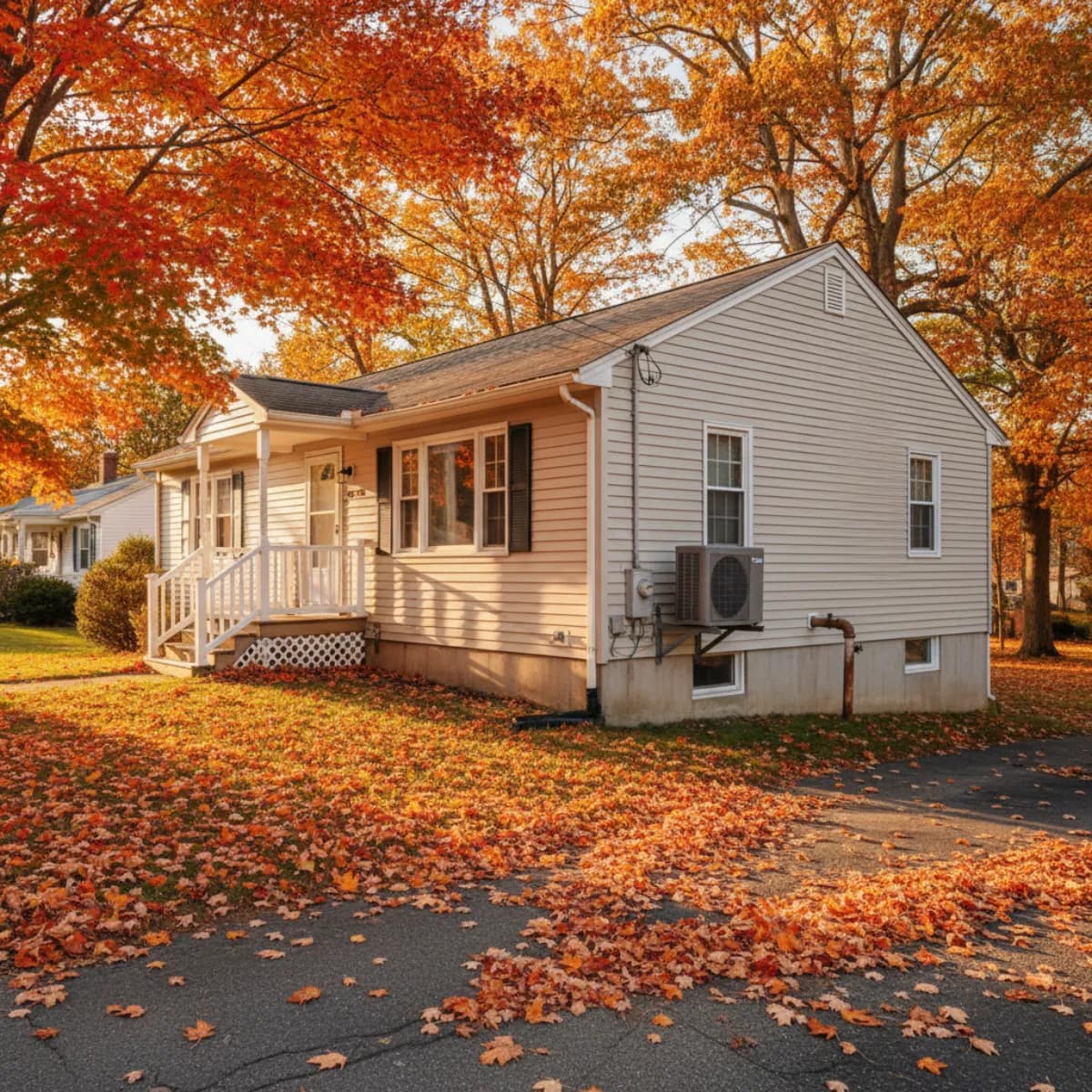
A Hudson raised ranch reduced oil furnace runtime with a 4-zone cold-climate ductless system. The design focused on finished lower-level comfort, NHSaves qualified product requirements, snow clearance, and a first-winter backup strategy.
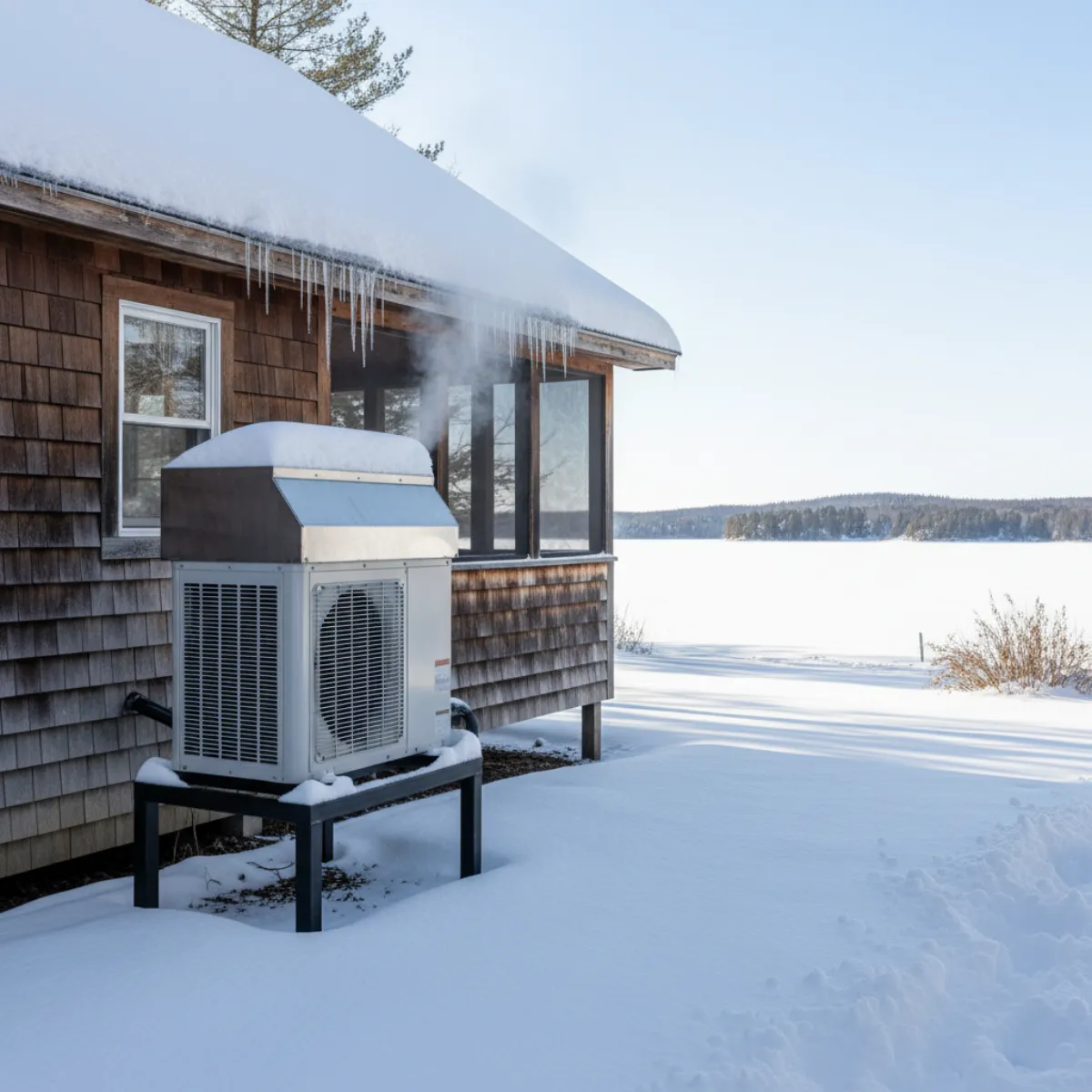
A Wolfeboro Lakes Region home added a 4-zone cold-climate heat pump system to reduce propane use while preserving a wood stove and furnace backup. The design centered on lake-effect cold, snow clearance, room-by-room zoning, and NHSaves qualified equipment documentation.
Use the city and home-type examples to understand likely system scope before a quote.
Use the rebate pathways as planning guidance, not a guarantee of approval.
Use the design decisions to compare whether an installer is doing real load and comfort planning.