Loading NuWatt Energy...

We use your location to provide localized solar offers and incentives.
We serve MA, NH, CT, RI, ME, VT, NJ, PA, and TX
Loading NuWatt Energy...
NuWatt designs, installs, and manages solar, battery, heat pump, and EV charger systems across 9 states. One company, one warranty, one point of contact.
Get a Free Quote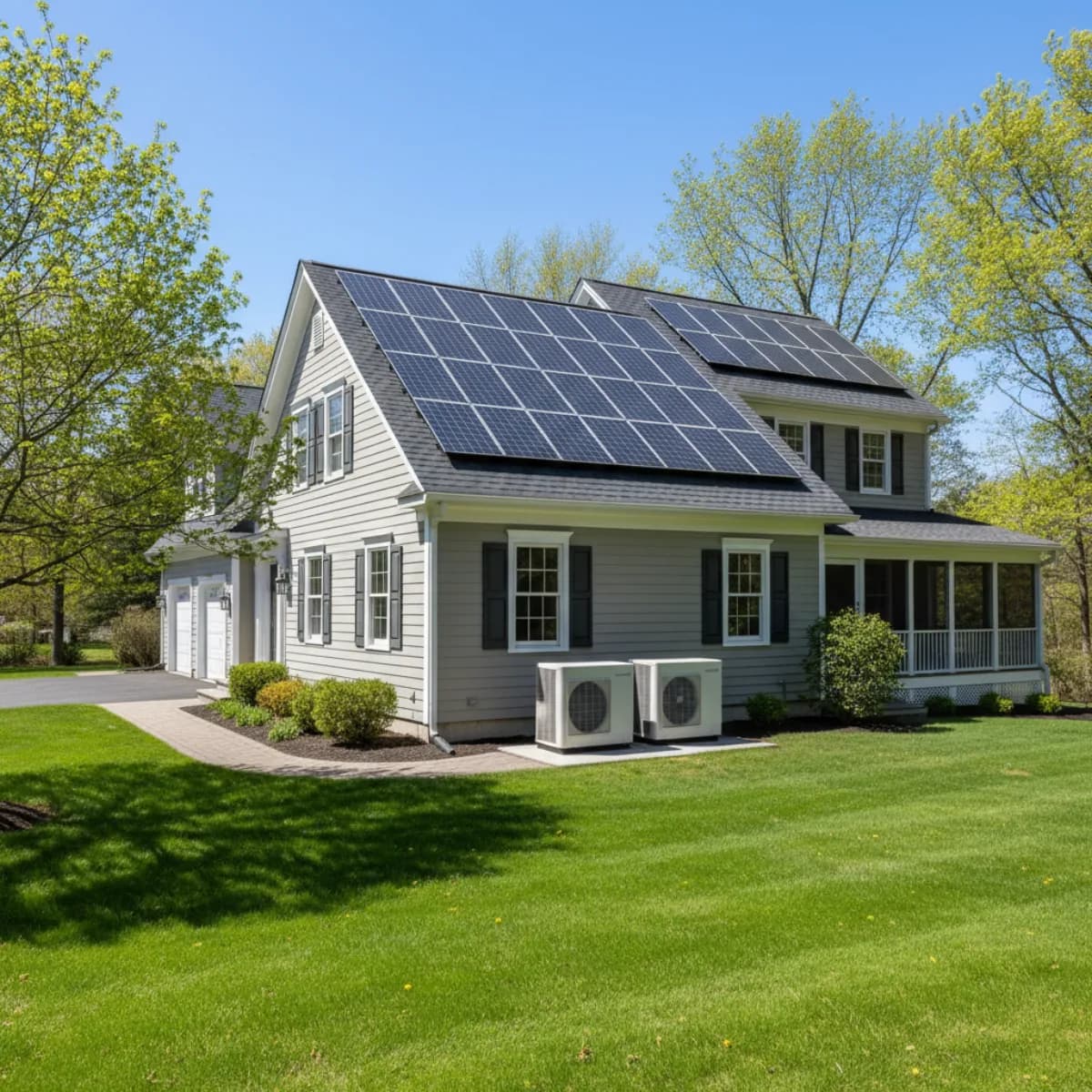
A Trumbull homeowner planned a heat pump and future solar array together. The heat pump design reduced propane runtime, and the solar model included future heating kWh so the homeowner would not undersize the PV system.
Connecticut homeowners should model heat pump load before final solar sizing. This Trumbull case used a 3.5-ton ducted heat pump, retained propane backup, and translated expected heating electricity into a future solar system size so the PV design reflected the electrified home.
| Category | Project Detail | Why It Matters |
|---|---|---|
| Home type | Split-level home, 2,050 sq ft | Sets the envelope, duct, and zoning constraints. |
| Previous heating | Propane furnace and central AC | Determines fuel-switching economics and backup strategy. |
| Equipment | Carrier ducted cold-climate heat pump with solar-ready load model | Cold-climate equipment selection affects winter performance. |
| Capacity and zones | 3.5 tons, 2 zones | Shows whether the project is room-level or whole-home. |
| Rebate pathway | Energize CT standard pathway plus solar load planning | Rebate rules vary by state, utility, equipment, and project scope. |
| Cost range | $25,000-$33,000 before rebates | Useful for comparing quote reasonableness. |
| Net cost range | $22,500-$30,500 after standard rebate target | Shows cost after standard rebate target, before final approval. |
| Estimated savings | $1,300-$2,100 before solar offset | Modeled operating-cost impact, not a guarantee. |
Solar sized from past utility bills would miss the new heating electricity load.
Dual-fuel controls needed to balance propane backup with heat pump savings.
The existing duct system needed review for heat pump airflow and zoning.
The homeowner needed separate rebate and solar economics because the programs do not work the same way.
NuWatt modeled the heat pump load first, then estimated added annual kWh for future solar sizing.
A ducted heat pump reused suitable distribution and separated upstairs and downstairs comfort zones.
Propane backup was retained with a lockout strategy that favored heat pump operation during normal winter conditions.
The proposal separated Energize CT rebate assumptions from solar production and bill-offset modeling.
| Decision | Reason | Field Note |
|---|---|---|
| Model heat pump load before solar | Pre-electrification bills would understate future electricity consumption. | Solar and HVAC models should talk to each other. |
| Use dual-fuel controls | The propane furnace was serviceable and useful as backup during extreme cold. | A transition plan can reduce risk while still cutting fossil runtime. |
| Separate rebate and solar economics | Heat pump rebates, solar incentives, and utility bill credits each have different rules. | Clear financial modeling prevents overpromising. |
Ducted dual-fuel design.
Split-level balancing.
Standard Energize CT cap.
Estimated heat pump electricity for PV sizing.
Before solar offset.
Ducted heat pump replacement.
Fuel use, roof potential, panel capacity, and duct review.
Manual J, ducted equipment selection, zoning, and backup controls.
Outdoor unit, indoor coil/air handler integration, controls, and commissioning.
Future kWh estimate prepared for PV design and bill-offset planning.
Final costs, rebates, and savings require a site-specific quote, utility confirmation, equipment selection, home energy assessment, and Mass Save approval.
Yes. If solar is planned within the next few years, include expected heat pump electricity so the array is not undersized.
Yes. Dual-fuel designs can keep propane backup while the heat pump handles normal heating hours.
Energize CT heat pump rebates apply to eligible heat pump work. Solar is modeled separately with different economics and program rules.
It depends on home load, setpoints, and backup settings. Many Connecticut homes add several thousand kWh per year after heat pump electrification.
Often, but only after checking duct sizing, leakage, returns, insulation, and room balancing.