Loading NuWatt Energy...

We use your location to provide localized solar offers and incentives.
We serve MA, NH, CT, RI, ME, VT, NJ, PA, and TX
Loading NuWatt Energy...
NuWatt designs, installs, and manages solar, battery, heat pump, and EV charger systems across 9 states. One company, one warranty, one point of contact.
Get a Free Quote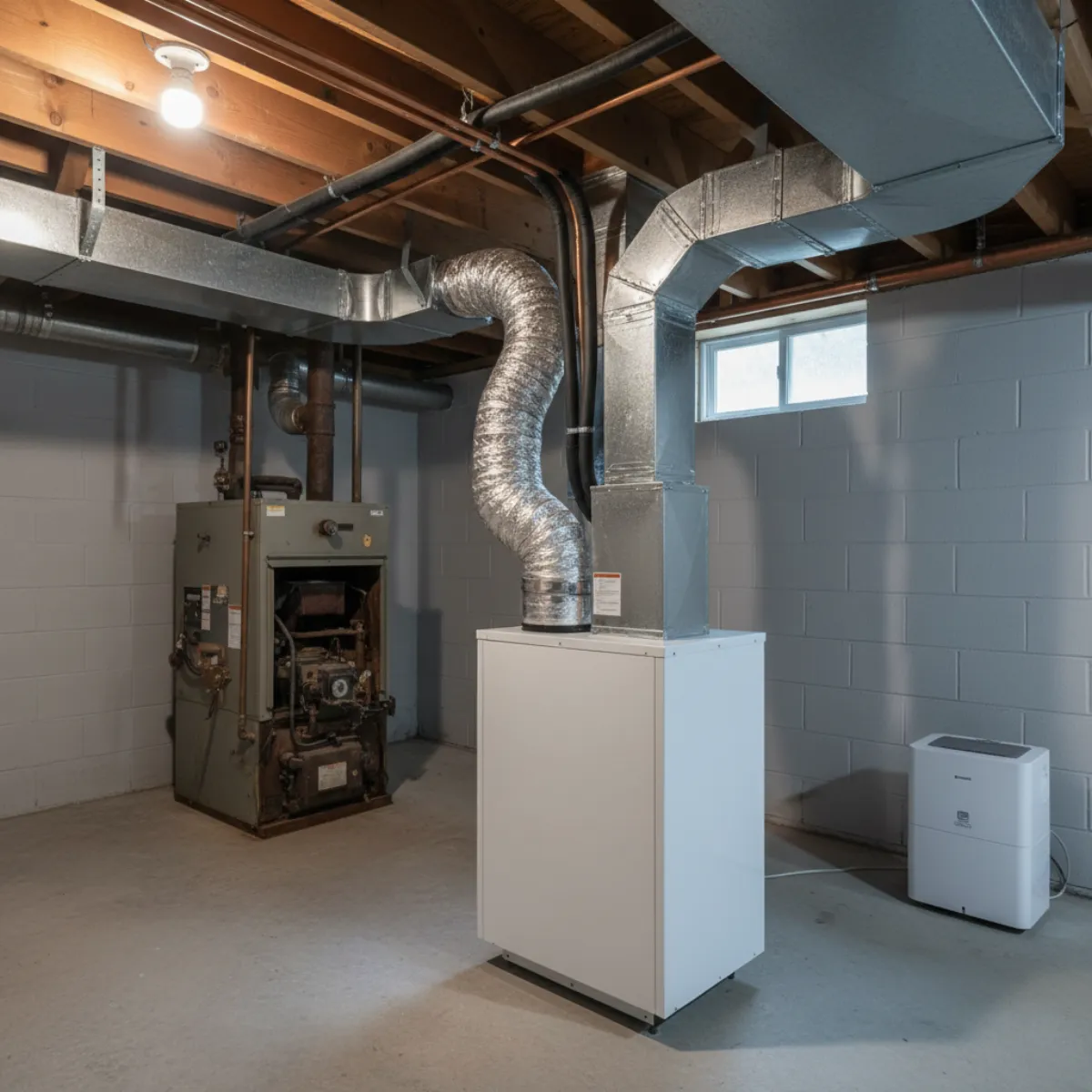
A West Hartford colonial used a ducted cold-climate heat pump to cut oil heating hours while preserving radiator backup. The project focused on duct suitability, static pressure, Energize CT HPIN documentation, and a practical first-winter controls plan.
A West Hartford oil boiler conversion usually starts with a room-by-room load calculation, duct review, Energize CT HPIN eligibility check, and backup control plan. This case used a 3.5-ton Bosch IDS ducted heat pump, retained the oil boiler as first-winter backup, and targeted the 2026 standard Energize CT residential rebate.
| Category | Project Detail | Why It Matters |
|---|---|---|
| Home type | 1930s colonial, 2,150 sq ft | Sets the envelope, duct, and zoning constraints. |
| Previous heating | Oil boiler with cast-iron radiators and aging central AC | Determines fuel-switching economics and backup strategy. |
| Equipment | Bosch IDS ducted cold-climate heat pump | Cold-climate equipment selection affects winter performance. |
| Capacity and zones | 3.5 tons, 2 zones | Shows whether the project is room-level or whole-home. |
| Rebate pathway | Energize CT standard residential air-source heat pump pathway | Rebate rules vary by state, utility, equipment, and project scope. |
| Cost range | $24,000-$31,000 before rebates | Useful for comparing quote reasonableness. |
| Net cost range | $21,500-$28,500 after standard rebate target | Shows cost after standard rebate target, before final approval. |
| Estimated savings | $1,500-$2,300 | Modeled operating-cost impact, not a guarantee. |
Existing ducts were designed for cooling, not full winter heating airflow, so static pressure and return sizing had to be checked.
Radiators created comfort expectations that a forced-air system needed to match without drafts.
The homeowner wanted lower oil use but did not want to remove a working boiler before seeing winter performance.
Energize CT documentation required qualifying equipment, HPIN installation, AHRI tonnage, and clear project scope.
NuWatt modeled the heating load, reviewed duct leakage and return paths, then selected a variable-speed ducted heat pump sized for part-load operation.
Two comfort zones separated upstairs bedrooms from first-floor living areas to reduce overheating and nighttime complaints.
Integrated controls preserved the oil boiler as backup while letting the heat pump carry normal heating hours.
The rebate package was prepared around Energize CT QPL equipment, HPIN installer requirements, and final commissioning documentation.
| Decision | Reason | Field Note |
|---|---|---|
| Review ducts before equipment selection | Cooling ducts can be undersized for heat pump airflow, especially upstairs. | Duct review is a real installer signal, not a brochure promise. |
| Retain radiator backup | The existing boiler gave the homeowner a low-risk first winter while heat pump performance was proven. | Staged electrification can be the best customer outcome in older CT homes. |
| Use HPIN-qualified documentation | Energize CT rebates depend on eligible equipment and installer paperwork. | Program compliance is part of project design, not an afterthought. |
Ducted cold-climate design.
Separated sleeping and living areas.
Standard Energize CT residential cap.
Backup boiler retained for resilience.
Depends on oil and electric rates.
Ducted replacement with controls.
Fuel history, duct inspection, attic access, and utility territory review.
Manual J load model, equipment match, zoning plan, and backup control settings.
Outdoor unit, indoor air handler, refrigerant, electrical, and controls integration.
Airflow, refrigerant charge, thermostat settings, and rebate document handoff.
Final costs, rebates, and savings require a site-specific quote, utility confirmation, equipment selection, home energy assessment, and Mass Save approval.
Yes. Many Connecticut homes keep the boiler as backup for the first winter. The important detail is setting controls so the heat pump carries normal heating and the boiler only helps when needed.
Yes. Energize CT heat pump rebates require qualifying equipment and installation through a participating Heat Pump Installer Network contractor.
Sometimes. Duct sizing, leakage, return air, insulation, and static pressure should be checked before promising ducted heat pump performance.
This project targeted the 2026 standard Energize CT residential air-source heat pump rebate, which is $250 per ton up to $2,500 per home.
Usually, yes. In a staged oil conversion, oil use can fall sharply when heat pump controls are set correctly, though final savings depend on weather, thermostat behavior, and fuel prices.