Loading NuWatt Energy...

We use your location to provide localized solar offers and incentives.
We serve MA, NH, CT, RI, ME, VT, NJ, PA, and TX
Loading NuWatt Energy...
NuWatt designs, installs, and manages solar, battery, heat pump, and EV charger systems across 9 states. One company, one warranty, one point of contact.
Get a Free Quote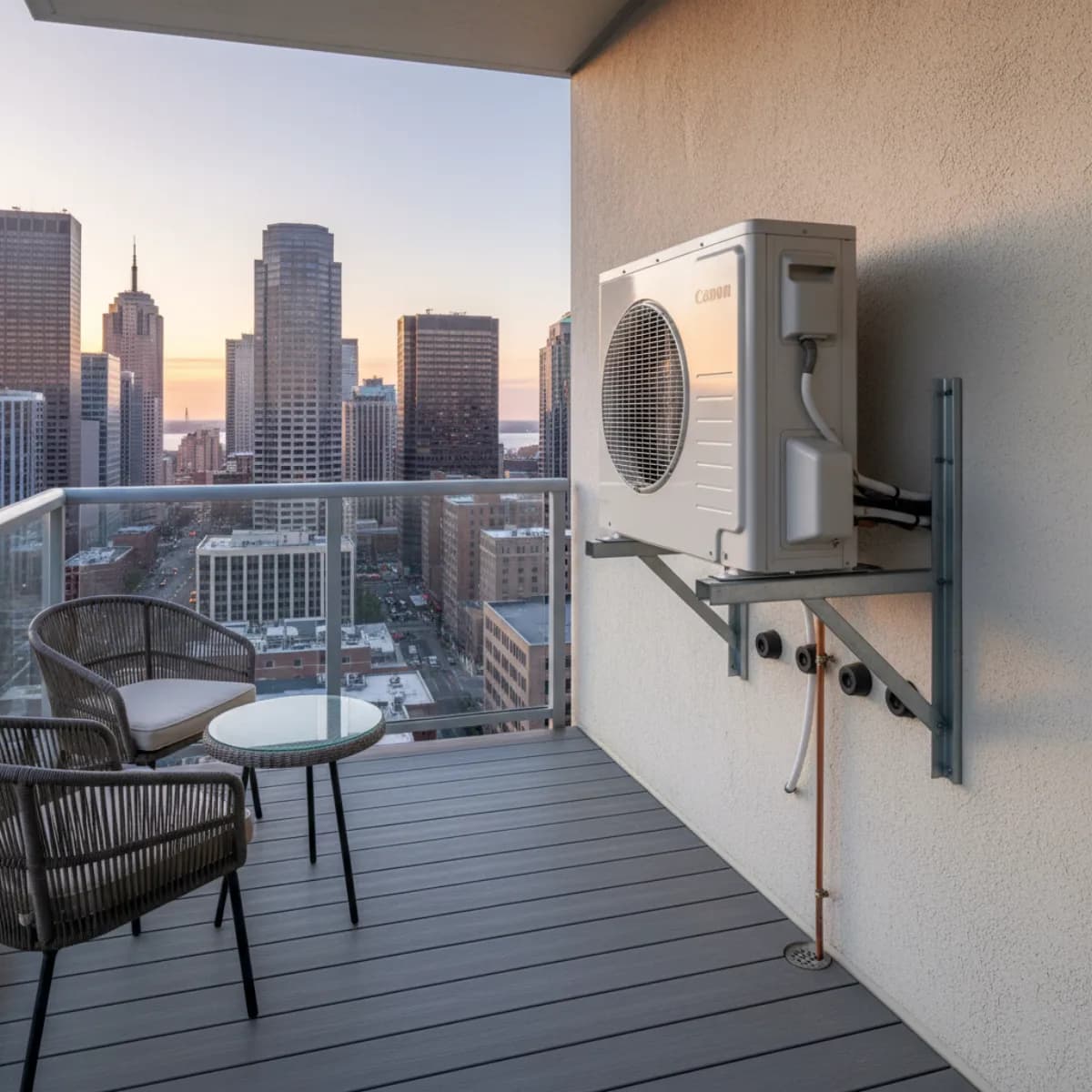
A Stamford condo replaced noisy through-wall cooling with a two-zone cold-climate mini-split and reduced electric baseboard runtime. The project centered on HOA approval, balcony clearances, condensate planning, and Energize CT rebate documentation.
Connecticut condo owners can often install mini-splits when HOA rules, outdoor-unit placement, condensate routing, electrical capacity, and noise requirements are addressed before contract. This Stamford case used a 1.5-ton, two-zone ductless system and kept electric baseboard as backup.
| Category | Project Detail | Why It Matters |
|---|---|---|
| Home type | Two-bedroom condo, 1,050 sq ft | Sets the envelope, duct, and zoning constraints. |
| Previous heating | Electric resistance baseboard with through-wall AC | Determines fuel-switching economics and backup strategy. |
| Equipment | Fujitsu cold-climate ductless mini-split | Cold-climate equipment selection affects winter performance. |
| Capacity and zones | 1.5 tons, 2 zones | Shows whether the project is room-level or whole-home. |
| Rebate pathway | Energize CT standard residential pathway with HOA approval | Rebate rules vary by state, utility, equipment, and project scope. |
| Cost range | $10,500-$15,500 before rebates | Useful for comparing quote reasonableness. |
| Net cost range | $8,000-$13,000 after standard rebate target | Shows cost after standard rebate target, before final approval. |
| Estimated savings | $700-$1,200 | Modeled operating-cost impact, not a guarantee. |
The outdoor unit had to fit within balcony and service clearance limits without draining condensate onto neighbors.
Line-set routing needed to be clean because interior chases were limited.
The homeowner wanted heating savings but could not remove the original baseboard system.
HOA review required equipment data, sound information, and a simple exterior visual plan.
NuWatt prepared a condo-friendly layout using one outdoor unit and two indoor zones for the living area and primary bedroom.
Condensate was routed to avoid nuisance drainage and winter icing on walkways.
The baseboard system remained available as backup, but the mini-split became the normal shoulder-season and winter heating source.
The HOA package included equipment cut sheets, placement notes, and a summary of sound and service clearances.
| Decision | Reason | Field Note |
|---|---|---|
| Build the HOA package before installation | Condo approvals often fail when equipment placement is vague. | Permitting and approvals are part of installation competence. |
| Keep baseboard backup | The building system remained in place and gave resilience during extreme cold. | A good condo design works with building constraints. |
| Use two zones instead of one | The bedroom and living room had different solar gain and occupancy schedules. | Room-level comfort is the reason ductless works well in condos. |
Sized for condo load, not building average.
Living area and bedroom comfort.
Final rebate depends on approved tonnage.
Depends on setpoints and backup behavior.
After HOA approval.
Quieter cooling and better humidity control.
HOA-ready placement, sound, and equipment documentation.
Panel capacity, disconnect location, and service path check.
Outdoor unit, two indoor heads, line-set covers, and condensate routing.
Remote settings, filter cleaning, and backup heat guidance.
Final costs, rebates, and savings require a site-specific quote, utility confirmation, equipment selection, home energy assessment, and Mass Save approval.
Usually, yes. Any outdoor equipment, line-set cover, or condensate routing can trigger HOA review. A clean approval package reduces delays.
Yes. Cold-climate mini-splits use far less electricity than resistance heat for most heating hours, though baseboard can remain as backup.
Often, yes, if the home is served by an eligible utility, uses qualifying equipment, and the installation is completed by an HPIN contractor.
Placement depends on balcony rules, exterior wall access, sound exposure, service clearance, drainage, and association requirements.
Sometimes, but bedrooms often need their own zone for comfort. A room-by-room load review is better than guessing from square footage.