Loading NuWatt Energy...

We use your location to provide localized solar offers and incentives.
We serve MA, NH, CT, RI, ME, VT, NJ, PA, and TX
Loading NuWatt Energy...
NuWatt designs, installs, and manages solar, battery, heat pump, and EV charger systems across 9 states. One company, one warranty, one point of contact.
Get a Free Quote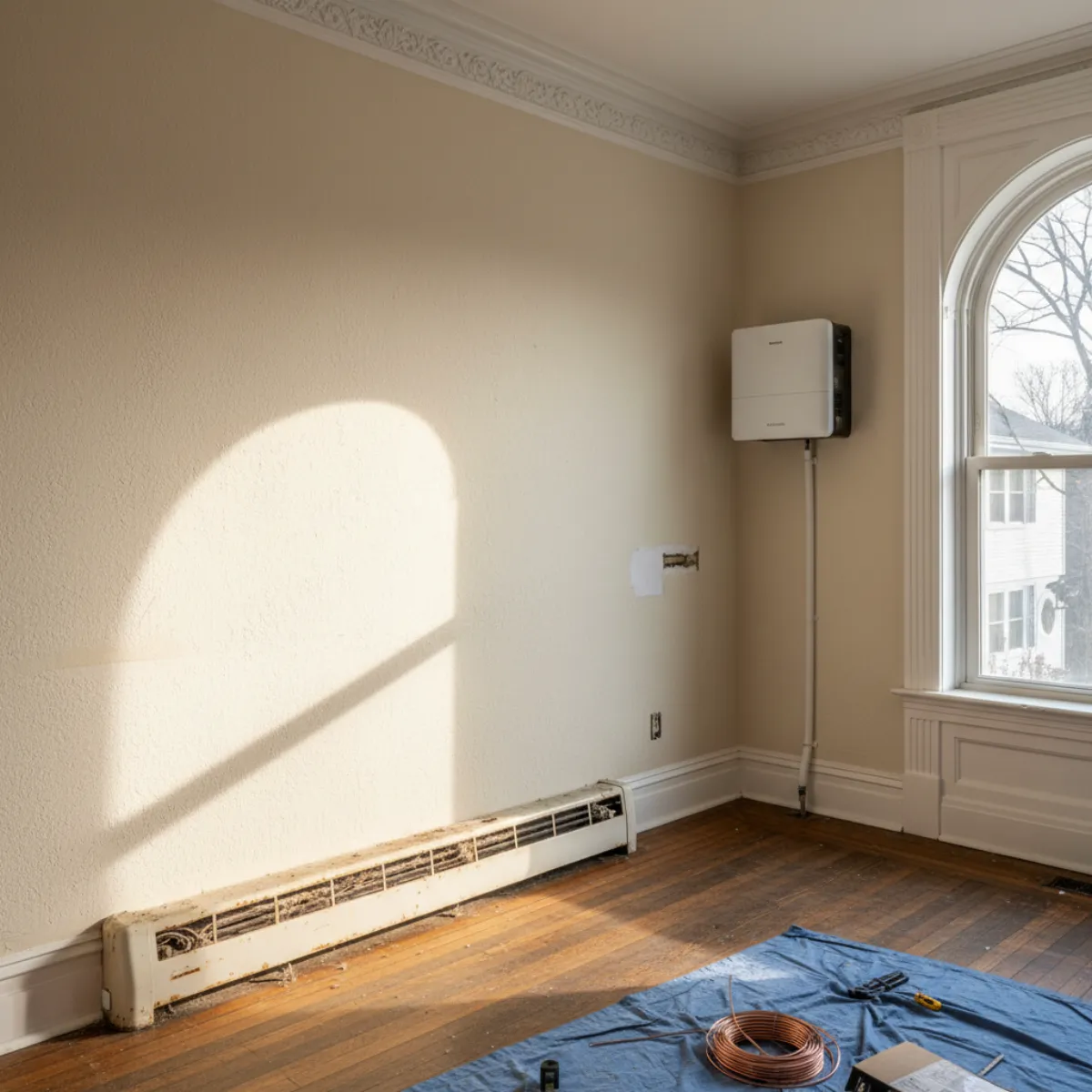
A New Haven Cape moved most heating from electric baseboard to a 5-zone cold-climate ductless system. The design prioritized upstairs knee-wall rooms, electric panel capacity, Energize CT documentation, and clear thermostat behavior for backup baseboard heat.
Replacing electric baseboard with cold-climate heat pumps can be one of the strongest Connecticut efficiency upgrades because heat pumps move heat instead of making it with resistance. This New Haven case used a 3-ton, 5-zone ductless system, kept baseboard backup, and screened the project for Energize CT eligibility.
| Category | Project Detail | Why It Matters |
|---|---|---|
| Home type | Cape-style home, 1,650 sq ft | Sets the envelope, duct, and zoning constraints. |
| Previous heating | Electric resistance baseboard and window AC | Determines fuel-switching economics and backup strategy. |
| Equipment | Mitsubishi Hyper-Heat multi-zone ductless system | Cold-climate equipment selection affects winter performance. |
| Capacity and zones | 3 tons, 5 zones | Shows whether the project is room-level or whole-home. |
| Rebate pathway | Energize CT standard pathway with enhanced-rebate screening | Rebate rules vary by state, utility, equipment, and project scope. |
| Cost range | $21,000-$28,000 before rebates | Useful for comparing quote reasonableness. |
| Net cost range | $18,500-$25,500 after standard rebate target | Shows cost after standard rebate target, before final approval. |
| Estimated savings | $1,400-$2,200 | Modeled operating-cost impact, not a guarantee. |
Upstairs rooms had high summer heat gain and winter envelope losses.
A single downstairs head would not move enough heat to closed bedrooms.
The electric panel needed load planning before adding heat pump circuits.
Baseboard thermostats had to be set so they did not erase heat pump savings.
NuWatt designed five ductless zones with priority on bedrooms and the main living area.
The electrical review compared heat pump load with existing baseboard circuits and appliance load.
Baseboard thermostats were left as backup and set below heat pump setpoints.
Rebate documents were organized around Energize CT equipment qualification and HPIN installation requirements.
| Decision | Reason | Field Note |
|---|---|---|
| Zone upstairs bedrooms separately | Cape bedrooms can be the hardest rooms to heat and cool evenly. | Home style changes design more than square footage alone. |
| Plan panel capacity first | Electric resistance homes can have complicated electrical load profiles. | Electrification requires electrical and HVAC planning together. |
| Set baseboard below heat pump setpoints | If baseboard turns on too early, the heat pump cannot deliver savings. | Controls behavior is part of commissioning. |
Cold-climate multi-zone system.
Bedroom comfort prioritized.
Standard Energize CT cap.
Thermostat setup is critical.
High because resistance heat is costly.
Includes multi-zone line routing.
Utility, HPIN, QPL, and electrical readiness check.
Manual J sizing, upstairs zone plan, and panel load review.
Outdoor unit, indoor zones, electrical disconnect, and line-set covers.
Thermostat hierarchy, filter cleaning, and winter operating habits.
Final costs, rebates, and savings require a site-specific quote, utility confirmation, equipment selection, home energy assessment, and Mass Save approval.
Yes. Cold-climate heat pumps can carry most or all heating hours in many Connecticut homes, with baseboard retained as backup if desired.
If baseboard thermostats are set above or equal to heat pump setpoints, resistance heat may run first and reduce savings.
Not always. The panel should be reviewed because adding heat pumps changes the load profile, even if baseboard circuits remain.
Bedrooms, main living areas, and problem rooms usually come first. Cape-style upstairs bedrooms often need dedicated zones.
It can when utility, equipment, installer, and documentation requirements are met. Final approval is always determined by Energize CT.