Loading NuWatt Energy...

We use your location to provide localized solar offers and incentives.
We serve MA, NH, CT, RI, ME, VT, NJ, PA, and TX
Loading NuWatt Energy...
NuWatt designs, installs, and manages solar, battery, heat pump, and EV charger systems across 9 states. One company, one warranty, one point of contact.
Get a Free Quote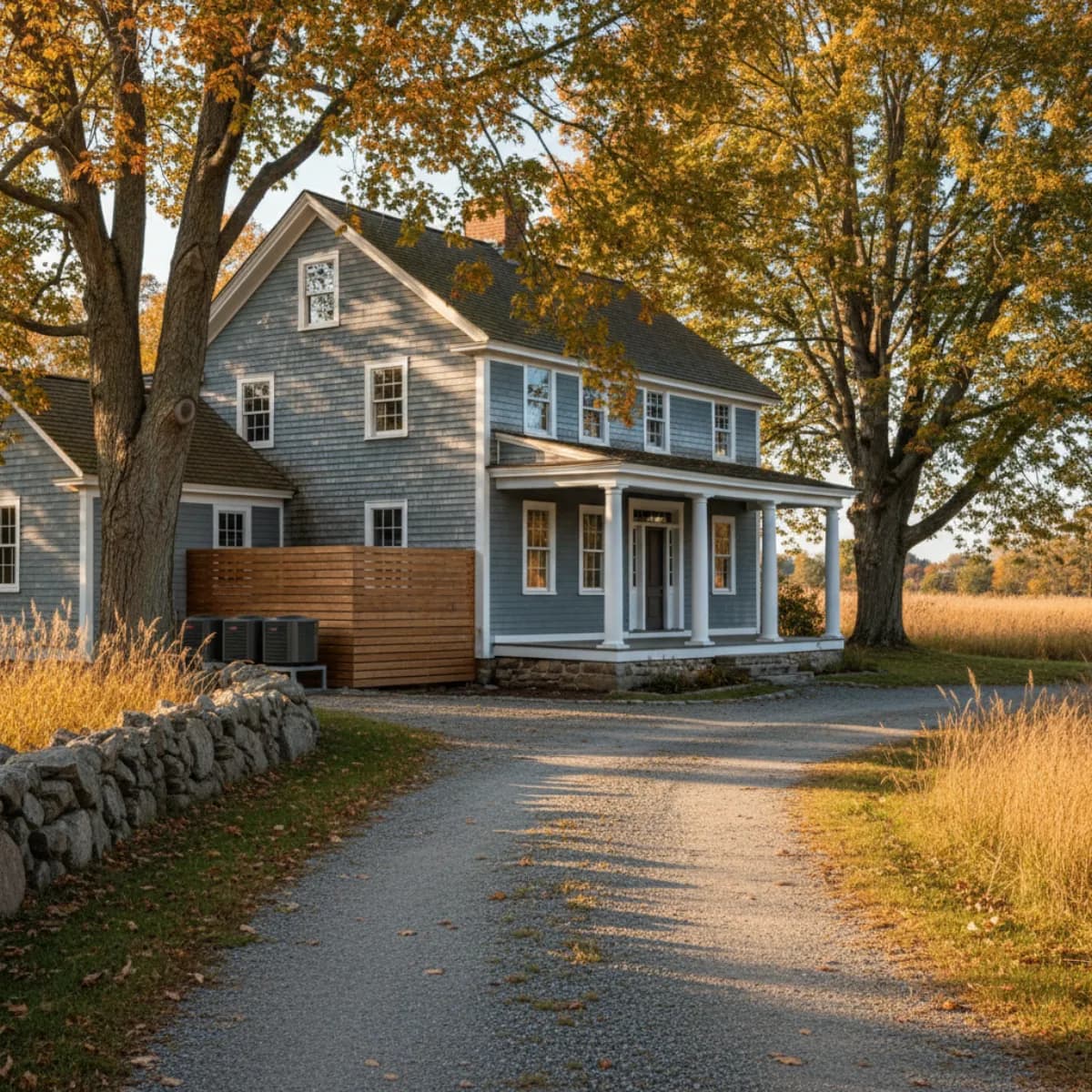
A Concord 1800s farmhouse needed electrification without damaging historic interiors. The final design combined ductless zones, compact ducted distribution, radiator backup, and envelope-aware sizing for a high-variance old-home load profile.
Yes, but old farmhouses need careful heat pump design. This Concord case used a mixed ductless and compact-ducted system, 7 comfort zones, radiator backup, and envelope-aware Manual J sizing. The design avoided square-foot rules because drafts, additions, window quality, and room layout matter more in pre-1900 homes.
| Category | Project Detail | Why It Matters |
|---|---|---|
| Home type | 1800s farmhouse, 2,700 sq ft | Sets the envelope, duct, and zoning constraints. |
| Previous heating | Oil boiler with cast-iron radiators | Determines fuel-switching economics and backup strategy. |
| Equipment | Fujitsu cold-climate ductless and compact ducted mix | Cold-climate equipment selection affects winter performance. |
| Capacity and zones | 4.5 tons, 7 zones | Shows whether the project is room-level or whole-home. |
| Rebate pathway | Whole-home or partial-home pathway based on final backup controls | Rebate rules vary by state, utility, equipment, and project scope. |
| Cost range | $34,000-$44,000 before rebates | Useful for comparing quote reasonableness. |
| Net cost range | $25,500-$35,500 after standard rebate target | Shows cost after standard rebate target, before final approval. |
| Estimated savings | $1,800-$2,700 | Modeled operating-cost impact, not a guarantee. |
Old homes have inconsistent loads: one room may be leaky and cold while the next room has renovated insulation.
Historic trim and plaster limited indoor head placement.
The homeowner wanted meaningful oil reduction without losing radiator comfort on the coldest nights.
Line-set routing had to respect the exterior appearance of the farmhouse.
NuWatt used a hybrid layout: compact ducted equipment for bedroom clusters and ductless heads for high-load common rooms.
Radiators were kept as backup for design-day conditions and homeowner confidence.
Manual J inputs were adjusted for known envelope differences between original rooms and additions.
Equipment placement avoided primary facade elevations and minimized visible exterior routing.
| Decision | Reason | Field Note |
|---|---|---|
| Use mixed distribution | No single ducted or ductless strategy fit every part of the home. | Old homes reward flexible design, not rigid packages. |
| Keep radiator backup | The homeowner valued comfort and resilience during the first winter. | Hybrid design can be the best path when envelope upgrades are still in progress. |
| Protect historic finishes | Interior and exterior routing needed to avoid damaging plaster, trim, and facade details. | Respecting building constraints is part of expert installation. |
Distributed across two outdoor systems.
Mixed ductless and compact ducted.
Depends on final pathway approval.
Radiators retained for backup comfort.
Historic routing and mixed distribution added complexity.
No central duct demolition.
Documented additions, insulation differences, plaster constraints, and radiator zones.
Room-by-room Manual J with old-home assumptions reviewed carefully.
Mixed ductless and compact ducted installation with exterior routing controls.
Setpoint, backup, and comfort review after cold-weather operation.
Final costs, rebates, and savings require a site-specific quote, utility confirmation, equipment selection, home energy assessment, and Mass Save approval.
Yes, but they require careful room-by-room design. Old homes often need mixed distribution, envelope improvements, and sometimes retained backup heat.
Often, yes. Keeping radiators during the first winter can reduce risk while the homeowner learns how the heat pump performs and decides whether future envelope work is needed.
They do not have to be. Compact ducted units, floor consoles, careful placement, and thoughtful exterior routing can reduce visual impact.
Yes, if the home, equipment, contractor, weatherization status, and project scope meet program requirements. Older homes may need weatherization work first.
Square-foot rules are especially risky in old homes because insulation, windows, additions, air leakage, and room exposure vary dramatically.