Loading NuWatt Energy...

We use your location to provide localized solar offers and incentives.
We serve MA, NH, CT, RI, ME, VT, NJ, PA, and TX
Loading NuWatt Energy...
NuWatt designs, installs, and manages solar, battery, heat pump, and EV charger systems across 9 states. One company, one warranty, one point of contact.
Get a Free Quote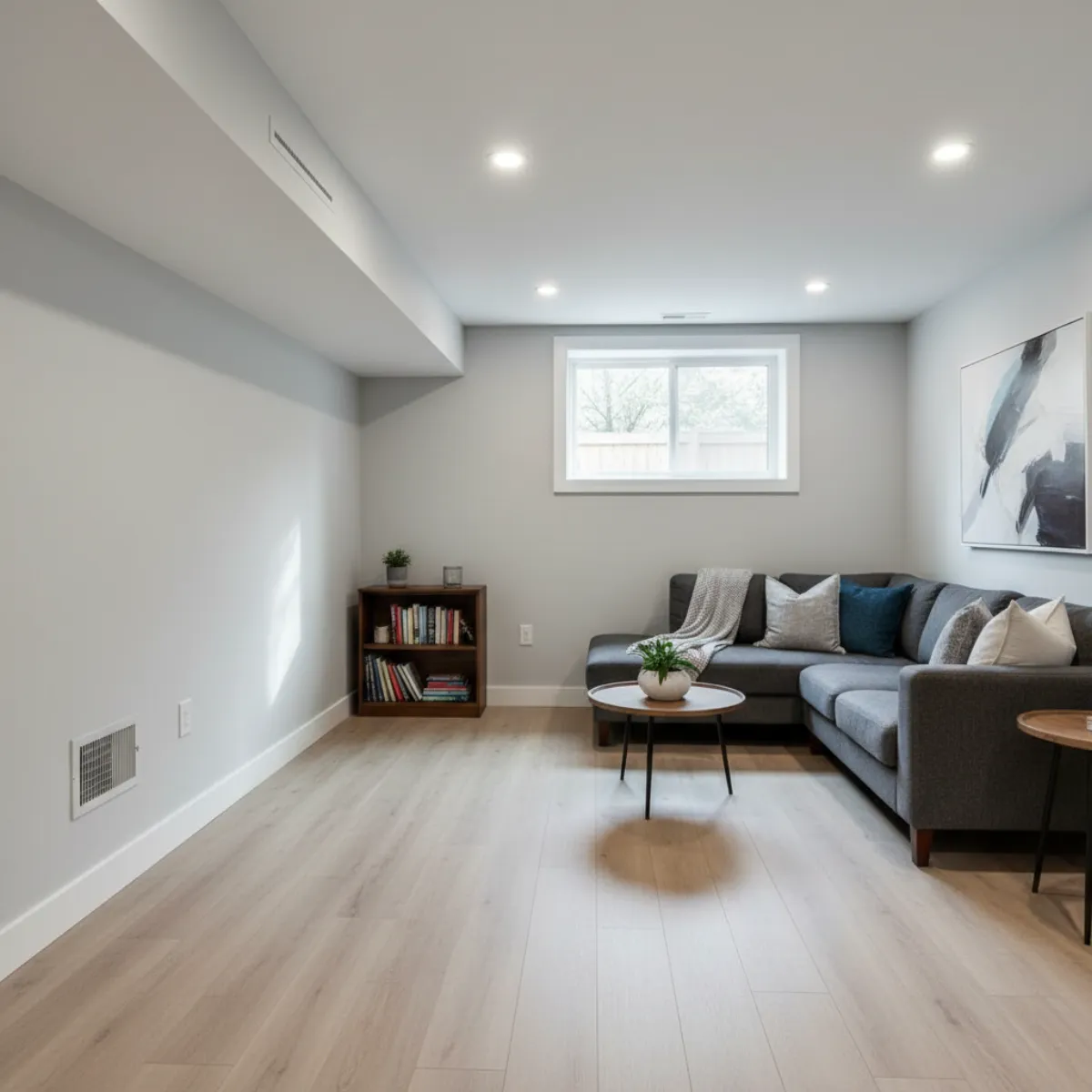
A Somerville homeowner converted a finished basement from a cold bonus room into comfortable living space. The project used a compact ductless layout, freeze-aware condensate routing, and careful line-set placement in a tight urban lot.
Yes. A properly sized mini-split can solve a cold finished basement while adding efficient cooling and dehumidification. This Somerville case used a 2-ton ductless system with 3 zones, gas backup retained, freeze-aware condensate routing, and a partial-home Mass Save rebate strategy.
| Category | Project Detail | Why It Matters |
|---|---|---|
| Home type | Renovated two-family unit with finished basement | Sets the envelope, duct, and zoning constraints. |
| Previous heating | Gas furnace with cold basement zone | Determines fuel-switching economics and backup strategy. |
| Equipment | Mitsubishi ductless mini-split system | Cold-climate equipment selection affects winter performance. |
| Capacity and zones | 2 tons, 3 zones | Shows whether the project is room-level or whole-home. |
| Rebate pathway | Basic or partial-home pathway | Rebate rules vary by state, utility, equipment, and project scope. |
| Cost range | $14,000-$20,000 before rebates | Useful for comparing quote reasonableness. |
| Net cost range | $11,500-$17,500 after typical rebate target | Shows cost after standard rebate target, before final approval. |
| Estimated savings | $450-$850 | Modeled operating-cost impact, not a guarantee. |
Basements have different loads than upper floors because below-grade walls, moisture, and air leakage behave differently.
Condensate drains can freeze if routed poorly in Massachusetts winters.
The outdoor unit needed service clearance in a narrow Somerville side yard.
The project needed honest rebate positioning because it was comfort-targeted, not whole-home conversion.
NuWatt designed a small multi-zone ductless system for the basement office, guest area, and first-floor support zone.
Condensate routing was kept short and protected to reduce freeze risk.
Outdoor unit placement preserved side-yard access while controlling sound and snow exposure.
The homeowner kept the existing furnace for main-house backup.
| Decision | Reason | Field Note |
|---|---|---|
| Treat basement as its own load profile | Below-grade rooms have different heating, cooling, and humidity needs. | Basement comfort needs more than extending upstairs assumptions. |
| Protect condensate routing | Frozen condensate can shut down a system or create water problems. | Freeze protection is a practical New England installation detail. |
| Keep existing furnace | The project solved problem rooms without forcing a full-system replacement. | Right-sized scope improves trust and avoids overselling. |
Targeted basement and first-floor comfort.
Office, guest area, first-floor support.
Depends on approved pathway.
Office and guest comfort improved.
Comfort project with some gas displacement.
Compact ductless installation.
Measured basement loads, moisture concerns, and finished-wall constraints.
Planned indoor head locations and outdoor service clearance.
Installed heads, line sets, condensate routing, and outdoor unit.
Tested heat, cooling, drains, and low-noise settings.
Final costs, rebates, and savings require a site-specific quote, utility confirmation, equipment selection, home energy assessment, and Mass Save approval.
Yes. Mini-splits are often ideal for finished basements because they provide room-level heating, cooling, and dehumidification without extending ductwork.
They can if condensate is routed poorly. A good design keeps drain runs protected, sloped, and serviceable.
It can, depending on the equipment, tonnage, utility territory, and whether the project is basic, partial-home, or part of a larger whole-home scope.
Yes. A heat pump is usually far more efficient than resistance space heaters and can also cool and dehumidify the basement.
A compact basement mini-split project often takes 1-2 installation days after design and electrical planning.