Loading NuWatt Energy...

We use your location to provide localized solar offers and incentives.
We serve MA, NH, CT, RI, ME, VT, NJ, PA, and TX
Loading NuWatt Energy...
NuWatt designs, installs, and manages solar, battery, heat pump, and EV charger systems across 9 states. One company, one warranty, one point of contact.
Get a Free QuoteMaine has the highest percentage of oil-heated homes in the United States — over 60%. Oil furnaces and boilers are the number one source of residential carbon monoxide poisoning. Switching to a heat pump eliminates combustion entirely. Zero flame. Zero exhaust. Zero CO risk.
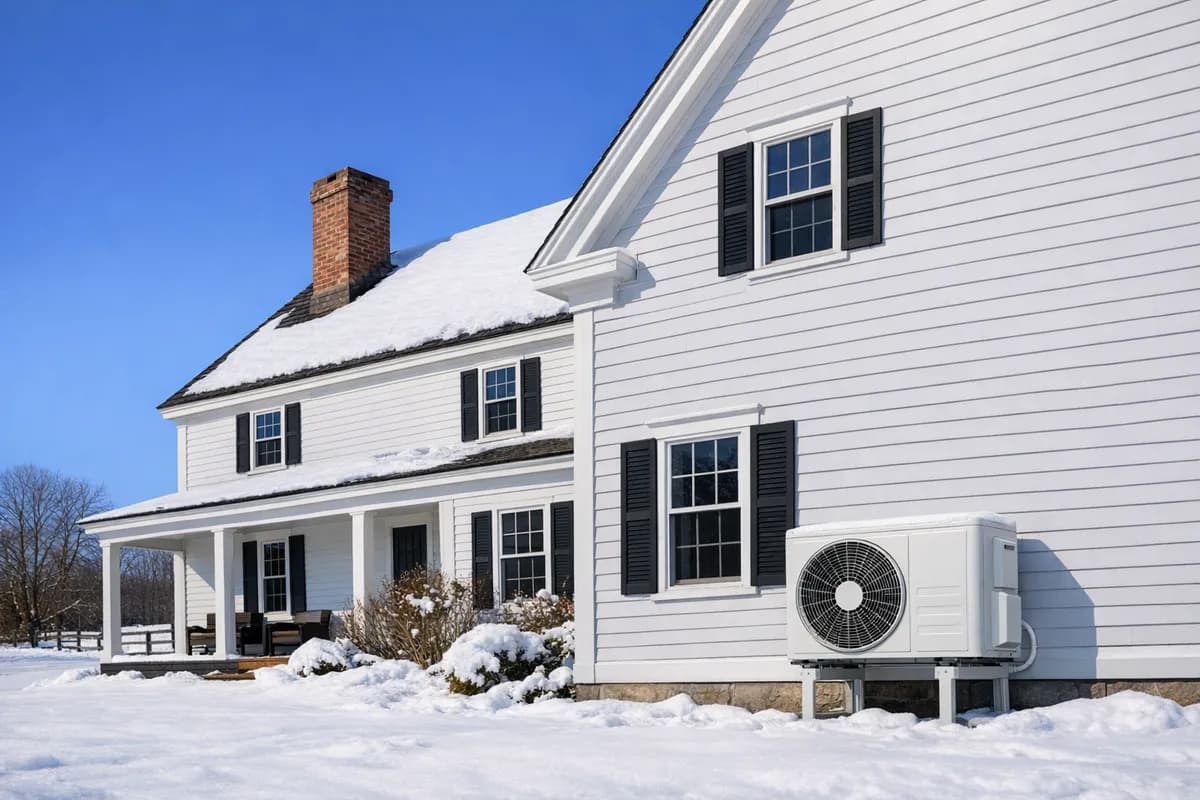
Carbon monoxide is an invisible, odorless gas produced by incomplete combustion. Every oil furnace, gas boiler, propane heater, and wood stove in Maine produces it. The state's heavy reliance on oil heat makes this a uniquely serious issue here compared to the rest of the country.
| Heating System | CO Production | Combustion? | ME Prevalence |
|---|---|---|---|
| Oil Furnace/Boiler | Yes — high risk | Yes | 60%+ of homes |
| Propane Furnace | Yes — moderate risk | Yes | ~5% of homes |
| Wood Stove/Pellet | Yes — variable risk | Yes | ~12% primary or backup |
| Electric Baseboard | None | No | ~15% of homes |
| Heat Pump | None — impossible | No | Growing rapidly |
Understanding the CO pathways in oil heating helps explain why this is such a significant risk in Maine, where the typical furnace is 20+ years old and many homes have deferred maintenance.
Heat exchangers develop cracks after 15-20 years — common in Maine's aging furnace fleet. CO leaks directly into living space.
Ice, bird nests, or debris blocking the chimney — especially common after Maine ice storms. CO backs up into the home.
Skipping annual tune-ups leads to incomplete combustion. The furnace runs but produces excess CO with every burn cycle.
Tight weatherization without combustion air supply creates negative pressure. Flue gases get pulled back into the house instead of venting outdoors.
Water or sludge in old underground or basement oil tanks causes unstable combustion and elevated CO output.
Maine homeowners who weatherize their homes (insulation, air sealing) without addressing combustion air supply can actually increase their CO risk. A tighter house creates negative pressure that pulls flue gases back into the living space instead of up the chimney. This is called backdrafting, and it is one of the most dangerous scenarios in older Maine homes. Heat pumps eliminate this risk entirely because there is no combustion air pathway to worry about.
CO is especially dangerous because you cannot see, smell, or taste it. Symptoms mimic the flu, so many people do not realize they are being poisoned until it is too late. During Maine's long heating season, low-level chronic exposure from a malfunctioning furnace can cause persistent headaches, fatigue, and cognitive issues that homeowners attribute to "winter blues."
Low (50 ppm)
Headache, mild dizziness
Onset: 2-4 hours
Moderate (100 ppm)
Severe headache, confusion, nausea
Onset: 1-2 hours
High (300+ ppm)
Loss of consciousness, brain damage
Onset: 15-30 minutes
Extreme (800+ ppm)
Death
Onset: 2-3 minutes
In rural Maine communities — Aroostook County, Washington County, the western mountains — emergency medical response times can exceed 30-45 minutes. At high CO concentrations (300+ ppm), loss of consciousness can occur in 15-30 minutes. This means that in many rural Maine locations, a serious CO leak can be fatal before help arrives. Eliminating the source of CO is the most effective prevention strategy.
This is not a matter of better engineering or improved safety features. Heat pumps are physically incapable of producing carbon monoxide. The technology works on an entirely different principle.
Maine law requires CO detectors in residential buildings. Understanding these requirements helps you know what applies to your home — both before and after switching to a heat pump.
If you eliminate ALL combustion appliances and do not have an attached garage, CO detectors are technically no longer required by Maine law. However, most safety professionals recommend keeping at least one per floor as a precaution — CO can enter from a neighbor's unit in multi-family buildings, from a portable generator during outages, or from an idling vehicle near an open window. Detectors cost $20-40 each and last 7-10 years.
Eliminating carbon monoxide is the most dramatic safety improvement, but switching from oil to a heat pump addresses several other hazards common in Maine homes.
Underground oil tanks leak and contaminate wells and soil. Maine DEP reports hundreds of oil spill cleanups annually, many costing $10,000-$100,000+. Removing the tank eliminates this risk.
Oil furnace chimneys accumulate soot and creosote. Without annual cleaning, chimney fires can occur. No furnace means no combustion flue and no chimney fire risk.
No more fuel oil deliveries on icy Maine driveways in January. No risk of overfill spills, delivery truck damage to property, or running out of fuel during a blizzard.
Oil combustion releases NOx, SO2, and particulates into the home — even with a working flue. Heat pumps circulate and filter indoor air without adding any combustion byproducts.
When Maine homes are air-sealed for efficiency, combustion appliances can backdraft deadly gases. Heat pumps let you weatherize aggressively with zero backdrafting risk.
No ignition source, no pilot light, no fuel storage. Heat pumps are the lowest fire-risk heating system available. Important for Maine's rural homes far from fire departments.
Most Maine homeowners do not switch all at once. Here is the typical transition path and what it means for CO safety at each stage.
First winter (Year 1)
CO detectors REQUIRED — oil system still present
Most Mainers install 2-3 mini-split zones and keep the oil furnace connected for the coldest nights. Heat pump handles 70-80% of heating. Oil system runs occasionally. All CO safety requirements remain in effect.
Year 2-3
CO detectors REQUIRED — oil system still connected
After gaining confidence in the heat pump, most homeowners barely run the oil system. Some add a zone or two. The oil furnace sits idle most of the season but remains connected. CO detectors still required.
Year 2-5
CO detectors optional (if no other combustion sources)
Oil furnace disconnected and removed. Oil tank decommissioned (Maine DEP requires proper closure). If no wood stove, gas appliances, or attached garage remain, CO detectors are no longer legally required. Many families keep them anyway — they are inexpensive insurance.
Efficiency Maine provides generous rebates for cold-climate heat pumps, making the safety upgrade more affordable for families currently heating with oil.
Standard Rebate
$1,000–$3,000
Per unit (up to 3 units)
Income-Eligible
$4,000–$12,000
Enhanced rebate + weatherization
Weatherization First
75–100% covered
Insulation + air sealing
Wood stoves are a Maine tradition and provide critical backup heat during ice storms and extended power outages. You do not need to give up your wood stove when installing a heat pump — but you do need to maintain CO awareness.
Maine Poison Control Center: 1-800-222-1222 | Emergency: 911
No. Heat pumps cannot produce carbon monoxide because they use no combustion whatsoever. They move heat using electricity and refrigerant — no flame, no exhaust, no CO risk. This is their single biggest safety advantage over oil furnaces, propane boilers, and gas systems.
Maine has the highest percentage of oil-heated homes in the entire United States — over 60% of households. Oil furnaces and boilers are the #1 source of residential carbon monoxide. Combined with Maine's long heating season (October through April) and older housing stock, the cumulative CO exposure risk is higher than almost any other state.
Yes. Maine law (Title 25, Section 2465) requires carbon monoxide detectors in all residential buildings with fuel-burning appliances or attached garages. Detectors must be installed on each floor level and within 10 feet of sleeping areas. Landlords must provide and maintain CO detectors in rental units.
If your heat pump is your ONLY heating source and you have no other combustion appliances (gas stove, fireplace, wood stove, generator, attached garage), CO detectors are technically not required by Maine law. However, most safety experts still recommend keeping them as a precaution for other potential CO sources like a car warming up in an attached garage.
Maine CDC reports approximately 80-120 CO poisoning cases annually requiring emergency department visits. Roughly 50-60% of these cases are linked to heating systems — primarily oil furnaces and propane heaters. Carbon monoxide is responsible for an average of 2-4 deaths per year in Maine, making it the state's leading cause of poisoning death during winter months.
Yes — most Maine homeowners keep their oil system as backup during the first winter with a heat pump. However, as long as the oil furnace remains connected, you must maintain CO detectors and continue annual oil burner service. Many families decommission the oil system after 1-2 winters once they trust the heat pump in cold weather.
Yes. Heat pumps eliminate all combustion-related risks: no risk of oil tank leaks (which can contaminate wells and soil), no risk of chimney fires, no flue gas backdrafting, and no need for fuel oil delivery trucks on icy Maine driveways. They also improve indoor air quality by eliminating combustion byproducts like NOx and SO2.
Wood stoves are a beloved Maine tradition and excellent backup heat during ice storms and power outages. You do not need to remove a wood stove when installing a heat pump. However, as long as you have a wood stove, you must maintain CO detectors. The heat pump handles day-to-day heating while the wood stove serves as emergency backup.
Over 60% of Maine homes still heat with oil. A cold-climate heat pump eliminates combustion entirely — the single biggest safety upgrade you can make for your family.