Loading NuWatt Energy...

We use your location to provide localized solar offers and incentives.
We serve MA, NH, CT, RI, ME, VT, NJ, PA, and TX
Loading NuWatt Energy...
NuWatt designs, installs, and manages solar, battery, heat pump, and EV charger systems across 9 states. One company, one warranty, one point of contact.
Get a Free QuoteThe residential solar tax credit is dead — but the commercial ITC is alive. Maine businesses can still claim 30-50% of system cost through Section 48/48E plus MACRS depreciation. The July 4, 2026 begin-construction window has closed; new starts still qualify if placed in service by December 31, 2027. Here are three real case studies and the complete financial breakdown.
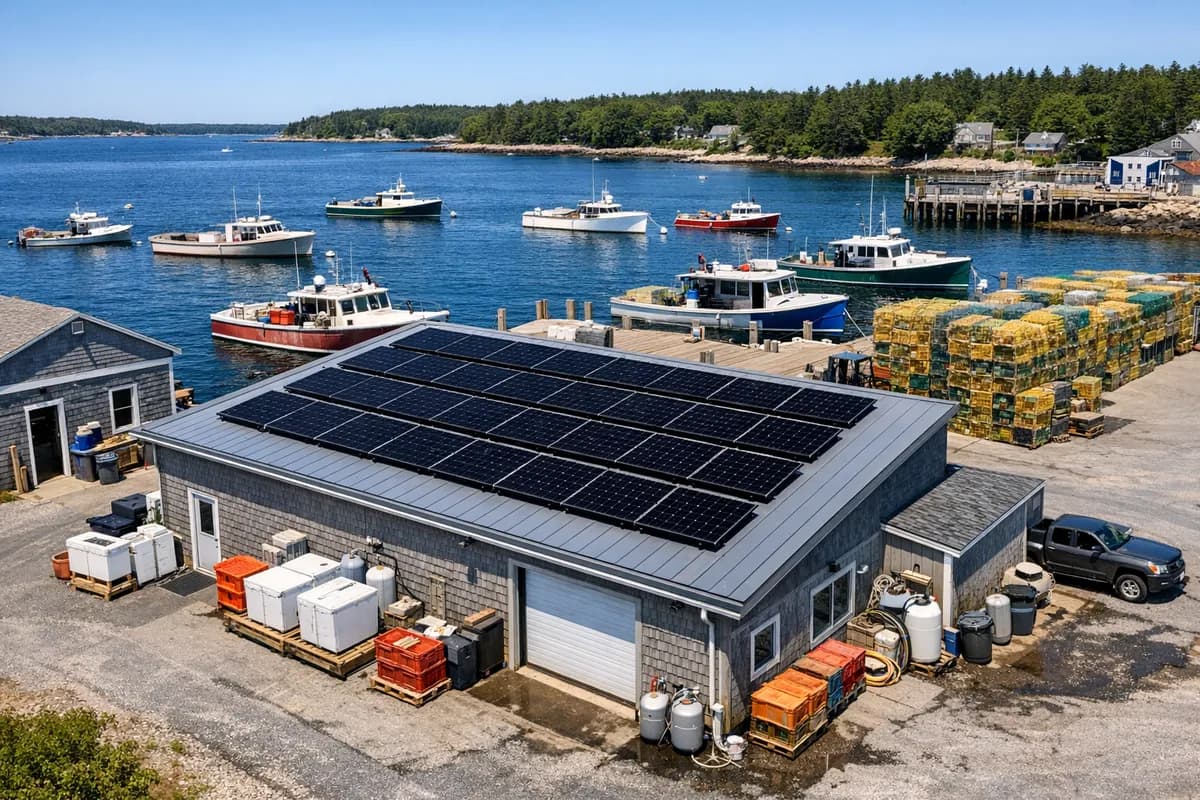
July 4, 2026 was the Section 48/48E begin-construction safe harbor, not an expiration. Projects that began construction on or before that date — by starting physical work on-site OR incurring 5% of total project cost (the Safe Harbor rule) — locked in the full timing pathway, placed in service through roughly 2030. Projects starting now still qualify for the 30% base ITC but generally must be placed in service by December 31, 2027, so the placed-in-service window is now the binding constraint. If you are considering business solar in Maine, plan the build around that date.
Unlike the dead residential credit (25D), the commercial Investment Tax Credit is alive and can be stacked with MACRS depreciation. Here is how the numbers work for a typical Maine small business.
Base ITC
All commercial solar projects meeting prevailing wage requirements
+ Domestic Content (FEOC)
Use American-made panels (e.g., Silfab, Mission Solar)
+ Energy Community
Project in coal/fossil fuel-impacted area or high-unemployment census tract
+ Low-Income
Projects serving low-income communities or on tribal land
Maximum possible
Stacking all eligible bonuses (rare but possible)
After applying the ITC, you reduce the depreciable basis by half the ITC amount. Example: $65K system with 30% ITC ($19.5K) has a depreciable basis of $55,250.
At 25% marginal tax rate: MACRS saves ~$13,800 in federal taxes, all in Year 1. Combined with the $19,500 ITC, total tax benefit = $33,300 on a $65K system.
Your utility territory significantly affects solar payback. Versant's higher rates make solar more valuable per kWh, but CMP serves 70% of Maine businesses.
Representative examples based on typical Maine business profiles. Exact numbers vary by location, roof condition, electric usage pattern, and ITC tier qualification.
Rockland, ME (CMP Territory)
System Size
50 kW
Annual Usage
60,000 kWh/year
Install Cost
$125,000
Annual Savings
$16,200/yr
ITC Savings
-$50,000 (40% ITC w/ FEOC)
MACRS Tax Savings
-$25,000
Net Cost After Tax Benefits
$50,000
Payback period: 3.1 years (after ITC + MACRS)
Camden, ME (CMP Territory)
System Size
25 kW
Annual Usage
30,000 kWh/year
Install Cost
$65,000
Annual Savings
$8,100/yr
ITC Savings
-$19,500 (30% ITC)
MACRS Tax Savings
-$13,813
Net Cost After Tax Benefits
$31,688
Payback period: 3.9 years (after ITC + MACRS)
Bangor, ME (Versant Territory)
System Size
20 kW
Annual Usage
24,000 kWh/year
Install Cost
$50,000
Annual Savings
$7,680/yr
ITC Savings
-$15,000 (30% ITC)
MACRS Tax Savings
-$10,625
Net Cost After Tax Benefits
$24,375
Payback period: 3.2 years (after ITC + MACRS)
Not every business can install rooftop solar. Roof condition, building ownership, or historic district restrictions may prevent installation. Community solar offers an alternative.
LD 1777 (2023) changed compensation for new community solar projects in Maine. Projects filed after January 1, 2024 receive tariff-based compensation instead of 1:1 NEB credits. This means:
Maine's Net Energy Billing (NEB) for commercial solar is among the best in the country.
Commercial solar exports receive the full retail rate as bill credits. At CMP ($0.27/kWh) or Versant ($0.32/kWh), every kWh exported has significant value.
Standard NEB applies to systems up to 660 kW — more than enough for any small business. No special application required beyond standard interconnection.
Excess credits roll over month-to-month indefinitely during the billing year. Annual true-up settles remaining credits at avoided cost rate.
We will analyze your electric bills, roof, and ITC eligibility. No commitment. New starts qualify if placed in service by December 31, 2027.
Full commercial solar guide for Maine
How Section 48E works for homeowners
Which utility is better for solar
Maine NEB explained
Subscribe without installing
Every financing option compared