Loading NuWatt Energy...

We use your location to provide localized solar offers and incentives.
We serve MA, NH, CT, RI, ME, VT, NJ, PA, and TX
Loading NuWatt Energy...
NuWatt designs, installs, and manages solar, battery, heat pump, and EV charger systems across 9 states. One company, one warranty, one point of contact.
Get a Free QuoteThe residential solar ITC and heat pump tax credit are gone. Maine still has Efficiency Maine rebates up to $9,000, 1:1 net metering, property tax exemptions, and Propel $0-down solar. Here is how to electrify your home and eliminate oil dependency in 2026.
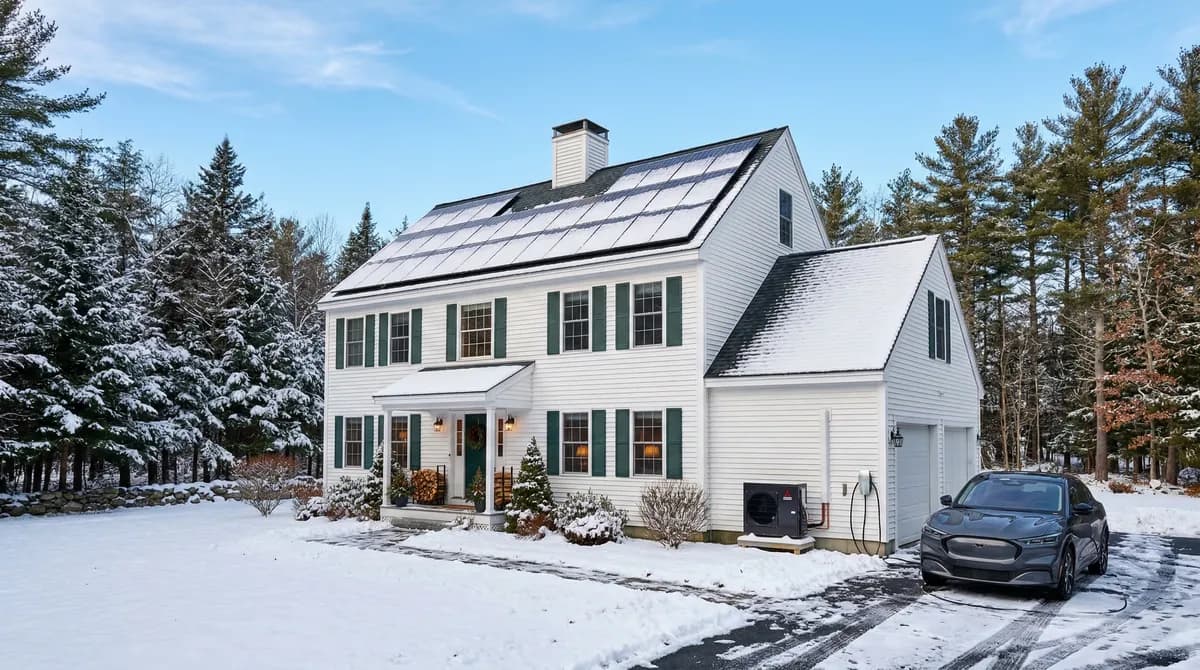
The One Big Beautiful Bill Act signed July 4, 2025 let the residential clean energy credits expire at the end of 2025. These are gone and are not coming back.
30% solar tax credit is gone. Homeowners buying cash or loan get $0 federal credit.
$2,000 heat pump credit is gone. $1,200 insulation credit is gone. All $0.
Do not be misled by outdated information
Many solar websites still advertise a "30% federal tax credit." That credit (Section 25D) is $0 for residential purchases in 2026. If a solar company quotes you a price "after the 30% tax credit," they are either misinformed or dishonest. The only way to access a federal credit in 2026 is through a third-party-owned system (lease/PPA) via Section 48E.
Federal residential credits are dead, but Maine's state programs are among the strongest in New England. These incentives do the heavy lifting.
$1,000 - $3,000 per unit (max 3)
Standard: $1,000/unit. Moderate income: $2,000/unit. Low income: $3,000/unit. Up to 3 units = $3,000-$9,000 total.
Full retail rate credits
CMP customers earn $0.27/kWh. Versant customers earn $0.32/kWh. Credits roll over monthly. Protected by law.
Solar adds $0 to property tax
Maine exempts 100% of solar equipment value from property taxes statewide (36 M.R.S. section 655). Not a local option — guaranteed.
No sales tax on solar equipment
Maine exempts solar energy equipment from the 5.5% state sales tax. Saves ~$1,500 on a typical system.
$0 upfront, day-one savings
Third-party owner claims Section 48E commercial ITC. Benefit passed to homeowner as lower monthly rate. Available in ME through NuWatt.
30%+ for third-party owned systems
When a financing company owns the solar system (lease/PPA), they claim the 48E credit. Homeowner benefits through reduced payments. July 4, 2026 was the begin-construction safe harbor; new starts still qualify if placed in service by Dec 31, 2027.
Over 60% of Maine homes heat with oil — the highest rate in the nation. At $3.82/gallon, a typical home spends $3,056/year just on heating fuel. This is where electrification pays for itself.

800 gallons x $3.82/gallon
$3,056/year
600 gallons x $3.38/gallon
$2,028/year
~5,500 kWh x $0.27/kWh (CMP)
$1,485/year
Versant: 5,500 kWh x $0.32/kWh = $1,760/year
9 kW system produces ~10,800 kWh/year
HP uses ~5,500 kWh — solar covers it entirely with surplus for household use
Heating cost: $0/year
Oil → Heat Pump + Solar
$3,056/yr
Full oil cost eliminated
Propane → Heat Pump + Solar
$2,028/yr
Full propane cost eliminated
Here is what a complete whole-home electrification project costs in Maine in 2026 — solar, heat pumps, and an EV charger.
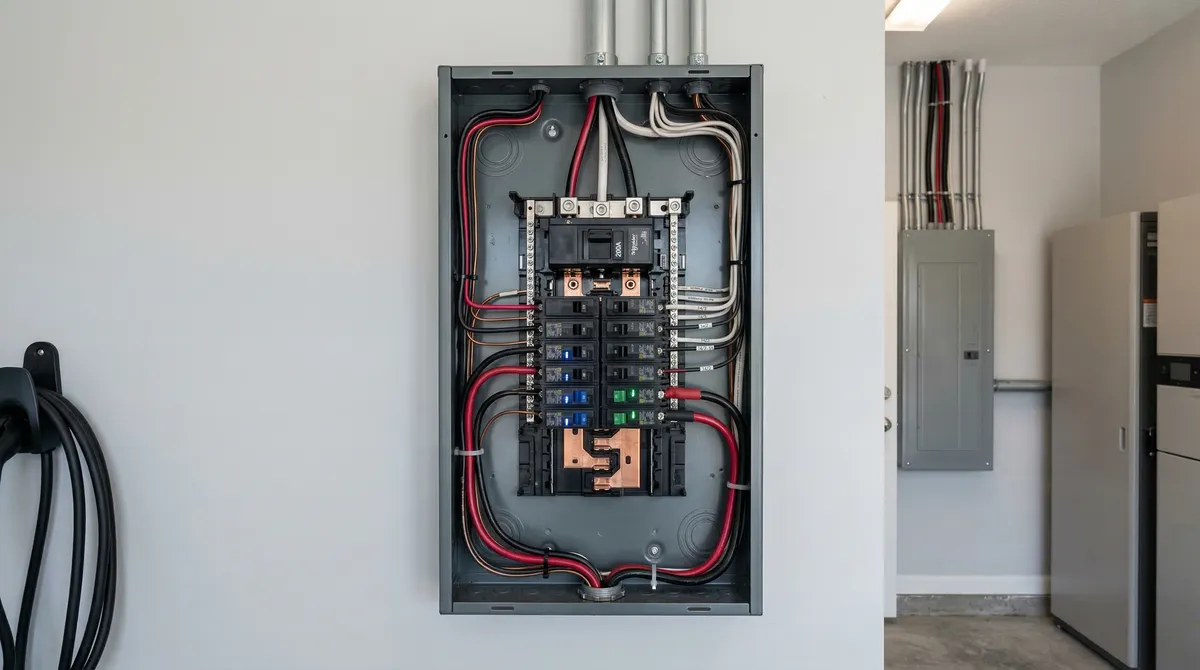
| Component | Cost Range | Notes |
|---|---|---|
Solar System (9 kW) | $26,190 - $28,710 | $2.91-$3.19/W installed. No 25D credit. |
Heat Pumps (2-3 zones) | $8,000 - $15,000 | Before Efficiency Maine rebates. Cold-climate rated. |
EV Charger (Level 2) | $800 - $1,500 | Installed. Efficiency Maine EV charger rebates may apply. |
Efficiency Maine HP Rebate | -$2,000 to -$9,000 | $1,000-$3,000/unit x 2-3 units. Income-dependent. |
| Net Cost (Cash Purchase) | $26,000 - $43,000 | After all rebates and credits. Propel eliminates solar upfront. |
Without the 25D solar ITC, financing matters more than ever. Here are three realistic approaches for Maine homeowners.
Upfront Cost
$8,000 - $15,000 (HP only)
Monthly
Propel payment replaces electric bill
Best For
Homeowners who want $0 solar upfront and have cash for HP
Upfront Cost
$33,000 - $43,000 (everything)
Monthly
$0 (after payback)
Best For
Homeowners with capital who want maximum long-term savings
Upfront Cost
$8,000 - $15,000 (HP only)
Monthly
$180 - $240/mo (solar loan)
Best For
Homeowners who want to own solar but spread the cost
Your utility territory changes the economics. Versant's higher rate means more valuable NEB credits but pricier heat pump electricity. CMP is cheaper to run but solar pays back slower.
| Metric | CMP (~70%) | Versant (~30%) | Advantage |
|---|---|---|---|
| Electric Rate | $0.27/kWh | $0.32/kWh | CMP |
| Customer Share | ~70% | ~30% | CMP |
| NEB Credit Value (9 kW) | $2,916/yr | $3,456/yr | Versant |
| HP Electricity Cost | $1,485/yr (5,500 kWh) | $1,760/yr (5,500 kWh) | CMP |
| Solar Payback (Cash) | ~15-17 years | ~12-14 years | Versant |
| Net Oil Savings (HP only) | $1,571/yr | $1,296/yr | CMP |
Bottom line: Both territories benefit from electrification. Versant customers get faster solar payback due to higher NEB credits. CMP customers pay less for heat pump electricity. In either territory, eliminating oil delivers $1,300-$1,600/year in direct savings before solar is added.
The federal Section 30C EV charger credit expired June 30, 2026 and is no longer available (as did 25D and 25C). The durable value of a Level 2 home charger now comes from Efficiency Maine rebates and charging on your own solar power.
Efficiency Maine EV charger rebates
Typical Level 2 charger + installation: $800-$1,500. Efficiency Maine EV charger rebates can offset part of it.
$0/mile solar charging
Charge from your own rooftop production and pay nothing per mile — savings that recur every year you drive.
Section 30C expired June 30, 2026
The one-time federal EV charger credit is no longer available. Plan around the state and solar savings above.
A Level 2 EV charger adds 3,000-4,500 kWh/year to your electricity demand (depending on driving). With a 9 kW solar system producing ~10,800 kWh/year:
Result: You eliminate oil, gasoline, and most of your electric bill.
If you heat with oil, install 2-3 zone cold-climate heat pumps immediately. You save $1,571/year (CMP) to $1,296/year (Versant) from day one. Efficiency Maine rebates ($1,000-$3,000/unit) apply at point of sale. No waiting.
Once heat pumps are running, you know your actual electricity usage. Size solar to cover it plus household needs. NEB 1:1 credits mean every kWh produced has full retail value. Propel $0-down makes this step cash-free.
The Section 30C federal credit expired June 30, 2026 and is no longer available. Add a Level 2 charger when you are ready: Efficiency Maine EV charger rebates offset the install cost, and charging from your own solar means $0/mile driving and a future-proofed garage.
The residential solar ITC (Section 25D) and energy efficiency credit (Section 25C) both expired December 31, 2025, and the EV charger credit (Section 30C) expired June 30, 2026 — all are $0 for homeowners in 2026. State programs like Efficiency Maine rebates and the 100% statewide property tax exemption remain. If you go with a lease or PPA, the financing company can claim Section 48E, which benefits you through lower payments.
A complete setup — 9 kW solar + 2-3 zone heat pump + Level 2 EV charger — runs approximately $35,000-$44,000 before state incentives. After Efficiency Maine heat pump rebates ($2,000-$9,000), net cost is typically $26,000-$43,000. Propel $0-down solar eliminates the solar upfront cost entirely.
A typical Maine home burns 800 gallons of oil per year at $3.82/gallon = $3,056/year. Heat pumps use about 5,500 kWh of electricity at CMP rates ($0.27/kWh) = $1,485/year. That is $1,571/year in direct savings before solar. With solar offsetting the heat pump electricity, your heating cost drops to effectively $0 — saving the full $3,056/year.
Propel is a lease/PPA program where a third-party financing company owns the solar system on your roof. They claim the Section 48E commercial ITC (30%+), which lets them offer you a lower monthly rate. You pay $0 upfront, get day-one electricity savings, and the payment often costs less than your current CMP or Versant bill. Available through NuWatt in Maine.
Efficiency Maine offers per-unit rebates: $1,000/unit for any income level, $2,000/unit for moderate income (80-150% AMI), and $3,000/unit for low income (below 80% AMI). Maximum 3 units per household, so total rebates range from $3,000 to $9,000. Applied at point of sale through registered contractors.
Yes. Maine Net Energy Billing (NEB) provides 1:1 retail-rate credits for rooftop solar. CMP customers earn $0.27/kWh and Versant customers earn $0.32/kWh for every kWh exported. Credits roll over monthly. LD 1777 (2023) only changed community solar compensation — rooftop NEB is protected.
You do not choose — it depends on where you live. CMP serves ~70% of Maine (southern/central), Versant serves ~30% (northern/eastern). Versant has higher rates ($0.32 vs $0.27/kWh), which means higher NEB credits and faster solar payback (12-14 years vs 15-17). But heat pump electricity costs more with Versant. Both territories benefit from electrification.
No. Section 30C expired June 30, 2026 and is no longer available. It previously provided a 30% credit on the installed cost of a Level 2 EV charger, up to $1,000 for residential. Maine homeowners can still lower charger costs through Efficiency Maine EV charger rebates, and pairing the charger with rooftop solar delivers $0/mile driving that outlasts any one-time credit.
Oil elimination saves $3,056/year (800 gal at $3.82). Solar NEB credits on a 9 kW system earn $2,916/year (CMP) to $3,456/year (Versant). Heat pump electricity costs $1,485-$1,760/year, but solar offsets this. Net annual savings: $4,000-$6,500+ depending on utility territory, oil usage, and system size.
Maine provides a 100% property tax exemption for solar equipment statewide under 36 M.R.S. section 655. This is not a local option — it is guaranteed. Solar equipment is also exempt from Maine 5.5% sales tax. These exemptions apply regardless of whether you pay cash, finance, or use Propel.
Start with heat pumps if you heat with oil — the fuel savings are immediate ($1,571/year for CMP customers). Add solar second to offset the new electricity load. Add an EV charger when you are ready — Efficiency Maine EV charger rebates plus $0/mile solar charging carry the value now that the 30C credit has expired. If cash is tight, Propel $0-down solar lets you add solar without upfront cost.
Yes. Modern cold-climate heat pumps (Mitsubishi Hyper-Heating, Fujitsu XLTH, Daikin Aurora) operate efficiently down to -15 degrees F. Portland design temperature is -1 degrees F, well within range. Even in northern Maine (Caribou at -18 degrees F), these systems provide primary heating. Many homeowners keep oil backup for extreme events but run heat pumps 95%+ of the time.
Solar + Heat Pump Bundle
Detailed sizing and cost breakdown for combining solar and heat pumps
Heat Pump vs Oil
Full cost comparison: oil furnace vs cold-climate heat pump
Solar Without the Tax Credit
How solar still makes sense in Maine without 25D
Propel $0-Down Solar
Lease/PPA with Section 48E passthrough — $0 upfront
CMP vs Versant Rates
How your utility territory affects solar ROI
EV Charger + Solar Bundle
Solar sizing and Efficiency Maine rebates for EV charging
Get a free whole-home electrification plan: solar sizing, heat pump zones, EV charger placement, and real cost estimates with current Efficiency Maine rebates.