Loading NuWatt Energy...

We use your location to provide localized solar offers and incentives.
We serve MA, NH, CT, RI, ME, VT, NJ, PA, and TX
Loading NuWatt Energy...
NuWatt designs, installs, and manages solar, battery, heat pump, and EV charger systems across 9 states. One company, one warranty, one point of contact.
Get a Free QuoteOne outdoor unit and one indoor head for $3,500 — or one outdoor unit and five heads for $18,000+? The right answer depends on your home type, heating goals, and whether you want the full Mass Save whole-home rebate.
$3.5K–$5.5K
Single-Zone
$11K–$18K
Multi-Zone (3-4)
Up to $8.5K
Mass Save Rebate
Down to -13°F
Cold-Climate Rated
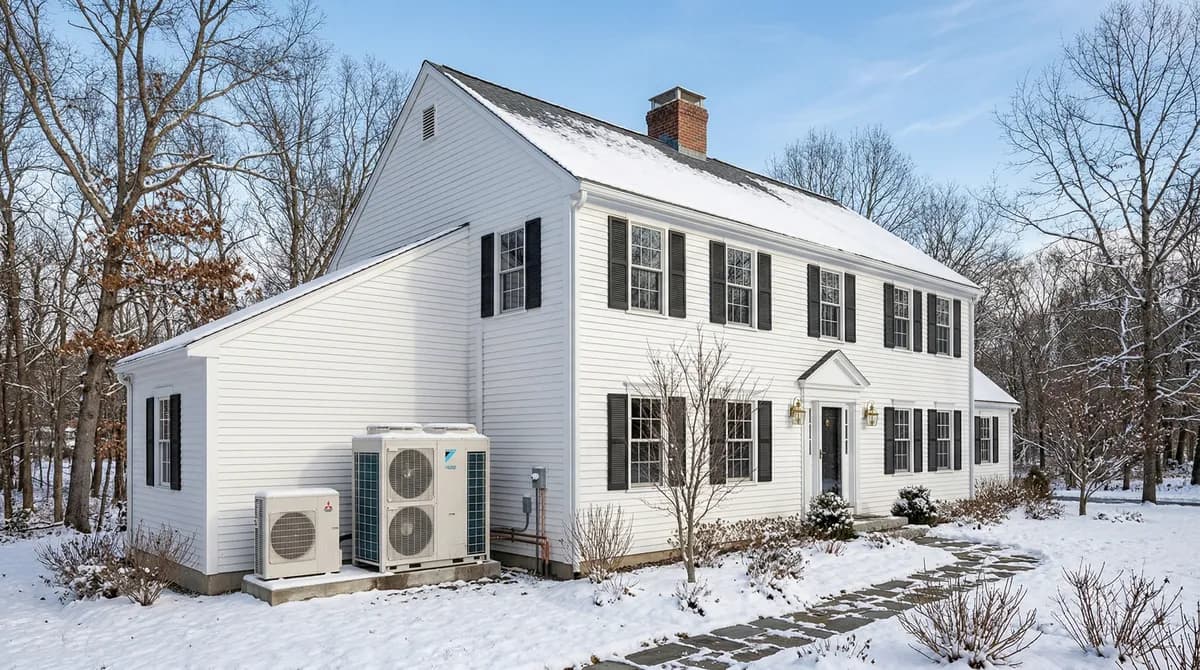
Both use the same inverter-driven compressor technology. The difference is how many indoor units share a single outdoor compressor.
1 outdoor + 1 indoor unit
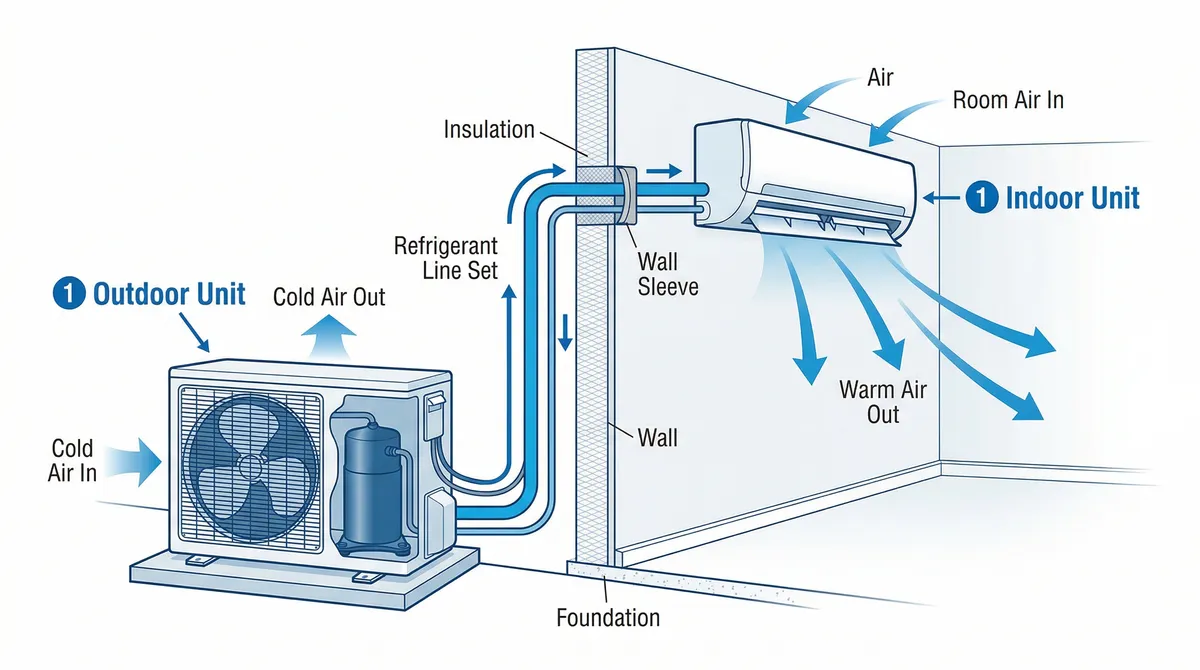
A single-zone system is the simplest configuration: one outdoor compressor connected by refrigerant lines to one indoor air handler. The compressor is precisely matched to the indoor unit’s capacity, which means it runs at peak efficiency across the full operating range.
In Massachusetts, single-zone mini splits are the most common installation type. They are ideal for targeted comfort in one area without replacing your entire heating system.
1 outdoor + 2-5 indoor units
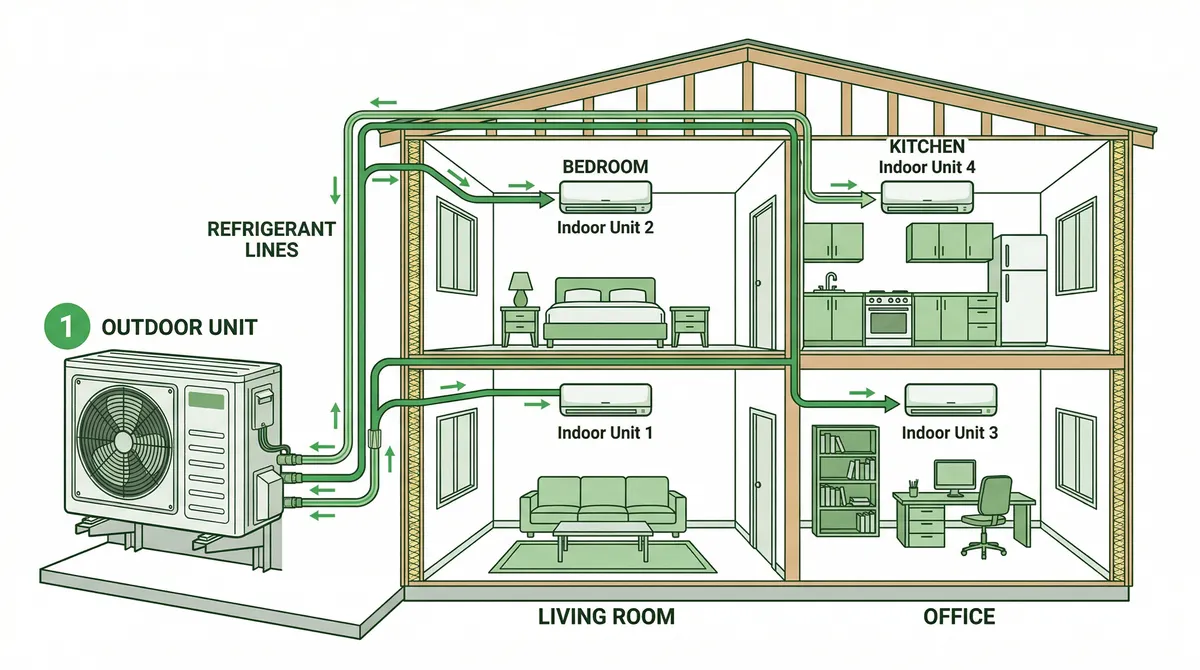
A multi-zone system connects one larger outdoor compressor to 2-5 indoor air handlers via individual refrigerant line sets. Each indoor unit can be set to a different temperature and controlled independently. The outdoor unit modulates its output based on total demand from all connected zones.
Multi-zone is the path to whole-home heating and cooling — and the only way to qualify for the full Mass Save $8,500 whole-home conversion rebate (all heating zones must be covered).
Massachusetts installed costs for 2026 including Mass Save rebates. All costs assume cold-climate rated equipment (NEEP ccASHP listed).
| Configuration | Equipment | Installed Cost | Monthly Operating* | Mass Save Rebate | Net Cost | Best For |
|---|---|---|---|---|---|---|
| 1-Zone | 1 indoor + 1 outdoor | $3,500 – $5,500 | $40 – $80 | ~$3,975 | $0 – $1,525 | Single room, home office, addition |
| 2-Zone | 2 indoor + 1 outdoor | $8,000 – $12,000 | $80 – $150 | ~$5,300 | $2,700 – $6,700 | Cape Cod (up/down), targeted rooms |
| 3-Zone | 3 indoor + 1 outdoor | $11,000 – $15,000 | $100 – $200 | ~$7,950 | $3,050 – $7,050 | Colonial (3 floors), ranch whole-home |
| 4-Zone | 4 indoor + 1 outdoor | $14,000 – $18,000 | $130 – $250 | Up to $8,500 | $4,000 – $8,000 | Larger colonials, split-levels |
| 5-Zone | 5 indoor + 1 outdoor | $16,000 – $22,000 | $150 – $300 | Up to $8,500 | $6,000 – $12,000 | Whole-home, large or multi-level |
* Monthly operating costs based on Eversource/National Grid rates ($0.38–$0.42/kWh) during MA heating season (Nov-Mar). Actual costs vary by insulation, setpoints, and weather.
To qualify for the maximum $10,000 Mass Save whole-home conversion rebate, your heat pump system must cover every heating zonein your home, and you must be replacing a fossil fuel heating system (oil, gas, or propane). A single-zone system in one room does not qualify for the whole-home rate — it earns the per-ton rebate ($2,650/ton) instead.
This is the most misunderstood aspect of multi-zone mini splits — and why multiple single-zone systems sometimes outperform a single multi-zone.
A multi-zone outdoor unit is sized to handle all connected indoor units running at full capacity simultaneously. A 4-zone system with four 12,000 BTU heads has a 48,000 BTU outdoor compressor.
But in practice, most Massachusetts homes rarely run all zones at once at full demand. On a 35°F November evening, you might only need heat in the living room and one bedroom. That 48,000 BTU compressor is now running at 25-30% of its capacity — well below its optimal efficiency range.
The compressor cycles more frequently (short-cycling), consumes more energy per BTU delivered, and produces less stable temperatures. This is why published multi-zone SEER2/HSPF2 ratings — which are measured with all zones running — can be misleading for real-world performance.
Multi-Zone (4 heads, 1 outdoor)
4 Single-Zone Systems
Rooms used at very different times
Home office 9-5, living room 5-10, bedrooms 10pm-7am. Rarely more than 1-2 zones active.
Long line set distances
Rooms far from outdoor unit location. Each line set over 50 ft loses refrigerant pressure and efficiency.
Redundancy matters
In a Massachusetts winter, losing all heat because one compressor fails is a serious risk. Separate units provide backup.
Phased budget
Install one zone now ($3,500-$5,500), add zones next year. Each is a complete system with no dependency.
Whether you choose single-zone or multi-zone, the equipment must be cold-climate rated for Massachusetts winters. Standard mini splits lose significant heating capacity below 20°F and may shut off entirely below 5°F. Massachusetts regularly sees temperatures below 0°F.
Hyper-Heating Models
-13°F to -22°F
Mitsubishi Hyper-Heat, Fujitsu XLTH, Daikin Aurora maintain output in extreme cold
NEEP ccASHP List
Required
Mass Save requires equipment on the NEEP cold-climate heat pump list. No exceptions.
MA Design Temp
5°F to -10°F
Boston 5°F, Worcester -5°F, Berkshires -10°F. System must heat at these temperatures.
Mitsubishi
MUZ-FS Hyper-Heat
Single & multi-zone | Down to -13°F
Fujitsu
AOU-XLTH / RLTH
Single & multi-zone | Down to -15°F
Daikin
Aurora / Fit Series
Single & multi-zone | Down to -13°F
LG
LGRED / Hyper Heat
Single & multi-zone | Down to -13°F
Massachusetts has distinct housing styles with different heating needs. Here is what typically works best for each.
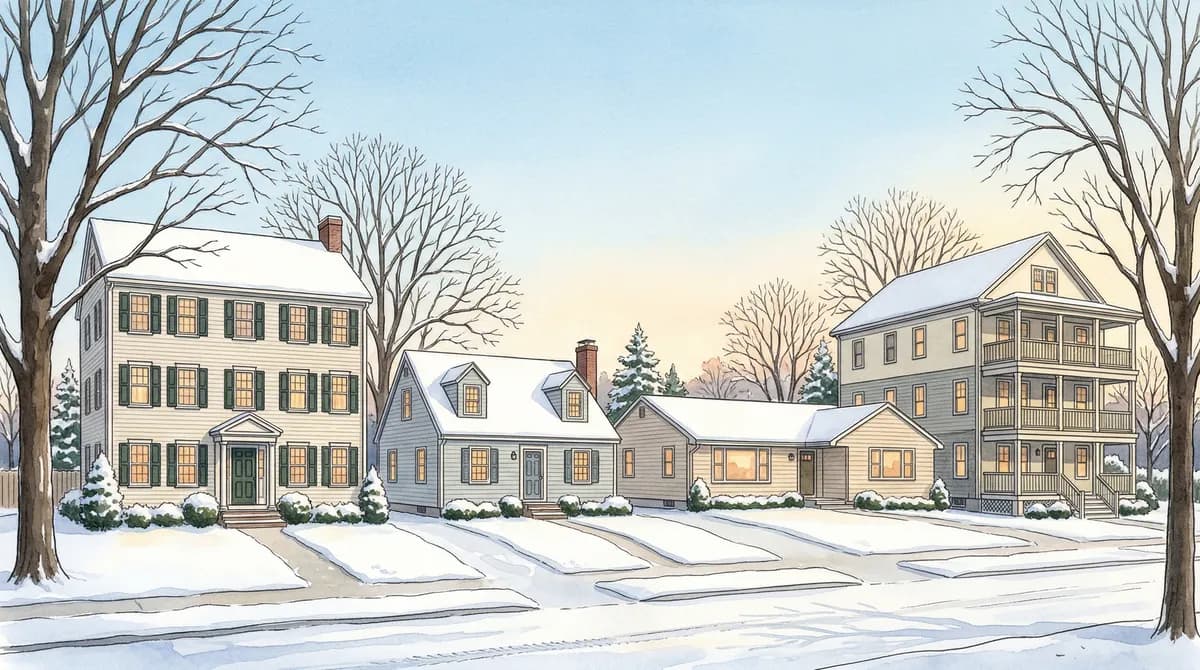
The classic Massachusetts Colonial has distinct heating needs per floor. A 3-zone system covers first floor living area, second floor bedrooms, and third floor bonus room. Better approach: a 2-zone system for floors 1-2 plus a single-zone for the third floor. Each outdoor unit runs at optimal capacity for its load.
Cape Cod homes have a main floor and a partially finished upper level. A 2-zone system — one head for the open main floor and one for the upstairs bedroom area — handles most Cape Cod layouts perfectly. The compact footprint means shorter line runs and lower installation cost.
Ranch homes are ideal for single-zone systems if the floor plan is open. A single wall-mounted or ceiling cassette unit in the main living area can heat 800-1,200 sq ft effectively. Add a second zone for a separated bedroom wing. Ranches rarely need more than 2 zones.
Massachusetts triple-deckers are best served by independent single-zone systems for each apartment unit. This gives each tenant separate temperature control, separate electric metering, and zero dependency on a shared outdoor compressor. If one unit fails, the other two apartments are unaffected.
Large Victorian homes with complex floor plans, multiple additions, and varying insulation levels are often better served by 3-4 independent single-zone systems than one large multi-zone. Each outdoor compressor is right-sized for its room, and failure of one unit does not affect the others. Line set routing is simpler.
Understanding the rebate structure is critical to choosing the right configuration. The difference between $3,975 and $10,000 depends on coverage.
$2,650 /ton
Up to $10,000
Yes. Mass Save does not require a multi-zone system for the whole-home conversion rebate. If you install 3-4 independent single-zone mini splits that collectively cover every heating zone in your home and replace your fossil fuel system, you qualify for up to $10,000. The key requirement is coverage, not configuration.
New England housing stock presents unique installation challenges. Here is what your installer should evaluate.
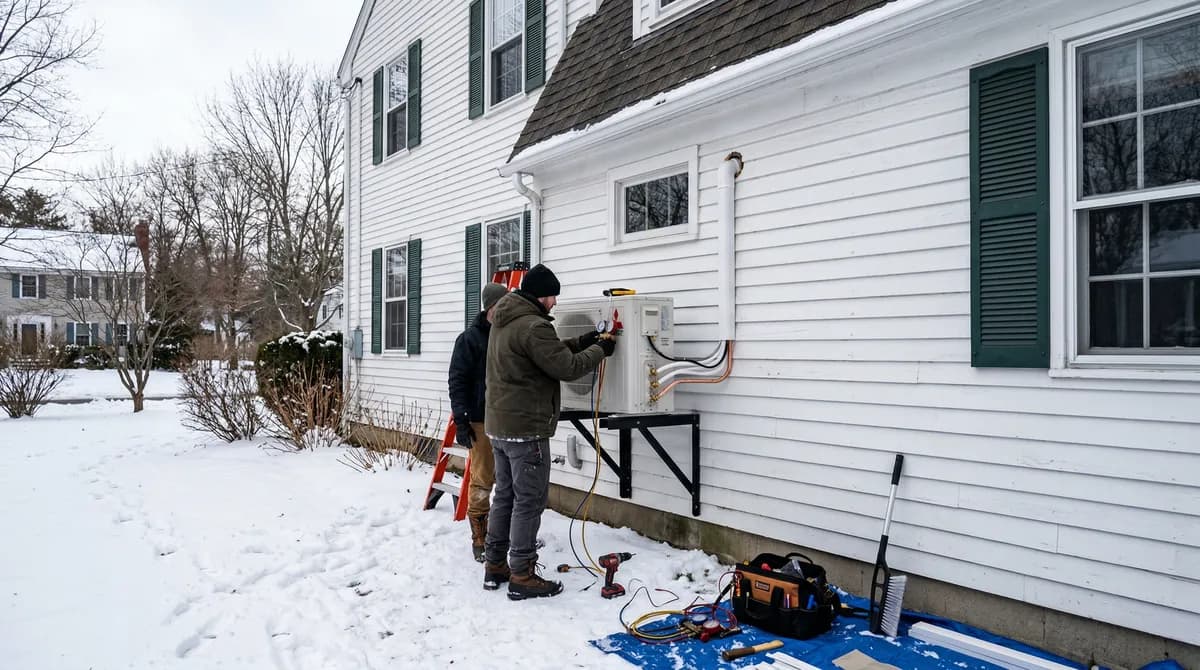
Refrigerant lines from outdoor to indoor units have maximum effective lengths (typically 50-80 ft). Multi-zone systems with distant rooms may require line sets near these limits, reducing efficiency. Single-zone systems can place the outdoor unit close to each room.
Multi-zone systems require branch boxes where the main line splits to individual indoor units. Each split adds complexity and cost. In older MA homes with limited chase pathways (no dropped ceilings, plaster walls), routing multiple line sets is the biggest installation challenge.
Single-zone: one 240V/15-20A circuit. Multi-zone: one 240V/30-60A circuit (varies by capacity). Your electrical panel must have available capacity. Older MA homes with 100A panels may need an upgrade ($1,500-$3,000) for larger multi-zone systems.
Multi-zone outdoor units are larger and heavier (200-350 lbs vs 70-120 lbs for single-zone). They need level ground, 24" clearance on all sides, and proximity to indoor units. On small MA lots, finding space for 3-4 outdoor units (multiple singles) can be harder than one larger unit.
Massachusetts gets 40-60 inches of snow annually. All outdoor units need a stand that elevates them 18-24 inches above expected snowfall. Roof drip lines and ice dams must be factored into placement. Some installers add a snow shelf or lean-to roof over the outdoor unit.
Most MA towns do not require HVAC permits for mini splits, but Boston, Cambridge, Brookline, and some other municipalities do. Outdoor units must meet noise setbacks (typically 50 dB at the property line). Historic districts may restrict visible outdoor equipment placement.
Use this flowchart to determine the best configuration for your situation.
You need multi-zone or multiple single-zone systems covering every heating zone.
A single-zone system for your target room is the most cost-effective option.
Ensure ALL heating zones are covered. Both multi-zone and multiple singles qualify.
Focus on the rooms where you want comfort. Per-ton rebate still applies.
Multi-zone is efficient when all zones run together — the compressor stays in its sweet spot.
Multiple single-zone systems will be more efficient when rooms have different schedules.
One multi-zone outdoor unit takes less total space than 3-4 individual units.
Multiple singles give you redundancy and per-room efficiency optimization.
Start with single-zone systems. Each is independent. Add more as budget allows.
A multi-zone system installed all at once is typically 10-15% cheaper than phased singles.
It depends on your goal. A single-zone ($3,500-$5,500 installed) is ideal for supplementing one room or area — a home office, primary bedroom, or addition. A multi-zone ($8,000-$18,000) heats and cools 2-5 rooms from one outdoor unit. For whole-home heating that qualifies for the full Mass Save $8,500 rebate, you need multi-zone coverage of every heating zone.
Mass Save offers $2,650 per ton of cold-climate heat pump capacity. A single-zone 1.5-ton unit earns about $3,975. A whole-home multi-zone conversion that replaces your fossil fuel system qualifies for up to $8,500. Income-eligible households (under 60% AMI) may receive enhanced rebates covering most or all of the project cost.
Yes, in many cases. Multiple single-zone systems give each room its own dedicated outdoor compressor optimized for that specific load. If one unit fails, the others keep running. Multi-zone systems share one outdoor compressor, which can be oversized when only one or two zones are calling for heat — reducing efficiency. The trade-off is more outdoor units and slightly higher total cost.
All mini splits lose some capacity as temperatures drop, but cold-climate models (Mitsubishi Hyper-Heat, Fujitsu XLTH, Daikin Aurora) maintain full rated heating output down to 5°F and 75-80% capacity at -13°F. The multi-zone efficiency concern is different: the outdoor compressor is sized for all zones running simultaneously, so it may short-cycle when only one zone calls for heat.
A 3-story Colonial typically needs 3-4 zones for whole-home coverage. You have two options: a single multi-zone outdoor unit (3-4 heads, $12,000-$18,000) or two separate systems — a 2-zone for upper floors and a single-zone for the main level ($10,000-$15,000 total). The two-system approach often performs better because each outdoor unit is right-sized for its load.
A single-zone mini split installs in 4-8 hours (one day). A multi-zone system with 3-5 heads typically takes 2-3 days. Line set routing through older Massachusetts homes — especially pre-1960 construction without chase pathways — can add time. Most installations do not require a building permit in MA, but some municipalities (Boston, Cambridge, Brookline) require HVAC permits.
Absolutely. Standard mini splits lose significant capacity below 20°F and may shut off below 5°F. Massachusetts regularly sees temperatures below 0°F in winter. Cold-climate (ccASHP) models with hyper-heat technology maintain heating output to -13°F or lower. Mass Save requires NEEP-listed cold-climate models to qualify for rebates — this is non-negotiable for any MA installation.
A single-zone mini split heating one area costs roughly $40-$80/month in a Massachusetts winter. A multi-zone system heating 3-4 rooms runs $120-$250/month depending on home size and insulation. Per-zone operating costs are comparable, but multi-zone systems may use slightly more energy due to oversized compressor losses when not all zones are active.
Our Massachusetts-licensed installers will assess your home, calculate heating loads, and recommend the optimal single-zone or multi-zone setup — with Mass Save rebate projections included.
Compare ducted and ductless systems for MA homes with and without existing ductwork.
Read guideThe premium ductless option for design-conscious MA homeowners and historic homes.
Read guideManual J calculations, BTU by home size, and why oversizing wastes money.
Read guideComplete guide to $2,650/ton and up to $8.5K whole-home rebates in MA.
Read guideWhy hyper-heating models are required for Massachusetts winters.
Read guideFull breakdown of heat pump costs in Massachusetts after Mass Save rebates.
Read guide