Loading NuWatt Energy...

We use your location to provide localized solar offers and incentives.
We serve MA, NH, CT, RI, ME, VT, NJ, PA, and TX
Loading NuWatt Energy...
NuWatt designs, installs, and manages solar, battery, heat pump, and EV charger systems across 9 states. One company, one warranty, one point of contact.
Get a Free Quote
The One Big Beautiful Bill Act ended the residential solar tax credit and set a begin-construction safe harbor for the commercial ITC. Here is exactly what changed, what still works, and why starting earlier keeps the most flexible timeline open.
Quick Answer
The One Big Beautiful Bill Act (OBBBA), signed July 4, 2025, eliminated the residential solar ITC (Section 25D) as of December 31, 2025. Homeowners buying solar with cash or a loan receive $0 in federal tax credits. The commercial ITC (Sections 48/48E) is still active; its July 4, 2026 begin-construction safe harbor has closed: projects that began construction on or before that date locked in the longer timing (placed in service through roughly 2030), and projects starting now still qualify but generally must be placed in service by December 31, 2027. Third-party financing (leases, PPAs, NuWatt Propel) can access the commercial credit because the financing company — not the homeowner — claims it. The FEOC domestic content bonus (+10%) follows the same begin-construction safe harbor (it does not vanish July 4), while MACRS bonus depreciation stays at a permanent 100% first-year deduction under OBBBA.
Residential solar tax credit (25D) expired Dec 31, 2025 — homeowners who buy solar with cash or a loan get $0 federal credit
Commercial ITC (48/48E): projects that began construction on or before July 4, 2026 locked in the longer timing (placed in service through ~2030); new starts still qualify if placed in service by Dec 31, 2027
FEOC domestic content bonus (+10%) follows the same begin-construction safe harbor (it does not vanish July 4) — Silfab 440W panels qualify
MACRS bonus depreciation is a permanent 100% first-year deduction under OBBBA — commercial projects expense the full depreciable basis in year one
Third-party ownership (Propel, leases, PPAs) still accesses 48/48E — the financing company claims the credit
State incentives (SMART, REG, net metering, rebates) are unaffected by the OBBBA and remain available
The One Big Beautiful Bill Act (OBBBA) is a sweeping budget reconciliation law signed by President Trump on July 4, 2025. It covered taxes, spending, immigration, defense, and energy policy in a single legislative package — hence the name.
For the solar industry, the OBBBA was the most consequential legislation since the Inflation Reduction Act (IRA) of 2022. While the IRA expanded clean energy tax credits, the OBBBA significantly rolled them back. The key changes:
The bottom line: if you are a homeowner buying solar with your own money, the federal government is no longer helping you. If you are a business or using third-party financing, the commercial ITC is still available — projects that began construction on or before July 4, 2026 locked in the longest, most flexible timing pathway, and new projects place in service by December 31, 2027.

From 2006 through 2025, homeowners who installed solar panels could claim a percentage of the system cost as a federal income tax credit. Under the IRA, that credit was 30% — meaning a $30,000 solar system earned a $9,000 credit.
As of January 1, 2026, that credit is $0. The OBBBA did not reduce it or phase it down. It ended it. If you install solar on your home in 2026 and pay for it with cash or a solar loan, you will not receive any federal tax credit.
8 kW System
$24,000
Typical installed cost
Old 25D Credit (30%)
$7,200
What you would have saved
2026 25D Credit
$0
Current federal credit
Section 25C covered heat pumps, insulation, windows, and other energy efficiency upgrades — up to $2,000 per year for heat pumps and $1,200 for other measures. It also expired December 31, 2025. If you are installing a heat pump in 2026, there is no federal credit for that either.
State incentives still exist.Programs like Mass Save (MA), Efficiency Maine, Energize CT, Clean Heat RI, and NJ Whole Home are state-funded and were not affected by the OBBBA. These can still provide thousands of dollars in heat pump and solar rebates. Check your state's programs for current availability.
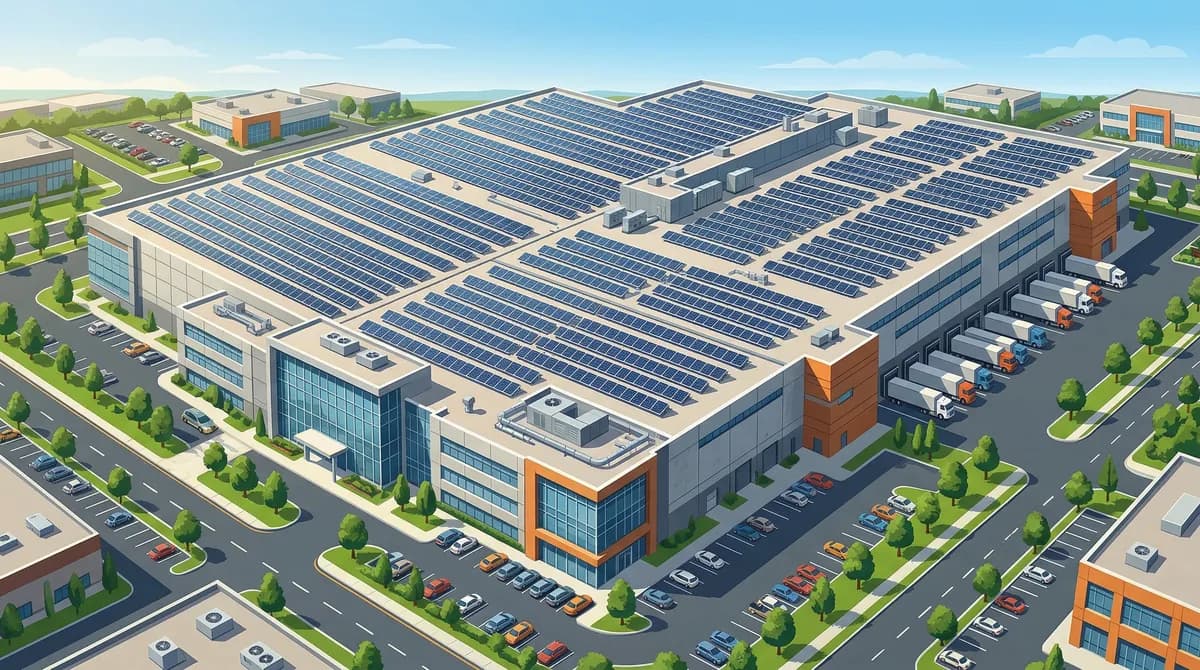
The commercial Investment Tax Credit under Sections 48 and 48E of the Internal Revenue Code is still available. Projects that began construction on or before July 4, 2026 locked in the longer timing pathway (placed in service through roughly 2030); projects starting now still qualify but generally must be placed in service by December 31, 2027. This credit is claimed by the system owner, which for commercial projects is the business, and for residential third-party ownership structures is the financing company.
The IRS provides two safe harbor methods to prove a project began construction. Projects that did so on or before July 4, 2026 locked in the longer placed-in-service window:
Pay at least 5% of total project cost. This is the most common method because it is easy to document.
Example: For a $200,000 commercial system, that is a $10,000 deposit.
Begin significant physical work at the project site or on custom components.
Preliminary activities (permitting, site surveys) do not count. Actual construction work does.
The completion window: Projects that began construction on or before July 4, 2026 have through roughly 2030 to place the system in service — the safe harbor rewarded starting, not finishing, by that date. Projects starting now still qualify but generally must be placed in service by December 31, 2027.
FEOC stands for Foreign Entity of Concern — specifically companies headquartered in, owned by, or controlled by entities in China, Russia, Iran, or North Korea. Under Section 48/48E, solar projects using equipment from non-FEOC (i.e., domestically manufactured or allied-nation) sources can claim an additional 10% domestic content bonus on top of the 30% base ITC.
This bonus is especially valuable for commercial projects. A 40% ITC (30% base + 10% domestic content) on a $500,000 commercial installation means an extra $50,000 in tax credits compared to the base rate.
| Panel | Origin | FEOC Compliant | +10% Bonus |
|---|---|---|---|
| Silfab 440W | Washington & New York, USA | ||
| Hyundai 440W | South Korea / China supply chain | ||
| REC 460W | Singapore / Norway HQ |
NuWatt's Propel financing program requires Silfab 440W panels specifically because FEOC compliance is mandatory for the third-party ITC claim and the domestic content bonus. If you choose Propel, you automatically get FEOC-compliant equipment.
The full ITC stack with domestic content: 30% base + 10% domestic content + 10% energy community + 10-20% low-income = up to 70% ITC for qualifying commercial projects. For more details, see our FEOC deadline guide.
The Modified Accelerated Cost Recovery System (MACRS) lets businesses depreciate solar equipment (5-year property). On top of this, bonus depreciation lets you write off the depreciable basis in the first year.
OBBBA made the 100% first-year bonus depreciation permanent (IRC §168(k), restored for property placed in service after Jan 19, 2025). The whole depreciable basis is expensed in year one — and this does not phase down in 2027 or later:
2025
100%
First-year bonus
2026
100%
First-year bonus
2027+
100%
First-year bonus
For a $500,000 commercial solar system (after claiming the 30% ITC, the depreciable basis is reduced by half the credit — so $500,000 minus $75,000 = $425,000 depreciable basis):
100% bonus = $425,000 first-year deduction (the full basis)
Total year-1 deduction: $425,000
Basis already fully expensed in year one
Remaining deduction: $0
Expensing the full $425,000 basis in year one delivers real cash-flow value up front. At a 21% corporate tax rate, that is about $89,250 in first-year tax savings from depreciation — and because the bonus is permanent, the same treatment applies whether the system is placed in service in 2026 or 2027.
If you are a homeowner considering solar in 2026, here is the honest breakdown of your options:
Federal help: $0. You own the system, so you would claim 25D — but 25D is gone. The commercial ITC (48/48E) does not apply because you are an individual, not a business.
Why it can still make sense: State incentives, utility savings, net metering credits, and rising electricity rates mean solar often pays for itself in 7-12 years even without federal credits. Your savings come from avoided electricity costs, not tax credits.
The commercial ITC still works here. With Propel, a financing company owns the solar system on your roof and claims the ITC under Section 48/48E. You get the benefit through lower monthly payments — the tax credit savings are passed through to you as reduced costs.
The timing: Projects that began construction on or before July 4, 2026 let the financing company lock in the longer Section 48E timing pathway (placed in service through roughly 2030). Projects starting now still qualify but generally must be placed in service by December 31, 2027.
Similar to Propel, a lease or PPA company owns the system and claims 48/48E. The same July 4, 2026 begin-construction safe harbor applies — projects that started on or before it locked in the longer timing; later starts place in service by December 31, 2027. The difference is ownership structure and terms — with a lease you pay a fixed monthly amount, with a PPA you pay per kilowatt-hour generated.
Be cautious: Not all lease/PPA companies pass through FEOC bonus savings. Ask specifically whether they use FEOC-compliant equipment and whether the domestic content bonus reduces your rate.
Solar without federal credits is more expensive upfront but still delivers a solid return through utility savings and state incentives. In high-rate states like Massachusetts ($0.28+/kWh) and Rhode Island ($0.29+/kWh), payback periods remain under 10 years for most systems. The federal credit loss hurts, but it does not break the economics of solar in the Northeast.

President signs the One Big Beautiful Bill Act. Residential ITC (25D) and energy efficiency credit (25C) set to expire December 31, 2025.
Section 25D (solar ITC) and Section 25C (heat pumps, insulation) officially expire. Homeowners who did not claim these credits by year-end lose them permanently.
Commercial ITC (48/48E) and the FEOC domestic content bonus remain available. Projects that began construction on or before July 4, 2026 locked in the longer placed-in-service window; projects starting now generally must be placed in service by December 31, 2027.
The Section 30C credit expired for both residential (up to $1,000) and commercial ($100,000 per item) EV charger installations placed in service after this date. Chargers placed in service by the deadline can still be claimed on Form 8911.
Projects that began construction (5% safe harbor or physical work) on or before this date locked in the full Section 48/48E timing — placed in service through roughly 2030 — plus the domestic content, energy community, and low-income bonuses. Projects starting now still qualify but generally must be placed in service by December 31, 2027.
OBBBA made the 100% first-year bonus depreciation permanent (IRC §168(k)). Commercial solar placed in service in 2027 and later still expenses its full depreciable basis in year one — no phasedown.
Determine your ownership type. Homeowners buying cash/loan: focus on state incentives. Business owners or Propel customers: the 48/48E begin-construction timing applies directly.
Request a site assessment and detailed proposal from NuWatt. We model all applicable credits, state incentives, and financing options for your specific situation.
Select your panel tier and financing structure. If using Propel or a commercial installation, Silfab 440W panels qualify for the FEOC domestic content bonus.
Execute a binding construction contract and make at least a 5% deposit. This satisfies the IRS safe harbor test for "beginning construction." Projects that did so on or before July 4, 2026 locked in the longer placed-in-service window (through roughly 2030); new projects target a December 31, 2027 placed-in-service date.
Retain all contracts, invoices, and proof of payment. Your tax advisor will use these records to substantiate the safe harbor claim. Projects that began construction on or before July 4, 2026 can be placed in service through roughly 2030; projects starting now generally must be placed in service by December 31, 2027.
| Incentive | Before OBBBA (2025) | After OBBBA (2026) |
|---|---|---|
| Residential Solar ITC (25D) | 30% of system cost | $0 — Expired Dec 31, 2025 |
| Energy Efficiency Credit (25C) | 30% for heat pumps, insulation | $0 — Expired Dec 31, 2025 |
| Commercial ITC (48/48E) | 30% base credit | 30% — projects that began by July 4, 2026 got the longer timing; new starts in service by Dec 31, 2027 |
| Domestic Content Bonus | +10% for US-made equipment | +10% — follows the begin-construction safe harbor (thresholds tighten in later years) |
| Energy Community Bonus | +10% | +10% — follows the begin-construction safe harbor |
| Low-Income Bonus | +10-20% | +10-20% — follows the begin-construction safe harbor |
| MACRS Bonus Depreciation | 100% first-year (permanent, OBBBA) | 100% first-year (unchanged) |
| EV Charger Credit (30C) | Up to $1,000 residential | Expired June 30, 2026 (residential) |
| State Incentives | Varies by state | Unchanged — still available |
The One Big Beautiful Bill Act (OBBBA) was signed into law on July 4, 2025. It eliminated the residential solar Investment Tax Credit (Section 25D) as of December 31, 2025, and set a July 4, 2026 begin-construction safe harbor for the commercial ITC under Sections 48 and 48E. Projects that began construction on or before July 4, 2026 locked in the full timing pathway (placed in service through roughly 2030); projects starting now still qualify but generally must be placed in service by December 31, 2027. Homeowners buying solar with cash or a loan receive $0 in federal tax credits.
No. The residential ITC (Section 25D) expired on December 31, 2025. Homeowners who purchase solar with cash or a loan in 2026 receive zero federal tax credit. The only way to access the remaining commercial ITC (Section 48/48E) is through a third-party ownership structure like a solar lease, PPA, or programs like NuWatt Propel, where the financing company — not you — claims the credit.
The IRS recognizes two methods to prove you began construction: (1) the 5% Safe Harbor Test — pay at least 5% of total project cost, or (2) the Physical Work Test — start significant physical work at the project site. Projects that began construction on or before July 4, 2026 locked in the longer placed-in-service window (through roughly 2030); projects starting now still qualify for the credit but generally require the system to be placed in service by December 31, 2027. Most commercial projects use the 5% safe harbor because it is straightforward to document with a contract and deposit.
FEOC stands for Foreign Entity of Concern. Solar projects using equipment manufactured outside of FEOC countries (China, Russia, Iran, North Korea) can claim an additional 10% ITC bonus on top of the 30% base credit. The bonus does not vanish on July 4, 2026 — it follows the same begin-construction safe harbor as the base credit, and the FEOC component-sourcing thresholds tighten for projects that begin construction in later years. NuWatt uses Silfab 440W panels (made in USA) which are FEOC-compliant.
Under OBBBA, MACRS bonus depreciation is a permanent 100% first-year deduction (IRC §168(k) restored for property placed in service after Jan 19, 2025). A commercial solar project expenses its entire depreciable basis in year one and $0 in years 2-6 — this does not phase down in 2027 or later.
Yes. NuWatt Propel uses a third-party ownership model where the financing company (not the homeowner) owns the system and claims the commercial ITC under Section 48/48E. Because the credit is claimed by a business entity, it is not affected by the residential ITC expiration. Projects that began construction on or before July 4, 2026 let the financing company lock in the longer Section 48E timing pathway (placed in service through roughly 2030); projects starting now still qualify but generally must be placed in service by December 31, 2027.
No. The Section 30C credit expired June 30, 2026 for both residential (up to $1,000 for a home EV charger) and commercial (up to $100,000 per item) property placed in service after that date. Businesses that placed chargers in service by June 30, 2026 can still claim the credit on Form 8911. Homeowners should instead use state and utility EV charger rebates and off-peak/TOU charging rates, which remain active.
State incentives vary significantly and are unaffected by the OBBBA. Massachusetts offers SMART 3.0 production payments and ConnectedSolutions battery incentives. Rhode Island has the REF rebate ($0.65/W) and REG program. Maine has net billing at retail rates. New Hampshire, Connecticut, New Jersey, and other states maintain their own incentive programs. NuWatt helps customers stack all available state and utility incentives.
Whether you are a business owner claiming the commercial ITC, or a homeowner exploring Propel financing, NuWatt can help you understand exactly what is available and what makes financial sense for your situation.
Disclaimer: This article provides general information about federal solar tax credits and the OBBBA. It is not tax advice. Tax credit eligibility depends on your specific circumstances, filing status, and tax liability. Consult a qualified tax professional before making financial decisions based on this information. NuWatt Energy is a solar installation company, not a tax advisory firm.
Sources: Internal Revenue Code Sections 25C, 25D, 30C, 48, 48E. IRS Notice 2023-29 (Begin Construction). One Big Beautiful Bill Act (Public Law, July 4, 2025). MACRS depreciation schedules per IRC Section 168.