
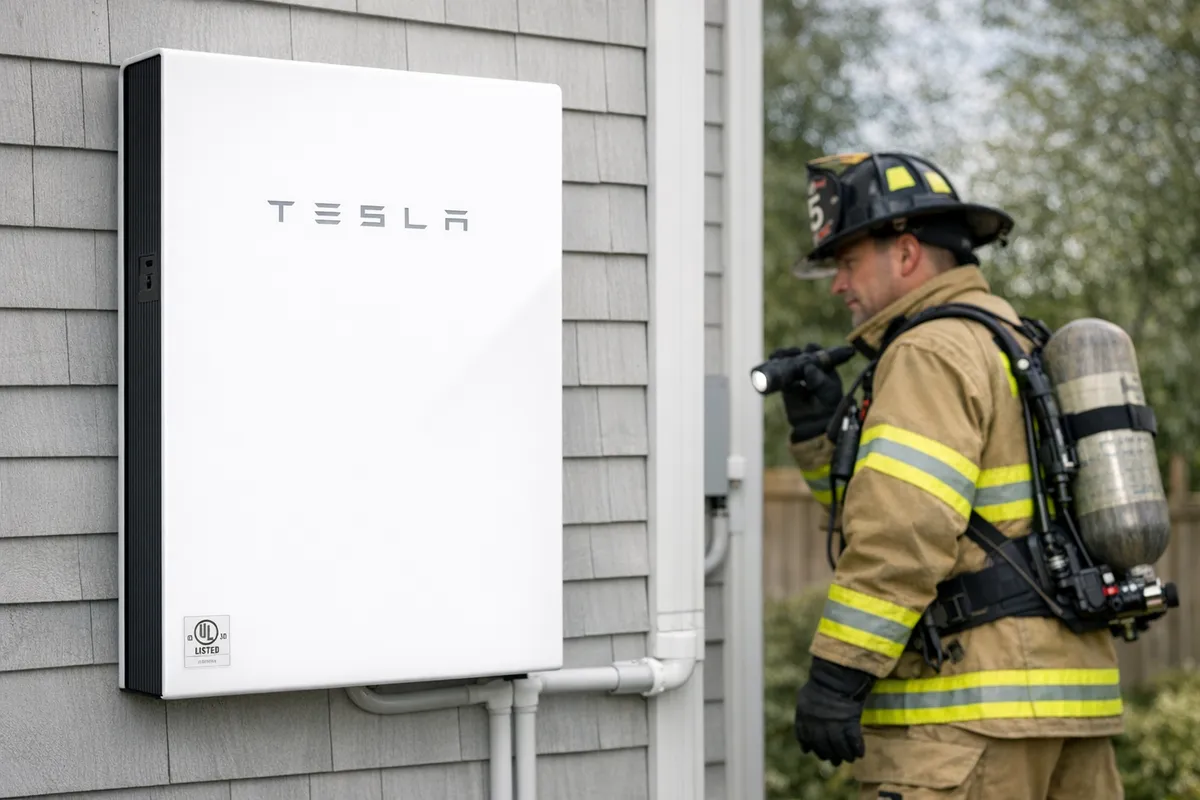
As more Rhode Island homeowners add battery storage — driven by ConnectedSolutions' $225/kW demand response earnings, outage protection, and the REF $2,000 battery adder — questions about fire safety have become more common. Headlines about EV fires and industrial battery incidents can be alarming, but residential battery technology in 2026 is fundamentally different from what's in the news.
The key is chemistry. The batteries being installed in Rhode Island homes today — Tesla Powerwall 3, Enphase IQ 5P and IQ 10T, Franklin aPower2, and sonnenCore+ — all use LFP (lithium iron phosphate) chemistry, which is inherently safer than the NMC (nickel manganese cobalt) batteries that have been involved in most publicized incidents. This guide explains the differences, RI fire code requirements, and what you need to do to stay safe and insured.
LFP vs NMC: Battery Chemistry Explained
Not all lithium batteries are created equal. The chemistry inside the battery cells determines the fire risk, lifespan, and safety profile. Here's a direct comparison of the two chemistries you'll encounter in the residential market:
LFP (Lithium Iron Phosphate)
Extremely Low RiskTesla Powerwall 3, Enphase IQ 5P/10T, sonnenCore+
270°C (518°F) — very high threshold
Minimal — no cobalt or nickel decomposition gases
6,000–10,000 cycles (15–25 years)
$400–$600/kWh installed
RI Recommendation: Recommended for all RI residential installations
NMC (Nickel Manganese Cobalt)
Low (but higher than LFP) RiskLG RESU (older models), some commercial units
150°C (302°F) — lower threshold
Yes — hydrogen fluoride, carbon monoxide, other toxic gases if thermal runaway occurs
3,000–5,000 cycles (10–15 years)
$350–$550/kWh installed
RI Recommendation: Phased out of most residential products. Not recommended.
Why LFP Won the Residential Market
The industry shift to LFP happened between 2022–2024. Tesla switched the Powerwall 3 to LFP. Enphase launched its entire IQ battery line with LFP. Franklin, sonnen, and most residential competitors followed. The reason: LFP's thermal runaway temperature (270°C) is nearly double NMC's (150°C), making it virtually impossible for a properly functioning LFP battery to reach dangerous temperatures during normal operation. The only trade-off is size — LFP batteries are physically larger for the same capacity — but for wall-mounted residential use, this is a non-issue.
Rhode Island Fire Code for Battery Storage
Rhode Island has adopted NFPA 855 as the governing standard for residential energy storage systems (ESS). Here's what's required for every battery installation in the state:
NFPA 855 Compliance
RequiredRhode Island adopted NFPA 855 (Standard for the Installation of Stationary Energy Storage Systems) as the governing code for residential battery installations. All ESS installations must comply.
UL 9540 / UL 9540A Listing
RequiredBattery systems must be UL 9540 listed and have passed UL 9540A fire testing. The Tesla Powerwall 3, Enphase IQ series, and Franklin aPower2 all carry this listing.
Electrical Permit
RequiredAll battery installations in RI require an electrical permit from the local building department. The permit triggers an inspection by the local AHJ (Authority Having Jurisdiction).
Clearances and Setbacks
RequiredMinimum 3-foot clearance from electrical panels, gas meters, and combustible materials. Indoor installations require additional ventilation per NFPA 855. Outdoor wall-mount (most common in RI) has simpler requirements.
Fire Department Notification
RequiredInstallers must notify the local fire department of ESS installation. A label at the electrical main panel identifies the presence and location of battery storage.
Smoke/CO Detection
ConditionalIf battery is installed in an attached garage or interior room, smoke detection is required in that space. RI already requires smoke detectors in all habitable areas per state fire code.
Unpermitted Installations: Don't Risk It
An unpermitted battery installation voids your homeowner's insurance coverage for any related incident. It also creates liability for the homeowner and installer. Every reputable RI battery installer pulls permits and schedules inspections as part of the standard process. If a company offers to skip permits to save time or money, find a different installer.
Tesla Powerwall 3: Safety Record Deep Dive
The Tesla Powerwall 3 is the most popular residential battery in Rhode Island due to its integration with Tesla's solar inverter, 13.5 kWh capacity, and strong ConnectedSolutions earnings. Here's its safety profile:
LFP (Lithium Iron Phosphate)
13.5 kWh
UL 9540, UL 9540A tested
Zero confirmed Powerwall 3 fire incidents as of March 2026
Active liquid cooling system maintains optimal temperature range
Battery Management System monitors each cell — auto-disconnects if temperature, voltage, or current exceed safe limits
IP67 rated (dust-tight, waterproof submersion to 1m) — outdoor rated for RI weather
10 years / 70% capacity retention at 10 years
Wall-mounted (indoor or outdoor). Most RI installations are outdoor on exterior wall.
Context on battery fires in the news: Most publicized battery fire incidents involve NMC-chemistry batteries in industrial or commercial settings, electric vehicles (which use much larger battery packs under far more stress), or improperly installed/modified systems. The Tesla Powerwall 3's LFP chemistry, active liquid cooling, and multi-layer Battery Management System make it one of the safest energy storage products available. Enphase IQ batteries share a similar LFP safety profile.
Insurance Implications for RI Homeowners
Your homeowner's insurance is directly affected by a battery installation. Here's what Rhode Island homeowners need to know:
Do I need to notify my homeowner's insurance about a battery?
Yes. Most Rhode Island homeowner's policies require notification of energy storage systems. Failure to disclose can void coverage in the event of a claim. Major RI insurers (Amica, USAA, State Farm, Liberty Mutual) generally cover battery systems under standard homeowner's policies, but you must report the installation.
Will my insurance premium increase?
Typically no, or minimal increase ($50–$150/year). LFP battery systems (Tesla Powerwall 3, Enphase) are viewed favorably by insurers due to their superior safety profile. Some insurers offer green energy discounts that offset any increase. NMC-chemistry batteries may see higher increases.
What if there's a battery-related incident?
Standard homeowner's insurance covers fire damage from any source, including battery systems. However, if the installation was not permitted, not code-compliant, or not disclosed to the insurer, the claim may be denied. Always use a licensed RI electrician and pull the required permits.
Does ConnectedSolutions participation affect insurance?
No. Rhode Island Energy's ConnectedSolutions demand response program ($225/kW summer) does not affect your insurance. The program cycles your battery within manufacturer-specified operating parameters. Inform your insurer about the battery itself, but ConnectedSolutions enrollment is not a separate disclosure requirement.
Safety Best Practices for RI Battery Owners
Installation
- Use a licensed RI electrical contractor — verify license at dbr.ri.gov
- Ensure the installer pulls all required permits (electrical + building if needed)
- Choose outdoor wall-mount location when possible (simplifies code compliance)
- Maintain 3-foot clearance from gas meters, electrical panels, and combustible materials
- Verify the installer provides fire department notification
- Request a copy of the UL 9540 listing for your specific battery model
Ongoing Safety
- Test smoke detectors monthly (RI state requirement)
- Keep the area around your battery clear of stored items, debris, and flammable materials
- Check battery app/monitoring monthly for error codes or temperature warnings
- Have your system inspected annually by a qualified electrician
- Never attempt to open, repair, or modify the battery enclosure yourself
- If you smell something unusual near the battery, power off and call your installer immediately
Emergency Response
- If you see smoke or fire from the battery: evacuate immediately, call 911
- Do NOT attempt to extinguish a lithium battery fire with water — firefighters have specialized protocols
- Know where your main electrical disconnect is (required to be labeled per RI code)
- The battery label at the main panel tells firefighters where the ESS is located
- LFP batteries (Powerwall 3, Enphase) are far less dangerous than NMC in a fire scenario
- Close doors to contain the fire — do not re-enter the structure
Is a Battery Worth the (Minimal) Risk in RI?
| Factor | With Battery | Without Battery |
|---|---|---|
| ConnectedSolutions Income | $2,250–$3,375/yr | $0 |
| Outage Protection | 8–12 hours backup | None |
| REF Battery Adder | +$2,000 rebate | N/A |
| Self-Consumption Optimization | Store excess for evening | Export at 80% NM rate |
| Fire Risk (LFP) | Extremely Low | None |
| Insurance Impact | $0–$150/yr increase | None |
| Additional Maintenance | Annual check recommended | None |
| 25-Year Financial Benefit | +$56,000–$84,000 | $0 |
Bottom line: In Rhode Island, the financial case for battery storage is overwhelming — ConnectedSolutions alone generates $2,250–$3,375/year in demand response income. The fire risk with modern LFP batteries, when properly installed and code-compliant, is negligible. The insurance impact is minimal. The economic benefit over 25 years ($56,000–$84,000+) far outweighs any additional cost or risk. The key is proper installation by a licensed contractor with all required permits and inspections.