Loading NuWatt Energy...

We use your location to provide localized solar offers and incentives.
We serve MA, NH, CT, RI, ME, VT, NJ, PA, and TX
Loading NuWatt Energy...
NuWatt designs, installs, and manages solar, battery, heat pump, and EV charger systems across 9 states. One company, one warranty, one point of contact.
Get a Free Quote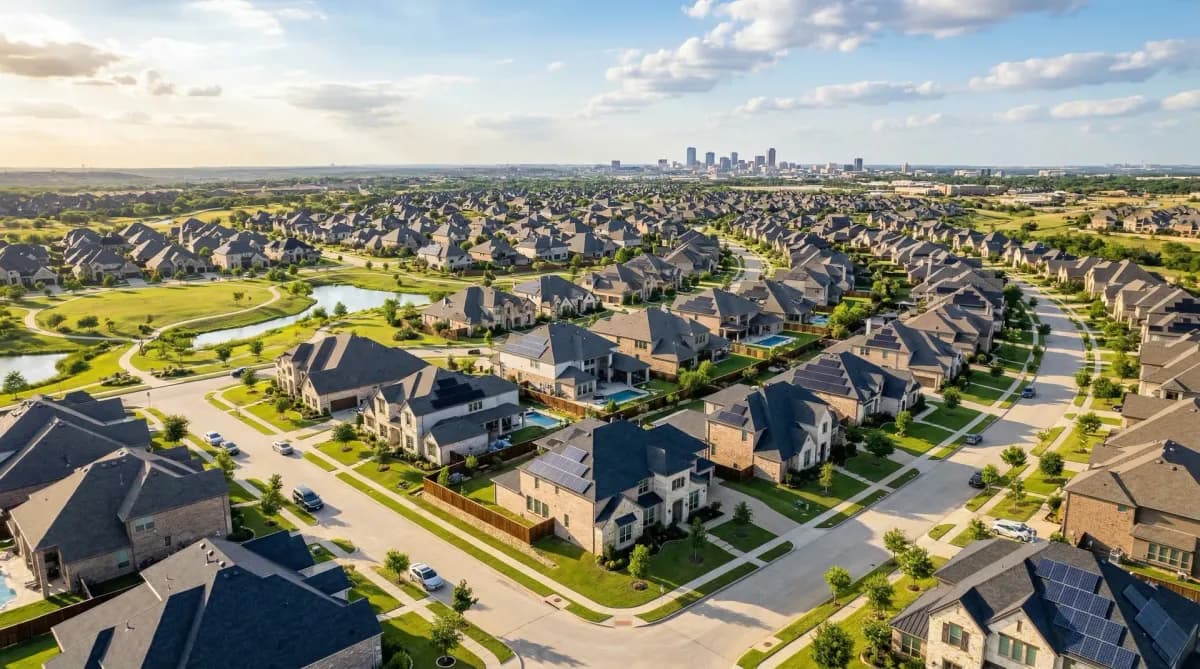
Fort Worth solar costs $2.50–$2.90/W in Oncor territory. A 10 kW system runs ~$27,000installed. TXU Energy's retail-match buyback gives you effective 1:1 net metering. Propel Solar financing uses Section 48E for $0 down through July 4, 2026. No federal 25D tax credit for cash or loan purchases.
2026 Alert: The federal residential solar tax credit (Section 25D) expired December 31, 2025. Fort Worth homeowners who purchase solar with cash or a loan receive $0 in federal tax credits. All prices shown are full installed cost. Programs like Propel Solar use a third-party owner to access the commercial ITC (Section 48E) with $0 down through July 4, 2026.
What Fort Worth homeowners actually pay in 2026 at different system sizes. All prices are full installed cost — there is no federal tax credit for cash or loan purchases.
| System Size | Cost Range | Average Cost | Annual Production | Annual Savings |
|---|---|---|---|---|
| 6 kW | $15,000–$17,400 | $16,200 | 9,697 kWh | $1,455 |
| 8 kW | $20,000–$23,200 | $21,600 | 12,930 kWh | $1,940 |
| 10 kW | $25,000–$29,000 | $27,000 | 16,162 kWh | $2,424 |
| 12 kW | $30,000–$34,800 | $32,400 | 19,395 kWh | $2,909 |
Section 25D (the residential solar tax credit) is dead. But Section 48E — the commercial/third-party ITC — remains available for projects beginning construction before July 4, 2026. Here is how Fort Worth homeowners can access it.
Section 48E requires that construction on your solar system begins before July 4, 2026. For Fort Worth homeowners, this means your project needs to be under contract and equipment ordered well before that date. If you are considering Propel Solar or any third-party ownership arrangement, start the process by May 2026 at the latest to ensure your project qualifies. After July 4, 2026, the commercial ITC is expected to phase out, removing the last remaining federal solar tax benefit.
Fort Worth sits in Oncor delivery territory within the deregulated ERCOT grid. Understanding how this works is critical for maximizing your solar investment.
Fort Worth shares Oncor territory with Dallas, giving you access to the best REP solar buyback options in Texas. TXU Energy's retail-match plan provides effective 1:1 net metering.
| REP | Plan | Buyback Rate | Contract | Rollover |
|---|---|---|---|---|
| TXU EnergyTop Pick | Solar Buyback 24 | Retail-match | 24 mo | |
| TXU Energy | Solar Buyback 12 | Retail-match | 12 mo | |
| Green Mountain Energy | Solar Buyback 36 | 8.5¢/kWh fixed | 36 mo | |
| Chariot Energy | Solar Buyback 24 | 7.0¢/kWh fixed | 24 mo | |
| Constellation | Solar Buyback 12 | 6.5¢/kWh fixed | 12 mo | |
| Shell Energy | Solar Buyback 24 | 6.0¢/kWh fixed | 24 mo | |
| Rhythm Energy | Solar Buyback | Wholesale (variable) | Mo-to-mo |
TXU Energy's Solar Buyback plan credits exported solar at the exact same rate you pay for consumption. This is effectively 1:1 net metering — the gold standard that most states mandate but Texas does not. If your TXU consumption rate is 15 cents per kWh, every kWh you export also earns 15 cents. The TXU retail-match is only available in Oncor territory — Fort Worth, Dallas, Waco, and Midland all qualify, but Houston and South Texas cannot access this plan.
Fort Worth anchors the western half of the DFW metroplex. Here is how solar stacks up across the metro area — all four cities share Oncor territory and access to TXU's retail-match buyback.
| City | $/W Range | 10 kW Avg | Rate | Tax Rate |
|---|---|---|---|---|
| Fort WorthThis Page | $2.50-$2.90 | $27,000 | $0.15/kWh | 2.24% |
| Dallas | $2.50-$2.90 | $27,000 | $0.15/kWh | 2.17% |
| Arlington | $2.50-$2.90 | $27,000 | $0.15/kWh | 2.24% |
| Plano | $2.50-$2.90 | $27,000 | $0.15/kWh | 2.17% |
Fort Worth's western DFW position means more suburban sprawl with larger lots and newer construction compared to Dallas proper. Newer roofs are ideal for solar — fewer shade issues, modern trusses that easily support panel weight, and 25+ year roof lifespans that align with solar panel warranties. Fort Worth neighborhoods like Alliance, Haslet, and Keller have particularly strong solar potential due to large, unshaded roof areas on homes built after 2010.
Tarrant County's 2.24% effective property tax rate is slightly higher than Dallas County's 2.17%. While this means higher property taxes in general, it also means the 100% Texas solar property tax exemption saves Fort Worth homeowners more per year. On a $27,000 system, Fort Worth saves ~$605/yr vs. Dallas's ~$586/yr — approximately $19 more annually.
Fort Worth sits in the heart of North Texas hail country. Choosing impact-resistant panels protects your investment and may lower your insurance costs.
| Panel | Hail Rating | Max Hail Size | Warranty |
|---|---|---|---|
| REC Alpha Pure-RX | IEC 61215 enhanced | 35mm (1.4 in) | 25 yr product, 92% at yr 25 |
| Qcells Q.Peak DUO | IEC 61215 enhanced | 35mm (1.4 in) | 25 yr product, 86% at yr 25 |
| Canadian Solar HiKu7 | Standard + enhanced testing | 25mm (1 in) standard | 25 yr product, 84.8% at yr 25 |
| Silfab 440W | IEC 61215 | 25mm (1 in) | 30 yr product, 86.6% at yr 30 |
Fort Worth's position as the western anchor of DFW creates unique advantages for solar installation. Here is what to know about going solar in Tarrant County.
Fort Worth's rapid growth means many homes built after 2005 with modern roofing materials and engineering. These newer roofs support solar panels with minimal structural concerns and have 20+ years of life remaining — ideal for a 25-year solar investment.
Suburban Fort Worth neighborhoods (Alliance, Keller, Haslet, Benbrook) feature larger lots with spacious roof areas. Less tree shading and wider roof planes mean more panel capacity and better solar production compared to denser urban areas in Dallas.
Fort Worth's hot summers (100+F days) slightly reduce panel efficiency by 10-15%, but the 5.4 peak sun hours more than compensate. Hail is the primary weather risk — choose panels rated for at least 25mm (1-inch) hail, and enhanced 35mm if budget allows.
Fort Worth Development Services typically processes solar permits in 1-2 weeks. Building permit ($150-300) and electrical permit required. Oncor interconnection takes an additional 2-4 weeks. Total timeline from contract to power-on: 6-10 weeks.
Texas law (SB 1626) prevents HOAs from banning solar panels. HOAs can set reasonable aesthetic guidelines for placement but cannot prohibit or unreasonably restrict installation. Many Fort Worth subdivisions with HOAs have active solar homeowners.
After ERCOT's Winter Storm Uri reliability concerns, battery backup is increasingly popular in Fort Worth. A 13.5 kWh battery (Tesla Powerwall 3) costs $12,000-$13,000 installed and provides 8-12 hours of backup for essential loads during grid outages.
The 100% Texas property tax exemption is a major financial incentive for Fort Worth solar owners — especially with Tarrant County's high 2.24% effective rate.
File Form 50-123 with the Tarrant Appraisal District (TAD) by April 30 following your solar installation. This is separate from your homestead exemption. The exemption prevents your property taxes from increasing due to the added value of your solar system. At Tarrant County's 2.24% rate on a $27,000 system, this saves approximately $605per year in the first decade. Fort Worth's higher property tax rate compared to Dallas County (2.17%) means even greater tax savings from the exemption.
Estimate your Fort Worth solar costs, production, and savings. Accounts for 25D expiration, Oncor territory rates, and the Texas property tax exemption.
Estimate your solar cost, payback period, and 25-year savings for any major TX metro.
Federal Residential Solar Tax Credit (Section 25D) Expired
Homeowners who purchase solar with cash or a loan receive $0 in federal tax credits. Section 25D expired December 31, 2025.
CenterPoint delivery area. Deregulated — choose a solar buyback REP for best export value. High humidity reduces panel efficiency slightly. Strong solar irradiance despite cloud cover. Largest TX solar market by installed capacity.
Cost Range
$2.00–$2.40/W
Peak Sun Hours
5.3 hrs/day
Avg Electric Rate
$0.14/kWh
County Tax Rate
2.31%
Annual Production
15,476
kWh/year
Annual Savings
$1,800
per year
Payback Period
12.2
years
25-Year Savings
$65,627
total
Estimates based on average 2026 TX solar pricing, 5.3 peak sun hours/day, 0.5%/year panel degradation, 3%/year electricity rate increase, and TX property tax exemption (Tax Code §11.27). Actual costs vary by installer, roof condition, and system configuration. Section 25D residential ITC expired Dec 31, 2025 — $0 federal tax credit for cash/loan purchases.
The calculator reflects $0 federal tax credit for cash and loan purchases. Section 25D expired December 31, 2025. Programs like Propel Solar use a third-party owner to claim the 30% commercial ITC (Section 48E) for projects beginning construction before July 4, 2026.
The calculator uses Oncor territory rates (~$0.15/kWh average) and accounts for TXU retail-match buyback. Fort Worth's 5.4 peak sun hours/day produces strong annual output. Adjust system size to match your electricity usage and roof area.
Propel Solar gives Fort Worth homeowners $0 down solar with a fixed payment and full ownership by year 5 — using the Section 48E commercial ITC that individual homeowners cannot access since 25D expired.
A third-party financing company owns your system and captures the 30% Section 48E commercial ITC — savings that homeowners cannot access since 25D expired. That tax benefit funds your $0 upfront cost.
If your Fort Worth electricity bill is $160/mo, your Propel payment is approximately $144/mo. The payment is fixed and predictable, unlike utility rates that increase 3-5% annually in the ERCOT market.
Full ownership transfers to you after approximately 5 years at no additional cost. Silfab 440W American-made panels (FEOC-qualified) with free maintenance during the financing period. You own the panels for the remaining 20+ years of their lifespan.
For Fort Worth homeowners who do not have $27,000 in cash, Propel Solar provides immediate savings with zero upfront risk. The third-party owner handles maintenance, monitoring, and warranty claims during the financing period. Combined with TarrantCounty's property tax exemption, Propel delivers strong value in Oncor territory. Deadline: Section 48E requires construction to begin before July 4, 2026.
Common questions about solar panel costs and installation in Fort Worth.
Solar costs in Dallas — same Oncor territory, Dallas County tax rate.
Read guideBetween Fort Worth and Dallas — mid-DFW solar pricing and incentives.
Read guideNorth DFW solar costs in Collin County with Oncor territory access.
Read guideComplete guide to REP buyback rates including TXU retail-match details.
Read guideHow solar buyback works in deregulated ERCOT territory.
Read guideCompare financing options for Texas solar including Propel.
Read guideComplete overview of going solar in Texas — incentives, timeline, and what to expect.
Read guideFull guide to hail-rated panels for North Texas and DFW.
Read guideHow the commercial ITC works for homeowners through third-party financing.
Read guideLast updated: March 16, 2026. Prices, rebate amounts, REP buyback rates, and utility programs may change. Contact NuWatt Energy or Oncor for current information.
NuWatt Energy partners with experienced DFW solar installers who know Oncor territory — from hail-resistant panel selection to TXU buyback optimization and Propel Solar qualification. Section 48E financing available through July 4, 2026. Get a free assessment tailored to your Fort Worth neighborhood and roof.