Loading NuWatt Energy...

We use your location to provide localized solar offers and incentives.
We serve MA, NH, CT, RI, ME, VT, NJ, PA, and TX
Loading NuWatt Energy...
NuWatt designs, installs, and manages solar, battery, heat pump, and EV charger systems across 9 states. One company, one warranty, one point of contact.
Get a Free Quote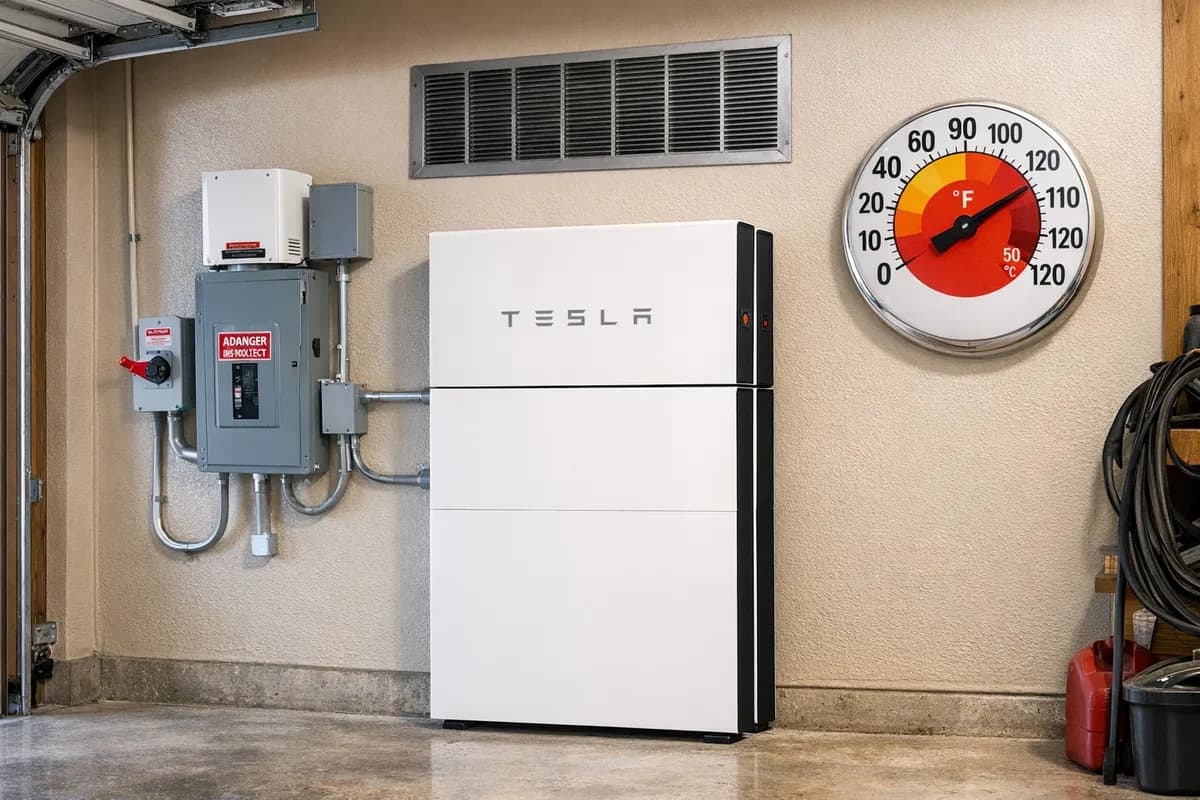
Texas garages reach 130°F+ in summer. Home battery chemistry, installation location, ventilation, and fire code compliance all matter more here than in any other state. Here is the complete safety guide -- no fearmongering, just engineering facts.
Both chemistries are safe when properly installed. But in Texas extreme heat, LFP has inherent advantages. Here is an engineering comparison.
Products: Enphase IQ 5P, Franklin aPower2, sonnenCore+
Products: Tesla Powerwall 3, LG RESU
An unconditioned Texas garage is one of the hottest possible locations for a home battery. Here are estimated temperatures based on DFW/Houston climate data.
| Month | Outdoor High | Est. Garage Temp | Battery Risk Level |
|---|---|---|---|
| June | 102°F | 115-125°F | Moderate |
| July | 106°F | 120-130°F | High |
| August | 107°F | 125-135°F | High |
| September | 100°F | 112-122°F | Moderate |
Energy storage systems (ESS) must comply with NFPA 855 and local amendments
TX Note: TX jurisdictions adopt IFC with local amendments. Check your city/county building department.
Residential ESS: max 20 kWh per unit, max 40 kWh per installation, 3-foot clearance from doors/windows/ignition sources
TX Note: Most residential batteries (10-15 kWh) fall under the 20 kWh single-unit limit.
Battery must be UL 9540 listed. UL 9540A thermal runaway fire test required for permitting.
TX Note: All major brands (Tesla, Enphase, Franklin, sonnen) have UL 9540 listing.
If installed in attached garage: 5/8" Type X fire-rated drywall or equivalent barrier between battery and living space. No installation below grade.
TX Note: Texas garages typically have drywall between garage and house. Verify fire rating during install.
Indoor installations require ventilation per manufacturer specs. Some jurisdictions require mechanical ventilation for NMC batteries.
TX Note: In TX heat, passive ventilation may not be sufficient for garage installs. Active ventilation recommended.
Texas SB 1252 streamlines battery permitting statewide. AHJs cannot impose requirements stricter than state building code for residential ESS under 20 kWh.
TX Note: Effective September 2025. Simplifies permitting for standard residential battery installations.
Most Texas homeowner policies cover battery storage as "attached equipment" under dwelling coverage. However, some insurers require notification and may adjust premiums. LFP batteries generally receive lower risk classifications than NMC.
Expected premium increase: $0-$150/year depending on insurer, battery chemistry, and installation location. Some insurers (USAA, State Farm) have explicit ESS coverage. Others may need a rider.
If a battery-related incident occurs, the insurer will check: (1) Was it UL 9540 listed? (2) Was it permitted and inspected? (3) Was it installed by a licensed electrician? Unpermitted installations may void coverage.
If a battery fire spreads to a neighbor's property, your liability coverage applies. Standard TX homeowner policies include $100K-$300K liability. Consider an umbrella policy ($1M+) if installing NMC chemistry in an attached garage.
Critical: Always notify your homeowner insurance company before or immediately after battery installation. An unpermitted, unreported battery that causes damage may void your entire homeowner policy -- not just the battery claim.
NuWatt follows all TX fire codes, uses UL 9540 certified equipment, and recommends the optimal installation location for your home. Every install includes permit, inspection, and insurance guidance.