Loading NuWatt Energy...

We use your location to provide localized solar offers and incentives.
We serve MA, NH, CT, RI, ME, VT, NJ, PA, and TX
Loading NuWatt Energy...
NuWatt designs, installs, and manages solar, battery, heat pump, and EV charger systems across 9 states. One company, one warranty, one point of contact.
Get a Free Quote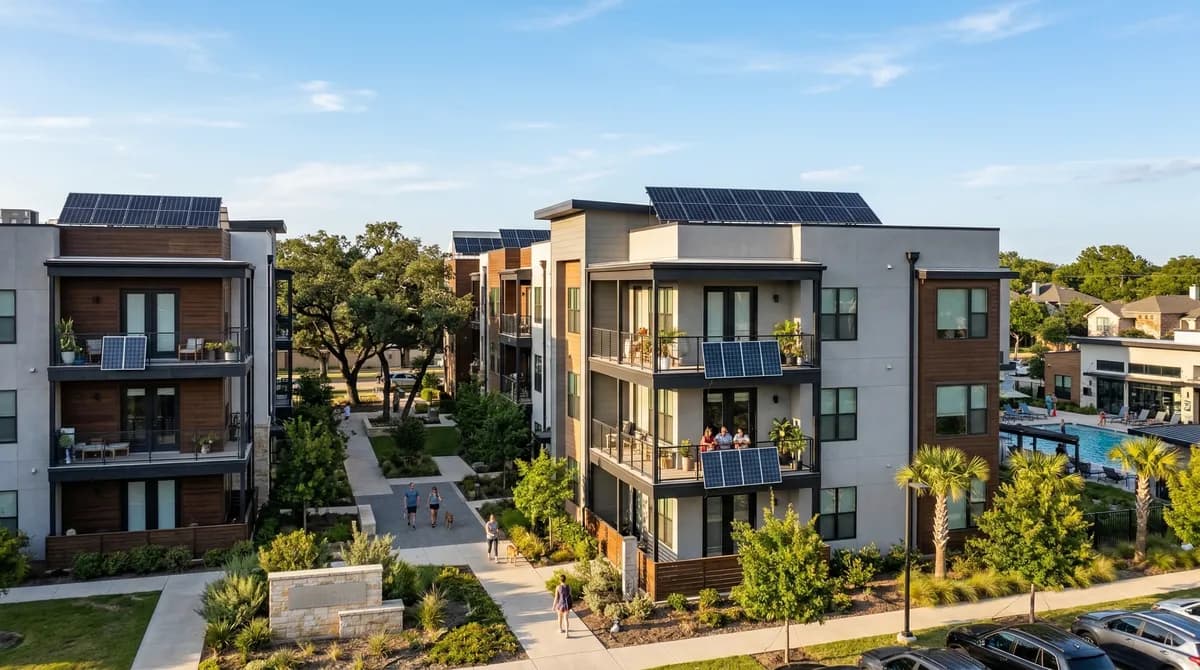
Texas has fewer renter solar options than NJ, MA, or NY. No community solar, no state program. Here is an honest look at what you cando in 2026 — and what is coming.
Texas’s deregulated electricity market and lack of community solar legislation mean renters have significantly fewer solar options than in Northeastern states. We will not sugarcoat this. What we will do is show you the real options available, ranked by practicality, so you can make the best choice for your situation.
Choose a Retail Electric Provider that sources 100% of electricity from renewable sources (solar and wind). Your electricity still comes from the grid, but your dollars support renewable generation. This is the easiest and most accessible option for TX renters.
Small portable solar panels (100-400W) that sit on a balcony, patio, or window. These plug into a micro-inverter that feeds electricity through a standard outlet, offsetting a small portion of your usage. Not a full home solution, but reduces grid dependence.
Present the business case to your landlord. Under Section 48/48E, the landlord (as property owner) can claim a 30% commercial ITC on solar installed on rental property. The landlord saves on property taxes (100% exempt), increases property value, and can charge a green premium. Some TX landlords are open to this, especially for multi-unit properties.
Texas has NO statewide community solar program and no enabling legislation. Unlike New Jersey (CSEP), Massachusetts (SMART), or New York (CDG), Texas has repeatedly failed to pass community solar legislation since 2013. The deregulated market and REP/utility opposition have blocked all attempts.
If you OWN a condo in Texas, Property Code section 202.010 protects your right to install solar panels. Your HOA/condo association cannot ban solar. However, condo installations are more complex because you typically share the roof. You may need board approval for shared roof access, and your installation must not interfere with other owners' property rights or common elements.
Key difference: Renters cannot install solar because they do not own the property. Condo ownershave the same solar access rights as homeowners under TX Property Code §202.010. If you own your condo unit, see our HOA solar rights guide.
If you want to try convincing your landlord, lead with their financial benefits — not yours.
As a property owner installing solar on a rental property, the landlord claims the 30% commercial investment tax credit. On a $30,000 system, that is $9,000 in tax credits. This credit remains available: projects that began construction on or before July 4, 2026 locked in the full timing pathway, and later starts still qualify if placed in service by December 31, 2027.
Solar adds value to the property but is 100% exempt from Texas property taxes. At TX's ~2.2% rate, that saves $660/year on a $30,000 system, or $16,500 over 25 years.
Solar adds approximately 4.1% to home value (Zillow). On a $350,000 rental property, that is $14,350 in equity. Tax-free equity growth.
Tenants with solar-powered homes have lower electricity bills and are less likely to move. Lower turnover = lower vacancy costs, which typically run $1,000-$3,000 per tenant change in TX.
Some landlords charge $25-$75/month premium for solar-equipped rentals. Tenants accept this because their electricity savings exceed the premium.
Reality check:Most landlords will not install solar based on a tenant request alone. The best candidates are landlords who own multiple properties, plan to hold the property long-term, and are already interested in sustainability. Do not be discouraged if the answer is no — the REP green energy plan is your next best option.
| State | Community Solar | Renter Options | Grade |
|---|---|---|---|
| Texas | None (no enabling legislation) | REP green plans, portable solar | D |
| New Jersey | CSEP (mandatory program) | Community solar, LIHEAP, PSE&G programs | A |
| Massachusetts | SMART community solar | Community solar, Mass Save, income-eligible | A |
| New York | CDG (Community Distributed Generation) | Community solar, NYSERDA programs | A- |
| Rhode Island | REG program | Community solar, income-eligible, ConnectedSolutions | B+ |
The next Texas legislative session (2027) is another opportunity for community solar legislation. Growing consumer demand and the success of community solar in 42 other states may build enough momentum. However, utility and REP opposition remains strong.
More Texas apartment complexes are installing commercial solar under Section 48/48E (30% ITC). This does not give tenants direct solar benefits, but it reduces the property’s operating costs, which may eventually translate to lower rent or utility-included pricing.
Some TX utilities are exploring virtual power plant programs where participants with batteries or smart thermostats contribute to grid stability. These programs are not solar-specific but represent a growing way for renters to participate in the clean energy economy.
If you own your Texas home, Propel financing unlocks the ITC savings renters can't access. A third-party owner installs FEOC-compliant Silfab 440W panels and claims the 40% Section 48E ITC, passing the savings to you as a fixed monthly payment. An 8 kW system at $2.90/W ($23,200) becomes ~$13,920 effective cost at ~$117/month — often cheaper than your current electricity bill. 8.99% APR, 25-year term, 660 FICO minimum. Projects that began construction by the July 4, 2026 safe-harbor date locked in the full Section 48E timeline; later starts still qualify if placed in service by December 31, 2027.
See Propel Financing DetailsWhen you become a homeowner, solar becomes your single best investment in Texas. Property tax exempt, energy savings of $1,200–$2,400/year, and 4.1% higher home value. Get ahead by getting a free estimate for your future home.