Loading NuWatt Energy...

We use your location to provide localized solar offers and incentives.
We serve MA, NH, CT, RI, ME, VT, NJ, PA, and TX
Loading NuWatt Energy...
NuWatt designs, installs, and manages solar, battery, heat pump, and EV charger systems across 9 states. One company, one warranty, one point of contact.
Get a Free Quote
The federal residential solar tax credit (Section 25D) died on December 31, 2025. Texas never had a statewide solar rebate to begin with. But here is the honest truth: Texas solar works because of high sun and low cost, not government subsidies. This guide covers every incentive that still exists and why the math works differently in Texas than anywhere else.
The federal residential solar tax credit (Section 25D) expired December 31, 2025. Texas homeowners who buy solar with cash or a loan receive $0 in federal tax credits. Texas has never had a statewide solar rebate program. But Texas solar still works because of 5 remaining incentives plus fundamental advantages in sun and cost:
Bottom line: A 10 kW system at $2.70/W costs $27,000 gross. With ~15,000 kWh/year production, self-consumption savings of ~$1,470/year, export income of ~$360/year, and property tax savings of ~$590/year, total annual value is approximately $2,420. Payback: 9-13 years depending on your utility territory and buyback rate.
Northeast states compensate for less sun with generous incentives. Texas takes the opposite approach: more sun, lower costs, and fewer programs. The math works differently here.
Texas gets 25-60% more usable sunlight than Northeast states. A 10 kW system in DFW produces ~15,000 kWh/year vs. ~11,000 in Boston.
Texas installation costs run $2.50-$2.90/W compared to $3.00-$3.30 in NE states. More competition, lower labor costs, and easier permitting.
Solar produces the most when you need it most -- summer AC season. Your panels peak when your electric bill peaks. Perfect alignment.
Texas has no state income tax. While this means no state tax credits are possible, it also means your solar savings are not eaten by state taxes.
Peak sun hours = average daily equivalent hours of full-intensity sunlight. Higher = more energy per kW installed.
Before we cover what still works, here is an honest accounting of what is gone. Other solar websites still reference these. They are wrong.
Homeowners who purchase solar with cash or a loan receive $0 in federal tax credits. This was 30% in 2025. Now it is zero. This was worth about $8,100 on a typical TX 10 kW system.
The $2,000 heat pump tax credit and $1,200 insulation/efficiency credit are both dead. These were separate from the solar ITC and also expired under the OBBBA.
Texas has never had a statewide solar rebate program. SECO (State Energy Conservation Office) focuses on commercial and public sector energy efficiency, not residential solar rebates. Any site claiming a "Texas state solar rebate" is wrong.
Texas has no state income tax. A state tax credit is literally impossible without a state income tax to credit against. This is not a policy decision -- it is structural.
The federal credit was the big loss. But every Texas local program survived intact. Here is the full comparison.
| Incentive Program | 2025 | 2026 | Status |
|---|---|---|---|
| Federal Tax Credit (25D) | 30% of system cost (~$8,100) | $0 -- Expired Dec 31, 2025 | Expired |
| Property Tax Exemption (SB 410) | 100% exempt | 100% exempt | Active |
| Austin Energy Solar Rebate | ~$2,500 | ~$2,500 (funding dependent) | Active |
| Solar Buyback Plans (ERCOT) | $0.04-$0.12/kWh | $0.04-$0.12/kWh | Active |
| Section 48E (Lease/PPA) | 30%+ for third-party owner | 30%+ (July 4, 2026 safe harbor) | Deadline |
| CPS Energy Casa Verde | $100-$275/ton | $100-$275/ton | Active |
| Oncor Battery Program | Battery incentives | Battery incentives | Active |
| State Solar Rebate (SECO) | None — never existed | None — never existed | Expired |
| 25C Energy Efficiency | $2,000 heat pump credit | $0 -- Expired Dec 31, 2025 | Expired |
The federal 25D credit was worth about $8,100 on a typical TX 10 kW system. That is a real loss. But Texas solar never relied heavily on federal incentives -- lower costs and more sun hours mean the payback works even without it. The property tax exemption alone is worth $15,000+ over 25 years.
Under SB 410 (Texas Tax Code Section 11.27), the assessed value of solar energy equipment is 100% exempt from property taxes. This is arguably the single most valuable incentive for Texas homeowners because Texas has some of the highest property tax rates in the nation.
Texas average property tax rate is approximately 2.2%. A 10 kW solar system adds roughly $27,000 in equipment value to your home. Without the exemption, your property tax bill would increase by about $594/year. With the exemption, your increase is $0. Over 25 years, that is approximately $14,850 saved.
Based on $2.70/W system cost and 2.2% average TX property tax rate. 25-year totals. Actual rates vary by county (1.5%-3.0%).
Texas has no statewide solar rebate. Instead, each utility runs its own programs. This means your incentives depend entirely on where you live. Austin Energy and CPS Energy (both municipal utilities) offer the best programs. Deregulated ERCOT areas rely on solar buyback plans from Retail Electric Providers.
| Utility | Territory | Market | Solar Rebate | Export Rate | Retail Rate | Notes |
|---|---|---|---|---|---|---|
| Austin Energy | City of Austin | Municipal (Regulated) | ~$2,500 | $0.097/kWh (VOS) | $0.12/kWh | Best overall incentive package in TX. 0% APR financing available. |
| CPS Energy | San Antonio / Bexar Co. | Municipal (Regulated) | Casa Verde | $0.097/kWh (VOS) | $0.125/kWh | Largest municipally owned utility in US. Solar buyback at VOS rate. |
| Oncor (DFW) | Dallas-Fort Worth + more | Deregulated (ERCOT) | Battery program only | REP dependent ($0.04-$0.12) | $0.15/kWh avg | Delivery utility only. Must choose REP with solar buyback plan. |
| CenterPoint | Greater Houston | Deregulated (ERCOT) | None for solar | REP dependent ($0.04-$0.12) | $0.16/kWh avg | Delivery utility only. Highest retail rates = highest self-consumption savings. |
| AEP Texas | South / West TX | Deregulated (ERCOT) | None confirmed | REP dependent ($0.04-$0.10) | $0.14/kWh avg | Corpus Christi, McAllen, Laredo. High sun hours offset lower rates. |
| Co-ops / Munis | Rural / small-town TX | Varies | Varies widely | $0.00-$0.06/kWh typical | $0.10-$0.14/kWh | Some co-ops do NOT allow grid-tied solar. Check your specific co-op. |
In Oncor, CenterPoint, AEP Texas, and TNMP territories (deregulated ERCOT market), your solar export rate depends entirely on which Retail Electric Provider you choose. Some REPs offer $0.04/kWh -- barely worth exporting. Others offer $0.10-$0.12/kWh. Before going solar, check which REPs offer solar buyback plans and compare rates.
Texas does not have mandatory 1:1 net metering like Northeast states. Instead, the deregulated ERCOT market lets Retail Electric Providers (REPs) set their own solar buyback rates. This means your export compensation varies dramatically based on which plan you choose.
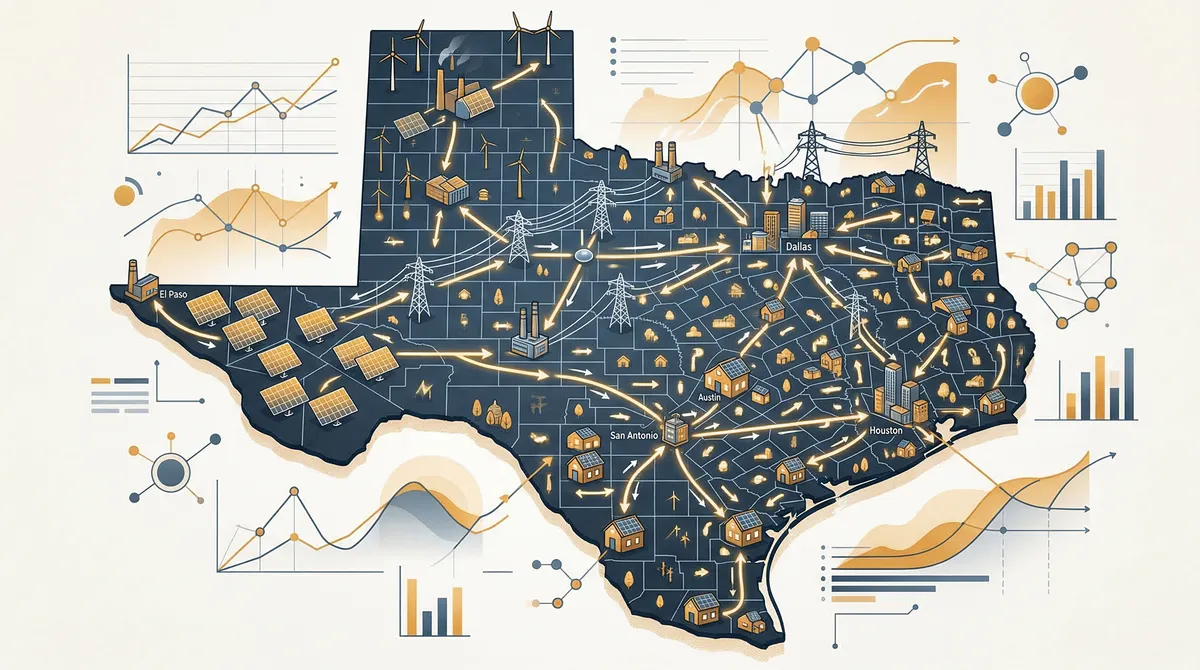
Pro tip: In deregulated areas, the difference between a $0.04 and $0.10 buyback rate on a 10 kW system exporting 4,500 kWh/year is about $270/year. That adds up to $6,750 over 25 years. Choose your REP wisely.
While the residential 25D credit is dead, Section 48/48E (the commercial ITC) is still available for third-party system owners. When you lease or sign a PPA, the financing company owns the system, claims the 30%+ commercial ITC, and passes savings to you via lower monthly payments.
Total possible: up to 70% ITC for the system owner. Your savings depend on how much the financing company passes through.
This begin-construction window has now closed, but it was never an expiry: projects that began by this date locked in the longer timing pathway, and new projects still qualify if placed in service by Dec 31, 2027. "Begin construction" meant either 5% of total cost spent OR significant physical work started.
Propel is a third-party ownership financing option available in Texas. The third-party system owner claims the Section 48E commercial ITC and passes savings through as lower monthly payments. Propel requires FEOC-compliant (Fabricated Entirely in the USA + One Country) panels -- specifically Silfab 440W -- to maximize the domestic content bonus.
No upfront cost to the homeowner. Third-party ownership means the financing company carries the equipment cost.
Silfab 440W panels qualify for the 10% domestic content bonus under Section 48E, increasing the ITC to 40%+ for the system owner.
Propel financing leverages Section 48E. Projects that began construction on or before July 4, 2026 locked the longer timing pathway; later starts still qualify if placed in service by December 31, 2027. The tighter post-2027 window rewards acting sooner.
Enter your system size and region to see exactly what each incentive is worth for your home. All calculations reflect 2026 values with $0 federal ITC.
See how Texas solar savings stack even without state rebates
First-Year Savings
$2,595
electricity + exports + property tax
25-Year Lifetime
$64,875
on a $28,000 system
Payback Period
10.8 years
then pure savings
Why TX solar works despite fewer incentives:
Estimates based on TX averages. Actual values depend on system design, shading, REP buyback terms, and your county's property tax rate. Federal residential ITC (Section 25D) expired Dec 31, 2025. No state solar rebate or tax credit exists in Texas.
No cherry-picked numbers. Here is what a typical cash purchase looks like in the largest TX metro, with zero federal credit.
After payback, you get approximately 14 years of near-free electricity (assuming 25-year panel warranty). With a good buyback plan ($0.10+/kWh), payback drops to ~10 years. With Austin Energy rebate, payback is ~9 years.
Your solar economics depend heavily on whether you are in the deregulated ERCOT market or served by a municipal utility. Here is how they compare.
Northeast states have more incentives. Texas has more sun and lower costs. Both can deliver a solid return on solar. Here is how they compare.
| Factor | Texas | Northeast (Avg) |
|---|---|---|
| Peak Sun Hours | 5.2-6.5 hrs/day | 4.0-4.5 hrs/day |
| Install Cost | $2.50-$2.90/W | $2.90-$3.30/W |
| Average System Cost (10kW) | ~$27,000 | ~$31,000 |
| Federal ITC (25D) | $0 | $0 |
| State Solar Rebate | None statewide | Varies ($0-$2,500) |
| SREC/ADI Programs | None | NJ $85.00/MWh, MA SMART $0.03/kWh |
| Net Metering | Not mandatory ($0.04-$0.12 buyback) | 1:1 or ~85% in most states |
| Property Tax Exempt | 100% (SB 410) | Varies (most states yes) |
| Retail Electric Rate | $0.12-$0.16/kWh | $0.22-$0.32/kWh |
| Payback (cash, no ITC) | 9-13 years | 8-12 years |
| 25-Year Savings | ~$60,000-$75,000 | ~$70,000-$120,000 |
Texas has fewer incentives and lower lifetime savings than the best NE states (NJ, MA). But TX also has lower upfront costs and more sun production. The payback periods are surprisingly similar. Where TX really wins: the combination of high sun hours and cooling-dominant energy use means your panels produce the most when you need power the most. That solar/AC alignment is uniquely valuable.
Texas has 5 active solar incentive mechanisms in 2026: 100% property tax exemption (SB 410), utility-specific rebates (Austin Energy ~$2,500, CPS Energy, Oncor battery), solar buyback plans from retail electric providers ($0.04-$0.12/kWh for exported power), Section 48E commercial ITC for lease/PPA systems (30%+; the July 4, 2026 begin-construction window has closed, but new projects still qualify if placed in service by Dec 31, 2027), and Propel financing ($0 down, FEOC-compliant panels). The federal residential 25D credit is $0.
No. The federal residential solar tax credit (Section 25D) expired December 31, 2025. Homeowners who buy solar with cash or a loan receive $0 in federal tax credits. However, lease/PPA companies that own the system can still claim Section 48E (30%+). Projects that began construction on or before July 4, 2026 locked the longer §48E timing pathway; later starts still qualify if placed in service by December 31, 2027 — and either way the owner passes savings to you via lower monthly payments.
No. Texas has no statewide solar rebate program and no state income tax, so state tax credits are structurally impossible. SECO (State Energy Conservation Office) does not offer residential solar rebates. However, individual utilities — especially municipal utilities like Austin Energy and CPS Energy — offer their own rebate programs.
Not in the traditional sense. Texas has no mandatory statewide net metering law. In the deregulated ERCOT market (85% of the state), you choose a Retail Electric Provider (REP) that offers a "solar buyback plan" — rates range from $0.04-$0.12/kWh for exported power, well below retail. Municipal utilities like Austin Energy and CPS Energy have their own programs with better rates ($0.097-$0.10/kWh VOS).
Under SB 410 (TX Tax Code Section 11.27), the value of solar energy equipment is 100% exempt from property taxes. This means your property tax bill does not increase when you add solar panels. With Texas average property tax rates of ~2.2%, this saves approximately $450-$650/year permanently on a typical system. The exemption is automatic — no application needed.
Most Texas homeowners see payback in 9-13 years without the federal ITC, depending on their utility territory and buyback rate. This is driven by high sun hours (~5.5 peak sun hours/day vs. 4.0-4.5 in the Northeast), lower installation costs (~$2.70/W vs. $3.00-$3.30 in NE states), and the property tax exemption. After payback, you get 12-16 years of near-free electricity.
In deregulated ERCOT areas (DFW, Houston, most of TX), you choose your own Retail Electric Provider. Some REPs offer solar buyback plans that pay you for excess electricity exported to the grid. Rates range from $0.04/kWh (basic) to $0.12/kWh (premium plans from Chariot, TXU Solar Buyback). This is NOT 1:1 net metering — export rates are typically 30-60% of retail rates.
Generally yes. Austin Energy is a regulated municipal utility that offers: a ~$2,500 solar rebate, Value of Solar (VOS) credit at ~$0.097/kWh for exports (higher than most ERCOT buyback rates), and 0% APR financing options. Austin Energy customers also have more predictable rates since they are not in the deregulated market. However, their base retail rate (~$0.12/kWh) is lower than DFW/Houston, so self-consumption savings are smaller per kWh.
Propel is a third-party ownership financing option available in Texas that offers $0 down solar with FEOC-compliant (Fabricated Entirely in the USA + One Country) panels. The third-party system owner claims the Section 48E commercial ITC (30%+); July 4, 2026 was the begin-construction safe-harbor date for the longer §48E timing pathway, and projects that begin construction after that still qualify if placed in service by December 31, 2027, passing savings through as lower monthly payments. Propel requires Silfab 440W panels to meet FEOC requirements.
Texas solar economics are fundamentally different from the Northeast. TX advantages: ~5.5 peak sun hours/day (vs. 4.0-4.5), lower installation costs (~$2.70/W vs. $3.00+), and no state income tax burden. TX disadvantages: no statewide net metering (NE states have 1:1 or close), no SREC/ADI programs (NJ pays $85.00/MWh for 15 years), lower retail electricity rates in some areas, and no state rebate program. Bottom line: TX solar works on sun + low cost, not subsidies.
Yes, for most homeowners. Texas has the 2nd highest solar potential in the US. A typical 10 kW system at $2.70/W costs $27,000. With ~15,000 kWh/year production, 70% self-consumption at $0.14/kWh retail, and 30% exported at $0.08/kWh, annual savings are approximately $2,130. The property tax exemption adds ~$590/year in avoided taxes. Total annual value: ~$2,720. Payback: ~10 years. After that, 15+ years of near-free electricity.
CPS Energy (San Antonio) offers rebates through the Casa Verde program: $100-$275 per ton for qualifying heat pumps and solar incentives. For solar specifically, CPS Energy provides a solar buyback credit for exported power. CPS Energy retail rates average $0.11-$0.125/kWh. As a municipal utility, CPS Energy programs are separate from ERCOT deregulated offerings.
Complete guide to every TX solar incentive and program for 2026.
Current pricing by city, installer costs, and what drives $/W.
Complete guide to going solar after the 25D ITC expired.
Compare REP buyback rates across ERCOT deregulated areas.
SB 410 property tax exemption details and dollar figures.
Austin Energy rebate program, VOS credits, and 0% financing.
Why battery backup matters in the ERCOT grid. Storm resilience.
How financing choice affects your incentives and total ROI.
$0 down, FEOC-compliant panels, Section 48E savings.
The federal credit is gone, but Texas sun and low costs still deliver solid returns. Get a free, no-pressure estimate showing exactly what each incentive is worth for your home.