
Loading NuWatt Energy...
We use your location to provide localized solar offers and incentives.
We serve MA, NH, CT, RI, ME, VT, NJ, PA, and TX
Loading NuWatt Energy...
NuWatt designs, installs, and manages solar, battery, heat pump, and EV charger systems across 9 states. One company, one warranty, one point of contact.
Get a Free QuoteQuick Answer
Solar panels require minimal maintenance — rain handles most cleaning naturally. Annual inspection is recommended. The main tasks: check for debris/bird nests (spring), verify production monitoring monthly, clean only if visibly dirty (1–2x per year). Professional cleaning costs $150–300. Inverter checks and electrical inspection every 3–5 years.
Everything you need to know about keeping your solar panels performing at peak efficiency — seasonal checklists, cleaning tips, monitoring, and when to call a professional.
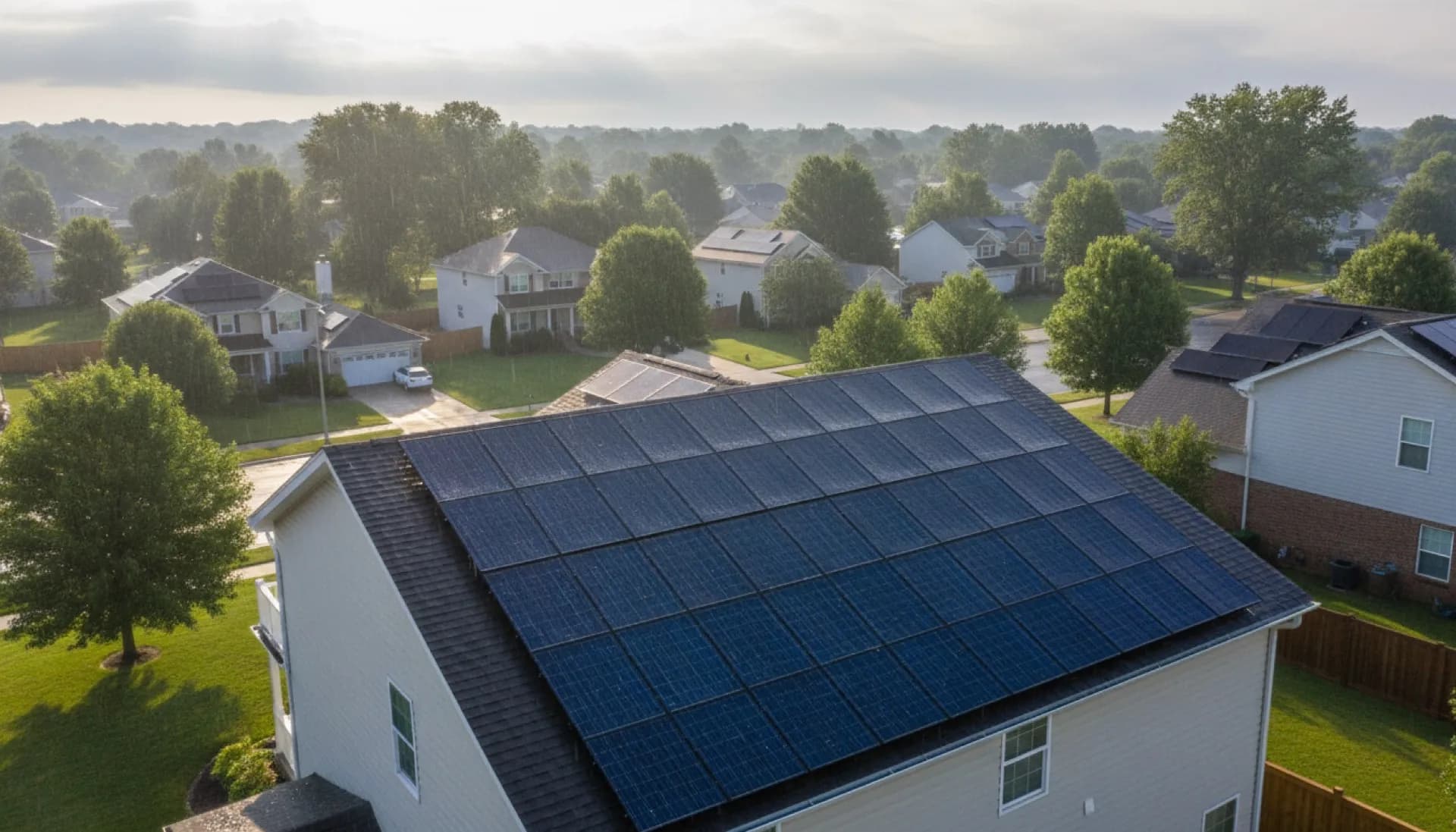
Solar panels are remarkably low-maintenance — they have no moving parts and are designed to withstand decades of weather. That said, a simple seasonal routine ensures your system produces maximum energy year-round. Here is what to do each season.
Important: Never Walk on Your Panels
Solar panels can support weight, but walking on them risks micro-cracks that are invisible but permanently reduce output. Always use a ladder and work from the roof edge, or hire a professional for any task that requires reaching the center of the array.
The number-one question homeowners ask about solar maintenance is about cleaning. The good news: in most of New England, rain does the job naturally. But there are times when a manual cleaning makes a real difference.
Production drop >10%
If your monitoring shows output significantly below expected levels and there is no shade or weather explanation, dirty panels are the likely cause.
Visible dirt or debris
Bird droppings, tree sap, pollen coating, or leaf buildup. A single bird dropping on a panel can reduce that panel's output by 20-30%.
After construction nearby
Construction dust, sawdust, or roofing debris can coat panels. Clean within a week of any nearby construction project completing.
Do This
Never Do This
Professional solar panel cleaning costs $150–300 for a typical residential system (15–25 panels). Consider hiring a pro if:
Reality check: Studies show that cleaning solar panels in typical residential settings improves output by only 2–5%. At average electricity rates, that is $20–60/year in recovered energy. Professional cleaning ($150–300) may not pay for itself unless panels are heavily soiled. For most homeowners, an annual garden hose rinse is sufficient.
Modern solar systems come with real-time monitoring that lets you track production from your phone. Monitoring is the single most important maintenance tool — it catches problems before they cost you money. Here is what to watch for.
The most common monitoring platform for microinverter systems. Provides panel-level production data, system health alerts, and lifetime energy tracking.
Used with SolarEdge optimizers and inverters. Provides system-level and optimizer-level monitoring with detailed performance analytics.
| Pattern | Likely Cause | Action |
|---|---|---|
| One panel producing less | Shade, dirt, or panel defect | Inspect that specific panel; check for shade or debris |
| All panels down equally | Inverter issue or grid problem | Check inverter status lights; contact installer |
| Gradual decline over months | Soiling buildup or partial shade | Clean panels; check for new shade sources |
| Sudden zero production | Inverter shutdown or breaker trip | Check breaker panel; verify inverter is on; call installer |
| Lower than last year (same month) | Panel degradation or new shade | Compare year-over-year data; schedule inspection if >5% drop |
Pro tip: Check your monitoring app at least once a month. Set up email or push notification alerts so you are notified immediately if production drops below expected levels. Most issues are caught within days, not months, when monitoring is active.
The inverter converts DC electricity from your panels into AC electricity your home uses. It is the one component most likely to need attention during your system’s lifetime. Your maintenance needs depend entirely on which type of inverter you have.
One small inverter under each panel. Enphase IQ8 is the industry standard.
One central inverter for the whole system. Common in older installations (pre-2020).
String Inverter Owners: Plan Ahead
If your system has a string inverter and is approaching 10+ years old, start budgeting for a replacement ($1,500–3,000). Consider upgrading to microinverters at that time — the added panel-level monitoring and 25-year warranty make the upgrade worthwhile for most systems. Contact NuWatt for an inverter upgrade assessment.
Solar panel systems are highly reliable, but issues do occur. Here are the most common problems, how frequently they happen, and what to do about them.
| Issue | Frequency | Fix | Cost | Urgency |
|---|---|---|---|---|
| Cracked panel | Rare (hail, debris) | Warranty replacement | $0 (warranty) | Medium |
| Bird nesting under panels | Common in suburbs | Install critter guard | $300-500 | Low |
| Hot spots | Rare | Warranty claim (manufacturing defect) | $0 (warranty) | High |
| Inverter failure | Moderate (string inverters) | Warranty replacement | $0 if under warranty, $1,500-3,000 if not | High |
| Soiling / dirt buildup | Seasonal | Garden hose rinse or pro cleaning | $0-300 | Low |
| Wiring damage (squirrels/rodents) | Occasional | Electrician repair + critter guard | $200-800 | High |
Birds, squirrels, and other animals love nesting under solar panels — the gap between the panel and the roof creates a warm, sheltered space. Critter guards are mesh barriers installed around the perimeter of your array to prevent animal access.
$300-500
Installation cost
One-time cost, DIY or professional
Nesting + wiring damage
What it prevents
Squirrel-chewed wires cost $200-800 to repair
Suburban + wooded areas
Recommended for
Essential if you see animals on or near your roof
Solar savings depend on your roof, utility rate, and state incentives.
Estimate My SavingsEvery NuWatt installation includes comprehensive system monitoring at no additional cost for the full 25-year life of your system. Here is what that covers.
Real-time production tracking through Enphase Enlighten or SolarEdge portal. We monitor your system alongside you.
Automatic alerts when production drops below expected thresholds. We contact you proactively before you even notice an issue.
Yearly analysis comparing actual production to expected output, accounting for weather and degradation. Delivered to your inbox.
If monitoring detects a component failure, we handle the warranty claim with the manufacturer on your behalf.
Many issues can be diagnosed and sometimes resolved remotely without a truck roll, saving you time and hassle.
NuWatt customers get priority scheduling for any maintenance or repair needs that arise.
Research
You just did this
Calculate
See your savings
Save
Lock in your price
You've done the reading. Now see how the numbers look for your specific zip code and utility bill.
Calculate My SavingsTalk to an expertNo credit card required. 100% free. Takes about 2 minutes.
Most residential solar panels only need cleaning 1-2 times per year, and many homeowners never clean them at all. Rain handles most dust and pollen naturally. You should clean panels if you notice visible dirt buildup, bird droppings, or a production drop greater than 10% compared to expected output. In dusty or pollen-heavy areas, semi-annual cleaning is a good practice.
No. Never use a pressure washer on solar panels. High-pressure water can crack the glass, damage the anti-reflective coating, and void your warranty. Use a garden hose with normal water pressure and a soft brush or squeegee if needed. Clean in the early morning or on a cloudy day when panels are cool to avoid thermal shock.
Solar panels themselves require minimal maintenance. An annual visual inspection is recommended: check for debris, cracked glass, and loose connections. The more important annual task is reviewing your monitoring data to ensure production is tracking as expected. Professional inspections every 3-5 years are a good idea for electrical connections and inverter health.
Professional solar panel cleaning typically costs $150-300 for a standard residential system (15-25 panels). Pricing varies by roof accessibility, system size, and location. Some companies offer annual maintenance packages that include cleaning plus an electrical inspection for $250-400. In most cases, the production gain from cleaning does not justify the cost unless panels are visibly dirty.
Microinverters (like Enphase) are installed under each panel and have 25-year warranties with virtually zero maintenance. String inverters (one central unit for the whole system) typically last 12-15 years and may need replacement at $1,500-3,000. Microinverters also provide panel-level monitoring, making it easier to identify individual panel issues. Most new installations use microinverters.
Yes. NuWatt provides 25-year system monitoring for all installations. This includes real-time production tracking, alert notifications if performance drops below expected thresholds, and an annual performance review. If monitoring detects an issue, our team contacts you proactively. This is included at no additional cost with your installation.