Loading NuWatt Energy...

We use your location to provide localized solar offers and incentives.
We serve MA, NH, CT, RI, ME, VT, NJ, PA, and TX
Loading NuWatt Energy...
NuWatt designs, installs, and manages solar, battery, heat pump, and EV charger systems across 9 states. One company, one warranty, one point of contact.
Get a Free Quote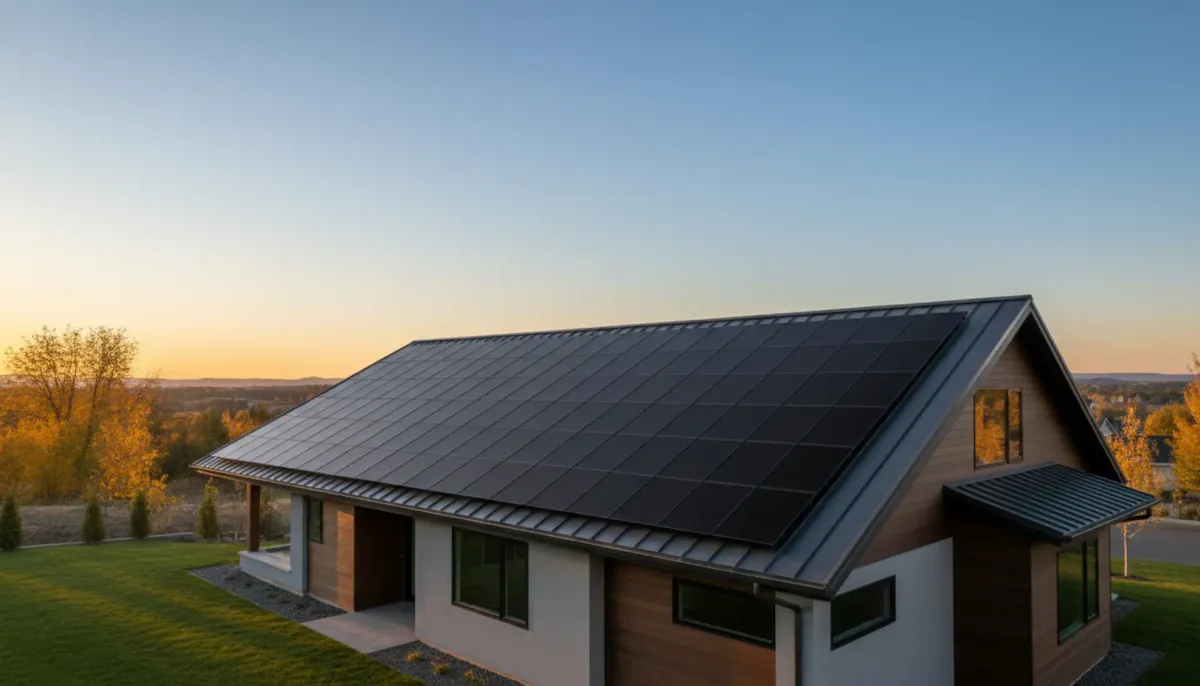
The Hyundai HiE-S440VG is NuWatt's entry-tier panel — backed by the trust of a global conglomerate, delivering 440W of N-type TOPCon efficiency at the lowest price per watt in our lineup. Here's our honest, installer-perspective review.
440W
Wattage
22.07%
Efficiency
25 Years
Warranty
Best Value
Price Tier
The Hyundai 440W is a solid, no-nonsense solar panel from a manufacturer whose parent company posted $230 billion in revenue in 2024. This is not a fly-by-night brand — Hyundai Energy Solutions has been producing solar cells since 2004 and full modules since 2010.
The Hyundai 440W is an honest panel at an honest price. You get current-generation TOPCon technology, a bankable 25-year warranty from a massive conglomerate, and the lowest installed cost in our three-tier lineup. If you are paying cash or using a standard solar loan (not a PPA), and your goal is maximizing ROI rather than squeezing every last watt from your roof, Hyundai is the smart pick. The $0.07/W savings over Silfab translates to roughly $500-$900 on a typical 8-12 kW system — real money in a world with no federal residential tax credit.
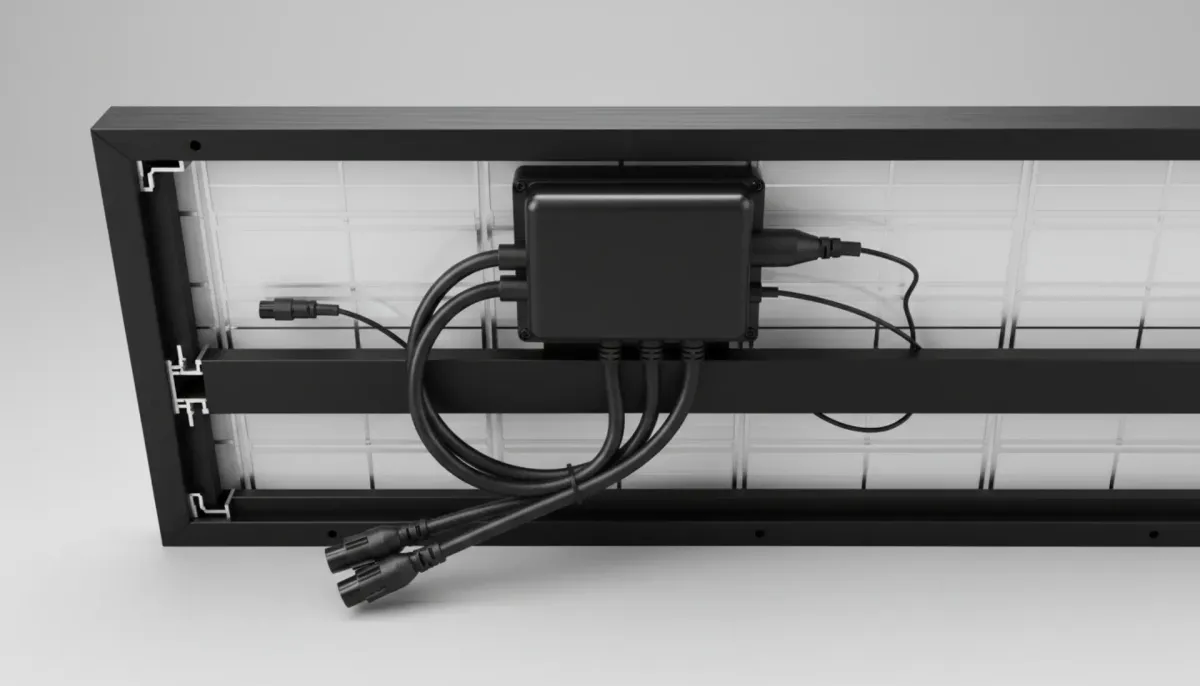
Complete datasheet specifications for the Hyundai HiE-S440VG at Standard Test Conditions (STC: 1000 W/m², 25°C, AM 1.5).
Operating temperature: -40°C to +85°C
How does the Hyundai 440W actually perform? We model four common scenarios using real NuWatt installation data, local irradiance values, and 2026 utility rates. All estimates assume no federal residential tax credit (Section 25D expired Dec 31, 2025).
Important: The Section 25D residential solar ITC expired on December 31, 2025. Homeowners purchasing with cash or a loan receive $0 in federal tax credits. All payback calculations below reflect this reality. Third-party ownership (PPA/lease) can still access Section 48/48E, but requires FEOC-compliant panels (Silfab, not Hyundai).
Typical Massachusetts or Connecticut home with 18 panels on a south-facing roof. Average 4.5 peak sun hours.
Annual Output
~10,560 kWh/yr
Payback
9-12 years
25-yr Savings
$65,000-$85,000
Texas or southeastern US home with 23 panels. Average 5.5 peak sun hours, higher cooling loads offset by greater production.
Annual Output
~14,500 kWh/yr
Payback
8-11 years
25-yr Savings
$55,000-$75,000
Smaller system for homes with moderate usage. 14 panels. Hyundai pricing makes this the most affordable entry point.
Annual Output
~7,920 kWh/yr
Payback
8-10 years
25-yr Savings
$45,000-$60,000
Maximum production for high-usage homes. 27 panels. All-electric home with heat pump and EV charging.
Annual Output
~15,840 kWh/yr
Payback
10-13 years
25-yr Savings
$90,000-$120,000
Degradation is where the Hyundai 440W shows its trade-off against the premium REC 460W. Over 25 years, this difference adds up to real production loss.
| Panel | Annual Degradation | Year 10 Output | Year 25 Output |
|---|---|---|---|
| Hyundai 440W | 0.40%/yr | ~94.2% | ~87.4% |
| Silfab 440W | 0.40%/yr | ~94.2% | ~87.4% |
| REC 460W | 0.25%/yr | ~96.8% | ~92.0% |
On a 10 kW system, the difference between 87.4% and 92.0% at year 25 is about 460 kWh/year — roughly $115-$130/yr at Northeast utility rates. Over 25 years, the REC's lower degradation produces roughly 6,500 kWh more total energy.
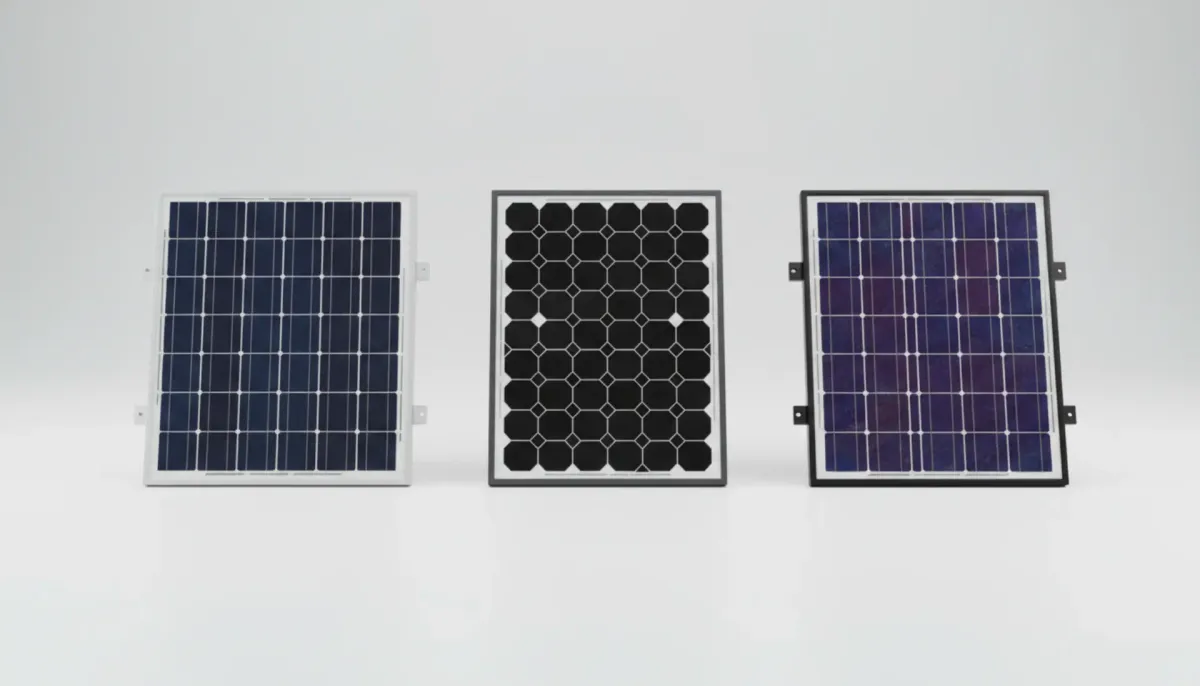
NuWatt offers three panel tiers. Here is an honest side-by-side comparison to help you choose the right panel for your situation.
| Specification | Hyundai Entry — Brand Trust | Silfab American-Made FEOC | REC Premium Efficiency |
|---|---|---|---|
| Wattage | 440W | 440W | 460W |
| Efficiency | 22.07% | 22.0% | 22.6% |
| Cell Type | N-type TOPCon | N-type TOPCon | HJT gapless |
| Temp Coefficient | -0.30%/°C | -0.30%/°C | -0.26%/°C |
| Degradation | 0.40%/yr | 0.40%/yr | 0.25%/yr |
| Year 25 Output | ~87.4% | ~87.4% | ~92% |
| Warranty | 25-yr product + performance | 30-yr product + performance | 25-yr product + labor |
| Price/Watt | Silfab − $0.07/W | Base price | Silfab + $0.19/W |
| Origin | South Korea / Vietnam | USA / Canada | Norway / Singapore |
| FEOC Compliant | No | Yes | No |
Why FEOC matters: The Section 48/48E commercial ITC (30%) is still available for third-party-owned systems beginning construction before July 4, 2026. But panels must be FEOC-compliant to qualify. Only Silfab meets this requirement in our lineup. If you are considering a $0-down PPA through NuWatt Propel (available in ME and TX), you need Silfab, not Hyundai.
Hyundai is positioned as our entry-level panel — not because it is low quality, but because overseas manufacturing enables a lower price than domestic Silfab or premium REC. Here is how our tiered pricing works.
Entry — Brand Trust
~$500-$900 less than Silfab on an 8-12 kW system
American-Made FEOC
Reference price point for all tiers
Premium Efficiency
~$1,400-$2,300 more than Silfab on 8-12 kW
The Section 25D residential solar ITC expired December 31, 2025. Homeowners purchasing solar with cash or a standard solar loan receive $0 in federal tax creditsregardless of which panel they choose. The only way to access federal incentives is through third-party ownership (PPA or lease), where the financing company claims the Section 48/48E commercial ITC — but this requires FEOC-compliant panels (Silfab). Hyundai panels cannot access this financing path. State and utility incentives vary; get your personalized estimate to see what is available in your area.
The right panel depends on your financing method, roof space, and priorities. Here is our honest recommendation matrix.
Our installation teams have hands-on experience with the Hyundai HiE-S440VG. Here are their candid notes from real rooftop installs.
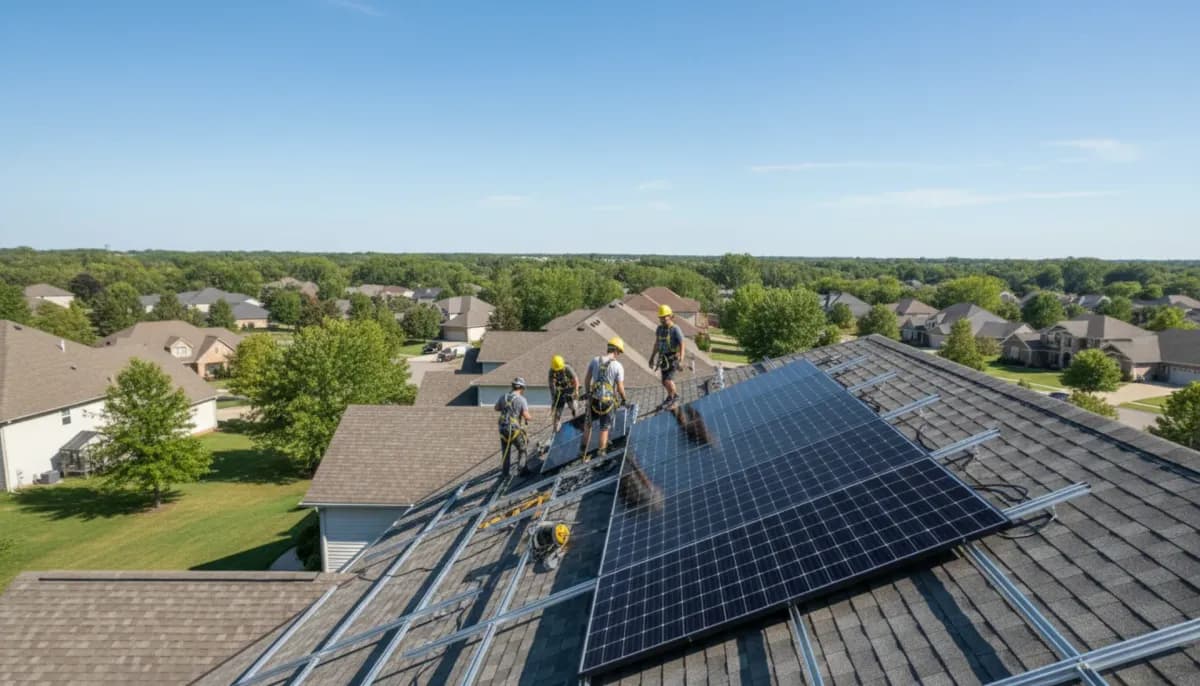
At 48.1 lbs (21.8 kg), the Hyundai 440W is within the normal range for modern residential panels. Our crews can single-carry these up a ladder without issues. The 30mm frame depth is standard, and the panels seat cleanly into IronRidge XR100 and SnapNrack rails.
We pair Hyundai panels exclusively with Enphase IQ8HC and IQ8M microinverters. The 37.60V Voc and 14.04A Imp fall well within IQ8 input specifications. No clipping issues at any site we have installed. The MC4-compatible connectors mate perfectly with Enphase cable assemblies.
The all-black appearance (black cells, black backsheet, black frame) matches our Silfab panels almost exactly from the street. Customers who mix Hyundai and Silfab on the same roof — for example, Silfab on the front-facing slope for FEOC and Hyundai on the rear — get a visually consistent array at a blended lower cost.
In New England winters, the -0.30%/°C temperature coefficient means these panels actually produce MORE than rated power when panel temperatures drop below 25°C. On a cold, clear January day in Massachusetts, we have measured Hyundai 440W panels producing 460-465W. Cold is a friend to solar — and New England has plenty of it.
Hyundai panels have been consistently in stock through our distributors since 2024. No supply disruptions, no substitutions. Hyundai Energy Solutions runs dedicated Korea and Vietnam production lines with capacity well above U.S. residential demand. Lead times are typically 1-2 weeks to our warehouse.
We have not needed to file a single warranty claim on a Hyundai panel in our installation history. This is typical for Tier 1 panels — warranty claims on modern panels are extremely rare. If one does fail, Hyundai Energy Solutions has a U.S.-based warranty office in Irvine, CA.
The Hyundai 440W uses N-type TOPCon (Tunnel Oxide Passivated Contact) cells — the technology that has largely replaced older PERC cells in 2025-2026. Here is why this matters for your roof.
REC's Alpha Pure-RX uses HJT (heterojunction) cells, which are technically superior to TOPCon in temperature handling and degradation. Both are N-type, but HJT adds amorphous silicon layers that reduce recombination losses.
Bottom line: TOPCon is the “mainstream premium” technology of 2026. HJT is the step above. Both are dramatically better than 2020-era PERC panels. The Hyundai 440W gives you TOPCon performance at the most affordable price in our lineup.
From South Korean industrial giant to global solar manufacturer — Hyundai's journey in solar energy spans two decades.
Chung Ju-yung founds Hyundai Group in South Korea, beginning as a construction company before expanding into automotive, shipbuilding, and electronics.
Hyundai Heavy Industries (now Hyundai Energy Solutions) begins manufacturing solar cells at its Eumseong, South Korea facility.
Hyundai Energy Solutions reaches commercial-scale solar panel production. Panels exported to European and Asian markets as utility-scale solar grows globally.
Hyundai solar panels enter the North American residential market through distributor partnerships, leveraging the Hyundai brand name for consumer trust.
Hyundai expands manufacturing to Vietnam, increasing capacity and reducing costs. Both Korean and Vietnamese facilities produce panels for the U.S. market.
Hyundai upgrades production lines from PERC to N-type TOPCon cell technology, improving efficiency from ~20% to 22%+ and reducing degradation rates.
Current flagship residential module released at 440W with 22.07% efficiency. Achieves Tier 1 Bloomberg rating and bankability certification.
IRA Foreign Entity of Concern rules took effect July 4, 2026. Hyundai panels (manufactured in Korea/Vietnam) do not qualify for Section 48/48E ITC-based financing — Silfab becomes the required choice for PPA programs.
Common questions about the Hyundai 440W solar panel, answered by our engineering team.
Yes. Hyundai Energy Solutions is a division of Hyundai Group, one of the largest conglomerates in the world (parent of Hyundai Motor, Hyundai Heavy Industries, etc.). They have manufactured solar cells and modules since 2010 with production facilities in South Korea and Vietnam. Hyundai panels are certified to IEC 61215, IEC 61730, and UL 61730 standards.
The two panels are remarkably similar on paper: both are 440W, N-type TOPCon, ~22% efficiency, and -0.30%/°C temperature coefficient. The key differences: Silfab is manufactured in the USA/Canada (FEOC-compliant for Section 48/48E financing), has a longer 30-year warranty, and costs $0.07/W more. Hyundai offers equivalent performance at a lower price but cannot qualify for third-party ITC-based financing programs like Propel.
The Section 25D residential solar tax credit expired December 31, 2025. Homeowners purchasing solar with cash or a loan receive $0 in federal tax credits. However, through third-party ownership models (PPA/lease), the financing company can claim the Section 48/48E commercial ITC at 30% (the begin-construction safe harbor closed July 4, 2026; new starts must be placed in service by December 31, 2027) — but this requires FEOC-compliant panels (Silfab), not Hyundai.
No. Hyundai panels are manufactured in South Korea and Vietnam, not in the United States. They do not meet the Foreign Entity of Concern (FEOC) requirements under the Inflation Reduction Act. Only Silfab panels in NuWatt's lineup are FEOC-compliant. If you need third-party ITC-based financing (like Propel PPA in ME/TX), you must choose Silfab.
Hyundai provides a 25-year product warranty covering manufacturing defects, materials, and workmanship, plus a 25-year linear performance warranty guaranteeing at least 87.4% output at year 25. The degradation rate is 0.40% per year after a first-year step of ~2%. This is solid but not top-tier — REC offers 0.25%/yr degradation and ~92% at year 25.
Hyundai is priced $0.07/W below Silfab (our base price) because it is not FEOC-compliant and is manufactured overseas where production costs are lower. This does not mean it is low quality — Hyundai is a Tier 1 manufacturer with bankable warranties and strong performance. The lower price simply reflects the global cost advantage of South Korean/Vietnamese manufacturing versus domestic US production.
The HiE-S440VG uses N-type TOPCon (Tunnel Oxide Passivated Contact) cells in a half-cut 108-cell configuration. TOPCon is the current mainstream high-efficiency technology, offering better performance than older PERC cells — especially in high temperatures and low light. N-type cells also have lower light-induced degradation (LID) than P-type alternatives.
The temperature coefficient of -0.30%/°C means the Hyundai 440W loses about 0.30% of its rated power for every degree Celsius above 25°C (77°F). On a 95°F day (35°C), that is roughly a 3% loss, so the panel would produce about 427W instead of 440W. This is average for TOPCon panels — REC's HJT technology does slightly better at -0.26%/°C, while older PERC panels are worse at -0.34%/°C.
Yes, if you use microinverters (which NuWatt exclusively installs with Enphase IQ8). Microinverters allow each panel to operate independently, so you can mix panel brands and wattages on the same roof without performance penalties. This is useful if you start with Hyundai now and want to expand later with a different panel.
Avoid Hyundai if: (1) You need FEOC-compliant panels for Propel PPA / third-party ITC financing — choose Silfab instead. (2) You want the absolute lowest degradation and highest long-term output — choose REC 460W (0.25%/yr vs 0.40%/yr). (3) You have very limited roof space and need maximum watts per square foot — choose REC 460W (more watts in the same footprint). Hyundai is best for homeowners who want solid performance at the lowest upfront cost.
Get a personalized system design with real pricing for the Hyundai 440W — or compare all three panel tiers side by side. Our instant quote tool shows you exact costs, production estimates, and payback timelines for your address.