
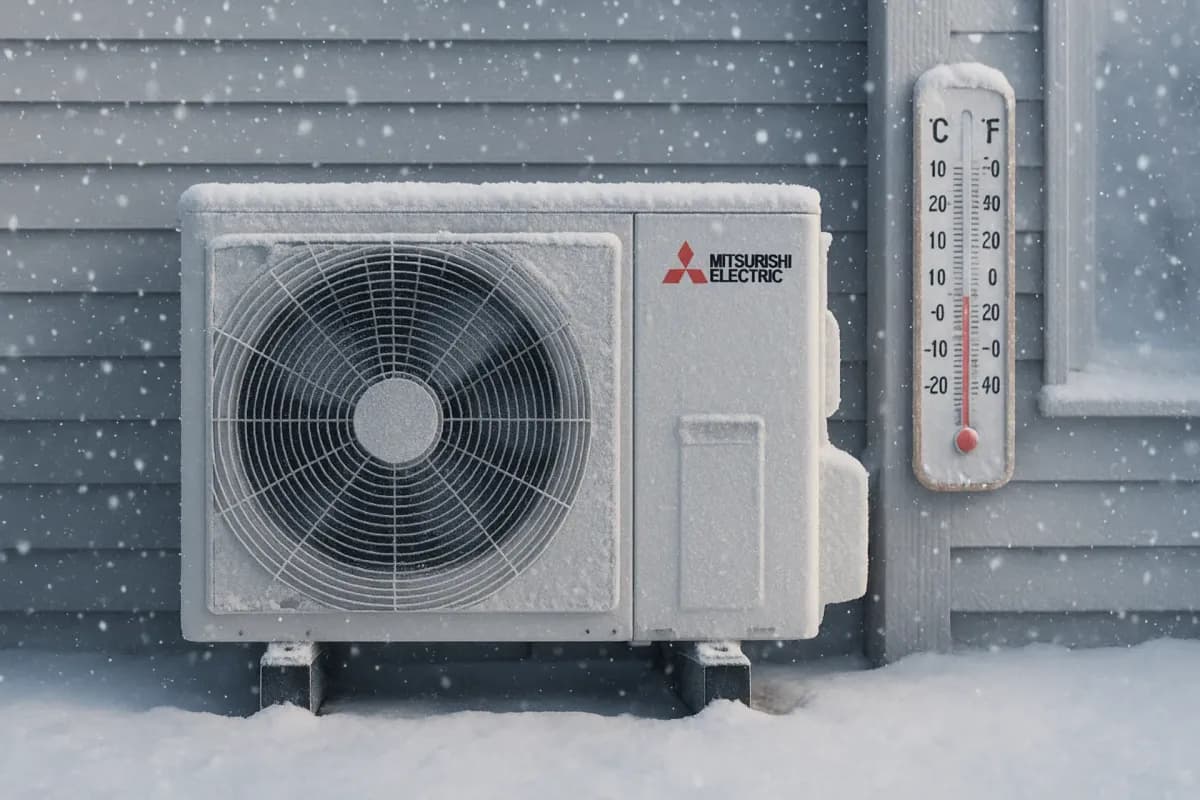

Modern cold-climate heat pumps maintain 75-85% of rated capacity at 5°F and 60-70% at -13°F. A Mitsubishi Hyper-Heat rated at 36,000 BTU still delivers 24,000+ BTU at 5°F — enough to heat most New England homes.
Home Electrification Experts — Full-Service Design to Install, 9 States
COP at 30°F
3.2–3.8
shoulder season efficiency
COP at 5°F
2.0–2.5
typical design temp
COP at -13°F
1.5–1.8
rated minimum
Capacity Retained
60–70%
at -13°F
Real Performance Data at Sub-Zero Temperatures
The most common question we hear from New England homeowners is straightforward: will a heat pump actually heat my house when it is 5°F outside? Or zero? Or negative 10? The answer, based on thousands of installations across Massachusetts, New Hampshire, Vermont, Maine, and Connecticut, is yes — if you install the right equipment. Cold-climate heat pumps (CCHP) are specifically engineered for sub-zero operation. They are not modified air conditioners. They are purpose-built heating machines that happen to cool in summer.
The table below shows real-world performance data for top-tier cold-climate heat pumps, sourced from the Northeast Energy Efficiency Partnerships (NEEP) cold-climate heat pump database and manufacturer-published engineering data. These are not theoretical numbers — they reflect actual measured performance in controlled laboratory conditions at each temperature point.
What COP Means for Your Wallet
COP (Coefficient of Performance) is the ratio of heat output to electricity input. If a heat pump has a COP of 2.5 at 5°F, it produces 2.5 units of heat energy for every 1 unit of electricity consumed. This is the single most important metric for understanding heat pump economics in cold climates.
To put COP in dollar terms: at a Massachusetts electricity rate of $0.33/kWh, here is the cost to produce 100,000 BTU of heat (roughly one hour of peak heating for a 2,000 sqft home at 5°F) using different heating sources:
Heat pump at COP 3.0 (30°F)
Heat pump at COP 2.0 (5°F)
Heat pump at COP 1.5 (-13°F)
Natural gas furnace (95% AFUE)
Oil boiler (85%, $4.20/gal)
Electric resistance (baseboard)
The critical insight: even at -13°F with a COP of just 1.5, a heat pump is still 50% more efficient than electric resistance heat and roughly half the cost of oil. The heat pump is cheaper to operate than every alternative at every temperature. The only question is how much cheaper — and the answer ranges from “dramatically” at 30°F to “significantly” at -13°F.
Top Cold-Climate Models for New England (2026)
Not all heat pumps are created equal for cold-climate performance. The following models represent the current best-in-class options for New England installations. All are NEEP listed, rated to at least -13°F, and proven across thousands of New England installations.
R-32
Mitsubishi MUZ-FH24NA (Hyper-Heat)
R-32
Mitsubishi MUZ-FH36NA (Hyper-Heat)
R-454B
Daikin Aurora (DZ20VC series)
R-454B
Bosch IDS 2.0 (cold-climate variant)
R-454B
Carrier 25VNA (Greenspeed)
R-32
Fujitsu Halcyon XLTH
Mitsubishi Hyper-Heat: The New England Standard
The Mitsubishi Hyper-Heat (MUZ-FH series) has earned its reputation as the go-to cold-climate heat pump in New England for good reason. The system uses a proprietary flash injection technology that routes liquid refrigerant back into the compressor during low-temperature operation, maintaining higher discharge temperatures and preventing liquid slugging — the primary failure mode for heat pumps in extreme cold.
In practical terms, the Hyper-Heat delivers supply air at 100-120°F even when it is 5°F outside. Compare this to standard heat pumps that may deliver 85-95°F supply air at the same outdoor temperature — a difference you will feel at the register. This higher supply temperature is especially important for homes with existing ductwork designed for furnaces that delivered 130-150°F air. The smaller temperature gap means fewer comfort complaints and fewer calls about “cold air from the vents.”
The current generation Hyper-Heat units use R-32 refrigerant, which provides an additional efficiency advantage at low temperatures. NEEP testing shows the MUZ-FH24NA producing 27,400 BTU/h at 5°F with a COP of 2.4, and still producing 18,000 BTU/h at -13°F. For a well-insulated 1,800-2,200 sqft New England home, the 2-ton MUZ-FH24NA can serve as the sole heating source in most cases.
Get a Cold-Climate Heat Pump Quote
NuWatt specializes in cold-climate installations for New England homes.
Real Winter Performance: What Homeowners Report
Laboratory data is useful, but what actually happens during a New England winter? Based on monitoring data and homeowner feedback from installations across our service area, here is what you can realistically expect:
Typical January Cold Snap (5-15°F)
The heat pump runs continuously at high capacity. Indoor temperature holds at the setpoint with no backup heat needed. Electricity usage averages 3-5 kWh per hour. Monthly heating cost: $200-$310 for a 2,000 sqft home.
Extreme Cold Event (below 0°F)
The heat pump runs at maximum capacity. For properly sized systems, it maintains the setpoint or drops 1-2 degrees below. Backup heat (if configured) supplements the remaining load for 10-20 hours total per winter. The system does not shut off — it keeps producing heat at reduced COP.
Polar Vortex Conditions (-10°F to -20°F)
These events occur 1-3 times per winter in northern New England and last 12-48 hours. The heat pump produces heat at reduced capacity (55-65% of rated) and backup heat covers the rest. Even during these extreme events, the heat pump provides 60-75% of total heating. Only the supplemental portion runs on expensive electric resistance.
Shoulder Season (30-45°F)
The heat pump operates at peak efficiency with COP of 3.0-4.0. This represents the majority of heating hours in a New England winter. Monthly cost drops to $80-$150. This is where heat pumps generate the most savings compared to oil or gas.
The Defrost Cycle: What You Need to Know
One aspect of cold-climate heat pump operation that surprises homeowners is the defrost cycle. When outdoor temperatures are between 20°F and 40°F with high humidity, frost builds up on the outdoor coil. The heat pump periodically reverses its cycle for 2-10 minutes to melt this frost, during which you may see steam rising from the outdoor unit and feel slightly cooler air from the vents.
This is normal and expected. Modern cold-climate models use demand defrost — they only defrost when sensors detect actual frost buildup, rather than on a fixed timer. This means 3-5 defrost cycles per day in frost-prone conditions, each lasting 3-5 minutes. The impact on indoor comfort is minimal. If your system defrosts frequently (every 20-30 minutes) or for extended periods (15+ minutes), that indicates a problem — usually low refrigerant charge or a faulty defrost sensor — and warrants a service call.
Below 20°F, the outdoor air is too dry for frost to form. Defrost cycles become rare in the coldest weather, which is counterintuitive but explains why heat pumps often run most smoothly during the deepest cold snaps rather than during marginal temperatures around freezing.
Common Mistakes That Hurt Cold-Climate Performance
Even the best cold-climate heat pump will underperform if installed or configured incorrectly. Here are the mistakes we see most often in New England:
Installing a standard (non-cold-climate) heat pump
Always verify that the equipment is NEEP cold-climate listed and rated to at least -13°F.
Setting the backup heat lockout too high
Set the lockout at or near the balance point temperature — typically 0-10°F for a properly sized cold-climate system.
Placing the outdoor unit in a snow drift zone
Elevate the unit on a stand (18-24 inches above expected snow depth) and ensure 24 inches of clearance on all sides.
Undersizing for heating (sizing for cooling instead)
In New England, the heating load is always larger than the cooling load. Size the system for heating at the design temperature, not for cooling.
Neglecting the envelope
Air sealing and insulation improvements are often the highest-ROI step. Mass Save, Efficiency Maine, and NHSaves all offer free or subsidized weatherization.
Skipping the Manual J calculation
A Manual J calculation considering your local design temperature, insulation levels, and air leakage is the only reliable way to select the right equipment size.
How to Verify Cold-Climate Ratings: The NEEP Database
The Northeast Energy Efficiency Partnerships maintains a public database of cold-climate heat pumps at ashp.neep.org. This database is the industry standard for verifying that a heat pump model is genuinely rated for cold-climate performance. Before signing a contract, verify that your proposed equipment appears in the NEEP database. Every state rebate program in New England requires NEEP listing for cold-climate rebate tiers.
The NEEP database lists capacity and COP at 47°F, 17°F, and 5°F for each model, plus the rated minimum operating temperature. Use these numbers to compare models head-to-head. Pay particular attention to the COP at 5°F — this is the temperature that most closely represents the critical heating hours in New England and varies significantly between models.
Cold-Climate Designation (ccASHP)
Look for the ccASHP designation in the NEEP database. This confirms the unit is rated to provide at least 70% of its rated capacity at 5°F and can operate down to at least 5°F without backup heat. Standard air-source heat pumps (ASHP) without the “cc” designation are not suitable for New England winters.
Ready to Get a Heat Pump Quote?
Get a free, no-obligation quote from NuWatt Energy. We handle design, permits, and installation.
Frequently Asked Questions
Do heat pumps work at -13°F?▼
What is COP and why does it matter?▼
Continue Reading
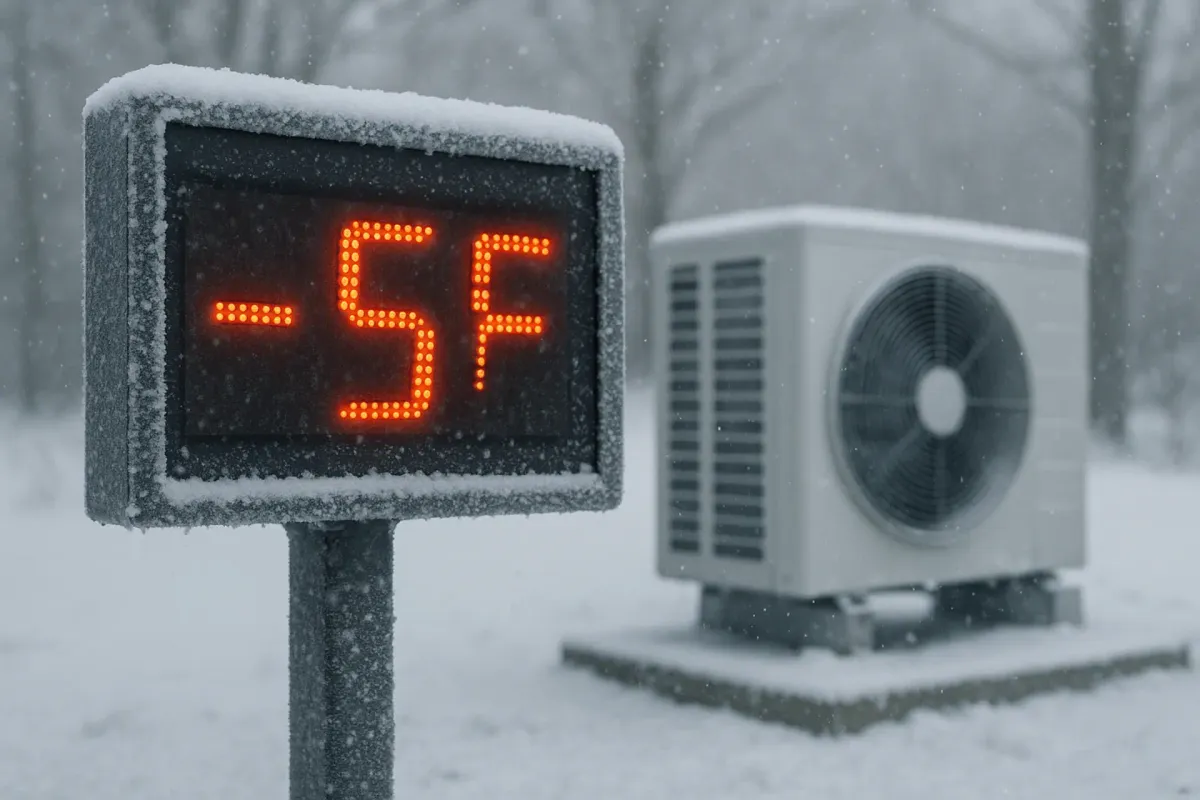
Heat Pump Balance Point: Find Yours, Cut Oil Use
Balance point temperature is the outdoor temperature at which your heat pump's output exactly matches your home's heat loss. Below this point, supplemental heat kicks in. In New England, a well-sized cold-climate system typically has a balance point of 5°F to -5°F.
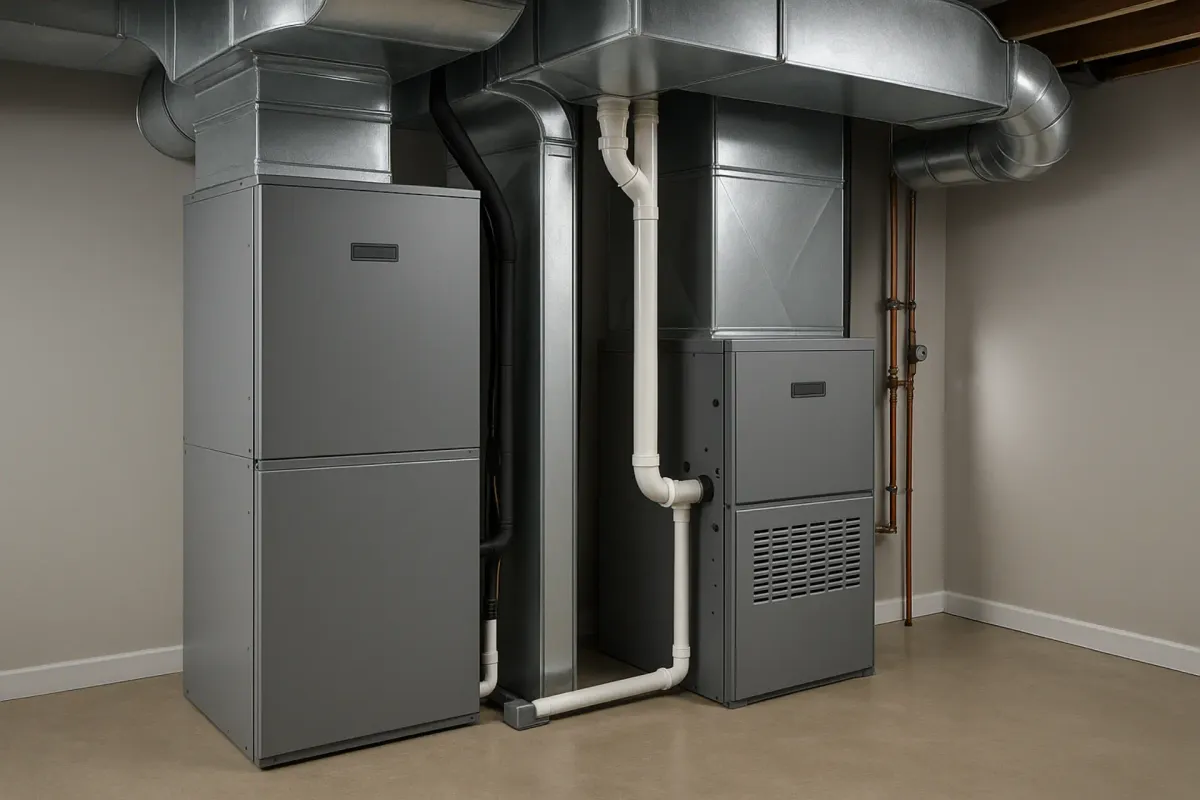
When to Add Backup Heat (Electric, Gas, Oil) and Why
A properly sized cold-climate heat pump handles 95%+ of heating hours without backup in most of New England. Backup heat makes sense for homes in northern VT/NH/ME where temperatures regularly drop below -10°F, or as a safety net during the first winter.
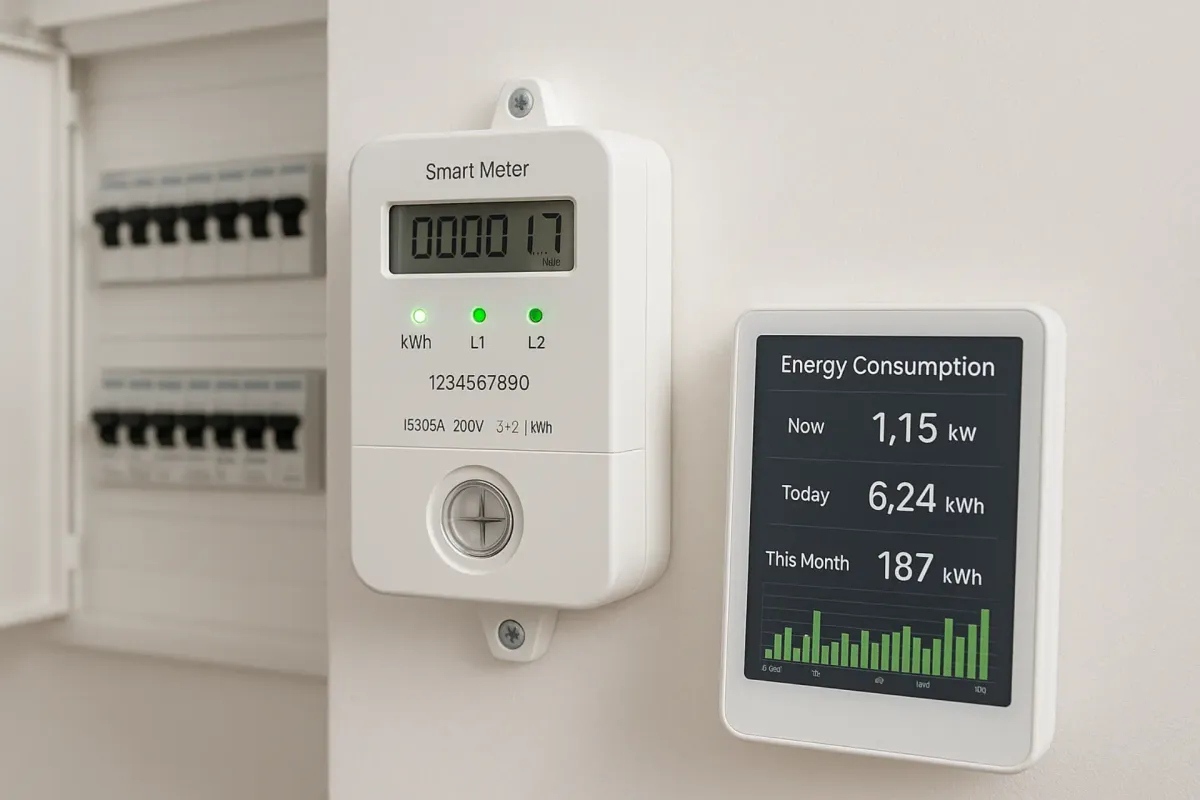
Heat Pump Electricity Usage: kWh by Home Size
A heat pump heating a 2,000 sqft New England home uses 8,000-12,000 kWh per year for heating. At Massachusetts rates ($0.33/kWh), that's $220-$330/month during winter — still 40-50% less than oil or propane.