
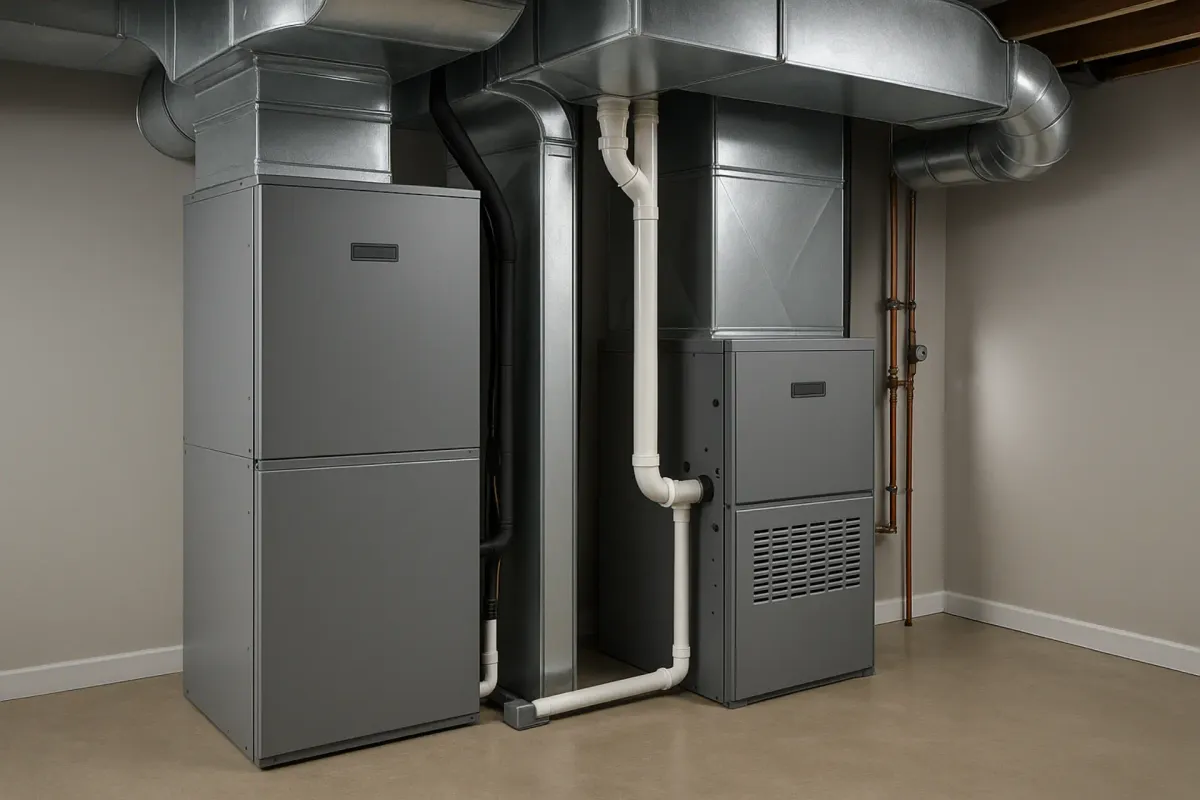

A properly sized cold-climate heat pump handles 95%+ of heating hours without backup in most of New England. Backup heat makes sense for homes in northern VT/NH/ME where temperatures regularly drop below -10°F, or as a safety net during the first winter.
Home Electrification Experts — Full-Service Design to Install, 9 States
Balance Point
5–15°F
when backup activates
Hours/Year
20–100 hrs
in Massachusetts
Backup Cost
$75–$290
per 50 hours (fuel dependent)
Most Common
Dual Fuel
keep existing furnace
Do You Actually Need Backup Heat in New England?
This is the most common question we get from homeowners making the switch to heat pumps, and the answer has changed dramatically in recent years. Five years ago, the honest answer was "probably yes" for most of New England. Today, with cold-climate heat pump technology rated to -13°F and even -22°F, the answer for most homeowners is: you need less backup than you think, but having some form of backup is smart insurance.
A properly sized cold-climate heat pump — Mitsubishi Hyper-Heat, Daikin Aurora, Fujitsu XLTH, or similar — handles 95%+ of heating hours in Massachusetts, Connecticut, and Rhode Island without any backup assistance. Even in northern Vermont, New Hampshire, and Maine where design temperatures drop to -10°F to -15°F, these systems maintain full capacity down to 5°F and provide 75-80% of rated capacity at -13°F.
The question isn't whether a heat pump canheat your home alone — it's whether you want the security of a backup system for the 20-50 hours per year when temperatures drop below -10°F and the heat pump is working at reduced capacity. For most homeowners, the answer is yes, at least during the first 2-3 winters while you build confidence in the system.
When Backup Heat Actually Kicks In
Understanding when and why backup heat activates helps you choose the right option. There are four scenarios:
Extreme cold events (below -10°F)
Heat pump still running, but at reduced capacity. If home heat loss exceeds heat pump output, backup fills gap. In well-insulated 2,000 sqft home: 20-40 hrs/winter in Boston, 60-100 hrs in Burlington VT.
Defrost cycles during extreme cold
When outdoor unit defrosts (every 30-90 min in sustained cold), heating pauses 2-10 minutes. Backup prevents indoor temperature drops. Most common backup activation.
Equipment failure
Any mechanical system can fail. Backup means no 2 AM emergency HVAC calls at -5°F waiting for compressor replacement. Justifies keeping old furnace connected for first few years.
Power outages
Heat pumps require electricity. In rural New England prone to extended outages (ice storms), wood stove, propane heater, or generator-backed system provides critical redundancy.
All Backup Heat Options Compared
Six backup strategies, from zero-cost (keep existing furnace) to $5,000+ (new equipment). Here's the complete comparison:
Existing oil/gas furnace (dual fuel)
Best For:
Homes with working furnace — most common transition strategy
Electric resistance strips (heat strips)
Best For:
Emergency backup only — too expensive for regular use
New gas furnace (dual fuel)
Best For:
Homes with existing gas lines wanting redundancy
Existing oil boiler (keep for backup)
Best For:
Transitional — use for extreme cold, phase out over 2-3 years
Propane wall heater (ventless/direct vent)
Best For:
Small homes, no duct system, supplemental rooms
Wood stove or pellet stove
Best For:
Rural homes, supplemental zone heat, power outage backup
Dual-Fuel Systems: The Most Common Approach
A dual-fuel system pairs a heat pump with an existing gas or oil furnace. This is the most popular backup strategy in New England because most homes already have a working furnace — so the incremental cost of keeping it connected is essentially zero.
Here's how it works: The system has a "balance point" — the outdoor temperature below which the furnace is more cost-effective than the heat pump. A smart thermostat or the system's built-in controls monitor outdoor temperature and automatically switch between heat pump and furnace at the balance point. Above the balance point, the heat pump runs exclusively. Below it, the furnace handles the load.
5°F
Natural Gas balance point
$1.85/therm
Gas cheaper below 5°F
0–5°F
Heating Oil balance point
$4.20/gal
Heat pump always cheaper
10–15°F
Propane balance point
$3.30/gal
Varies by system
All-Electric vs. Dual-Fuel: Making the Choice
Going all-electric means the heat pump is your only heating source, with electric resistance strips as emergency backup. No fossil fuel, no combustion, no gas line, no oil tank. Here's when each approach makes sense:
Go All-Electric When:
- Design temp above -10°F (most of MA, CT, RI, southern NH)
- Well-insulated home (post-1990 or recently weatherized)
- Want to eliminate all fossil fuel costs and infrastructure
- Building new or doing deep energy retrofit
- Have or plan solar panels to offset electricity cost
Keep Dual-Fuel When:
- Design temp below -10°F (northern VT, NH, ME)
- Older home with high heat loss (pre-1960, not weatherized)
- Have working furnace with remaining life
- Want maximum peace of mind in year one
- Area has frequent extended power outages
Backup Fuel Cost Comparison: Real Numbers
Backup heat usage varies dramatically by location and home. For a typical 2,000 sqft home in central Massachusetts with a well-sized heat pump system, backup might run 30-60 hours per winter. Here's what those hours cost with each fuel type:
Natural gas
$97
for 50 hours backup
Wood pellets
$72
for 50 hours backup
Cord wood
$85
for 50 hours backup
Propane
$190
for 50 hours backup
Heating oil
$213
for 50 hours backup
Electric resistance
$290
for 50 hours backup
For 50 hours of backup heat per winter, the cost difference between the cheapest option (wood pellets at $72) and the most expensive (electric resistance at $290) is about $218/year. Over 15 years, that adds up — but remember, backup runs less and less as you gain confidence in the heat pump and potentially improve your home's insulation. Many homeowners find they use zero backup by year 3.
Typical Dual-Fuel Transition: A Lexington, MA Scenario
Typical Case: Dual-Fuel Transition
A 1978 colonial in Lexington, MA — 2,400 sqft with a 12-year-old oil boiler. The homeowner installed a 3-ton Mitsubishi Hyper-Heat ducted system in 2024 and kept the oil boiler as backup, with the balance point set at 5°F.
Year 1 (2024-25)
Oil boiler ran 45 hours (January cold snap). Oil cost: $380. Burned 90 gal vs 850 gal prior year. Total heating dropped from $3,570 (oil) to $1,480 (heat pump + backup).
Year 2 (2025-26)
After adding attic insulation through Mass Save (free), boiler ran only 18 hours. Used 35 gal oil all winter. Now considering removing oil tank entirely.
Decision
Keeping boiler costs $225/yr service. 18 hrs backup = $147 oil. Total $372/yr. Plan: keep one more winter, then decommission and rely on heat pump with electric strip emergency backup.
Emergency Heat Mode: When and Why
Every heat pump thermostat has an "EM HEAT" or "Emergency Heat" setting. This bypasses the heat pump entirely and runs only the backup heating source — typically electric resistance strips if you're all-electric, or the furnace in a dual-fuel system.
When to use EM HEAT
Only if outdoor heat pump unit has completely failed — compressor won't start, fan motor dead, or unit physically damaged. EM HEAT is a lifeline to keep pipes from freezing while you wait for repair service.
When NOT to use EM HEAT
Cold weather. At 5°F and house heating slowly, DON'T flip to EM HEAT. Heat pump is working — it ramps gradually. At $0.33/kWh, electric resistance costs 3× more. A week of EM HEAT = $200-$400 bill spike.
Common Mistake: Using EM HEAT for Cold Weather
If your home isn't reaching temperature during cold weather, the issue is likely undersizing, a failed defrost board, or low refrigerant — not something that EM HEAT fixes. Call your installer for diagnosis rather than burning money on resistance heat.
Ready to Get a Heat Pump Quote?
Get a free, no-obligation quote from NuWatt Energy. We handle design, permits, and installation.
Note: Case scenarios in this article are typical examples drawn from installations across NuWatt's New England service area. Specific homeowner details have been generalized to protect privacy. Numbers are representative; actual results vary by home, fuel prices, and utility rates.
Frequently Asked Questions
Do I need to keep my furnace as backup?▼
What is emergency heat mode?▼
Continue Reading
Heat Pump Balance Point: Find Yours, Cut Oil Use
Balance point temperature is the outdoor temperature at which your heat pump's output exactly matches your home's heat loss. Below this point, supplemental heat kicks in. In New England, a well-sized cold-climate system typically has a balance point of 5°F to -5°F.
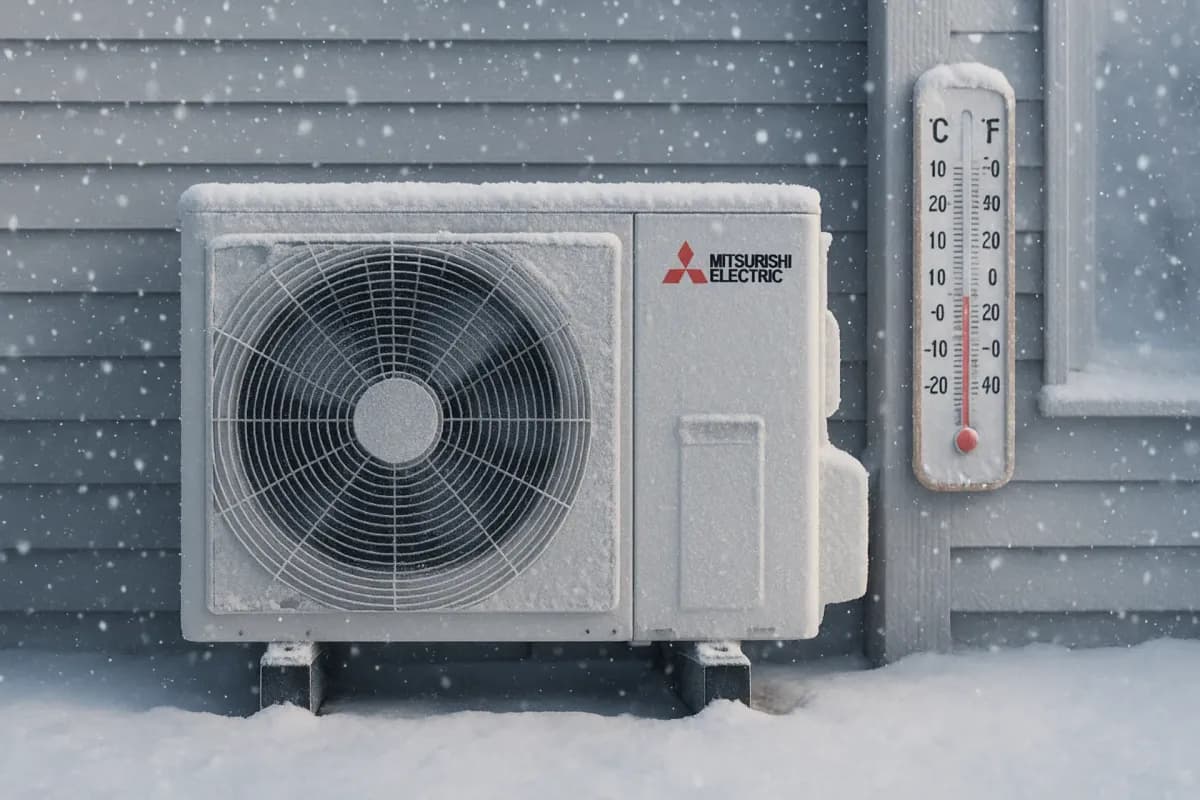
Cold-Climate Heat Pumps at 5°F and Below: Real Performance Expectations
Modern cold-climate heat pumps maintain 75-85% of rated capacity at 5°F and 60-70% at -13°F. A Mitsubishi Hyper-Heat rated at 36,000 BTU still delivers 24,000+ BTU at 5°F — enough to heat most New England homes.
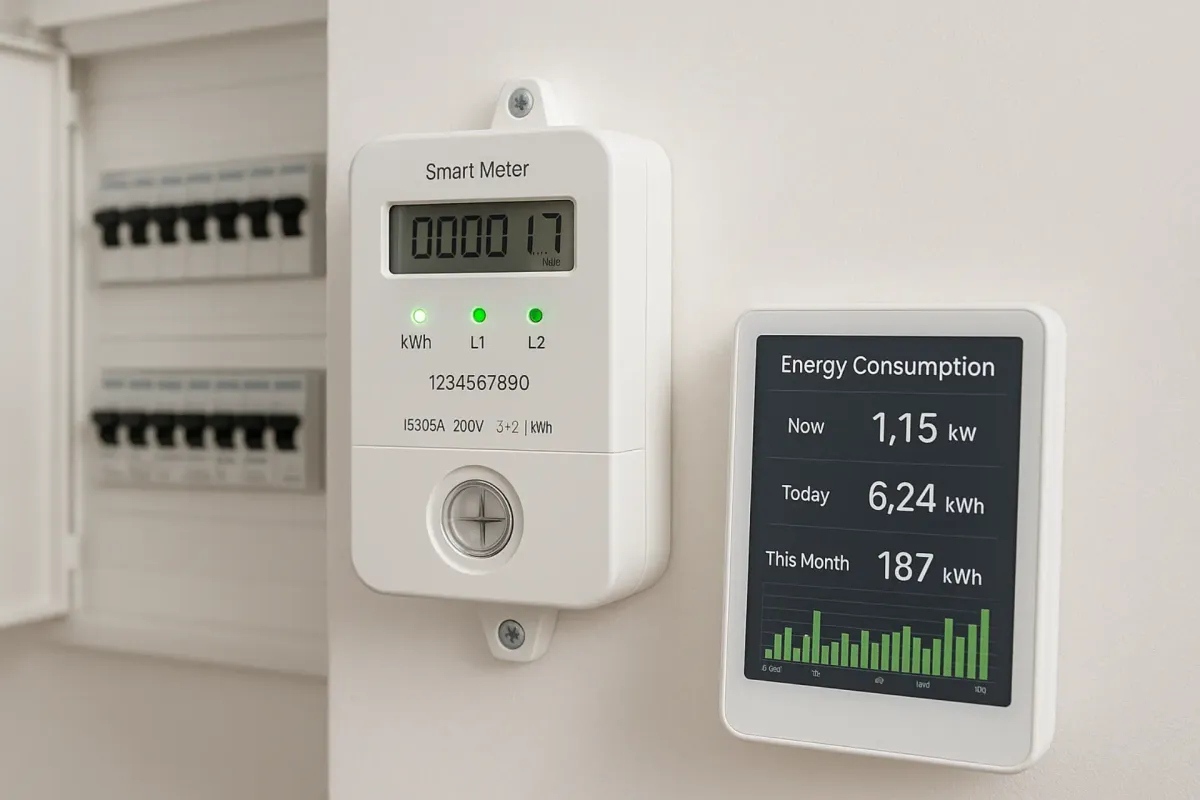
Heat Pump Electricity Usage: kWh by Home Size
A heat pump heating a 2,000 sqft New England home uses 8,000-12,000 kWh per year for heating. At Massachusetts rates ($0.33/kWh), that's $220-$330/month during winter — still 40-50% less than oil or propane.