Loading NuWatt Energy...

We use your location to provide localized solar offers and incentives.
We serve MA, NH, CT, RI, ME, VT, NJ, PA, and TX
Loading NuWatt Energy...
NuWatt designs, installs, and manages solar, battery, heat pump, and EV charger systems across 9 states. One company, one warranty, one point of contact.
Get a Free QuoteHeadlines about battery fires make homeowners nervous. Here are the facts: cold does not cause battery fires — heat does. Maine's cold basements are actually one of the safest environments for battery storage. LFP chemistry (used in most modern batteries) has an excellent safety record. This guide separates fact from fear with Maine-specific details.
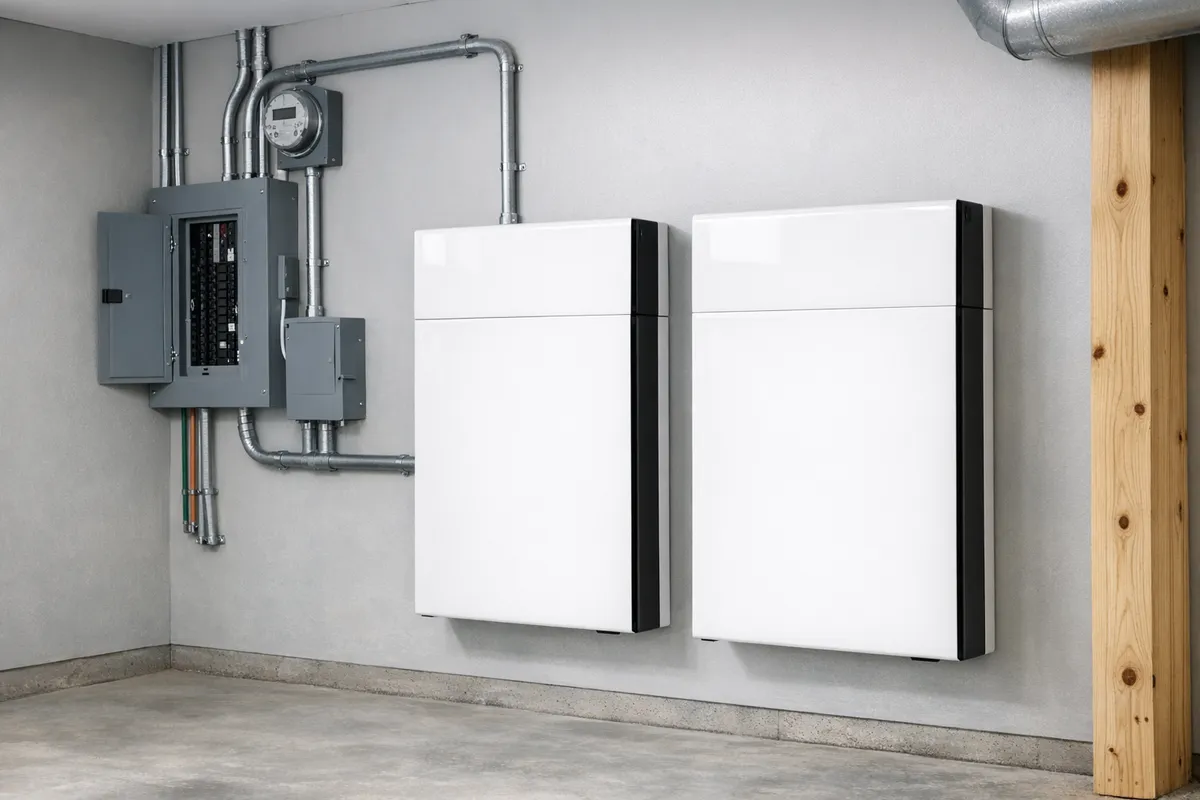
This is wrong. Battery fires are caused by thermal runaway — a self-accelerating chain reaction where internal cell temperature rises uncontrollably. Thermal runaway is triggered by excessive heat, physical damage, overcharging, or manufacturing defects. Cold temperatures slow chemical reactions and reduce fire risk.
In Maine, a basement at 45-55F in winter keeps batteries well below the threshold where thermal issues begin. Compare this to a garage in Arizona at 130F+ in summer. Maine's climate is a safety advantage, not a risk factor.
Not all lithium batteries are the same. The two main chemistries used in home storage have very different safety profiles. For Maine homes, we strongly recommend LFP.
| Property | LFP (Recommended) | NMC |
|---|---|---|
| Full name | Lithium Iron Phosphate | Nickel Manganese Cobalt |
| Thermal runaway temp | ~270C (518F) | ~150C (302F) |
| Oxygen release at failure | No | Yes (intensifies fire) |
| Fire intensity if failure occurs | Lower — no accelerant | Higher — self-oxidizing |
| Energy density | Lower (larger for same kWh) | Higher (more compact) |
| Cycle life | 5,000-10,000 cycles | 2,000-5,000 cycles |
| Cold weather performance | Good (reduced capacity below 32F) | Good (similar reduction) |
| Products using this chemistry | Tesla Powerwall 3, Enphase IQ 5P, Franklin aPower | LG RESU, some older Tesla units |
| Cost (2026) | $800-$1,200/kWh installed | $900-$1,400/kWh installed |
| Recommended for Maine homes | Yes — strongly recommended | Acceptable with proper installation |
Bottom line: LFP batteries are safer, last longer, and cost less than NMC in 2026. The only advantage NMC has is energy density (smaller size for same capacity). For a Maine basement or garage with plenty of space, LFP is the obvious choice.
Maine follows NFPA 855 (Standard for the Installation of Stationary Energy Storage Systems) as adopted through the Maine Uniform Building and Energy Code (MUBEC). Here are the key requirements for residential installations.
Maine homes typically offer two options for battery installation: the basement or the garage. Both work, but they have different considerations.
Verdict: Excellent choice for Maine. Cool, stable temps are ideal for battery longevity and safety. Address moisture if your basement is damp.
Verdict: Good option, especially for ease of access. Wide temp swings may slightly reduce battery performance in extreme cold, but modern units handle Maine winters well.
Why cold basements are actually safer
The biggest battery safety incidents (like the 2024 San Diego garage fire) occurred in hot climates where ambient temperatures were 100F+. Maine basements at 45-55F are 200+ degrees below the thermal runaway threshold for LFP batteries (518F). The chemical reactions that lead to fires are temperature-dependent — colder environments are inherently safer. Your Maine basement is one of the best possible locations for a battery.
All modern residential batteries from major manufacturers use UL-listed, safety-tested equipment. Here are the most popular options available in Maine.
Capacity
13.5 kWh
Safety cert
UL 9540 / UL 9540A
Operating temp
-4F to 122F
Fire risk
Very Low
Integrated inverter. Active liquid cooling. Suitable for indoor or outdoor installation in Maine.
Capacity
5 kWh (stackable)
Safety cert
UL 9540 / UL 9540A
Operating temp
-4F to 131F
Fire risk
Very Low
Modular design. Microinverter-based. No single large battery — distributed risk. Excellent for Maine.
Capacity
13.6 kWh
Safety cert
UL 9540 / UL 9540A
Operating temp
-4F to 122F
Fire risk
Very Low
Full home backup with automatic transfer switch. LFP chemistry is the safest option.
Capacity
10 kWh
Safety cert
UL 9540
Operating temp
32F to 113F
Fire risk
Very Low
Indoor only. German engineering. Higher operating temp minimum — may need conditioned space in Maine.
Adding a battery system to your home has insurance implications. Here is what to expect.
Most Maine insurers cover battery storage without issue. Premium increase is typically $50-$150/year.
Meeting these requirements ensures your installation is insurable. Keep all documentation.
Some insurers offer discounts for whole-home backup systems that protect against burst pipe / flood damage during outages.
Battery incidents are extremely rare with properly installed LFP systems. But knowing what to do gives peace of mind.
Do NOT touch the battery unit
If the disconnect switch is safely accessible, turn it off
Evacuate the area (move everyone outside)
If you see smoke or smell burning: Call 911 immediately
If no smoke/smell: Call your installer for assessment
Do not re-enter the area until cleared by a professional
Context: How rare are battery incidents?
For perspective: there are approximately 13,000 house fires caused by clothes dryers each year in the US. Space heaters cause over 40,000 fires annually. Residential battery fire incidents are measured in single digits per year across hundreds of thousands of installations. A properly installed LFP battery is statistically one of the safest electrical appliances in your home.
We install Tesla Powerwall, Enphase, and Franklin batteries with proper NFPA 855 compliance. Every installation is permitted and inspected.
Backup power for Maine storms
Optimize battery with TOU rates
Which backup is right for you
Whole-home electrification
Current solar pricing in Maine
Going fully off-grid in Maine