Loading NuWatt Energy...

We use your location to provide localized solar offers and incentives.
We serve MA, NH, CT, RI, ME, VT, NJ, PA, and TX
Loading NuWatt Energy...
NuWatt designs, installs, and manages solar, battery, heat pump, and EV charger systems across 9 states. One company, one warranty, one point of contact.
Get a Free Quote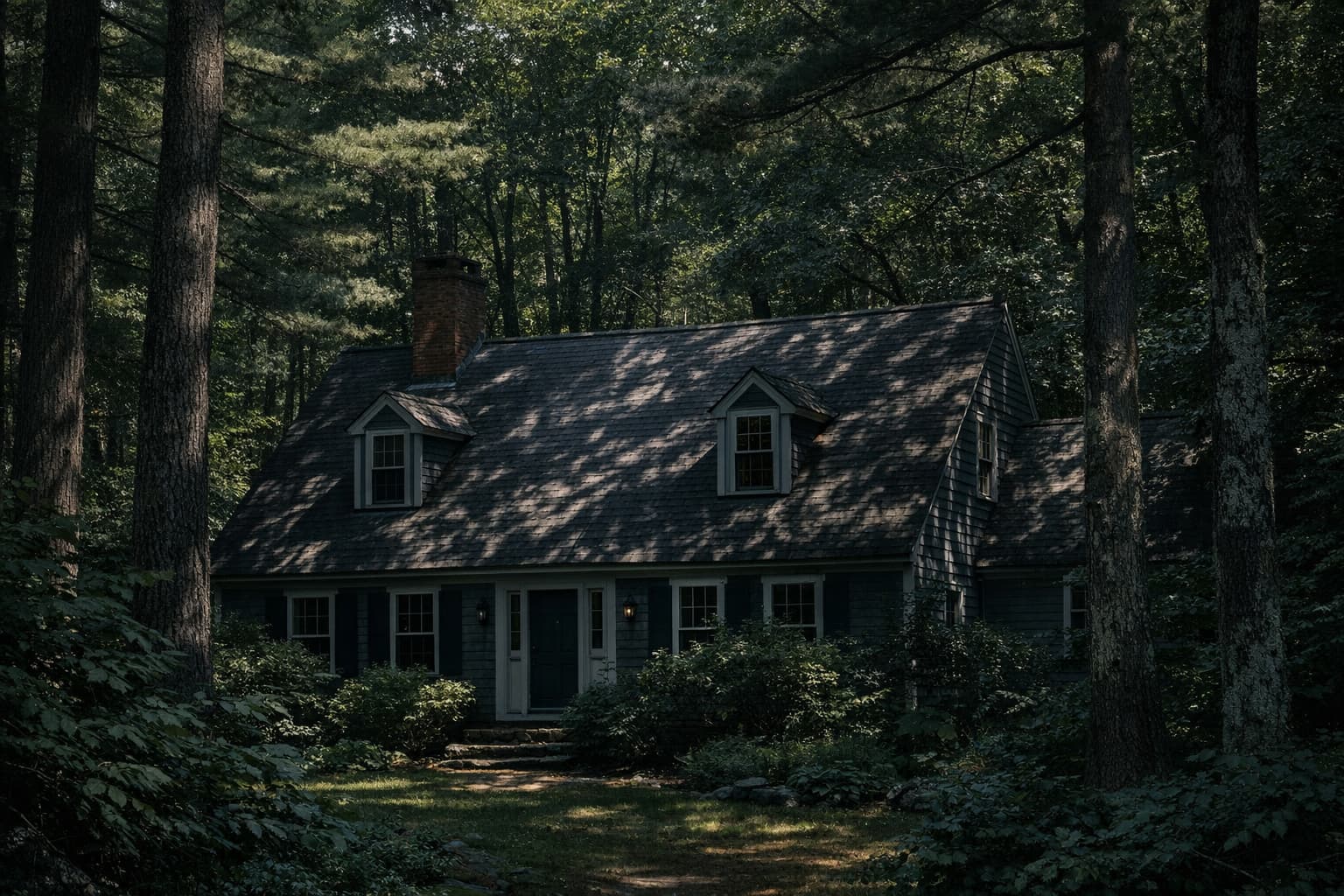
We sell solar — but we will not sell it to you if it does not make sense. Here are 7 honest reasons to skip solar in Maine, plus better alternatives.
Skip rooftop solar in Maine if: your bill is under $75/month, you are moving within 2 years, your roof is heavily shaded (Maine is 89% forested), your roof needs replacement within 5 years, or your only roof area faces north. For these situations, community solar, heat pumps, and Efficiency Maine efficiency upgrades are better investments. But if your bill is $100+ and your roof has sun — solar is still one of the best investments in Maine.
We install solar in Maine. We obviously want you to buy solar. But we have learned that recommending solar to the wrong homeowner leads to bad reviews, costly cancellations, and unhappy customers. Being honest about when solar does not work builds trust — and trust is how we build a sustainable business.
There are legitimate companies and advisors who will sell you a system even when it does not pencil out. This page is our commitment to transparency: if solar does not work for your situation, we will tell you, and we will point you to a better option.
Evaluated honestly with Maine-specific data
A $75/month bill means you use roughly 280 kWh/month (at CMP $0.27/kWh). A system sized for that usage would be only 2-3 kW — too small for the fixed costs of installation (permitting, electrical, labor) to pencil out. The payback would stretch to 15+ years with minimal savings.
What to do instead: Focus on energy efficiency upgrades. Efficiency Maine offers rebates for insulation, air sealing, and heat pump water heaters that can reduce your bill further. If your bill is low because you heat with oil, consider a heat pump instead — the electric bill will go up, but total energy costs go way down.
Solar panels add 3-4% to home value (Zillow research), but selling a home with new solar adds complexity. Buyers may not value it fully, the transfer process takes effort, and in a buyer's market, solar rarely commands its full cost premium. The 7-9 year Maine payback means you will not recoup your investment in 2 years.
What to do instead: If you are buying a new home in Maine, factor solar into that home's potential. Some homeowners install solar on their next home instead. If renting, look at Maine community solar programs — you can subscribe and save 5-15% on your electric bill with no installation.
Maine is the most forested state in the nation — 89% of the land is covered in trees. Many homes are surrounded by mature pines, oaks, and maples. Even partial shading (30-40% of the roof) can reduce production by 50% or more with traditional string inverters. Microinverters help but cannot overcome heavy shade. If your roof gets less than 4 hours of direct sun in summer, ROI collapses.
What to do instead: Get a shade analysis first (we provide free satellite-based assessments). If trees are on your property, selective trimming can open up a viable solar window. If the shade is from neighbors' trees, consider ground-mount solar (needs 0.25+ acre of open land) or community solar.
Installing solar on a roof that needs replacement soon means you will pay $2,000-$4,000 to remove and reinstall panels when you reroof. Asphalt shingles in Maine last 20-25 years (shorter than national average due to freeze-thaw cycles and ice dams). If your roof is 18+ years old, reroof first.
What to do instead: Reroof first, then install solar on the new roof. Better yet, consider a solar-ready reroof — heavier underlayment, extra flashing, and structural reinforcement add minimal cost during reroofing but save money and time when solar goes on later. See our Maine solar roof replacement guide.
South-facing roofs produce 100% of potential. East and west faces produce 80-85%. North-facing roofs produce only 50-60% — cutting ROI roughly in half. If your home's only viable roof area faces north, the payback in Maine stretches to 15-18+ years, which is marginal.
What to do instead: If you have a garage, shed, or barn with south/west exposure, mount panels there. Ground-mount systems work well on Maine properties with open land. Community solar is also an option — no roof required.
If you live alone in a small, well-insulated home and use 300 kWh/month or less, solar savings max out at ~$1,000/year. A $15K-$20K investment for $1K/year savings is a 15-20 year payback — not terrible, but not the 7-9 year payback that makes solar compelling. Your money may work harder elsewhere.
What to do instead: If your usage is low because you heat with oil/propane, switching to a heat pump will dramatically increase electric usage (but lower total energy costs). That higher bill makes solar much more worthwhile. Consider the full electrification math, not just current electric usage.
This is a common concern but largely a myth. Yes, Maine gets only 9 hours of daylight in December (vs 15+ in June). But solar is an annual investment — summer overproduction banks NEB credits that offset winter shortfalls. A properly sized system with 1:1 net metering produces enough annually even with dark winters. This is NOT a reason to skip solar — but it is a reason to size correctly.
What to do instead: Ensure your installer sizes for annual production, not peak summer. A good Maine installer accounts for snow cover (5-10% annual loss), shorter winter days, and low sun angles. The 1:1 NEB rolling credits make annual balancing work.
Every state has its quirks. Here is what makes Maine different from the solar company brochures:
Maine is the most forested state in the US. This means widespread shade issues, especially for homes outside of villages. Before any consultation, we do a satellite shade analysis to verify viability.
Maine roofs deal with heavy snow loads (40-80 psf design load) and ice damming. Solar panels actually help by creating a smooth surface that sheds snow faster, but the roof underneath must be structurally sound.
Portland gets 9.1 hours of daylight on December 21 vs 15.4 hours on June 21. December production is roughly 25% of June production. Annual net metering (1:1 NEB) smooths this out — summer credits offset winter deficits.
For homes within 1-2 miles of the coast, salt air can affect panel mounting hardware over time. Stainless steel racking is recommended, adding $200-$500 to system cost.
The 25D ITC expired December 31, 2025. Maine homeowners now pay full price for cash purchases. This extends payback by 2-3 years vs the 30% credit era, making marginal cases (low usage, partial shade) less viable.
Score yourself on each factor to determine your fit
| Factor | Go Solar | Skip Solar |
|---|---|---|
| Monthly electric bill | $100+ (CMP) or $80+ (Versant) | Under $75 |
| Time in home | 5+ years | Moving within 2 years |
| Roof shade | 4+ hours direct sun, summer | Under 4 hours, heavy tree cover |
| Roof age | Under 15 years old | 18+ years (needs replacement) |
| Roof orientation | South, SW, SE, or flat | North-facing only |
| Budget | Cash or Propel financing available | Cannot afford and no financing option |
| Electric usage trend | Rising (EV, heat pump, growing family) | Declining (kids leaving, downsizing) |
If 5+ factors land in the “Go Solar” column, rooftop solar is likely a strong investment. If 3+ land in “Skip Solar,” explore alternatives below.
Not going solar does not mean you are out of options. Maine has strong programs for energy savings:
Subscribe to a community solar farm and receive 5-15% bill credits. No installation, no roof requirements, no upfront cost. Available through CMP and Versant programs.
Best for: Renters, shaded homes, poor roof condition, apartment dwellers
Learn moreFree or subsidized home energy audit identifies air leaks, insulation gaps, and efficiency upgrades. Often saves 20-30% on heating costs. Efficiency Maine covers most of the audit cost.
Best for: Drafty old Maine homes, high heating bills, pre-solar preparation
Learn moreIf you heat with oil ($3.82/gal), switching to a heat pump can save $1,500-$3,000/year on heating. Efficiency Maine rebates cover $1,000-$3,000/unit. Often a higher ROI than solar.
Best for: Oil and propane heated homes, homes with good electric rates
Learn moreMany Maine homes (especially pre-1980) lose 25-40% of heat through poor insulation. Efficiency Maine offers rebates for attic insulation, wall insulation, and air sealing.
Best for: Older homes, cold drafts, ice dam problems
Learn moreIf your roof is problematic but you have open land (0.25+ acres), ground-mount solar avoids roof issues entirely. Slightly higher cost ($0.10-$0.20/W more) but optimal tilt angle and no shade compromises.
Best for: Properties with shade on roof but open land, farms, large lots
Learn moreIf none of the above alternatives fit, waiting 2-3 years is valid. Panel prices continue to drop 2-5% annually. A roof replacement now means solar in 3 years on a new roof.
Best for: Roof replacement imminent, moving uncertain, very low usage
Learn moreMaine has 17.6 million acres of forest — the highest percentage of any US state. This is not abstract: it means mature trees surround most Maine homes, and shade is the number one reason we tell homeowners to consider alternatives.
However, the 89% statistic is misleading for solar assessments. Most Maine homes are in cleared areas — villages, suburbs, and open lots. The forest cover is concentrated in rural and wilderness areas. Within developed neighborhoods, solar viability is often 70-80%, similar to other New England states.
The takeaway: do not assume shade is a problem — or not a problem — based on Maine's forest statistics. Get an individual site assessment.
We use satellite imagery and LiDAR data to assess your specific roof. Takes 24-48 hours, no site visit needed. If shade kills the project, we will tell you.
If 1-2 trees on your property are the problem, selective trimming ($500-$2,000) can open a solar window. We can identify exactly which trees to address.
Open field, south-facing yard, or unused land? Ground-mount solar avoids roof shade entirely. Higher upfront cost ($0.10-$0.20/W more) but optimal production.
Get an honest assessment of your Maine home. We will tell you if solar makes sense — and if not, what does.