Loading NuWatt Energy...

We use your location to provide localized solar offers and incentives.
We serve MA, NH, CT, RI, ME, VT, NJ, PA, and TX
Loading NuWatt Energy...
NuWatt designs, installs, and manages solar, battery, heat pump, and EV charger systems across 9 states. One company, one warranty, one point of contact.
Get a Free Quote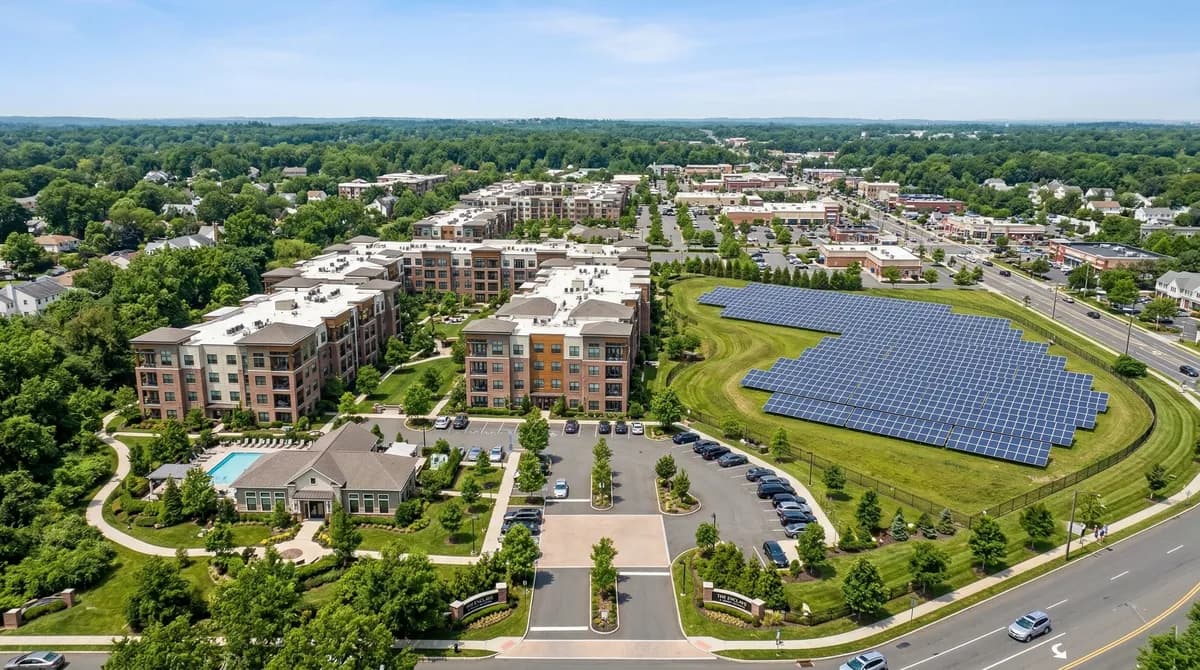
Can't put panels on your roof? NJ's Community Solar Energy Program (CSEP) saves renters 5-15% on their electric bill — no panels, no installation, no upfront cost. Condo owners have legal solar rights under NJ law.
New Jersey offers three pathways to solar energy for renters, condo owners, and landlords. Each has different economics and requirements.
Best for renters & apartment dwellers
Subscribe to a local NJ solar farm. Get credits on your utility bill — no panels on your roof. Save 5-15% on electricity.
For condo owners with roof access
Install panels on your condo's exclusive-use roof area. Protected by NJ solar access law N.J.S.A. 45:22A-48.
For investment property owners
Landlords can install solar on rental properties using the Section 48E commercial ITC through a third-party financing company. Projects that began construction on or before July 4, 2026 locked in the widest timing window; new projects still qualify if placed in service by December 31, 2027.
The Community Solar Energy Program is NJ's answer for residents who can't install rooftop solar. Here's the process from start to savings.
Search for community solar projects in your utility territory (PSE&G, JCP&L, or ACE). Projects are listed on NJCEP.com or through community solar providers.
Sign up for a subscription. No upfront cost, no equipment, no installation. You simply allocate a portion of your electric bill to the solar farm.
The solar farm produces electricity and you receive credits on your utility bill based on your subscription share. Credits appear as a line item on your regular bill.
Your total electric bill is reduced by 5-15%. No change to your service, no panels on your roof, no maintenance. You can cancel or transfer if you move within your utility territory.
LMI subscribers may receive 15-20% credits, saving $270-$360/year.
Your best solar option depends on your living situation. Here's a quick guide.
No roof access, no ownership. CSEP is your only solar option — and it works well. $0 upfront, 5-15% savings.
Protected by N.J.S.A. 45:22A-48. Full solar savings, ADI income, property tax exempt. Your HOA cannot unreasonably deny installation.
Shared roof requires full association approval. CSEP is easier. Or advocate for a building-wide solar installation.
Townhomes typically have individual roof areas. NJ law protects your right to install. Follow the HOA approval process.
Third-party 30% ITC available; projects that began construction by July 4, 2026 locked in the longer timing window, and new starts still qualify via the Dec 31, 2027 placed-in-service date. Add property value, attract tenants, earn ADI/SREC-II income.
If you own a condo in New Jersey, state law protects your right to install solar panels.
N.J.S.A. 45:22A-48 prohibits condo associations and HOAs from unreasonably restricting solar energy installations. Your association can require an approval process and reasonable aesthetic guidelines, but cannot impose a blanket ban or conditions that reduce system efficiency by more than 10%.
The federal residential solar tax credit (Section 25D) expired December 31, 2025. There is no federal tax credit for residential solar or battery installations in 2026.
NJ state incentives still apply: ADI/SREC-II ($85.00/MWh for 15 years), net metering (1:1 retail), sales tax exemption (6.625%), and 100% property tax exemption. These make solar still financially attractive with 7-9 year paybacks.
Yes. NJ renters can subscribe to community solar through the Community Solar Energy Program (CSEP). You subscribe to a portion of a local solar farm and receive credits on your utility bill — saving 5-15% on electricity. No panels on your roof, no upfront cost, no long-term commitment required. Any NJ electric customer can participate.
CSEP is New Jersey's community solar program administered by the NJ BPU. It allows residents who can't install rooftop solar (renters, apartment dwellers, shaded properties) to subscribe to a local solar farm and receive bill credits. The program prioritizes low-to-moderate income (LMI) subscribers — at least 51% of each project's capacity must serve LMI customers.
NJ community solar subscribers typically save 5-15% on their monthly electric bill. On an average NJ electric bill of $130-$170/month, that's $8-$25/month or $100-$300/year in savings. LMI subscribers may receive larger discounts. The exact savings depend on your subscription size, the solar farm's production, and your utility rate.
Yes, if you have exclusive-use rights to your roof area (limited common element). N.J.S.A. 45:22A-48 prohibits condo associations from unreasonably restricting solar installations. You still need to go through the architectural review process, but the association cannot deny your request without a reasonable basis. If you have a shared roof, you'll need full association approval.
If you move within the same utility territory (e.g., PSE&G to PSE&G), you can typically transfer your subscription to your new address. If you move to a different utility territory or out of NJ, you would cancel your subscription. Most CSEP plans have no cancellation penalty. Check your specific agreement for terms.
Community solar subscriptions have no upfront cost. You don't pay for equipment, installation, or maintenance. Instead, you pay a subscription rate that is lower than your utility rate — the difference is your savings (5-15%). Some providers charge a small monthly subscription fee that is offset by your bill credits. Net result: lower total electricity cost.
Yes. Landlords can install solar on rental properties. Through Section 48E, a third-party financing company can own the system and claim the commercial ITC (up to 30-50% reduction). Projects that began construction on or before July 4, 2026 locked in the full Section 48E timing window; projects that begin construction after that date still qualify for the 30% credit but generally must be placed in service by December 31, 2027. The landlord benefits from property value increase and ADI/SREC-II income. Tenants may benefit from reduced common area costs.
NJ requires that at least 51% of each CSEP community solar project's capacity be allocated to low-to-moderate income (LMI) subscribers. LMI is defined as households earning 80% or less of area median income. LMI subscribers often receive larger discounts (10-20% vs. 5-10% for market-rate subscribers). This ensures equitable access to solar savings.
Whether you rent, own a condo, or manage investment property — NJ has a solar pathway for you. Community solar starts at $0. Condo solar is protected by law.