Loading NuWatt Energy...

We use your location to provide localized solar offers and incentives.
We serve MA, NH, CT, RI, ME, VT, NJ, PA, and TX
Loading NuWatt Energy...
NuWatt designs, installs, and manages solar, battery, heat pump, and EV charger systems across 9 states. One company, one warranty, one point of contact.
Get a Free QuoteQuick Answer
In most states, your HOA cannot prohibitsolar panels. State solar access laws protect homeowners' right to install solar energy systems. HOAs may impose “reasonable restrictions” on placement and aesthetics, but outright bans are void and unenforceable in states with solar access protections.
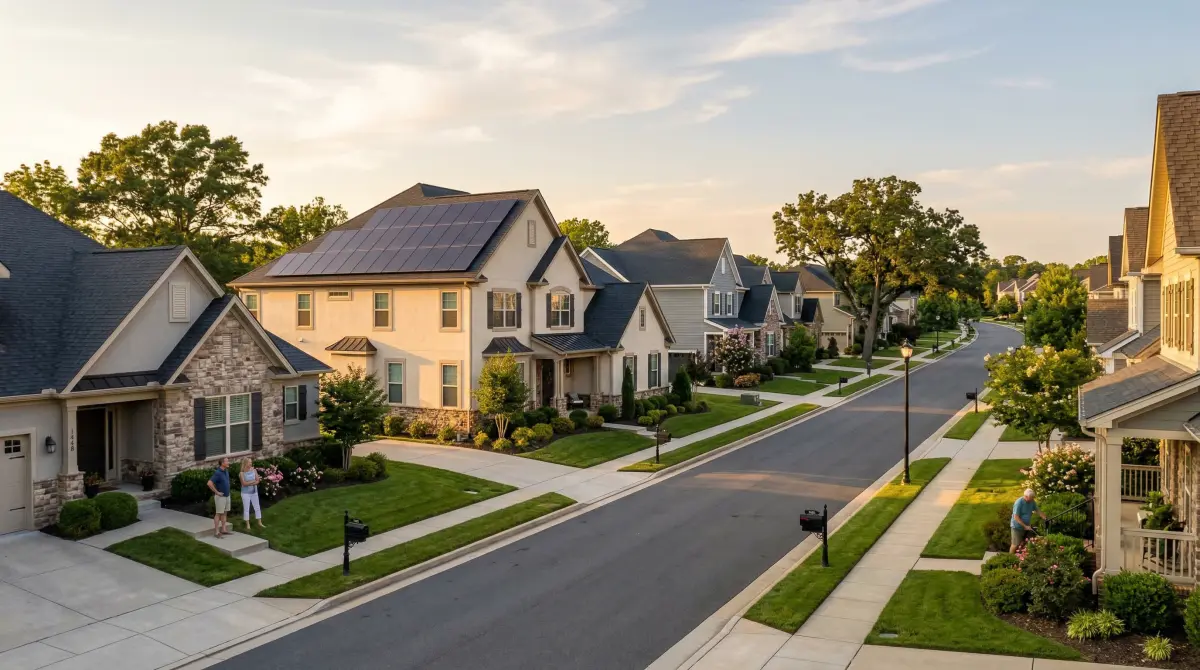
State-by-State Solar Access Rights (2026)
If you live in an HOA community, you might worry that your association can stop you from going solar. In most states, they can't. Here's what the law actually says, state by state, and exactly what to do if your HOA pushes back.
As of 2026, at least 29 states have enacted solar access laws that restrict an HOA's ability to prohibit solar panel installation. Among NuWatt's service states, seven of nine have strong protections that make solar bans void and unenforceable.
The key distinction is between an outright ban (illegal in most states) and “reasonable restrictions” (generally permitted). Your HOA can ask you to use low-profile hardware or prefer a certain roof face. They cannot tell you “no solar, period.”
Understanding this line matters because some HOA boards still try to block solar installations, either out of ignorance of the law or through restrictions designed to make solar impractical. Knowing your rights is the first step to a successful installation.
There is no single federal law that explicitly overrides all HOA solar restrictions. However, several federal frameworks discourage unreasonable barriers:
Federal energy policy has long recognized the importance of solar access. The Department of Energy's Solar Energy Technologies Office promotes removing barriers to residential solar adoption.
The Federal Housing Administration discourages HOA restrictions that unreasonably prevent energy-efficient improvements, including solar installations, on individually owned properties.
The real protections come from state-level solar access laws. These vary significantly in strength and coverage. Your state law is your primary legal shield.
Here's what the law says in each of NuWatt's service states. We've verified these statutes as of March 2026, but laws can change—always confirm with a local attorney for your specific situation.
MGL Ch. 184, §23C
Any provision that forbids or unreasonably restricts solar installation is void and unenforceable. Applies to HOAs, condos, and cooperatives.
Restrictions that effectively prevent solar or unreasonably limit system output are automatically void under state law.
SB 4 (2022), eff. Jan 2023
HOAs in common interest communities cannot adopt or enforce rules preventing solar installation on single-family unit roofs. Must act on applications within set timeframes.
Connecticut was the last New England state to pass solar access protections (effective January 1, 2023). HOAs may set reasonable size and placement guidelines but cannot deny outright.
R.I. Gen. Laws §34-40
Rhode Island has a solar easement statute but no comprehensive statewide law preventing HOAs from restricting solar. HOAs retain considerable power over installations.
Property owners can create solar easements to protect sunlight access, but there is no blanket prohibition on HOA solar restrictions. Check your CC&Rs carefully.
N.J.S.A. 45:22A (2017+)
HOAs cannot adopt covenants, bylaws, or rules prohibiting solar collector installation on individually owned property. One of the first East Coast states with strong protections.
The law limits HOA authority to prohibit solar installations and restricts any covenant that would ban solar on property owned by an individual (not common area).
RSA 477:22-b
Any deed restriction or covenant that prohibits or unreasonably limits solar PV installation is void and unenforceable.
A restriction is "unreasonable" if it significantly increases cost, decreases efficiency, or otherwise effectively discourages solar installation.
Title 33, Ch. 28-A (§1421–1423)
HOAs, condo associations, and unit owners associations cannot prohibit members from installing solar energy devices on their residential property.
Established in 2009, Maine’s Solar Rights law allows only reasonable restrictions related to public safety or structural integrity—not blanket bans.
TX Property Code §202.010
HOAs cannot include or enforce any provision in a dedicatory instrument that prohibits or restricts solar energy device installation. One of the strongest laws in the country.
Texas law also prevents HOAs from requiring ground-mounted systems instead of rooftop. 2011 and subsequent amendments have progressively strengthened homeowner protections.
27 V.S.A. §544
No deed restriction, covenant, or similar binding agreement can prohibit or have the effect of prohibiting solar collectors on buildings. Prevailing party in disputes is entitled to attorney’s fees.
HOAs may determine specific roof placement location within 45° of due south, provided it does not impair effective operation of the solar system.
No statewide law (as of 2026)
Pennsylvania has no statewide solar access law. HOAs can restrict or prohibit solar panel installations through CC&Rs. Legislation has been proposed but not enacted.
SB 826 (2021), SB 31 (2023), and related bills have been introduced but none have passed. Check your specific HOA documents and local municipal ordinances for any protections.
7
States with strong protection
1
State with limited protection
1
State with no protection
Nearly every solar access law allows HOAs to impose “reasonable restrictions.” But the law draws a clear line. Here's what falls on each side:
The output test:In most states, if an HOA's restriction would reduce your solar system's energy production by more than 10–15%, it crosses the line from “reasonable” to “unreasonable” and is likely unenforceable. Ask your installer for a production impact analysis comparing the HOA's preferred placement versus optimal placement.
Most HOA boards comply once they understand the law. But if yours pushes back, follow these five steps. We've helped homeowners through this process many times—it almost always resolves without litigation.
Ask your HOA to provide the specific rule, covenant, or bylaw that they claim prohibits or restricts your solar installation. Verbal objections carry no weight.
Respond in writing, referencing your state’s solar access statute by name and section number. Include the exact language that makes unreasonable restrictions void.
Have your solar installer provide a professional analysis showing how the HOA’s proposed restriction would reduce system output. A 10%+ reduction typically makes a restriction unreasonable under most state laws.
Send a certified letter to the HOA board with the state law citation and production analysis. Keep the tone professional. Most HOAs will comply once they see the legal exposure.
If the HOA still refuses, contact your state attorney general’s consumer protection office, a real estate attorney familiar with solar access law, or Solar United Neighbors for free guidance.
Condo tip: If you own a condo and want solar, start by checking if your state has protections for common-area solar installations. Then explore community solar and condo-specific options—you can often get 5–15% savings without touching the roof.
In most states where NuWatt operates (MA, CT, NJ, NH, ME, TX, VT), HOAs cannot legally block solar panel installation. State solar access laws make any outright ban void and unenforceable. However, Pennsylvania has no statewide protection, and Rhode Island protections are limited. Check your state’s specific laws.
Reasonable restrictions typically include requiring same-color mounting hardware, requesting panels be placed on a non-street-facing roof (only if it doesn’t significantly reduce output), requiring prior written notice before installation, and following architectural review timelines. They cannot require expensive aesthetic modifications, impose solar-specific fees, or add requirements that effectively prevent installation.
In states with solar access laws (MA, CT, NJ, NH, ME, TX, VT), an HOA cannot fine you for installing solar panels if you’ve complied with any reasonable restrictions. Fines for a lawful installation would likely be unenforceable. However, you should still follow proper notification procedures and any legitimate architectural review process.
First, get the denial in writing with specific reasons. Then cite the applicable state solar access law. Get a professional production analysis showing how any restriction reduces output. Send a formal written notice to the HOA board referencing the law. If they still refuse, contact your state attorney general’s office or a solar advocacy organization like Solar United Neighbors.
It depends. In a condo, you typically don’t own the roof—it’s common area controlled by the association. Most solar access laws protect homeowners who own their roof (single-family HOAs). For condos, you may need board approval for common-area modifications. Alternatives include community solar programs or shared rooftop agreements.
Generally no. While HOAs can set aesthetic or placement guidelines, requiring a specific installer would likely be considered an unreasonable restriction in states with solar access laws. The installer choice is the homeowner’s decision, though you should ensure your chosen installer meets any licensing requirements your state mandates.
Many HOAs have an architectural review process, and it’s good practice to submit your plans beforehand—even if your state law protects your right to install. This demonstrates good faith, avoids unnecessary conflict, and gives your HOA a chance to suggest reasonable placement preferences. Most states require HOAs to respond within a set timeframe.
In states with solar access laws, an HOA generally cannot force removal of a lawfully installed solar system. If you installed panels in compliance with state law and any reasonable HOA restrictions, a removal demand would likely be unenforceable. Document everything and consult an attorney if threatened.
Multiple studies, including research from the Lawrence Berkeley National Laboratory and Zillow, show homes with solar panels sell for 3–4% more than comparable homes without. Solar panels are broadly considered a property value enhancement, not a detriment. Your state solar access law exists precisely to prevent this type of objection from blocking installations.
There is no single federal law that explicitly overrides all HOA solar restrictions. However, the federal Solar Rights provisions and FHA guidelines discourage unreasonable barriers. The real protections come from state-level solar access laws, which vary significantly. States like Texas, Massachusetts, and Vermont have among the strongest protections in the country.
We've done this before.
Our team has helped dozens of homeowners navigate HOA solar disputes. We provide the production analysis, documentation, and state law references your HOA board needs to see. Most issues resolve in a single letter.