Loading NuWatt Energy...

We use your location to provide localized solar offers and incentives.
We serve MA, NH, CT, RI, ME, VT, NJ, PA, and TX
Loading NuWatt Energy...
NuWatt designs, installs, and manages solar, battery, heat pump, and EV charger systems across 9 states. One company, one warranty, one point of contact.
Get a Free QuoteFrom site assessment to flipping the switch — every step of a residential solar installation, with honest 2026 pricing now that the federal tax credit has expired.
7
Steps
2-4
Months typical
$0
Federal ITC (Expired)
2026 Reality Check: The 30% residential solar tax credit (Section 25D) expired December 31, 2025. All costs shown on this page reflect full out-of-pocket pricing. The only federal incentive still available is a Section 48 lease/PPA (begin-construction safe harbor: July 4, 2026; new projects placed in service by December 31, 2027).
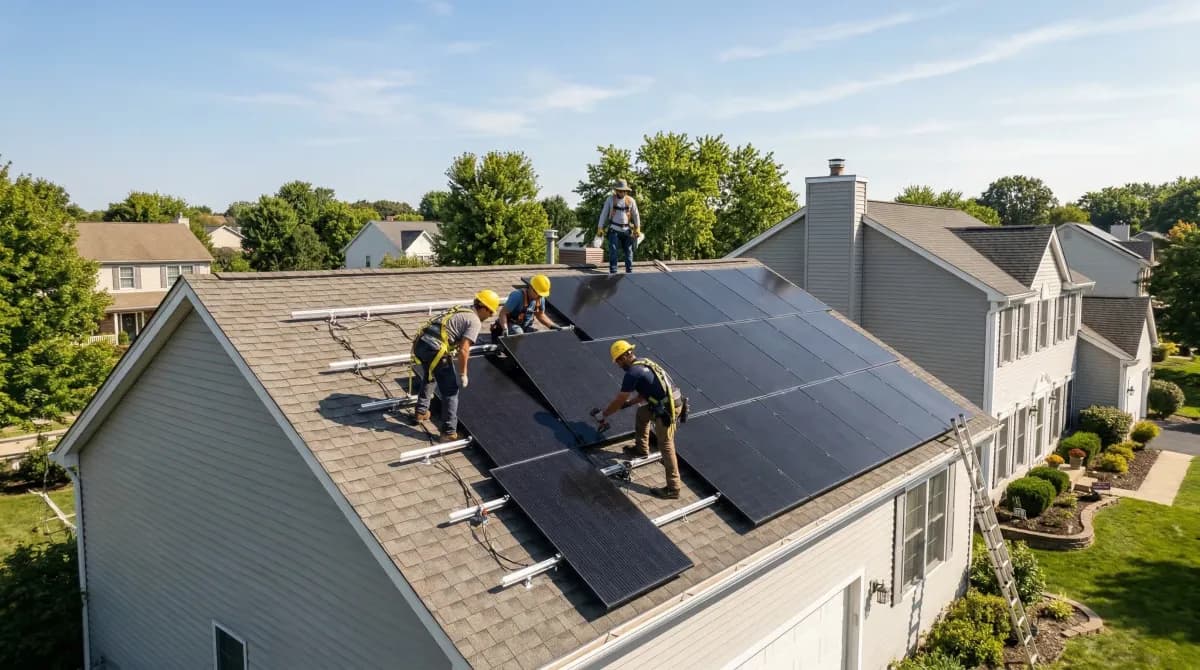
For most homes, a solar project runs about 2-4 months from the day you sign to the day the utility grants Permission to Operate — sometimes faster. The crew is only on your roof for about 1-3 days. Almost all the remaining time is permitting and the utility's interconnection queue, which no installer controls, so timelines vary by town and utility.
Seven real phases, from the first design to power-on. Most of the wait is permitting and the utility's interconnection queue — the on-roof work is surprisingly fast.
Tap any phase to see what you do, what NuWatt does, and how long it usually takes.
We turn your roof, shading, and about a year of energy usage into a system design and a clear proposal — with honest 2026 numbers and no expired federal credit baked in.
Signature to power-on: about 2–4 months for most homes
Sometimes faster. The crew is only on your roof for 1–3 days of that — almost all the remaining calendar time is permitting and the utility's interconnection queue, which no installer controls. Want to see what's slowing things down where you live? Check interconnection delays by utility.
Start your projectA legitimate solar installer in 2026 will never do these things.
Section 25D expired Dec 31, 2025. Any company still showing this credit is either ignorant or dishonest.
High-pressure sales tactics signal a company that profits from confusion, not quality. You have a legal right to cancel within 3 days.
If the company that sells you the system hands off installation to an unknown subcontractor, warranty accountability is murky.
Code requires structural verification for most rooftop solar. Skipping this step risks roof damage and failed inspection.
Standard practice is 10-20% deposit, balance at completion. Full prepayment eliminates your leverage if problems arise.
Your installer should clearly explain your state-specific net metering rate and how credits appear on your utility bill.
Real pricing without the expired federal tax credit.
| System Size | 2026 Cost Range | Typical Panels | Homes Best For |
|---|---|---|---|
| 5 kW | $14,250-$17,000 | 12-13 | Small home, low usage |
| 8 kW | $22,800-$27,200 | 18-20 | Average home |
| 10 kW | $28,500-$34,000 | 23-25 | Larger home, EV charger |
| 15 kW | $42,750-$51,000 | 34-38 | High usage, heat pump + EV |
Costs shown are pre-state-incentive. Ranges reflect NuWatt's 9-state service area. See state-by-state solar costs for your exact market.
State-by-state pricing without the federal tax credit
Read guideHow to access the only federal incentive left — before July 4
Read guideHow a third-party owner unlocks the 30% ITC for you
Read guideNeed a new roof first? Estimate combined reroof + solar cost
Read guideHow to evaluate solar companies and avoid scams
Read guideHonest analysis without the ITC — state by state
Read guideNuWatt handles everything from site assessment to PTO — dedicated local crews, honest 2026 pricing. Free consultation with no obligation.