Loading NuWatt Energy...

We use your location to provide localized solar offers and incentives.
We serve MA, NH, CT, RI, ME, VT, NJ, PA, and TX
Loading NuWatt Energy...
NuWatt designs, installs, and manages solar, battery, heat pump, and EV charger systems across 9 states. One company, one warranty, one point of contact.
Get a Free QuoteYour inverter converts DC power from solar panels into AC power your home can use. It is the brain of your system, and the wrong choice can cost you 15-30% of your production over 25 years. Here is an honest, data-backed comparison of all three types.
Quick Answer
For most homes, microinverters (like the Enphase IQ8HC) are the best choice because they offer panel-level monitoring, 25-year warranty, shade tolerance, and no single point of failure. String inverters save $1,200-$2,000 upfront but typically need replacement at year 10-15. Power optimizers (SolarEdge) are the best option when integrated battery storage is a priority.
Micro Warranty
25 yr
Enphase IQ8
String Warranty
12 yr
typical brand
Cost Difference
$1,200-$2K
8 kW system
Shade Loss
25-50%
string vs 0% micro
Solar panels produce direct current (DC) electricity. Your home, appliances, and the electrical grid all run on alternating current (AC). The inverter is the device that converts DC to AC, making your solar power usable. Without it, your panels would generate electricity you cannot use.
But the inverter does more than just convert power. It also handles maximum power point tracking (MPPT), which continuously adjusts the electrical load to extract the maximum possible power from each panel. It monitors system performance, reports production data to your monitoring app, and manages safety features like rapid shutdown (required by NEC 2020 for firefighter safety).
The inverter is the most failure-prone component in a solar system
Solar panels are solid-state with no moving parts and routinely last 30+ years. Inverters contain capacitors and other electronics that degrade with heat cycling. String inverters typically last 10-15 years. Microinverters, being smaller and distributed, experience less thermal stress and carry 25-year warranties.
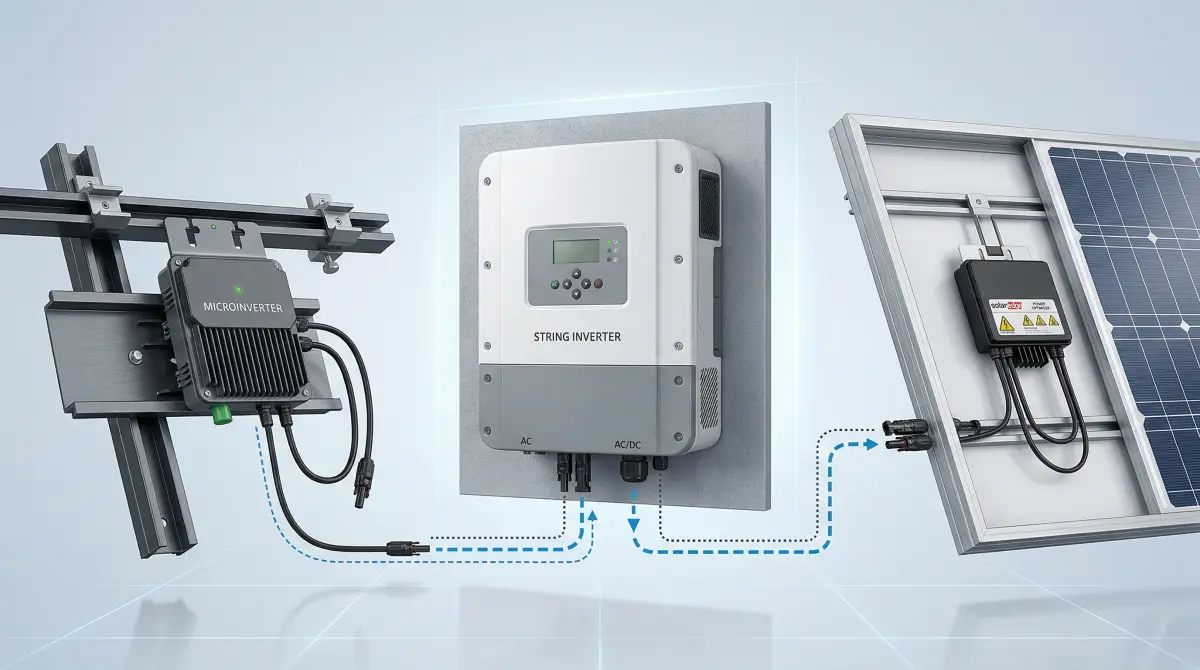
There are three main types of solar inverters for residential systems: string inverters, microinverters, and power optimizers (which pair with a central inverter). Each handles the DC-to-AC conversion differently, with significant implications for cost, performance, monitoring, and long-term reliability.
A string inverter is the oldest and simplest solar inverter technology. Your panels are wired in series (like Christmas lights) into “strings” of 8-12 panels. All strings connect to a single inverter box, typically mounted on your exterior wall or in your garage. The inverter converts the combined DC power from all panels into AC power for your home.
Advantages
Disadvantages
The “Christmas Light” Problem
Because panels in a string are wired in series, the weakest panel dictates the performance of the entire string. If one panel produces 20% less power due to shade, dirt, or a defect, every panel in that string is limited to that lower current. On a 10-panel string, one shaded panel can reduce total string output by 25-50%, not just 10%.
A microinverter is a small device (about the size of a paperback book) mounted on the racking behind each solar panel. Each panel gets its own dedicated microinverter that converts DC to AC right at the panel. AC power then flows through standard home wiring to your electrical panel. There is no central inverter box.

Advantages
Disadvantages
Real-world performance beats peak efficiency
String inverters have slightly higher peak efficiency (98% vs. 97.5%), but microinverters consistently outperform in real-world conditions. Why? Because peak efficiency assumes every panel is receiving identical, optimal sunlight. In practice, panels face different angles, temperatures, shading patterns, and soil levels. Microinverters optimize each panel individually, resulting in 5-25% more annual energy harvest depending on your specific conditions.
Power optimizers are DC-to-DC converters mounted on each panel, similar to microinverters. But instead of converting DC to AC at the panel, they condition and optimize the DC power before sending it to a central string inverter. SolarEdge is the dominant manufacturer of this technology.
Think of it as a hybrid approach: you get the panel-level optimization and monitoring of microinverters, but you still have a central inverter doing the DC-to-AC conversion. This means you still have a single point of failure (the central inverter) with a shorter warranty, but you gain the panel-level benefits at a lower cost than full microinverters.
Advantages
Disadvantages
The battery integration advantage
The SolarEdge Home Hub is genuinely compelling for battery storage. It combines solar inverter and battery inverter into one unit, meaning you do not need a separate $2,500+ battery inverter. If you are installing solar and a battery at the same time, or plan to add a SolarEdge battery within 1-3 years, this saves real money. With Enphase microinverters, you need the IQ System Controller to add battery storage, which adds cost and complexity.
Every specification that matters, compared across all three inverter types as of March 2026.
| Feature | Microinverter | String Inverter | Power Optimizer |
|---|---|---|---|
| How It Works | One inverter per panel converts DC to AC at the panel | Panels wired in series; one central box converts all DC to AC | DC optimizer per panel feeds conditioned DC to a central inverter |
| Cost (Inverter Only) | $0.30-$0.45/W | $0.10-$0.20/W | $0.25-$0.35/W |
| Cost Premium (8 kW) | +$0 (baseline) | -$1,200 to -$2,000 savings | -$400 to -$800 savings |
| Warranty | 25 years | 12 years (inverter) | 25 years (optimizer) + 12 years (inverter) |
| Panel-Level Monitoring | Yes - per panel | No - system level only | Yes - per panel |
| Shade Performance | Excellent - isolated per panel | Poor - one shaded panel affects entire string | Good - optimizers mitigate but central inverter limits |
| System Expansion | Easy - add panels with their own microinverter | Difficult - may need a new inverter | Moderate - add optimizers but inverter must support capacity |
| Single Point of Failure | No - one failure affects one panel only | Yes - inverter failure stops entire system | Yes - central inverter failure stops entire system |
| Battery Integration | Requires separate battery inverter (Enphase IQ Battery) | Requires separate battery inverter | Built-in with SolarEdge Home Hub |
| Peak Efficiency | 97.5% (IQ8HC) | 98-99% | 99.5% (optimizer) + 97.5% (inverter) |
| Monitoring App | Enphase Enlighten | Varies by brand | mySolarEdge |
| Rapid Shutdown | Built-in compliance | Requires add-on modules ($200-$400) | Built-in compliance |
We offer two inverter options. Every NuWatt system includes panel-level monitoring, rapid shutdown compliance, and professional installation by NABCEP-certified crews.
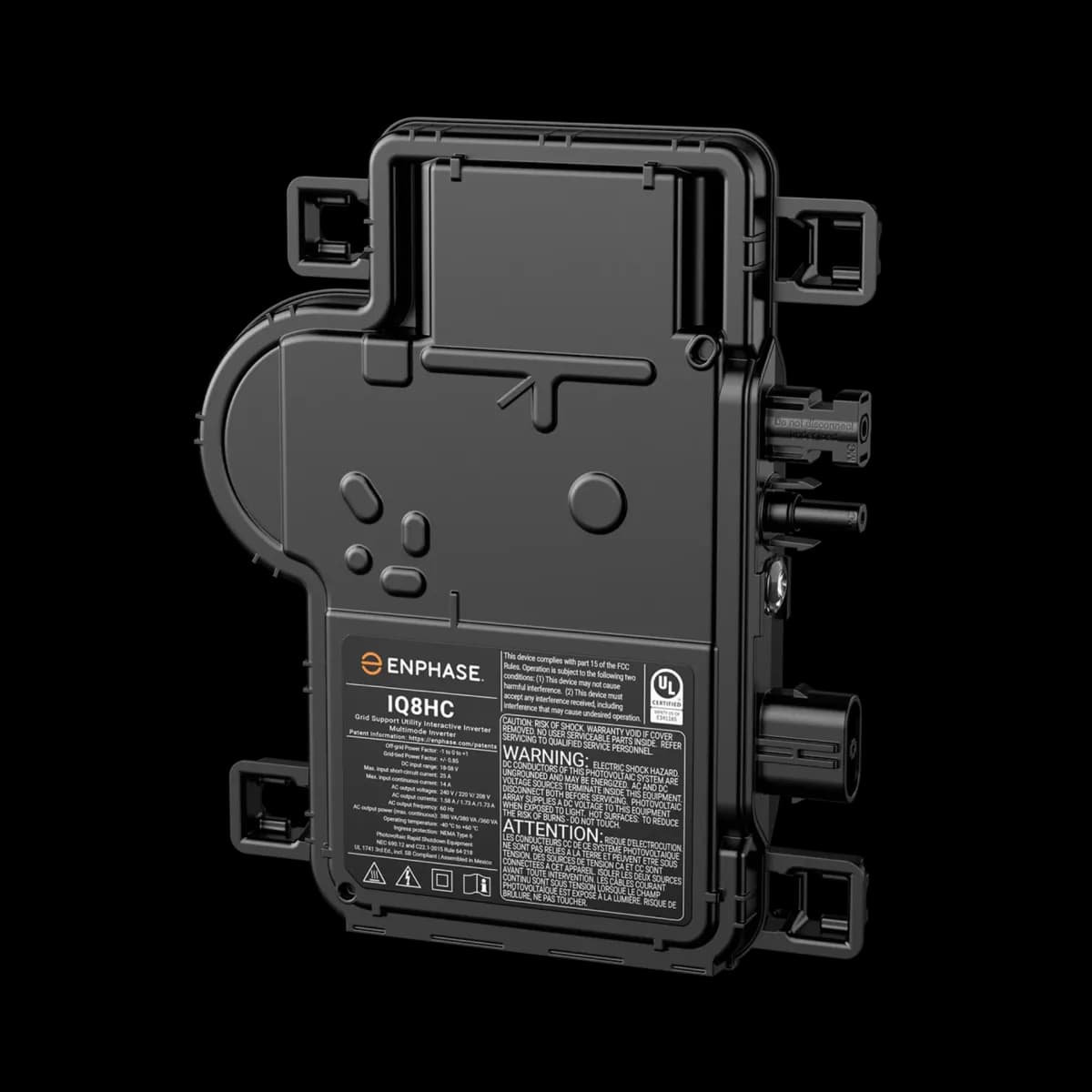
NuWatt installs Enphase IQ8HC microinverters as standard on every residential system. The 25-year warranty means your inverter will likely never need replacement. Panel-level monitoring through the Enphase Enlighten app lets you see exactly which panels are producing and catch issues immediately. And because each panel operates independently, shade on one panel does not drag down the rest of your system.
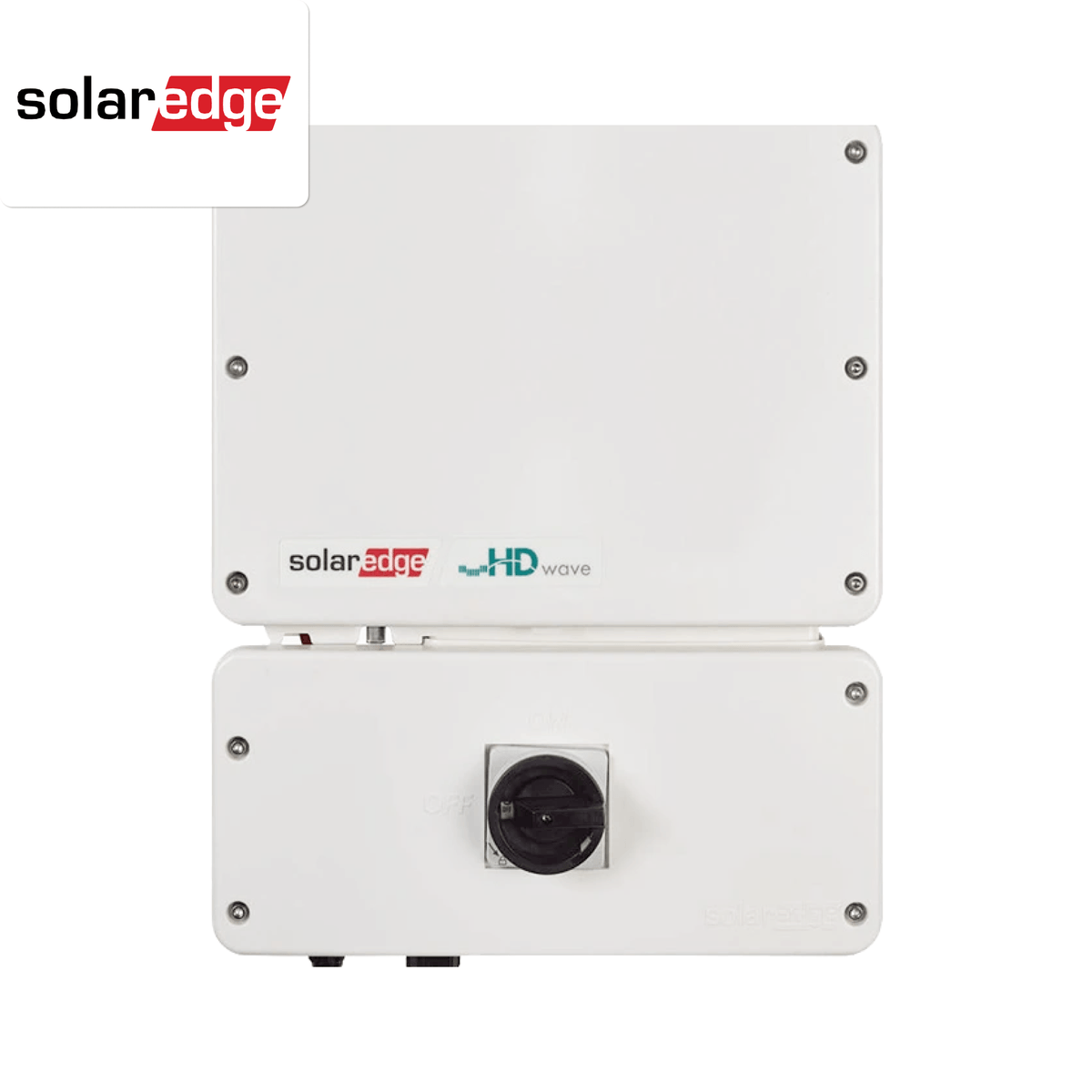
NuWatt offers the SolarEdge Home Hub as an alternative for homeowners who want integrated battery storage. The Home Hub combines solar inverter, battery inverter, and energy management in one unit. If you plan to add a SolarEdge battery (or already have one), this is the most cost-effective path. Each panel still gets a power optimizer for panel-level monitoring and shade mitigation.
Your roof, shade, budget, and battery plans determine the best choice. Here are the most common scenarios.
Shading on part of your roof
Each panel produces independently. A tree shading 3 panels loses only those 3 panels of production. With a string inverter, those 3 shaded panels could reduce the entire 20-panel string by 30-50%.
Complex roof with multiple orientations
Panels on south, east, and west roof faces receive sunlight at different times and intensities. Microinverters let each panel operate at its own optimal point. String inverters require matching panel orientations on each string.
Simple south-facing roof, no shade, budget-conscious
If your roof is simple, unshaded, and all south-facing, a string inverter saves $1,200-$2,000. However, you lose panel-level monitoring and the 25-year warranty. NuWatt recommends microinverters even in this scenario for the monitoring and warranty advantages.
Planning to add a battery within 1-3 years
The Home Hub has a built-in battery inverter. Adding a SolarEdge battery later requires no additional hardware, saving $2,500+ vs. adding a separate battery inverter to a microinverter system. If you know you want storage, this is the most cost-effective path.
Want to expand your system later
Adding panels to a microinverter system is straightforward: new panels + new microinverters, done. With a string inverter or SolarEdge system, expanding may require upsizing the central inverter, adding a second inverter, or reconfiguring strings.
Want the longest warranty and least maintenance
The 25-year microinverter warranty matches or exceeds panel warranty. String inverters typically need replacement at year 10-15 ($2,000-$3,500). Over a 25-year system life, the microinverter "premium" often pays for itself by avoiding a mid-life inverter replacement.
Monitoring is not a luxury feature. It is how you know your system is actually producing what it should. Without panel-level monitoring, a failed panel or a wiring issue could reduce your production for months without you knowing.

Used with Enphase IQ8HC microinverters
Used with SolarEdge Home Hub + power optimizers
A real-world monitoring story
One NuWatt customer with string inverter monitoring (system-level only) had a damaged panel that reduced output by 15% for 8 months before it was caught during an annual inspection. That cost approximately $200 in lost production. With panel-level monitoring (Enphase or SolarEdge), the alert would have triggered within 24 hours of the performance drop, and NuWatt would have dispatched a technician under warranty.
The cheapest inverter upfront is not always the cheapest over 25 years. Factor in replacement costs, production differences, and warranty coverage.
String Inverter
8 kW System
Plus potential production loss from shade, which varies by home
Microinverter
8 kW System
No mid-life replacement. Production optimized per panel.
Power Optimizer
8 kW System
Optimizer warranty is 25 yr, but central inverter still needs replacement
The microinverter “premium” is often an illusion
On an 8 kW system, microinverters cost $1,200-$2,000 more upfront. But when you factor in the $2,000-$3,500 string inverter replacement at year 12-15, rapid shutdown modules ($200-$400), and the production gains from panel-level optimization, microinverters often cost less over 25 years. That is why NuWatt installs them as standard on every residential system.
A microinverter is a small device mounted behind each solar panel that converts DC to AC power at the panel level. A string inverter is a single large box (usually wall-mounted in your garage or on an exterior wall) that converts DC to AC for the entire system. Microinverters allow each panel to operate independently, while string inverters require panels to work as a connected group.
For most homeowners, yes. Microinverters add $0.10-$0.25/W ($800-$2,000 for a typical system) but offer a 25-year warranty (vs. 12 years for string), panel-level monitoring, better shade performance, and no single point of failure. When you factor in the cost of replacing a string inverter at year 10-15 ($2,000-$3,500), microinverters often cost less over the system lifetime.
Power optimizers (like SolarEdge units) are DC-to-DC converters mounted on each panel. They condition the DC power before sending it to a central inverter. Unlike microinverters, they do not convert DC to AC at the panel. They offer panel-level monitoring and shade mitigation like microinverters, but still rely on a central inverter, creating a single point of failure.
NuWatt installs Enphase IQ8HC microinverters as standard on all residential systems. We also offer the SolarEdge Home Hub (string inverter with power optimizers) as an alternative, particularly for homeowners who want integrated battery storage. We do not install basic string inverters without optimizers because the monitoring and safety limitations do not meet our quality standards.
Both are excellent brands. Enphase microinverters are better for shade tolerance, system expansion, and long-term warranty (25 years, no central inverter to replace). SolarEdge is better for integrated battery storage (the Home Hub combines solar and battery inverter). NuWatt recommends Enphase for most installations and SolarEdge when battery integration is the priority.
With a string inverter, panels are wired in series. When one panel is shaded, it restricts current flow through the entire string, reducing output from all panels by 25-50%. With microinverters, each panel operates independently. A shaded panel loses its own production but does not affect the other panels. For a 20-panel system with 3 shaded panels, this can mean 15-30% more annual production from microinverters.
If one microinverter fails, only that one panel stops producing. The rest of your system continues operating normally. You will see the failure immediately in the Enphase Enlighten monitoring app. Under the 25-year warranty, Enphase ships a free replacement and NuWatt installs it. With a string inverter failure, your entire system goes down until it is repaired.
Yes. Enphase offers the IQ Battery 5P (3.84 kWh per unit, stackable) that integrates directly with IQ8 microinverter systems through the Enphase IQ System Controller. No separate battery inverter is needed. The SolarEdge Home Hub has a built-in battery inverter, which can be simpler if you are installing solar and battery at the same time.
As of March 2026, microinverters add approximately $0.30-$0.45/W to system cost, while string inverters cost $0.10-$0.20/W. For an 8 kW system, that is roughly $2,400-$3,600 for microinverters vs. $800-$1,600 for a string inverter, a difference of $1,200-$2,000. Power optimizers with a string inverter fall in between at $0.25-$0.35/W.
With microinverters, no. Each new panel gets its own microinverter, so you can add panels without changing any existing equipment. With a string inverter, you may need a larger inverter if the additional panels exceed its capacity. With SolarEdge, you can add optimizers but the central inverter must support the additional capacity.
NEC 2020 rapid shutdown requirements mandate that solar panel voltage drops to safe levels within 30 seconds when the system is shut down (for firefighter safety). Microinverters and SolarEdge power optimizers have built-in rapid shutdown compliance. Basic string inverters require add-on rapid shutdown modules ($200-$400), adding cost and complexity. All NuWatt installations meet NEC 2020 rapid shutdown requirements.
String inverters typically last 10-15 years, with most manufacturers offering a 12-year warranty. Replacing a string inverter costs $2,000-$3,500 including labor. Over a 25-year solar system life, you should budget for at least one inverter replacement. Microinverters carry a 25-year warranty and are designed to last the life of the system.
NuWatt engineers will analyze your roof, shade, and energy goals to recommend the optimal inverter configuration. Every quote includes Enphase IQ8HC microinverters as standard, with SolarEdge Home Hub as an option for battery integration.
Best Solar Panels & Inverters 2026
Full equipment breakdown: panels, inverters, and battery options.
How Many Solar Panels Do I Need?
Calculate the right system size based on your usage and roof.
Battery Backup Sizing Guide
Size your battery system for outage protection and bill savings.
Enphase Monitoring Troubleshooting
Fix common Enphase Enlighten app and connectivity issues.
Solar System Not Producing Enough?
Diagnose and fix production issues with your solar system.
Expand Your Existing Solar System
Add panels, batteries, or an EV charger to your current system.
Rapid Shutdown Requirements 2026
NEC 2020 compliance, equipment, and what it means for your install.
Solar Panel Lifespan & Warranty
How long solar panels last and what your warranty actually covers.
Solar Cost by State 2026
Updated $/W pricing for all 10 NuWatt states with no ITC.