
Loading NuWatt Energy...
We use your location to provide localized solar offers and incentives.
We serve MA, NH, CT, RI, ME, VT, NJ, PA, and TX
Loading NuWatt Energy...
NuWatt designs, installs, and manages solar, battery, heat pump, and EV charger systems across 9 states. One company, one warranty, one point of contact.
Get a Free Quote
The REC Alpha Pure-RX 460W is the highest-wattage panel in NuWatt's residential lineup. With the best temperature coefficient in class (-0.24%/°C), lowest degradation (0.25%/yr), and 460W per panel, it delivers the most lifetime kWh per square foot. Here's whether the premium is worth it.

460W
Wattage
22.5%
Efficiency
-0.24%/°C
Temp Coefficient
~92%
Year 25 Output
The REC Alpha Pure-RX 460W is a premium-tier residential solar panel built on N-type HJT (heterojunction) cells with REC's proprietary split-cell architecture. It is the direct descendant of the technology REC manufactured for Panasonic's EverVolt line — same HJT DNA, higher output.
Complete technical specifications for the REC Alpha Pure-RX 460W solar panel. All values from REC's official datasheet under Standard Test Conditions (STC: 1000 W/m², 25°C, AM 1.5).
| Specification | Value |
|---|---|
| Model | REC Alpha Pure-RX 460 |
| Rated Power | 460W |
| Efficiency | 22.5% |
| Cell Type | N-type HJT, 132 half-cut split-cell |
| Temp Coefficient (Pmax) | -0.24%/°C |
| Annual Degradation | 0.25%/yr |
| Year 25 Output | ~92% of rated power |
| Warranty | 25-yr ProTrust (product + performance) |
| Dimensions | 1821 × 1016 × 30 mm (71.7 × 40.0 × 1.18 in) |
| Weight | 22.5 kg (49.6 lbs) |
| Voc / Isc | 44.0V / 13.53A |
| Vmp / Imp | 37.2V / 12.37A |
| Bifacial | No (mono-facial) |
| Certifications | IEC 61215, IEC 61730, UL 61730 |
| Manufacturing | Singapore |
| FEOC Compliant | No |
REC's Alpha Pure-RX uses Heterojunction (HJT) cells with a proprietary split-cell architecture. HJT combines crystalline silicon with amorphous silicon thin films, creating a cell that handles heat and shade significantly better than conventional PERC or even standard TOPCon cells.

At -0.24%/°C, the REC 460W loses less power per degree of heat than any other panel in our lineup. On a 95°F roof (cell temp ~145°F), a standard PERC panel (-0.34%/°C) loses ~15% of rated output. The REC loses only ~10.5%. That 4.5% gap translates to meaningful production gains over 25 years.
HJT cells degrade at just 0.25% per year — tied with Silfab for the lowest in our lineup. After 25 years, you still get ~92% of day-one output vs ~87% for TOPCon (Hyundai) and ~86% for PERC. Over the system lifetime, that 5-6% gap means thousands of additional kWh produced.
HJT cells have near-zero LID and LETID (Light and Elevated Temperature Induced Degradation). Standard PERC panels lose 1-3% in the first year from LID. The REC 460W produces at its full rated 460W from day one — no "break-in" period.
REC's split-cell design divides each cell into two halves, creating independent current paths. When shade falls on part of the panel, only the affected half-cell reduces output — the other half continues producing normally. This cuts shade losses by up to 50% compared to full-cell designs.
Both HJT and TOPCon are N-type cell technologies — a significant upgrade over older PERC cells. TOPCon (used by Hyundai and Silfab) offers good efficiency at lower manufacturing cost, making it the price-performance champion. HJT (used by REC) adds amorphous silicon thin films for superior temperature performance and degradation resistance, but costs more to produce. Think of TOPCon as a modern sedan and HJT as a luxury sedan — both are excellent, but HJT has the edge on refinement.
The REC Alpha Pure-RX 460W excels in two real-world conditions that matter most for New England homeowners: hot summer days and partial shade. Here is how those advantages translate to actual energy production.

Solar panels lose efficiency as they heat up. On a typical summer day, rooftop cell temperatures can reach 65°C (149°F) — that is 40°C above the 25°C STC rating baseline. Here is how the three panels in NuWatt's lineup compare at that temperature:
REC 460W (-0.24%/°C)
-9.6%
~416W actual output
Hyundai 440W (-0.26%/°C)
-10.4%
~394W actual output
Silfab 440W (-0.29%/°C)
-11.6%
~389W actual output
At peak summer heat, the REC 460W produces 22W more than Hyundai and 27W more than Silfab — per panel. On a 16-panel system, that is 352-432W more total output during the hottest hours when electricity is most expensive (peak time-of-use rates).
REC's split-cell design divides each cell into two independent halves. When a tree branch, chimney shadow, or dormer casts shade on part of a panel, only the affected half-cells reduce output — the unshaded half continues producing normally. Combined with Enphase IQ8 panel-level optimization, the REC 460W minimizes shade losses better than any other panel in our lineup.
For homes with some shade, this means the REC 460W can produce 10-15% more annual energy than a standard full-cell panel in the same position. If your roof has nearby trees or partial obstructions, this advantage alone can justify the premium.
Degradation rate determines how much power your panels still produce after decades on the roof. Lower is better — and this is where HJT technology truly separates itself.
| Panel | Degradation | Year 10 | Year 25 |
|---|---|---|---|
| REC 460W | 0.25%/yr | ~97.5% | ~92% |
| Silfab 440W | 0.25%/yr | ~97.5% | ~92% |
| Hyundai 440W | 0.40%/yr | ~96.0% | ~87.4% |
Both REC and Silfab tie at 0.25%/yr — the best available. Over 25 years, each panel retains ~92% of rated output. Hyundai's 0.40%/yr degradation means it drops to ~87.4%, losing an additional 4.6% of production over the system's lifetime. On a 10 kW system, that difference amounts to roughly 1,200 additional kWh per year by Year 25.
NuWatt offers three panel tiers. Here is how they compare on every metric that matters. The REC 460W leads in wattage, efficiency, and temperature performance — but the other two have their own strengths.
| Spec | REC AlphaPREMIUM | Hyundai HiE-S440VG | Silfab SIL-440-BG |
|---|---|---|---|
| Wattage | 460W | 440W | 440W |
| Efficiency | 22.5% | 22.0% | 22.0% |
| Temp Coefficient | -0.24%/°C | -0.26%/°C | -0.29%/°C |
| Cell Type | N-type HJT split-cell | N-type TOPCon | N-type TOPCon |
| Degradation | 0.25%/yr | 0.40%/yr | 0.25%/yr |
| Year 25 Output | ~92% | ~87.4% | ~92% |
| Warranty | 25-yr ProTrust (product + perf) | 25-yr product + 25-yr performance | 30-yr product + 30-yr performance |
| Price | +$0.19/W premium | Baseline | +$0.05/W |
| Origin | Singapore | South Korea | USA (Washington state) |
| FEOC Compliant | No | Yes | Yes |
The REC Alpha Pure-RX 460W is our premium panel tier. It costs more than the Hyundai 440W (baseline) and Silfab 440W (mid-tier), but delivers measurably more lifetime energy production.
Baseline
Solid N-type TOPCon with FEOC compliance. Best price per watt. Good for budget-conscious systems on large roofs.
+$0.05/W
USA-made, 30-year warranty, 0.25%/yr degradation, FEOC compliant. The balanced choice for most homeowners.
+$0.19/W
Highest wattage, best temp coefficient, HJT split-cell. Maximum lifetime kWh per panel. Not FEOC compliant.
For a typical 8 kW system, choosing REC over Silfab adds approximately $1,500 to your total cost. For a 10 kW system, the difference is roughly $1,900. Here is what that extra investment buys:
The premium typically pays for itself within 8-10 years through higher per-panel production (460W vs 440W), better hot-weather performance, and lower long-term degradation.
No federal tax credit for cash/loan purchases. The Section 25D residential solar tax credit expired December 31, 2025. If purchasing with cash or a loan, you receive $0 in federal tax credits regardless of which panel you choose. Third-party ownership (lease/PPA) can still access the Section 48/48E commercial ITC at 30% for projects starting before July 4, 2026.
The REC Alpha Pure-RX 460W is our premium recommendation, but it is not the right panel for every situation. Here is who benefits most and who should consider alternatives.
Space-constrained roofs
Fewer panels needed — 460W per panel means maximum output from limited space.
Homes with partial shade
Split-cell design minimizes shade impact by up to 50%.
Hot climate zones
Best temp coefficient means 2-5% more production during summer peaks.
Long-term homeowners
0.25%/yr degradation maximizes 25-year cumulative production.
Cash or loan buyers not needing FEOC
If you are paying cash or using a standard loan (not Propel), FEOC does not apply.
You need Propel $0 Down financing
REC is NOT FEOC compliant. Choose Silfab 440W (USA) or Hyundai 440W (S. Korea).
Budget is the primary concern
Hyundai 440W saves $0.24/W — roughly $2,000 on a 10 kW system.
You want the longest warranty
Silfab offers 30 years vs REC's 25 years.
You prefer US-manufactured panels
Silfab is made in Washington state. REC is made in Singapore.
You have a large, unshaded roof
On big, sun-drenched roofs, the shade and efficiency advantages of REC matter less.
The REC Alpha Pure-RX 460W is manufactured in Singapore and does not meet Foreign Entity of Concern (FEOC) requirements. This means:
If you need FEOC-compliant panels, choose the Silfab 440W (USA-made) or Hyundai 440W (South Korea). Both are fully FEOC compliant.
Learn more about the FEOC deadline and what it means for your solar project
Our NABCEP-certified installation teams have been working with REC Alpha panels since 2023. Here are practical observations from the field.
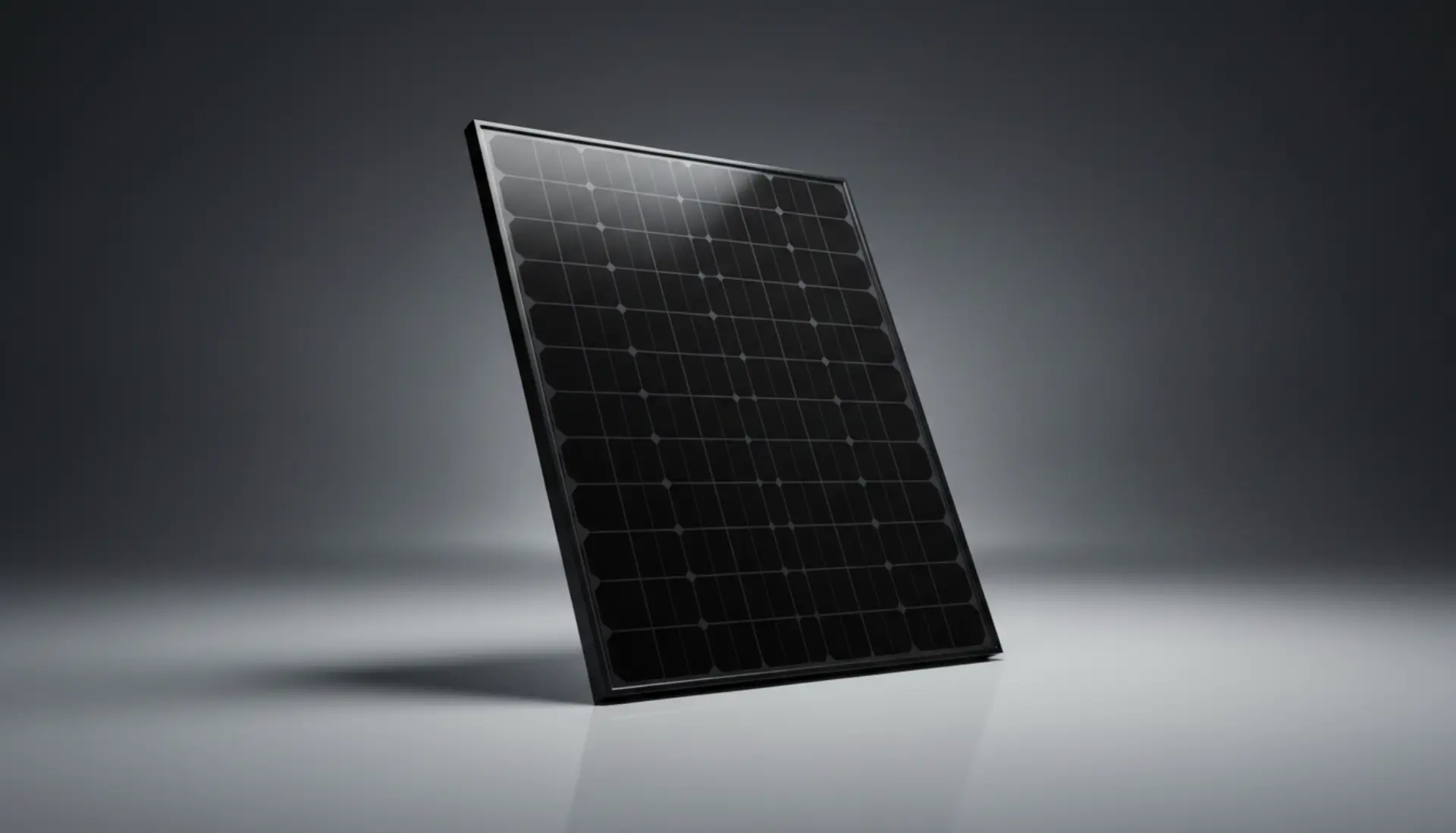
At 1821 × 1016 mm, the REC 460W is slightly wider than the Silfab 440W and Hyundai 440W. On tight roofs, measure carefully — you may fit one fewer panel per row. However, the higher wattage per panel often compensates.
At 49.6 lbs, the REC 460W is within normal range. No special racking or structural reinforcement needed beyond standard residential mounts.
The Voc of 44.0V and Imp of 12.37A pair cleanly with Enphase IQ8+ and IQ8M microinverters. No clipping concerns at standard string lengths.
The Alpha Pure-RX has a sleek all-black appearance (black frame, dark cells, dark backsheet) that looks premium on any roof. Most homeowners prefer the uniform look over silver-frame alternatives.
REC Group has a unique pedigree in the solar industry — founded in Norway, manufacturing in Singapore, acquired by India's Reliance Industries. Here is the journey from Nordic startup to global premium panel brand.
Renewable Energy Corporation (REC) founded in Sandvika, Norway. Begins as a polysilicon and wafer manufacturer for the global solar industry.
REC expands from raw materials into solar cell and module manufacturing. Builds factories in Norway and Singapore, establishing a reputation for quality and innovation.
REC concentrates solar panel manufacturing at its state-of-the-art facility in Tuas, Singapore. Achieves some of the highest automation levels in the solar industry.
REC introduces the Alpha Series — the world's first 60-cell panel to break 380W using HJT cells. Sets a new standard for residential panel efficiency.
India's Reliance Industries (owner Mukesh Ambani) acquires REC Group for $771M. Brings massive capital backing while REC retains Norwegian engineering leadership and Singapore manufacturing.
REC Group begins manufacturing Panasonic's EverVolt panels using shared HJT technology. Panasonic's exit from manufacturing makes REC the de facto successor.
REC launches the Alpha Pure-RX series with improved split-cell HJT architecture. The 460W model achieves 22.5% efficiency with the industry's best -0.24%/°C temperature coefficient.
With Panasonic's full exit from solar in April 2025, REC becomes the go-to premium HJT panel for residential installers. Backed by Reliance's $240B market cap.
When you buy a solar panel, you are trusting the manufacturer to honor a 25-year warranty. REC Group is backed by Reliance Industries, an Indian conglomerate with a market capitalization exceeding $240 billion. Compare that to SunPower (bankrupt in 2024) or Panasonic (exited solar in 2025). REC's financial backing is among the strongest in the entire solar industry — your warranty is as solid as it gets.
Get an instant solar estimate for your home. Our tool calculates your system size, production, and pricing — including the REC 460W option. Takes 2 minutes, no commitment.