
Massachusetts Solar Interconnection Queue 2026
Your solar panels are installed, but you cannot turn them on until your utility says so. Here is exactly how long that takes in Massachusetts, by utility, with the steps, delays, and strategies that actually move the needle.

Quick Answer
Solar interconnection in Massachusetts takes 4 to 12 weeks depending on your utility, system size, and local grid conditions. Simple residential systems under 25 kW on healthy transformers are fastest. Complex systems, areas with high solar saturation, or applications requiring impact studies can take 16 to 20 weeks or more. The biggest factor you can control is submitting a complete, accurate application the first time.
What Is Solar Interconnection?
Solar interconnection is the formal process of connecting your rooftop solar system to the utility electrical grid. It is not optional. Every grid-tied solar installation in Massachusetts must complete interconnection before the system can legally generate and export electricity.
Without interconnection approval, you cannot participate in net metering (which credits you for exported energy at retail rates) or enroll in the SMART program (which pays you $0.03/kWh for every kilowatt-hour your system produces over 20 years). The interconnection process verifies that your system meets safety standards, that the local grid can handle the additional generation, and that proper metering is in place to track your energy flows.
The process is managed entirely by your utility — Eversource, National Grid, Unitil, or your local Municipal Light Plant (MLP). Your solar installer submits the application on your behalf, but the utility controls the review timeline. That timeline varies significantly depending on which utility serves your address.
Federal Residential Solar Tax Credit (Section 25D) Expired
The 30% residential ITC expired December 31, 2025. Homeowners who purchase solar with cash or a loan receive $0 in federal tax credits. Interconnection timelines are separate from tax considerations, but be aware that any company quoting you a price “after the 30% credit” is using outdated information. The only remaining federal credit pathway is through a lease or PPA where the third-party system owner claims the Section 48/48E commercial ITC.
Wait Times by Utility (2026)
Current interconnection timelines for Massachusetts investor-owned utilities and MLPs. “Simple” = residential systems under 25 kW. “Complex” = systems over 25 kW or those requiring additional engineering review.
| Utility | Simple (≤25 kW) | Complex (>25 kW) | Current Backlog | Pro Tip |
|---|---|---|---|---|
| Eversource Eastern & Western MA | 4-6 weeks | 8-16 weeks | Moderate | Submit complete application in one shot — resubmissions restart the clock |
| National Grid Central & Western MA | 4-8 weeks | 10-20 weeks | Heavy in Western MA | Request a pre-application consultation for systems near transformer limits |
| Unitil Fitchburg & surrounding | 3-5 weeks | 6-10 weeks | Light | Smallest utility territory in MA — fastest processing times |
| Municipal Light Plants (MLPs) 40+ towns (Peabody, Braintree, Wellesley, etc.) | Varies widely | Case-by-case | Unpredictable | Contact your MLP directly before committing — each has its own rules and net metering policy |
Eversource
Eastern & Western MA
Simple (≤25 kW)
4-6 weeks
Complex (>25 kW)
8-16 weeks
Submit complete application in one shot — resubmissions restart the clock
National Grid
Central & Western MA
Simple (≤25 kW)
4-8 weeks
Complex (>25 kW)
10-20 weeks
Request a pre-application consultation for systems near transformer limits
Unitil
Fitchburg & surrounding
Simple (≤25 kW)
3-5 weeks
Complex (>25 kW)
6-10 weeks
Smallest utility territory in MA — fastest processing times
Municipal Light Plants (MLPs)
40+ towns (Peabody, Braintree, Wellesley, etc.)
Simple (≤25 kW)
Varies widely
Complex (>25 kW)
Case-by-case
Contact your MLP directly before committing — each has its own rules and net metering policy
Western Massachusetts Is the Bottleneck
National Grid territories in Western MA are experiencing the longest interconnection delays in the state. High residential solar adoption rates in towns like Amherst, Northampton, and Greenfield have pushed many local transformers to capacity. If you are in this region, factor in a potentially longer timeline and ask your installer about transformer loading before signing a contract.
The Interconnection Process Step-by-Step
From application submission to Permission to Operate — what happens at each stage and how long it typically takes.
Installer Submits Application
1-3 daysYour solar installer prepares and submits the interconnection application to your utility. This includes a single-line electrical diagram, site plan, equipment specifications (inverter make/model, panel wattage), and proof of electrical permit. Most installers handle this entirely.
Utility Reviews Application
2-6 weeksThe utility engineering team reviews your application for grid capacity, transformer loading, voltage regulation, and safety compliance. For simple residential systems (under 25 kW on a healthy transformer), this is often a desk review. Larger systems or areas with high solar saturation may require a more detailed engineering assessment.
Approval or Impact Study
0-12 weeks (if study required)If the system passes the initial review, you receive conditional approval. If the utility identifies concerns (transformer capacity, feeder line loading, or voltage issues), they may require a supplemental review or a full impact study. Impact studies add cost and time but are not common for typical residential systems.
Meter Swap / Installation
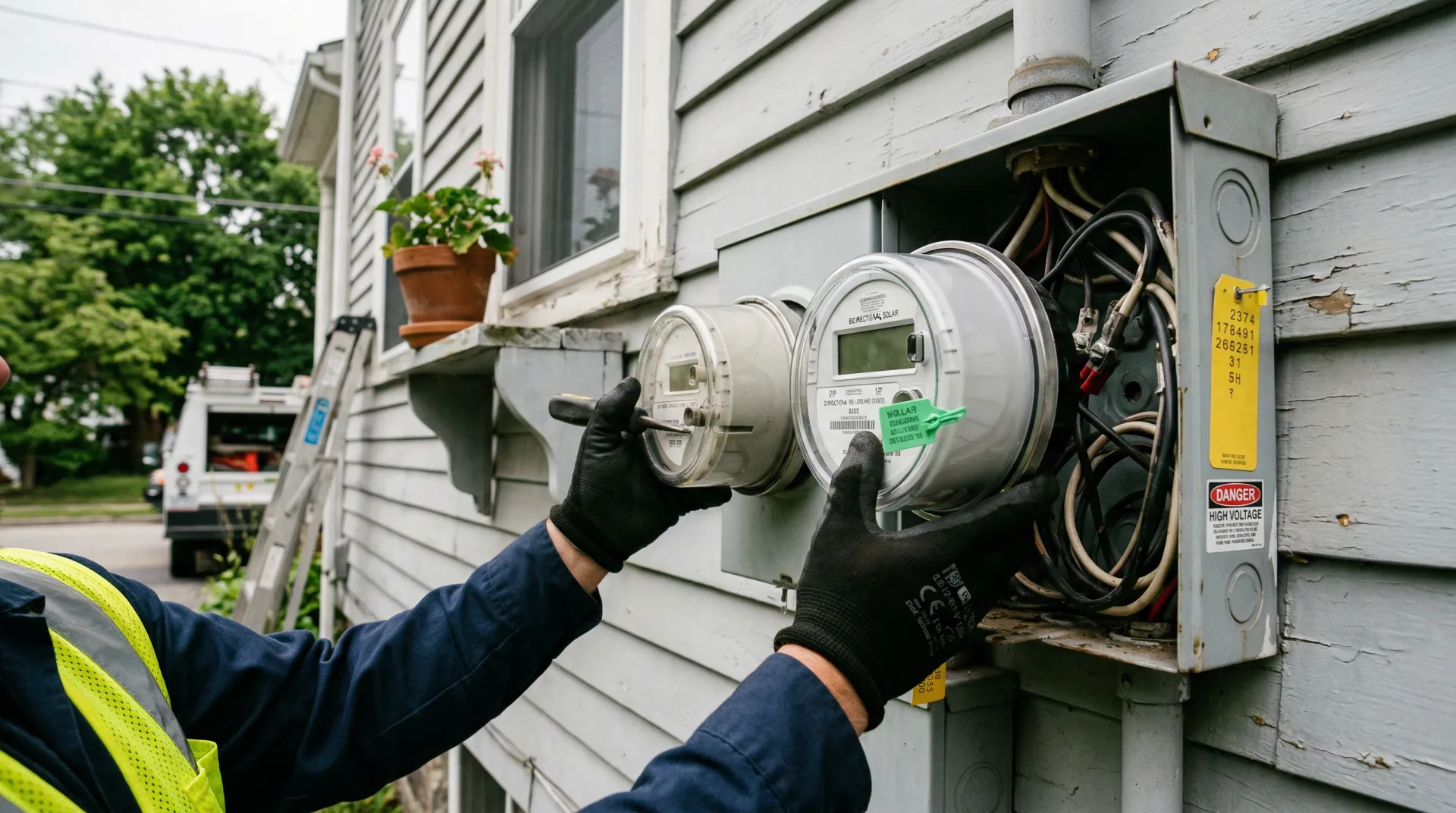
1-2 weeksOnce approved, the utility schedules a meter swap to install a bidirectional (net) meter that can track both energy consumed from the grid and energy exported by your solar system. In some cases, your existing smart meter already supports bidirectional measurement and only needs a configuration update.
Permission to Operate (PTO)
1-5 business days after meter swapThe utility issues your PTO letter, confirming your system is approved to generate power and export to the grid. Until you receive PTO, your system must remain off or in a non-exporting mode. Only after PTO can you begin earning net metering credits and SMART program income.
Total Timeline Summary
Best Case (Unitil, simple)
3-5 weeks
Typical (Eversource / NGrid)
6-10 weeks
Worst Case (study + upgrade)
16-30 weeks
Common Delays and How to Avoid Them
Most interconnection delays are preventable. Here are the six most common causes and what you can do about each one.
Incomplete Application
High ImpactMissing single-line diagrams, incorrect inverter specs, or unsigned forms force the utility to reject and return the application. Each resubmission restarts the review window.
How to avoid this:
Choose an installer with a track record of first-pass approvals. Ask their approval rate.
Transformer Upgrade Needed
High ImpactIf your neighborhood transformer is already at or near capacity (common in areas with high solar adoption), the utility may require a transformer upgrade before your system can connect. This is the single biggest cause of months-long delays.
How to avoid this:
Ask your installer to check the transformer loading before signing a contract. A pre-application inquiry to the utility can reveal this early.
Panel Capacity Limitations
Moderate ImpactHomes with 100-amp electrical panels may need an upgrade to 200 amps before solar can be installed. While this is an electrical issue (not a utility issue), it can stall the interconnection timeline if discovered late.
How to avoid this:
Have your installer verify your panel amperage during the initial site visit, not after the application is submitted.
Peak Season Backlogs
Moderate ImpactSpring and early summer see the highest volume of interconnection applications as homeowners rush to install before peak production months. Utility review teams have finite capacity, and queue times lengthen significantly from March through July.
How to avoid this:
Consider starting the process in late fall or winter. Installations in Q4 or Q1 typically see faster interconnection.
SMART Program Enrollment Bottleneck
Moderate ImpactSMART enrollment is a separate queue from interconnection. Even if your system is physically connected, SMART capacity blocks can be full in your utility territory, delaying when your production-based incentive payments begin.
How to avoid this:
Have your installer confirm SMART block availability in your territory before signing. Blocks can close unexpectedly.
Multiple Utility Touchpoints
Low ImpactSome applications bounce between utility departments — engineering, metering, billing — with no single point of contact. Each handoff introduces potential delays, especially at larger utilities.
How to avoid this:
Ask your installer to provide a named contact at the utility and weekly status updates.
Impact Studies: When, Why, and How Much
An impact study is a detailed engineering analysis that the utility performs when a proposed solar system raises concerns about grid stability or safety. Most residential systems under 15 kW do not require one. However, the percentage of applications triggering impact studies has been increasing in Massachusetts as solar adoption grows and local transformers approach capacity limits.
What Triggers One
- System size exceeds 25 kW
- Transformer already at high solar loading
- Rural feeder line with limited capacity
- Reverse power flow concerns at substation
Cost Range
Supplemental Review
$500 - $1,500
Full Impact Study
$1,500 - $5,000
Who Pays
Applicant (you or your installer) unless utility initiated
Timeline Impact
Supplemental Review
+2-4 weeks
Full Impact Study
+4-12 weeks
If Upgrade Required
+2-6 months
Can You Avoid an Impact Study?
In some cases, yes. Reducing your proposed system size to stay under the transformer threshold can eliminate the need for a study. Your installer should be able to estimate the available hosting capacity on your circuit by reviewing the utility’s hosting capacity map (available from Eversource and National Grid). Slightly downsizing a system from 12 kW to 10 kW, for example, can sometimes avoid a study entirely and save you months of waiting.
SMART Program Queue vs. Interconnection Queue
Many homeowners confuse SMART enrollment with interconnection. They are two separate processes with separate timelines. Interconnection gives you permission to connect to the grid. SMART gives you production-based incentive payments. You need both, and they do not necessarily happen at the same time.
Interconnection Queue
- Physical grid connection approval
- Managed by your utility
- Required to turn system on
- Timeline: 3-20 weeks
SMART Program Queue
- Incentive payment enrollment
- Managed by DOER / utility programs
- Required for $0.03/kWh payments
- Depends on capacity block availability
SMART 3.0 capacity blocks can fill without warning. Your installer should confirm available capacity in your utility territory before you sign a contract. If your block fills before enrollment, you may be placed on a waitlist for the next block opening. SMART pays $0.03/kWh flat rate for residential systems (under 25 kW) over a 20-year term. For an 11 kW system, that is approximately $396 per year in additional income beyond net metering.
Red Flags During Interconnection
Watch for these warning signs that your installer may not be equipped to handle Massachusetts interconnection properly.
Installer does not handle interconnection paperwork
A reputable installer manages the entire interconnection process. If they tell you to submit the application yourself, they either lack experience with MA utilities or are cutting corners.
No timeline estimate given before signing
Any experienced MA installer can estimate interconnection timelines for your specific utility and territory. Refusing to provide one suggests they have not done enough installations in your area.
Hidden upgrade fees appear after contract signing
Transformer upgrades, panel upgrades, and utility fees should be assessed before you sign. If these costs appear as surprise change orders mid-project, the installer skipped the pre-application check.
"You can use your system right away" claim
Operating your solar system before PTO is issued violates utility interconnection agreements and can result in penalties. Any installer who tells you to turn on the system before PTO is putting you at risk.
Installer cannot name which SMART block you will enroll in
SMART capacity blocks are specific and trackable. Your installer should tell you the exact block, its remaining capacity, and the timeline for enrollment confirmation.
What a Good Installer Does
A reputable Massachusetts installer handles every step of interconnection and SMART enrollment. They provide you with a realistic timeline before you sign, check transformer loading during the site assessment, and give you weekly updates on application status. They have a named contact at the utility and can tell you their first-pass approval rate. If they cannot answer these questions, keep looking.
Calculate Your Solar ROI While You Wait
While your interconnection application is in the queue, use this calculator to understand your true solar return on investment — with accurate 2026 pricing and no phantom 30% federal credit.
Massachusetts Solar ROI Calculator
Estimate your solar return on investment with SMART income, net metering credits, ConnectedSolutions, and MA tax benefits.
Federal Residential Solar Tax Credit (Section 25D) Expired
Homeowners who purchase solar with cash or a loan receive $0 in federal tax credits. Section 25D expired December 31, 2025.
Eastern MA (Boston, South Shore, Cape Cod, MetroWest, Western MA)
Eversource Energy — MA Solar Stats
Electric Rate
$0.28/kWh
Net Metering
1:1 retail credit (Class I ≤25 kW)
SMART 3.0 Rate
$0.03/kWh
Interconnection
2-4 weeks typical
Cost Breakdown
Savings Breakdown
20-year exemption — solar adds $0 to your property tax
Payback Period
7
years
25-Year Savings
$114,687
total
Monthly Benefit
$378
per month
Estimates based on average 2026 MA solar pricing, SMART 3.0 $0.03/kWh residential flat rate, 1:1 retail net metering, 6.25% sales tax exemption, 20-year property tax exemption, and 15% state tax credit (max $1,000). Section 25D residential ITC expired Dec 31, 2025 — $0 federal tax credit for cash/loan purchases.
Frequently Asked Questions
Can I speed up my solar interconnection in Massachusetts?
What if my transformer needs upgrading for solar?
Does adding a battery make interconnection more complex?
What about upgrading to a 200-amp panel for solar?
Can I use my solar system before receiving Permission to Operate?
How does the SMART program queue differ from the interconnection queue?
What triggers a utility impact study for solar?
Is interconnection wait time different for Eversource vs. National Grid?
Related Massachusetts Solar Guides
MA Solar Panel Cost 2026
Current pricing by city, utility, and system size.
SMART Program Guide 2026
How SMART 3.0 works, rates, enrollment, and capacity blocks.
Solar Company Red Flags
How to spot dishonest installers before you sign.
200-Amp Panel Upgrade Guide
When you need one, what it costs, and how it affects solar.