Loading NuWatt Energy...

We use your location to provide localized solar offers and incentives.
We serve MA, NH, CT, RI, ME, VT, NJ, PA, and TX
Loading NuWatt Energy...
NuWatt designs, installs, and manages solar, battery, heat pump, and EV charger systems across 9 states. One company, one warranty, one point of contact.
Get a Free QuoteThat cloud of steam is completely normal. Your heat pump is running its defrost cycle to melt frost off the outdoor coil. Here’s how it works, what to expect in Connecticut winters, and when you should actually worry.
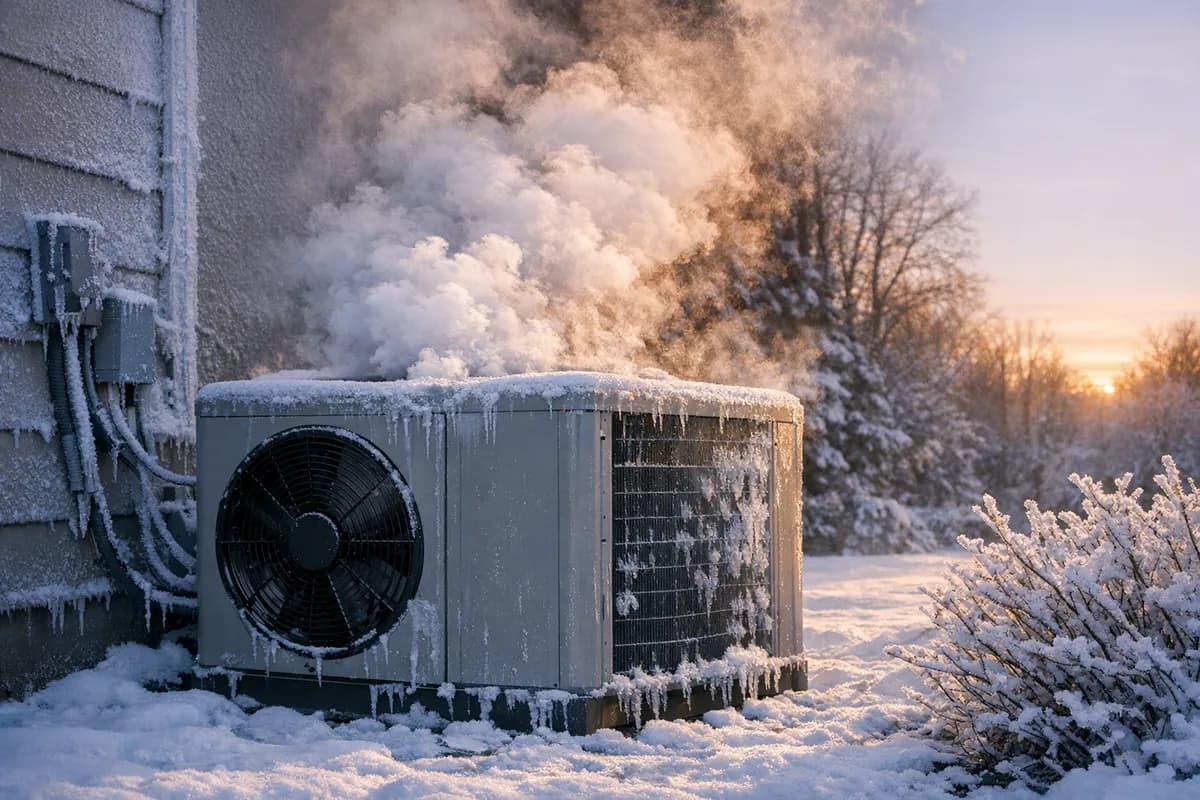
Every winter, thousands of Connecticut homeowners see steam rising from their heat pump for the first time and panic. The defrost cycle is a built-in feature of every heat pump. It runs automatically, lasts 1-10 minutes, and keeps your system running efficiently. You do not need to do anything — just let it work.
A step-by-step look at what happens during every defrost cycle.
As the heat pump extracts warmth from cold outdoor air, moisture condenses and freezes on the outdoor coil. This is unavoidable physics — any surface colder than the dew point collects frost.
Temperature and/or pressure sensors on the outdoor coil detect reduced airflow or abnormal pressure differentials, indicating significant frost buildup.
The system temporarily switches from heating to cooling mode, sending hot refrigerant gas through the outdoor coil to melt the frost. Your indoor unit briefly stops blowing warm air.
As the hot refrigerant melts the frost, you see a dramatic cloud of steam/vapor rising from the unit. The outdoor fan may stop. This is the most visible part of defrost and looks alarming but is completely normal.
Once the coil temperature rises above freezing (typically 57°F+), the system switches back to heating mode. The outdoor fan restarts and warm air flows indoors again.
CT winters bring everything from light frost to ice storms to nor’easters. Here’s what to expect from your heat pump in each scenario.
| Weather Condition | Defrost Frequency | Duration | Steam Amount | Notes |
|---|---|---|---|---|
| Light Frost (30-40°F, moderate humidity) | Every 60-90 minutes | 2-5 minutes | Light wisps | Most common in CT fall and early spring. Minimal impact on comfort or efficiency. |
| Heavy Frost (20-32°F, high humidity) | Every 30-60 minutes | 5-10 minutes | Visible cloud | Classic CT winter. Defrost cycles are more frequent but the system handles it well. |
| Freezing Rain / Ice Storm | Continuous or very frequent | 5-15 minutes | Large cloud, may hear water dripping | CT gets 2-4 significant ice events per winter. The unit works harder but should recover. If ice persists 24+ hours after the storm, call a technician. |
| Nor'easter (heavy snow, wind) | May not defrost effectively if coil is buried | N/A if buried | Reduced or none | Keep the area around the outdoor unit clear. Brush snow away gently (never chip ice). CT averages 2-5 nor'easters per winter. |
| Bitter Cold (below 10°F, dry air) | Less frequent (less moisture in cold air) | 2-5 minutes | Light | Very cold, dry air actually produces LESS frost. Northern CT (Litchfield Hills) may see more of this pattern. |
Well-intentioned actions that can damage your heat pump or cost you money.
You can puncture the thin aluminum coil fins or damage the refrigerant lines. A single puncture means a $500-$2,000 repair and refrigerant loss.
Thermal shock can crack components. The hot water refreezes quickly in CT cold, making the ice worse. It can also create a dangerous ice sheet on your walkway.
The heat pump NEEDS airflow to function. Covering it blocks the coil, traps moisture, and can cause the system to overheat or fail. CT homeowners sometimes cover units thinking it helps; it doesn't.
Emergency heat costs 3x more (COP 1.0 vs COP 3.0). Frost is NORMAL. Only use emergency heat if the outdoor unit has failed completely. At $0.27/kWh, unnecessary emergency heat adds $5-$15/day.
Persistent ice indicates a real problem: failed defrost control, low refrigerant, bad reversing valve, or blocked drain. Call a qualified technician — preferably an Energize CT HPIN-registered contractor.
Clear snow drifts, leaves, and debris. The outdoor unit needs airflow on all sides to exchange heat efficiently.
CT snow and ice accumulate at ground level. Risers keep the base pan clear and allow meltwater to drain.
Use a soft broom or your hand. Never use a shovel, ice scraper, or anything hard that could damage the fins.
Fall checkup before CT winter ensures defrost sensors, refrigerant levels, and the reversing valve are all working.
Make sure snow hasn't drifted against or over the unit. Clear a path for airflow. The unit should resume defrost once airflow is restored.
After a storm passes and temperatures rise above freezing, the unit should clear within hours. If it doesn't, something is wrong.
Stamford, Bridgeport, New Haven, Norwalk
Milder temperatures but higher humidityfrom Long Island Sound. Expect more frequent defrost cycles but shorter duration. Salt air can accelerate corrosion on outdoor coils — annual cleaning is especially important.
Hartford, New Britain, Middletown
Colder than coast, more snow. Classic defrost pattern— moderate frequency, moderate duration. River valley fog can increase frost accumulation during inversions.
Torrington, Litchfield, Norfolk
Coldest region in CT. Temperatures regularly below 10°F in January. Paradoxically, very cold dry air produces less frost. More concern about capacity at extreme cold than defrost. Fujitsu XLTH rated to -15°F is ideal here.
Most defrost-related issues are caused by one of these underlying problems. A qualified HVAC technician (ideally Energize CT HPIN-registered) can diagnose and fix them.
The board that triggers defrost has failed. Unit never enters defrost or stays in defrost too long.
Refrigerant leak reduces defrost effectiveness. The coil can't get hot enough to melt ice.
The valve that switches between heating and cooling mode is stuck. The unit can't reverse to defrost.
Ice has blocked the drain at the base. Meltwater refreezes and builds up, eventually encasing the entire unit.
The sensor that detects frost accumulation has failed, so the system doesn't know when to defrost.
The fan can't clear frost or maintain airflow. May hear unusual sounds or see the fan not spinning.
Your heat pump is running its normal defrost cycle. During heating, frost builds on the outdoor coil. The system periodically reverses to melt this frost, creating visible steam. In Connecticut winters (20-40°F with moderate humidity), defrost cycles occur every 30-90 minutes and last 1-10 minutes. This is completely normal and means your system is working correctly.
In typical Connecticut winter conditions (20-35°F), expect defrost cycles every 30-90 minutes, each lasting 2-10 minutes. During freezing rain or ice storms, defrost may be more frequent. In very cold, dry conditions below 10°F, defrost is actually LESS frequent because cold air holds less moisture. If your unit never defrosts or defrosts continuously for 15+ minutes, that indicates a problem.
Never chip ice off a heat pump. The outdoor coil has thin aluminum fins that are easily damaged, and the refrigerant lines can be punctured. A single puncture costs $500-$2,000 to repair. Instead, let the defrost cycle handle normal ice. If ice persists for 24+ hours after a storm, call a qualified HVAC technician. You CAN gently brush loose snow away from around the unit.
Only if the outdoor unit is completely buried in snow and unable to run. During a nor'easter, keep the area around the outdoor unit clear of snow drifts. The heat pump should continue operating normally even in heavy snowfall as long as airflow isn't blocked. Emergency heat costs 3x more ($0.27/kWh vs ~$0.09/kWh effective) and should only be used when the outdoor unit has actually failed.
During the defrost cycle, the system temporarily reverses to melt frost on the outdoor coil. For 1-10 minutes, the indoor unit may blow cooler air or stop blowing entirely. This is normal. Some systems activate a backup heat strip during defrost to maintain indoor comfort. If the pause lasts longer than 15 minutes, the defrost control may need service.
Yes. When the defrost cycle melts frost, the water drains through the base pan of the outdoor unit. In Connecticut, this water can refreeze on the ground beneath the unit. Ensure the drain path is clear and the unit is elevated on a pad or risers (recommended 4-6 inches above ground) to prevent ice buildup from blocking the base.
If ice covers the entire outdoor unit — top, sides, and coil — for more than 24 hours and the defrost cycle is not clearing it, switch to emergency heat to protect the compressor and call a qualified HVAC technician. Possible causes include a failed defrost control board, low refrigerant charge, stuck reversing valve, or blocked drain pan. Do not attempt to remove the ice yourself.
Yes, but they work harder. During freezing rain, ice accumulates on the outdoor coil faster than normal. The defrost cycle runs more frequently. Most modern cold-climate heat pumps (Mitsubishi Hyper-Heat, Fujitsu XLTH) handle Connecticut ice storms well. After the storm, check that the unit is clear and operating. CT averages 2-4 significant ice events per winter season.